Adult Books for Teens: Common Core: Nonfiction: “In the Garden of Beasts”

In the Garden of Beasts by Erik Larson   garden of beasts

William E. Dodd wasn’t President Franklin D. Roosevelt’s first choice for United States Ambassador to Germany in the early 1930s, just as Adolf Hitler rose to power–nor even the president’s second or third choice. And Dodd himself had good reason to refuse the post (as others had done). He was a history professor at the University of Chicago, who was working on a multi-volume history of the Old South. It was the great goal of his life to finish that work. He was already in his early 60’s, which was fairly old in the 1930’s when people didn’t live as long as many do now. But Dodd and his wife had ambitions for him, and there was prestige in the post. So the couple took both of their adult children and set off for Germany.

In 1933, Hitler, then Germany’s chancellor, was consolidating his power. The president of the German Weimar Republic was still alive, but he was ill. Hitler was in the process of surrounding himself with men who would bend themselves to his will; he was blaming the Jews for the defeat of Germany in WW I and for Germany’s economic woes. Already, there were sanctions and violence against German Jews. Dachau was the model for other concentration camps. Euthanasia of ‘idiots’ and people that the German government considered imperfect was gearing up. Even Americans who visited Germany, unaware of the brutal culture that had become the norm, were frequently hauled off and beaten in prisons for not giving the Hitler salute when a procession of storm troopers passed.

Imagine walking into this charged political atmosphere as a new Ambassador to Germany from the United States. Dodd and his family didn’t grasp what was happening. Dodd had studied in Germany in his youth and had a deep affection for the German people. For him–and for everyone around him–Hitler and the men surrounding him (Hermann Goring, Joseph Goebbels, Heinrich Himmler) seemed like a group of buffoons. They were thought of as overgrown adolescents whose power couldn’t be maintained. They were just too ridiculous, too power hungry, too ruinous for Germany. Everyone was waiting for them to be tossed from power within a year or so.

In The Garden of Beasts looks at the rise of Hitler, mainly through the viewpoints of Dodd and his daughter, Martha. Martha appeared to think of herself as more daring and unconventional than the reader sees her. While it is true that her sexual mores were unconventional for the 1930s–she had many affairs, including with Nazi officials–Martha fell prey to surface appearances. At first the Nazis and SS men seemed decent to her because they were charming. She was also quite taken in by Soviet-style communism and fell in love with a Russian diplomat. She was disabused of her Soviet fantasy when she visited the USSR. Eventually, there was no denying the outrageous brutality of the Nazis. Martha came to understand how frightening they were.

William Dodd, although he wanted to give the Nazis a chance, came to a quicker understanding of their true nature than his daughter did. He was living in a country where the word “fanatic’ had become a positive way of describing someone. Neighbors were reporting neighbors to the German police; everyone lived in a constant state of fear. Dodd tried to sound a warning to government officials and anyone who would listen that the Nazis were bent on destroying Europe and its culture. That  they were preparing for war. That the United States would probably have to get involved.

No one listened.

The purge of June 30, 1934, ostensibly for treason, appeared to prove the hopelessness in belief that Hitler’s power was a passing fad. This was the date that Hitler appeared to become all powerful. The murder of any official–of any person who might possibly have been critical of Hitler–was a weird thing to happen in a European country in the twentieth century. Yet ordinary people, tired of storm troopers terrorizing them, at first thought the executions are a great thing that would bring some relief.

Afterward, so much savagery took place in Germany that June 30, 1934 may seem to us just the beginning of a dictatorship. But the takeover of the German government wasn’t beyond stopping at this point. However, in August, President of the Weimar Republic, Paul von Hindenburg died. Hitler’s power became absolute.

High school housekeeping: This is an interesting read by the author of The Devil in the White City, which I have also recommended to my students. The use of diaries written by the ambassador and his daughter provide interesting primary source documentation of the events and personalities of the Third Reich. Larson also uses other sources for research, so there’s much to be learned from your reading. What will be most striking to you is how almost no one understood what was taking place in Germany and how it would affect the world.

Posted in Historical Fiction/Historical Element, Human Rights Issues, Non-fiction | Tagged , , , , , , , , , , , | 2 Comments

Romance” “Game of Love”

GOL Cover  Game of Love by Ara Grigorian

Though a citizen of Great Britain, Gemma Lennon is a Spanish beauty with azure eyes. While her celebrity has made her wealthy, it is her talent as a tennis player that she dreams of fulfilling. Through injury, often related to bad judgment in romantic relationships, Gemma’s great goal–winning a Grand Slam tournament–has eluded her.

At a particularly low point, after an accident and a lopsided loss at the Australian Open, Gemma meets Andre. Coincidentally, the two land in the same place a few times and end up on a flight together. Gemma doesn’t know exactly what Andre does for a living, but he is clearly brilliant and very good looking as well.

For his own part, Andre has as many reasons to stay away from a new romance as Gemma does. His have more to do with his high-tech job, his responsibilities to anti-terrorist work and his contract as a consultant to M&T, which will yield him a huge bonus if he can stick with the work for another six months.

Yet the pair is immediately attracted to one another, and they are quickly falling in love.

This isn’t a romance about a third party who appears to be a valid romantic rival. In this love triangle, it’s work and its rewards that is the illusory infatuation. This is fun for the reader.The fan of romance may enjoy reading about the lifestyles of Andre and Gemma–wealth and celebrity and all of the nastiness of the paparazzi and the journals and magazines that earn their living by lying about the famous. Yet, on a more personal level, readers will be able to relate to the predicament of balancing work and love, of the attempt to be happy through meaningful work without allowing it to ruin meaningful relationships. Gemma and Andre’s battle is on a grander scale, but ultimately, it’s one that we all have to fight. So, of course, we’re rooting for the good guys.

High school housekeeping: Game of Love is a good choice for teen romance fans. It is refreshing to step away from the usual love triangle. In YA romance novels especially, the ‘wrong partner’ always seems too obvious and, while the author insists that the female protagonist is smart, she is often so stupid about recognizing which man or boy is doing what to harm her that I just tire of her and the whole business. (Strangely, authors of future dystopias do a better job of creating love triangles than authors of YA romances.)

The romance between Gemma and Andre is very sweet and much of the physical aspect of the relationship is left to the imagination. I think this is a good choice for an author to make, and not because I am prudish about teens’ reading. I recently read in a nonfiction book about how to write that sex scenes are very difficult to create because once the writer starts, he stops dealing with his individual characters–they lose their personalities–and enters the mechanics of the physical relationship, which can leave the reader with an ‘oh brother,’ sense of the scene.

One last thing–I’ve had students who have asked me for a book of fiction that has some tennis action in it. I’ve never been able to think of something to recommend. Well, here’s one! Happy reading, romance and tennis fans.

Posted in Fiction, Romance | Tagged , , , , , , , , , , | 1 Comment

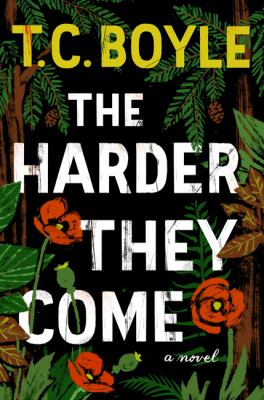
Adult Books for Teens: “The Harder They Come”

The Harder They Come by T. C. Boyle   harder they come

A cruise to Central America and a stop in Costa Rica sound like a vacation dream for a middle class retired couple. After all, Costa Rica is supposed to be a pretty safe place and all of the side trips have been recommended by the cruise liner and its obsequious crew members. What could go wrong?

A lot, as it turns out. While Sten and his wife are on an eco-tour, hoping to find rare birds and other Costa Rican wildlife, Sten, a Vietnam-era ex-Marine (now 70 years old) has been getting more and more outraged at the bus driver and the second-class tour accommodations as the group nears its destination. On arrival, their tour group is attacked by three armed men who demand all of their valuables. At this point, Sten is feeling fully victimized and not going to take it. He remembers his Marine training—it becomes automatic—and he fights back.

When Sten is finally back home, we realize that he has many other big issues to contend with. His son, Adam, is schizophrenic and furious that he is being removed from his grandmother’s cabin in the woods, now that the grandmother has died. Self-medicating on various drugs including opium—which can be grown in the forests outside Mendocino—Adam is delusional and thinks of himself as the reincarnation of John Coulter, consummate frontiersman. Part of the Lewis and Clark Expedition, Coulter later outran Blackfoot Indians for 300 miles to survive a death sentence.

Sten, a former high school principal, volunteers in a citizens’ group that patrols the forests around Mendocino for evidence of Mexican drug cartels, which grow marijuana in those secluded woods. In doing so, they wreck havoc on the environment, using insecticides that poison the animals and pollute the streams. They are laying waste to the flora and fauna of this beautiful redwoods area–the same area inhabited by Adam. They are armed and dangerous.

Enter Sara, a member of the ‘sovereign citizen movement.’ She insists that she is not under the rule of the ‘Republic of California’–not its police, highway patrol or any of its laws, including the one that demands a driver wear a seatbelt. When she is pulled over and refuses to comply with law officers, her much beloved dog is taken to a shelter. This is only the beginning of her problems. About 40 years old, when she meets the 25-year-old Adam, the two outlaws who want to stick it to the man are a dangerous couple. Fueled by sexual desire and paranoid worldviews, they are a lethal combination.

High school housekeeping: This is a wild story, high-octane fuel that will appeal to teens. Its author, T. C. Boyle is also one of today’s great writers. Here, his description and pacing is extraordinary. So much more the reason for grabbing a copy of The Harder They Come. I think some high school students will snigger at the title, but it’s the perfect fit for the story, which begins in Costa Rica with Sten very irritated because reggae music is always playing. A famous line from a reggae song is “And then the harder they come/The harder they fall, one and all.” And boy, is that true in this book.

Posted in Adventure Stories, Controversial Issue/Debate, Environmental Issues, Family Problems, Fiction, Human Rights Issues, Mature Readers, Over 375 pages | Tagged , , , , , , , , , , , , , , , , , , , , | Leave a comment

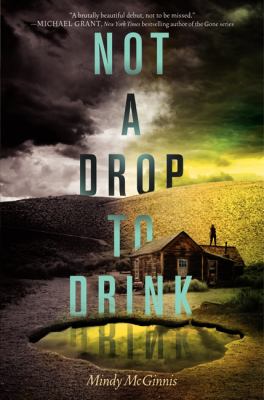
“Not a Drop to Drink”

Not a Drop to Drink by Mindy McGinnis  not a drop

“Lynn was nine the first time she killed to defend the pond.”

Those are the first words of Not a Drop to Drink, and they start you on a reading session you won’t want to stop until the last page.

Lynn’s mother is a better shot than Lynn is, and, from the roof, can pick off intruders who hope to take over the farmhouse, and more importantly, its pond. Lynn must learn what her mother knows, has been learning it from childhood, and is desiring to do some of the difficult work of survival by herself. Intruders aren’t the only problem for the pair. There is the undependable weather, the lack of medicines, the roving coyotes that are far too brazen, fearless about attacking human beings.

It’s the lack of available water in the world that makes Lynn and her mother’s pond so precious. Because it’s their lifeline, they can’t share. And because they are always on guard against intruders, they are pretty much alone is the world, except for one neighbor, Stebbs, whom Mother just refers to as “asshole.” He has a secret source of water, and a friendlier attitude than Lynn’s mom, but she loathes him for reasons Lynn can’t understand.

Still there are moments of happiness in this life, particularly when winter sets in with blizzards. Then it is impossible for intruders to find the farm. Lynn and her mother can rest, can read the great classic poems and warm themselves by the fire.

It is in such a winter that Lynn has seen danger to the South, a group of men forming, who have tried to take over the pond and will certainly try again. But just as she relaxes her guard, noting that there has been no smoke from their encampment in weeks, she believes that another danger is out by the river. And yet what she finds there finally breaks her heart open to empathy, to a sense of fellowship that her mother never taught her, and of which she probably wouldn’t approve. Will it save or destroy Lynn?

High school housekeeping: Not a Drop to Drink is a wonderful YA dystopia about a future in the rural U.S. (Lynn is in Ohio). It’s based on the very real possibility that we will run short on potable water and that people will fight to the death for it. I’m in California and found this timely as the governor has just required citizens to cut their water use by 25%.

McGinnis’s writing is great. Her characters come alive and as Lynn is forced by circumstances to deal with people other than her mom, she gains in insight and empathy. There’s the requisite romance, but it has depth and concerns that you don’t often find in teen love stories.  On the whole, everything about this novel is plain good stuff. There was only one thing that bothered me, and it was so minor that I’m not sure why it kept running through my head. Lynn quotes a famous poem as having the line “not a drop to drink.” The famous poem “The Rime of the Ancient Mariner” has a line “nor any drop to drink.” I kept wanting that to be fixed. But other than that tiny issue, I was in love with the book and look forward to more from the author. All teens should enjoy this one.

Posted in Uncategorized | Tagged , , , , , , , , , , , , , , , , , , | 2 Comments

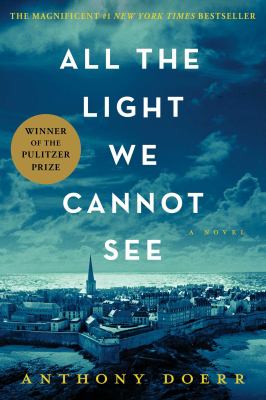
Adult Books for Teens: “All the Light We Cannot See”

all the light  All the Light We Cannot See by Anthony Doerr

A French girl whose father is the master of the locks at the Museum of Natural History in Paris goes blind when she is only six years old. Her father is very handy and deeply loving. He devises clever puzzle boxes for her birthday that she must figure out in order to find the prize inside, often a chocolate.

The chocolate is a big deal because this is Paris on the brink of Nazi occupation during WW II. A good deal of life’s simple pleasures are rationed. And yet, not only does Marie-Laure’s father manage chocolate; he procures one book in braille for each birthday, a true treasure that pulls the girl into the world of her imagination.

Before the Nazis overrun Paris, Marie-Laure has an interesting life with her loving Papa. He brings her to the museum where she hangs out with her favorite scientist and learns about sea creatures, running her hands over the shells of many sea snails. So that she can understand her surroundings and learn to navigate them by herself, Marie-Laure’s father whittles a model neighborhood in wood, full of streets, tiny houses, and miniature people. But when the Nazis arrive, the pair must flee, finally ending up in the home of Marie-Laure’s great-uncle, a man whose service in WW I has left him shell shocked and agoraphobic; a man who hasn’t left the house in decades.

At the same time, in an orphanage in Germany, Werner and Jutta are trying to get by. While Jutta is deeply thoughtful, Werner is a ‘doer.’ He finds an old shortwave radio and is able to repair it. People discover he has a knack for fixing things, especially electronics. He’s super smart and is hoping that his intelligence will be the key to leaving his mining town, where the German government requires all boys to enter the mines at age 15. This is pretty much a death sentence after a stint of back-breaking labor. When Werner wins a spot at a German military academy and befriends the small, bird-loving boy, Frederich, he finds out how the Nazis encourage bullies to sniff out the weakest and to what lengths they will bully those who do not fit in. Werner himself can only escape torture because of his talent–he is learning to track resistance fighters as they transmit coded information over radios.

High school housekeeping: This wonderful novel should be read by teens for many reasons. First is the writing–it’s a winner of the Pulitzer Prize. But there is also the deep sense of what individuals in Europe suffered and struggled through during WW II. History on the personal level–where you get the emotional lives of both resistance fighters and Hitler Youth–has great appeal and helps you to understand why people behave as they do. You empathize with others, comprehend their plights.

Doerr doesn’t tell the story in chronological order, but at first focuses on bombings and air raids that bring the German boy and the French girl somewhere in the vicinity of one another in Saint-Malo on the Brittany coast. Only after this does he pan out to show you the events that lead to this strange twist of fate. Even then, the chapters are not chronological. I’ve worked with teens  who had a hard time understanding books that shift back and forth in time. In the case of All the Light We Cannot See, chapters indicate the season and year, so if you don’t skip these, you should be OK.

I know you are busy with homework, and this is a long book. Nevertheless, don’t miss this one! It reminds us all of how the human spirit can survive the atrocities men are capable of plaguing one another with.

Posted in Adventure Stories, bullying, Family Problems, Historical Fiction/Historical Element, Human Rights Issues, Non-fiction, Over 375 pages | Tagged , , , , , , , , , , , , , , , , , | 4 Comments

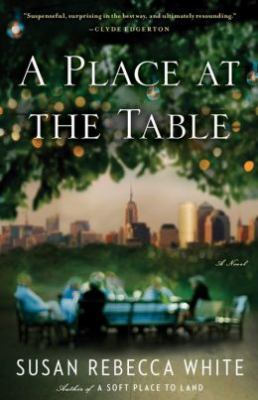
Adult Books for Teens: “A Place at the Table”

A Place at the Table by Susan Rebecca White  place at table

This tale of disparate people coming together to grant one another a bit of peace, the opportunity to find their places at the table, begins with brother and sister James and Alice Stone, who in their adventures in the woods, stumble upon a man’s body. He is African American, and he has been lynched. The children, who are also African American, have good reason to be frightened. This is 1920’s North Carolina. Although they live in Emancipation Township, an African American-owned town, just outside their familiar neighborhoods, racial terrorism waits. Although the pair hides, they overhear men in the woods discussing the lynching. What James decides to do will alter his life. His family decides he is in too much danger to stay. He must be sent to relatives in New York.

Suddenly, the reader is introduced to Bobby. Although he is also a Southerner, he’s white, he’s from Georgia, and it is the 1970’s. He is the son of loving but very religious parents. And he is gay. The older he grows, the most sure of this he is, and he is hounded by his bullying older brother, who is repulsed by him. He, too, must escape. And it is only through the love of his grandmother and her life-long industry in making and selling the best pound cakes on the planet that he finds the money to flee–to New York. Bobby has always been interested in food, and in New York, he has the chance to become anyone, including a top-notch chef.

So, with so many years separating these two Southern stories, how can they come together in a meaningful way? The reader isn’t sure until an entirely new character enters–Amelia Brighton. She’s not from the South, but only hails from nearby Connecticut. But she, too, is dealing with a painful relationship as her husband conducts an affair and her marriage is crumbling. Which of these characters finds a place at the same table and in what way is the heart of the story. How they help one another and learn to accept themselves and the trajectory of their lives is a lesson for all of us who are struggling with our identities and our pasts.

High school housekeeping: I think this is a good choice for high school students who are reading at grade level. You might feel a bit confused as one story disappears and you are jolted into another–the transitions don’t exist–but just keep going forward. I think many teens deal with the kind of issues that are addressed in this novel–racial issues, family tensions, coming out of the closet, mending friendships and being open to new relationships. In addition, there’s a historical element to A Place at the Table–you’ll get a good feel for the places and times that the novel has as its various settings. Plus, you’ll empathize with the characters. All in all, well worth your time.

Posted in bullying, Faith-Based/Religious Element, Family Problems, Fiction, Historical Fiction/Historical Element, Multicultural | Tagged , , , , , , , , , , , , , , , | Leave a comment

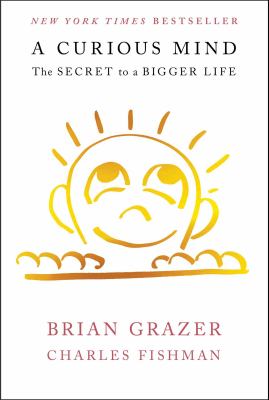
Common Core: Nonfiction: “A Curious Mind”

A Curious Mind: the Secret to a Bigger Life by Brian Grazer and Charles curious mindFishman

Brian Grazer is the producer of many well-known films (A Beautiful Mind, Apollo 13, Grinch, Splash) and  some TV series (24 is the best known). He’s always been a very curious person and here he argues the value of a curious mind–showing the reader that it can lead to personal and financial success as it has for him, but that it will, more certainly, lead to self-fulfillment.

Grazer met his Imagine Entertainment movie partner, director Ron Howard, simply by having the chutzpah to ask him if he would be willing to talk to Grazer for an hour or so. In fact, this is how Grazer makes all of his interesting connections. He has ‘curiosity conversations,’ a practice he began long before he was famous. He calls (or has his assistant call) people who are well-known in many walks of life–the entertainment industry, of course, but also in other arts, in science, and in business. He’s talked to outdoorsmen and high-ranking politicians. He asks for an hour of their time just to chat and ask some questions. Some of these people are readily willing. Others are harder to convince, but Grazer is tenacious. He will try for years until he gets a ‘yes’ answer.

Entertainers whom Grazer has talked to include Prince and Eminem. Scientists include Jonas Salk, the developer of the polio vaccine, which saved thousands of lives. Politicians include Condoleezza Rice, John McCain, and President Barack Obama (when Obama was the most junior senator in the U.S.), and even Fidel Castro. He also got to have dinner with Princess Diana, then the most famous and photographed person in the world.

These conversations have influenced Grazer’s work. In the case of Condoleezza Rice, it helped him decide that it was unsafe to make a movie about Mexican drug dealers in location in Mexico. When he meets Isaac Asimov, Grazer is unprepared and Asimov’s wife basically tells him to get lost, that he doesn’t even understand Asimov’s work. I’m not entirely sure how many people in the world could have understood the brilliant and prolific Asimov, but Grazer–who felt this like a slap in the face–learned never to go to a curiosity meeting unprepared again. The story that is most interesting is Grazer’s meeting with a victim of torture under the Pinochet regime. He was able to talk to her because Sting knew her, he knew Sting, and he was invited to Sting’s Malibu mansion for dinner.

Not all of these meetings turn out to be very interesting in the telling, but it is clear that they are important for Grazer’s creativity. When he needs to understand how the astronauts of the Apollo 13 mission would have felt trapped and facing death, he relies on his conversations with that Pinochet torture victim. (Truly, her story is the most interesting in the book, and by itself, worth the price of admission.)

Grazer discusses how the reader can make curiosity work for him or her. Since most of us, at least those of us at a certain age, have spent a life having the curiosity drilled out of us, this reminder of why it matters is very welcome.

High school housekeeping: A Curious Mind is a short, quick read that just about any teen could connect to. Although I’m not an entirely uncritical fan of the Common Core, it is better than the dozen years we spent with ‘No Child Left Behind,’ drilling curiosity out of students so that they could parrot answers and fill in bubbles on multiple choice standardized test. I hope this is the sort of book that the framers of the Common Core want you to read–indeed, I hope that as we have moved away from bubble-the-blank hell, curiosity will again take its rightful place in education.

After reading this book, you may want to start arranging your own curiosity conversations. Granted, you don’t know Sting and don’t stand a snowball’s chance in hell of being invited to his house. But there are many interesting people all around you, and most of them would love to talk to you about what they do and why it matters. And who knows–Grazer got to have some great conversations with people far more famous and, in the eyes of the world, far more important than he is–and all he did was ask and keep asking. That’s a skill we should all learn.

If you are interested in the workings of Hollywood and movie-making, that is just one more reason for you to read A Curious Mind.

Posted in Biography/Memoir, Non-fiction | Tagged , , , , , , , , , , , , | Leave a comment

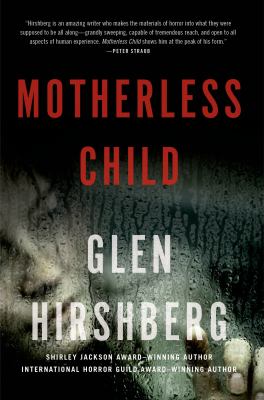
Adult Books for Teens: “Motherless Child”

 motherless child  Motherless Child by Glen Hirshberg

Bad girl Natalie doesn’t immediately realize that her wild night with pop singer The Whistler and best friend Sophie has done her damage forever . That’s really forever rather than a lifetime; she has been turned into a vampire. The Whistler hopes to make Natalie his eternal companion. As he sees it, she is his Destiny. He turns Sophie just to give Natalie someone to hang with while she figures out what has happened to them both, while they finish their transformation.

When Natalie does realize what has happened to her and Sophie, both women give their babies to Natalie’s mother with instructions to take off and never let the women know where she has gone with the children. The ensuing loneliness and desire would be enough to keep the reader charmed, but when ‘Mother’–the woman who turned The Whistler–figures out that her eternal companion hopes to forsake her for another, she is having none of it.  Mother is amoral, cunning, willful, and violent. In the midst of all the grief and longing, we are thrust into spine-tingling episodes and suspenseful cat and mouse chases.

Not your typical vampire book, Motherless Child is about many things, and most surprisingly–if you allow the title to color your guesses about the nature of the book–it is a book about the ferocity of mother love. Its limitless nature

Motherless Child makes clear why Hirshberg has won so many horror awards. He draws the reader in quickly and never lets her go. All of his characters are well drawn. With the story very nearly concluded, he manages a final plot twist that both shocks the reader and leaves her deeply satisfied.

High school housekeeping: It’s not often that you have the joy of reading genre fiction of literary quality. Add to that the fact that this tight piece of writing is no longer than a typical YA book–it’s well under 300 pages–and you have a great read for any teen horror fan. So often, I have students ask me for horror that is scarier than the usual YA fiction, but that isn’t the 500 or more pages of many adult horror novels. Well, teens, here is that book. Add to that a vampire who uses his Twitter base to hunt his prey. Then throw in the fact that this is exactly the type of writing that your teachers want you to read–that is, it’s high-quality stuff–and there’s nothing to keep you away from Motherless Child. Enjoy!

Posted in Adventure Stories, Family Problems, Fiction, Horror/Mystery/Suspense | Tagged , , , , , , , , | 2 Comments

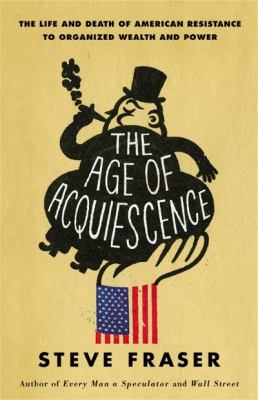
Common Core: Nonfiction: “The Age of Acquiescence”

Age of Acquiescence: The Life and Death of American Resistance to Organized Wealth and Power by Steve Fraser   

age of acquiescence

I picked up Age of Acquiescence because it was recommended as a companion work to Capital in the 21st Century.  Age of Acquiescence is also certainly worth the long read although its focus is narrower. Its author, Steve Fraser, asks a basic and important question: Why isn’t there an American movement that rails against the economic disparity that we see in the 21st century? Why are we ‘acquiescing’ to the monied and the very powerful, to the inequalities that stem from capitalism as we practice it?

The answer to that question has much to do with the history of the United States. Fraser works to show the reader that during the first Gilded Age–the turn of the 19th to the 20th century (which Fraser extends a few decades into the 1920s and even the 1930s for some examples), ordinary, working class folks protested against the economic disparity inherent in capitalism, against the dreadful working conditions under which they slaved. (And yes, Fraser does make an argument that there is such a thing as ‘salaried slavery.’ ) These protests sometimes became violent riots. And things did change. By mid-century, there was the eight-hour working day, and the laboring classes lived much better lives under unions. Well, mostly. Fraser mentions that unions could be guardians of the old prejudice and although he doesn’t include much detail, many unions originally kept out people of color. This in itself is an interesting topic to pursue.

Many people felt that life was good in the 1950s, 60s and 70s. Financially, they were better off than their parents and grandparents had been. But Fraser notes a downward trend in social mobility, a new Gilded Age of economic disparity and ostentatious wealth that began in the 1980s with the election of Ronald Reagan to the presidency. The resulting decimation of the middle class in our current Gilded Age concluded in the economic meltdown of 2007-8. When people took stock of their ‘new normal’ in 2008 and saw that they would be less financially well-off/stable than their own parents had been, there wasn’t much fuss.

There was, of course, the  Occupy Wall Street movement, but how long did that last? And what did it all mean? Fraser argues that the reason people could rail about their situation over a hundred years ago was because they were unused to capitalism as a system. They had been able to grow their own food, trade and barter their own goods, and manage to get along working fewer hours for big businesses or corporations. But now, we don’t know any other sort of life. We are certain that capitalism is the only economic system that our country can labor under. We have no genuinely creative ideas about how to change things, nor do we have the power to do so, when banks are ‘too big to fail.’ In addition, we are so used to excess that it no longer outrages us. We model our lives on the excesses of the rich, are guilty of satisfying our desires with borrowed money.

The one movement that Fraser sees rallying against the status quo is not on the left or progressive as it once was, but rather is on the right–the Tea Party. However, the Tea Party is railing against the government and not against an economic system or wealthy inequity.

Fraser hopes to stir us out of our stupor–to stop believing that ‘Greed is good,’ that top earning CEOs know better than anyone else in the universe what is good for all of us. How exactly this is to happen is less clear. Twenty-first century workers can look backward at numerous failed socialist experiments, so they are less inclined to see other economic systems as a panacea for our current state of woes–which include endless working hours (thank you modern technology!), diminished buying power, two family incomes as the norm, skyrocketing college costs and more.

High school housekeeping: The Age of Acquiescence is a good book for teens and young adults (college age) interested in economics. It’s a longish work–without the endnotes, it’s about 425 dense pages. You need to read at grade level or you won’t follow Fraser’s arguments. I think it is exactly the kind of book that the framers of the Common Core would like you to read. It is well worth your time–you’ll learn a lot about the history of the United States, including not only about labor protests and the formation of unions, but of robber barons and the current version of these men. You’ll be introduced to the various (failed) socialists experiments and utopian colonies of a century ago. Still, I think that most AP and honors students don’t have a lot of free time to read. That this is a shame goes without saying, but it’s also a fact. If you are interested in economics–maybe you are thinking of it as a college major–check out the book from the library and read the introduction. It’s about 10 pages and will give you a very good overview of the book, helping you decide whether you want to devote more time to it.

If you are truly interested in economics and specifically in the problems with capitalism as a system, you shouldn’t skipCapital in the 21st Century. It takes a longer view over much of the western world and shows that capital will always accrue at the top, to a few people. At times when this didn’t happen in the U.S., it was due to open frontiers (stealing land from American Indians was a way of ordinary people to get a start without paying the price, but of course, that’s no longer an option) and wars.

Both The Age of Acquiescence andCapital in the 21st Century are the work of liberal thinkers. While they are based on solid research, there exist economists that come to more conservative conclusions about capitalism and its benefits for the common man. One of these is Deirdre McClosky. I have a son who reads widely in economics and recommends McClosky’s point of view to balance Fraser and Picketty. However, her work is not only very long, but multi-volumed. With this in mind, I asked for the single volume that would be best for intelligent high school students considering economics as a field of study. He recommends Bourgeois Dignity. He also promises to write a guest review for me, so stay tuned.

Posted in Controversial Issue/Debate, Historical Fiction/Historical Element, Human Rights Issues, Non-fiction, Over 375 pages | Tagged , , , , , , , , , , | Leave a comment

“Blackbird”

blackbird     Blackbird by Anna Carey

OK, yes, you have read this sort of story before, and you‘ve seen it in movies. Someone with amnesia wakes up. Without a memory, that person has to piece his or her life together and figure out how and why s/he arrived in the present. But let’s face it–unless this scenario is one that drones on endlessly in a soap opera, it’s a fun premise. And in Blackbird, the reader is pulled into the mystery immediately and races through the story to a satisfying conclusion. That is, an almost satisfying conclusion in that Blackbird is the first book in a trilogy.

Blackbird is narrated in the second person. I see this more often lately and although writers are often advised against using the second person (You), I almost always love it. (Think of Blink and Caution and how well that worked.) If YOU wake up on the subway tracks in Los Angeles without any idea of how you got there–or how you got the scars on your neck or the strange tattoo on your wrist–well, you want to find out. This happens to you in Blackbird. All you know is that you have a backpack with one thousand dollars, some clothes, and a phone number on a piece of paper that says, “Do not call the police.”

You have to make up a name for yourself when the boy in the supermarket, Ben, notices that you are hurt and asks about you. Sunny, you think. That’s a good name. And so your adventure begins. You realize that you may have been some sort of thief or juvenile delinquent in your previous life–after all, you can pick a lock, break into an office.

Someone out there seems to know exactly what your criminal talents are and is watching you. You are stuck; you’ve lost your chance to go to the police. Who do you trust?

This novel reminds me of a short story that many, many high school students read in anthologies. When I taught English, that story was always a favorite among my kids. (I can’t tell you the name; it would give away a nice plot point of the novel). If there’s anything I didn’t like about Blackbird, it’s that the elements of the storyline that were concluded in this ‘book one’ seemed rushed–a sort of, ‘Well, this and that must have happened by now’–before the presentation of the character that will drive the second book. But altogether, Blackbird is  a blast. YOU’LL have fun with it.

High school housekeeping: I recommend this novel to all high school students. It’s fast-paced and short enough for the reluctant reader, but it also has enough mystery and plot twists to engage a book lover. Teens are always asking me for a mystery, and this is a very good one. Once I talk this up at my high school and some of my kids have read it, I want to ask them about connections to that anthologized story. We can wonder together whether it has had a lasting effect on Anna Carey, the author of Blackbird. I’m guessing yes.

Posted in Adventure Stories, Hi-Low/Quick Read, Horror/Mystery/Suspense, Young Adult Literature | Tagged , , , , , , , , , | Leave a comment