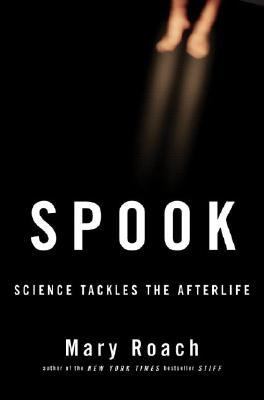
Nonfiction: “Spook: Science Tackles the Afterlife”

Spook by Mary Roach spook

I’m gathering some scary stories for a fall display, and thought I’d add Spook–which is not a scary book at all, but rather an entertaining work of nonfiction that takes a look at life after death.

Mary Roach, the author of Spook, wants to know if we can scientifically prove or disprove the existence of life after death. She wants to know if there really is a human soul. She begins her investigation (or at least her narrative about it) in India. Roach accompanies an investigator who is hoping to verify the reincarnation of a man, born into a child who lives not far from where the man had lived his life. This journey is pretty disappointing, and what she learns supports Roach’s initial feelings–she’s a skeptic.

In fact, proving or disproving the existence of the human soul has frustrated great philosophers, theologians, and scientists all. So the reader shouldn’t expect great revelation here. But what makes the book a worthwhile read is learning about some of the crazy history–and present day shenanigans–of folks who claim to be in touch with the dead.

How hardily many people accepted mediums a century ago is surprising. Folks believed in the presence of the dead during seances when tables levitated and trumpets played by themselves. Weirder still is how ‘ectoplasm’ would often appear around the medium during a seance. How did this filmy tissue of phantomness–that looks a lot like cheesecloth–get in the room? (OK, the answer is creepier than actually dealing with the dead. Can you say orifice?)

As always, Roach has fun in her investigations. She goes to medium school (really just a weekend workshop) and tries to learn the craft along with a cohort of believers.

Roach also turns to science, past and present. At one time, a serious surgeon studied whether the soul had left the body by weighing patients at death and seeing if there was a change.

Today, there are a few serious scientific institutes that study the paranormal. They use computers, infrasound and electromagnetic waves to try to locate the souls among us. They investigate those out-of-body experiences that people have during surgery when their hearts stop.

High school housekeeping: Spook roams all over the place, but in a good way. California teens will remember the Donner party from their youthful studies of California history, and will be engaged by the author’s efforts to reach the spirits of those departed cannibals. Mary Roach has written several books about her investigations into questions that have always puzzled her. She’s always funny while she’s informative. Her footnotes, which can really stray from the subject at hand, are sometimes the most fun of all. A book that goes over well in book talks is Stiff: The Curious Lives of Human Cadavers. It, too, is an interesting read for fall as our thoughts turn to the dead (and the undead).
Posted in Controversial Issue/Debate, Humor, Non-fiction | Tagged , , , , , , , , , , , , , , , | 2 Comments

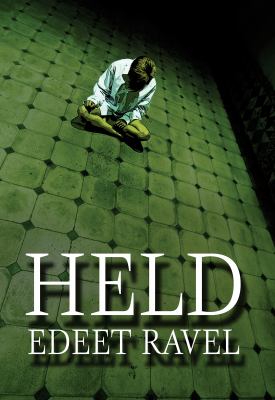
“Held”

Held by Edeet Ravel  Held

Chloe Mills is living every high school student’s dream. She’s in Greece with her best friend in a summer volunteer program. She and Angie rarely argue, but after a disagreement with Angie, Chloe decides to do some sightseeing by herself. She’s grabbed, thrown in a van, blindfolded, and drugged. Later, she’s taken on a plane. Yes, she’s been kidnapped and has no idea what country she is now in.

Chloe’s fear is both rational and irrational–to avoid a spoiler, I’ll just say that she sometimes has reason to be very afraid and that she suffers, but–weirdly–she is also treated much better than she could have imagined by one of her captors. He visits her with some regularity, is a good cook, and is concerned about her well being. She begins to idolize him, reading much into each thing that he does. She’s suffering from Stockholm Syndrome, a state of mind in which a hostage comes to identify with his or her captor and may even believe that s/he is in love with that captor.

We (and Chloe) learn very early in the novel that she is being held in an effort to have prisoners released. She’s in this for the long haul, and is never sure what fate awaits her–death, torture, release?

High school housekeeping: Held is a quick, easy read, but in a short narrative space, it creates a very detailed and complex look at Stockholm Syndrome. Not only can you see how Chloe would start to think about her captor as her love interest; as you learn more and more about her captor’s life, you, too, wonder if he’s such a bad guy. And you feel very weird about this as you read, asking yourself, “Am I being fooled, too?” The addition of Facebook posts, news articles, and a “Free Chloe” website at the end of chapters help the reader understand how friends and Chole’s mom are dealing while they have no idea what is happening to her.

As this is an easy read (middle school reading level, but with high school students as its intended audience), I recommend it for struggling readers. But it’s a quick, fun summer read for others as well, worth the afternoon it will take you to become absorbed in Chloe’s story.

Posted in Fiction, Hi-Low/Quick Read, Human Rights Issues, Romance, Young Adult Literature | Tagged , , , , , , , , , , , , , , , | Leave a comment

New Adult Nonfiction–Challenge Yourself!

This slideshow requires JavaScript.

Challenge yourself to read some serious nonfiction.

Try some books that argue against what you believe.

Find out who is behind innovations, medical discoveries, and other significant change.

Learn, baby, learn.

Posted in Uncategorized | Leave a comment

“The Bully” and “The Gun”

This slideshow requires JavaScript.

The Bully by Paul Langan

Darrell Mercer moves from Philadelphia, PA to California in the middle of his freshman year of high school. Although his neighborhood in Philly is not the best–even dangerous sometimes–he has a lot of good neighbors and friends. He doesn’t know anyone in California, but a new job opportunity for his mom makes the move necessary.

Before Darrell’s first day at Bluford High, things go wrong. A guy named Tyray bullies him and extorts money simply because Darrell has walked up to him and tried to make conversation. Darrell is not very tall and is thin. Tyray is big and muscular.

Darrell also meets a nice girl named Amberlynn, but he notices on his first day at school that she is very popular and doesn’t seem to recognize him. He sits alone in the cafeteria and wishes he could go back to Philadelphia.

Things go from bad to worse. Every week, Tyray takes all of Darrell’s money, threatening that he will beat Darrell if he doesn’t give the money to him. Darrell also notices that his young cousin beats on the cousin’s even younger brother just because he can.

What can Darrell do when he is threatened daily and his life is a nightmare? When he sees a flyer posted at school, he thinks he may have an answer, if only he has the courage to see it through.

High school housekeeping: The Bully is part of the Bluford High series and is meant for students working to improve their reading skills. The Lexile level is 700, so about the 5th grade reading level. It’s a fast-moving, action-filled read. You’ll be sickened by some of the terrible bullying that Darrell goes through, but it is realistic. It is interesting that the author makes a connection between what is happening to Darrell and what is happening to his young cousin. If you are working on your reading skills, give it a try.

The Gun by Paul Langan (later published as Payback)

Tyray Hobbs is a bully who humiliates weaker kids, extorts their lunch money, and generally sees himself as the master of his personal universe.

Funny how things can change in a day.

One of Tyray’s favorite targets is Darrell Mercer. Darrell is one of the newer kids at Bluford High–Darrell comes from Philadelphia to California as a freshman in high school. Although Tyray has bullied him for awhile (see The Bully above), Darrell has joined the wrestling team and has started to stand up to Tyray.

Seeing Darrell in the cafeteria, Tyray decides to hassle him for not giving Tyray his weekly payment. But things don’t go as planned.

So now everyone has seen that Tyray has a weak spot. The schoolwide fear of Tyray is disappearing fast. Other students make fun of him. Everyone disrespects him, and he needs to get respect back in the only way he understands it–by bringing back the fear.

And how can Tyray get that fear back into the students of Bluford High? With a gun.

High school housekeeping: The Gun is part of the Bluford High series and is meant for students working to improve their reading skills. It is also titled Payback in a newer edition. The Lexile level is 730, so about the 5th grade reading level. It’s a fast-moving, action-filled read with a white knuckler (suspenseful) ending! I couldn’t put it down. While The Gun can stand on its own, I recommend that you read The Bully first–this is a sequel, and it’s fun to know the whole story.

Posted in bullying, Family Problems, Fiction, Hi-Low/Quick Read, Read 180, Sports, Young Adult Literature | Tagged , , , , , , , , , , , , , , , , , | Leave a comment

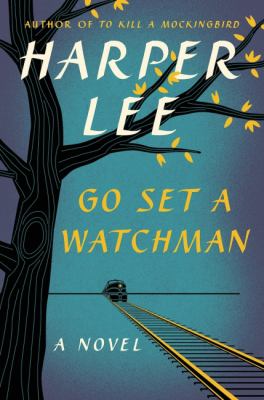
“Go Set a Watchman”

Go Set a Watchman by Harper Lee   Go Set a Watchman

With the flap over Harper Lee’s new book still simmering among readers I know, I have to admit that I’m surprised at how virulently both professional reviewers and ordinary lovers of To Kill a Mockingbird hated the fact that Go Set a Watchman finally made it into print.

Sure, it’s not the example of craftsmanship that To Kill a Mockingbird is. But then, in the last few months it’s been well established that it was an early draft of that novel, one that is set some eighteen years after those hot summer days of the Great Depression when Atticus stood up against his friends and relations in the fictional town of Maycomb, Alabama to defend an African American man against rape charges.

Like many people of my generation, I was worried about reading the story of a lesser Atticus. A few years ago, during the years-long fiftieth anniversary celebration of the publication of To Kill a Mockingbird, I was in the independent bookstore Bookshop Santa Cruz and saw a bumper sticker for sale: “What would Atticus do?” That this is practically blasphemy in the comparison of Atticus to Jesus didn’t matter. I loved it and bought multiple copies, distributing it to some of my favorite English teacher buddies.

So I found it ironic that in Go Set a Watchman, Jean Louise Finch asks the very question “What would Atticus do?” The answer is not what Jean Louise had hoped he would–and not what all the folks with images of Gregory Peck standing in the courthouse, worn out from Tom Robinson’s defense, had hoped for either. (If you are over forty, Gregory Peck is so melded in your mind with Atticus Finch that you can’t even pretend they are different people.)

So what if Harper Collins manufactured a fake literary event? People are free to respond as they see fit. There was no order that readers rush to get the book at midnight of its publication date. Take away the ‘New Harper Lee Book Discovered!’ nonsense, and I’m glad that Go Set a Watchman was published. It’s a great example of how a pretty decent book becomes a great book in the hands of a great editor.

The best parts of Go Set A Watchman are not those that are causing controversy, but rather Jean Louise’s reminiscences of her girlhood (as ‘Scout,’ of course) and the author’s beautiful evocation of small town Southern life in Maycomb. It is easy to see an editor reading the manuscript and pointing out these passages to Lee. “Here’s your story. Write it.” Anyone who is a writer–whose secret desire is to become a published author–would do well to read both books and note how completely the story changes. That so much work went into a manuscript that the author had considered fully realized may give the struggling writer the faith to press on, to discover the heart of her story and start again.

For junior high and high school students, reading Go Set a Watchman just before reading To Kill a Mockingbird would provide an excellent opportunity to understand why their teachers require several drafts of important papers and why they are taught to peer edit one another’s work. Besides the clear superiority of the sections of Go Set a Watchman that deal with Scout’s childhood, there is a lesson in the mess that Jean Louise tries to sort out about her father’s views of race and segregation. Lee turns rather long speeches about ideology into dialogue, a mistake that writing teachers refer to as ‘info dumps.’

The info dumps containing views on the NAACP and whether the South is ready in the 1950’s  to be fully integrated are now historical arguments–and Jean Louise’s father, aunt, and uncle all land on the wrong side of history. These ideological issues are the trigger that forces Jean Louise to see her father as a man and not some sort of infallible god. We readers of To Kill a Mockingbird, like Jean Louise, are unhappy to be disillusioned with Atticus. Too bad. A break with a parent’s conscience and the formation of one’s own is a necessary ritual of coming into adulthood. It, too, is an important lesson for teens to derive from the books they read. For those of us adults who want too much to cling to an idea of Atticus as the father we all wish we had guiding us through life–well, it’s never too late to realize that our conscience and our actions are in our own hands.

Posted in Controversial Issue/Debate, Family Problems, Fiction, Historical Fiction/Historical Element, Human Rights Issues | Tagged , , , , , , , , , , | Leave a comment

“Me and Earl and the Dying Girl”

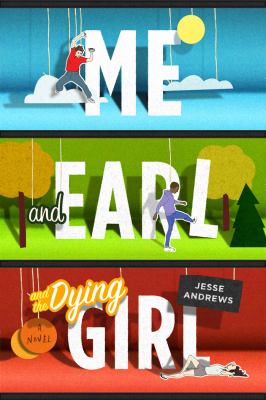
Me and Earl and the Dying Girl by Jesse Andrews   me and earl

There really is a dying girl in this novel, so to say that most of it is a lot of fun seems weird. But it is fun. You should read it.

Seventeen-year-old Greg S. Gaines has spent his adolescence trying to stay off of people’s loser list by staying out of any group or clique–if he disengages, no group will claim him or hate him for hanging with a group they don’t like. He says that high school is where “we are first introduced to the basic existential question of life: How is it possible to exist in a place that sucks so bad?” He sees his high school as chaotic.

None of the cliques is an alpha group that has dominance over the school. In a funny monologue Greg goes through each and explains why (“The stoners? Too lacking in initiative. The gangbangers? Too rarely on the premises.”) He is on good terms with all he meets–band geeks, drama students, jocks, the church kids, the smart kids, and the few rich kids (most of them go to a private school, so there aren’t many around). The problem is that since Greg always keeps things on the surface, he really has no true friends.

Greg does have Earl, whose home life is super chaotic. His mom locks herself in her bedroom and drinks ever since her husband, Earl’s stepdad, went to prison. Earl’s older brothers start fights for entertainment. But Earl has something at home that Greg wants: video games. Greg has something at home that Earl wants: less chaos (and interesting snacks). And so they hang out beginning in in kindergarten. Some years later, after viewing a few of Greg’s dad’s foreign films, the boys decide that they, too, want to make films, and thus begins their filmmaking career.

From his mom, Greg finds out that a girl he knew in middle school, one he had pretended to like as a girlfriend but has not spoken to in years, has acute myelogenous leukemia. Leukemia is a blood cancer, this is a severe form of it, and, yes, Rachel Kushner is dying. Greg’s mom thinks that Rachel could really use a friend, so Greg obliges and makes awkward phone calls to her in chapters titled “Phone Sex” although there’s nothing sexual about them. He just wants us to know how socially inept he is. He then visits her and brings Earl, whose language can be pretty obscene, along.

Rachel becomes sicker, Greg realizes that this is not the typical YA novel love story–the two are not falling for one another–but instead it is about the difficulty of getting through the awkwardness of tragedy.
High school housekeeping: As I’ve mentioned, the novel is a lot of fun. Greg is very self-effacing–he describes himself as looking like pudding.His late elementary and middle school crushes on girls are disastrous but hilarious. One of the best things about this book is how well it shows the awkwardness of engaging with someone–maybe someone you don’t know very well–while that person is suffering a tragedy. The loud, rambunctious, sometimes rage-fueled Earl does a better job. Greg has to be shaken out of his lifelong habit of disengagement. And there a good lesson in continuing to engage, even when things are very awkward because, ultimately, we are all going to need others.

Posted in Family Problems, Fiction, Grief, Humor, Young Adult Literature | Tagged , , , , , , , , , , , , , , , , , , , | Leave a comment

Sci-Fi/Future Dystopias: “Oryx and Crake”

Oryx and Crake by Margaret Atwood  oryx

Snowman (as in Abominable), who was once known as Jimmy, appears to be the last human being on earth. His existence doesn’t seem much worth living–the environment is in ruins and he cannot survive the blazing sun, but must always be covered. Genetically engineered animals–pigoons and wolvogs –roam freely, and Snowman is always in danger of being ripped to shreds and eaten.

Yet Snowman has a purpose. He must guard the safety of the simple and guileless ‘Crakers,’ a new species of human-like creatures of many colors (but all of whom have green eyes).

As Snowman takes a journey back to the  RejoovenEsence compound from which he and the Crakers fled (he is now starving and needs supplies), the story takes the reader to Jimmy’s pre-apocalyptic life, showing how the present came to pass. In a world of social inequality and injustice, the smart and the lucky lived in company-owned compounds while everyone else lived in the pleeblands. Work in the compounds often centered on genetic engineering, which promoted medical miracles (human brains grown in pig bodies, for example) as well as new sources of food.

Jimmy had two great friends that he depended on. The genius Crake and Jimmy went way back to pre-adolescence when they used to play the video game Extinctathon together (from which Crake got his name) and look at HottTotts, a porn website which took advantage of small children. It’s on this website that Crake first saw Oryx, who was only about eight years old at the time. He wondered about the horrors of her life and secretly loved her. When he met her in person much later, his love became all the greater as she is kind and empathetic. Oryx is a surprisingly forgiving person, considering that she was sold into sexual slavery as a child and lived as an object for all of her young life. As a young adult, she was hired by Crake to be his assistant in cultivating the Crakers.

What happened to Crake’s brainchild, the Paradise Project, as well as Crake and Oryx along with the rest of the world’s population is at the shocking heart of this tale.

A chilling can’t-put-it-down page turner, Oryx and Crake is a must read for all fans of science fiction and dystopian future–and for most of the rest of us as well.
High school housekeeping: Students on the lookout for great dystopian fiction must read Oryx and Crake. The world building is excellent and feels like a quite possible future. The writing is great, the characters are well developed and the end is a stunning heartbreaker. Atwood is writing for adults, so this is a more meaty fiction than you’ll find in many YA future dystopias. But if you’re a good reader, it will also be more rewarding. Oryx and Crake is the first book in the MaddAddam trilogy. Check it out–you’ll have to keep going.

Posted in Adventure Stories, Controversial Issue/Debate, Environmental Issues, Family Problems, Fiction, Human Rights Issues, Over 375 pages, Sci-Fi/Futuristic | Tagged , , , , , , , , , , , , , , , , , | 1 Comment

“We Were Liars”

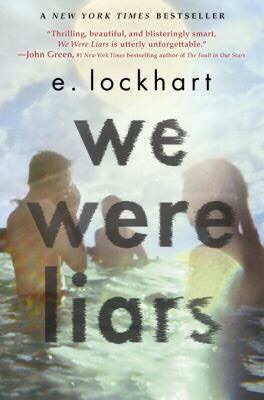
image     We Were Liars by E. Lockhart

As the first grandchild of Harris Sinclair, Cadence has a lot to gain. The Sinclairs are east-coast old money whose family came to the U. S. on the Mayflower. Harris owns a small island, Beechwood, where the family gathers each summer.

Two of the most important summers at Beechwood are when the Sinclair cousins–Cadence, Johnny and Mirren–are eight and when they are fifteen. At eight, they meet Gat, the nephew of the (Indian) boyfriend of one of Harris’s daughters. Gat immediately becomes one of the group, one of the Liars. But his presence creates some ethnic tension. Harris doesn’t like that one of his daughters (Carrie) has brought Indians into the perfectly tall and perfectly blonde family.

Gat returns each summer and is a great friend of Johnny’s. During the Liars’ fifteenth summer, Gat and Cadence fall in love. That much Cadence can remember, but little else. She was in an accident and hurt her head. She ends up with amnesia and horrifying migraine headaches for which she must take strong painkillers. Due to her accident, she is kept from returning to Beechwood for her sixteenth summer. During her seventeenth, she goes back and tries to recall all that happened.

With her memory loss, headaches and medicated state, Cadence is a very unreliable narrator. However, she sees her family as a sort of King Lear story–the bullying granddad with his three daughters who argue about money and inheritance. She also thinks a lot about various fairy tales and how the characters in those tales fare against magic and fate. All of her musings are interesting and pull the reader into her drama, as does her love for Gat and for her cousins. Yet because Cadence is such an unreliable narrator, the reader is in for a crazy ride and some serious shocks about what happened during “summer 15.”

High school housekeeping: If you aren’t used to reading a book with an unreliable narrator, We Were Liars is a great place to start. This novel is wildly popular with professional reviewers. For my own part, I ended with a sense of “No fair!” because it felt like the author had cheated a bit in laying out the story for me, the reader, unreliable narrator or not. But this really is a compelling story. I recommend it to all teens and particularly lovers of mysteries and family dysfunction.

Posted in Fable/Fairy Tale/Fantasy, Family Problems, Fiction, Horror/Mystery/Suspense, Romance, Young Adult Literature | Tagged , , , , , , , , | Leave a comment

Adult Books: Memoir: “Let’s Pretend This Never Happened”

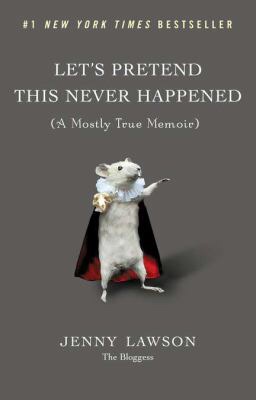
Let’s Pretend This Never Happened by Jenny Lawson  image

Jenny Lawson grew up in Wall, Texas, a small rural town that it was her goal to escape. Just as in many such tales, we find that in adulthood, the author looks back on the extreme weirdness of her childhood with fondness. And that, yes, she does want to go home again.

The big difference with Lawson is that her recollections are wildly funny rather than nostalgic. I always have students looking for humorous books. If you can handle some profanity (and some common but appropriate terms for body parts–more on that in a later paragraph), this may be your book. And it doesn’t just pander to a need for low humor. It does a great job of showing how some of the most upsetting or mortifying events from childhood can be some of the most useful in simply sensing that you’ve had a life, that you’ve had some fun, that you are not just interchangeable with your friends and neighbors or with kids who grew up in another place.

Most of the wacky events of Lawson’s childhood stem from the facts that her family is fairly poor and that her dad runs a taxidermy shop next to the house. He is always collecting road kill and using both dead and live animals to play jokes on the kids. The family has a pet raccoon until it nearly takes Jenny’s sister’s face off. One of the tribe of turkeys that their dad keeps lands Jenny in a hilarious scene when it follow her to high school and poops everywhere. When they are older, Dad plays jokes on Jenny’s fiance. The first time they meet, Jenny’s dad throws a baby bobcat on Victor to see how he’ll react. He puts baby ducklings in the house to amuse his grandchildren.

It’s small wonder that Lawson ends up with an anxiety disorder, but even that is fodder for wisecracking. And Lawson is just so funny.

After Lawson marries Victor, there is more craziness in their household–they have a surprising number of arguments about how the zombie apocalypse will come off–and in their jobs. Lawson works in a human resources department and has side-splitting stories about the strange things that people do when they apply for jobs–and the entirely inappropriate things they do once they have jobs.

There are a few things that are treated seriously–Lawson has three miscarriages before delivering her daughter, and, well, that’s just not funny. She also has rheumatoid arthritis, which can be both painful and debilitating. But overall, for those of us with little knowledge of rural lives, guns, and wild animals, this memoir is a hoot.

High school housekeeping: Caveat–Lawson uses the f-word a lot. There are also sections at the end of the book–an epilogue, an ending, and then yet more stuff–that aren’t very funny. I’m not sure why they are there, except for the opportunity to use the word ‘vagina’ as much as possible. And while there’s nothing wrong with the word vagina, I think that Lawson is only hoping to get a laugh out of the reader. Which fails. She would have done much better to quit at the end and not add the extras.

Oh–I think it goes without saying that Lawson is exaggerating about most of what happened in her life so that she can get a laugh. But just in case–now you know.


Posted in Biography/Memoir, Family Problems, Mature Readers, Non-fiction | Tagged , , , , , , , , , | Leave a comment

Mystery/Humor: “Croak”

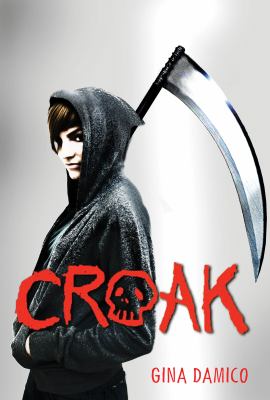
Croak by Gina Damico  croak

For no reason she can figure out, sixteen-year-old Lex Bartleby is one crazy angry girl. Previously normal and a good student, the high school junior can barely get through a day of school without punching someone out. The only reason that she isn’t kicked out of school a week before summer is that her very loving parents devise a plan to turn her around. She has to spend the summer in the country (Adirondacks) with her Uncle Mort, whom she hasn’t seen since she was six. Lex is sick about the idea of being taken away from her twin sister and forced into  the boredom of the tiny town of Croak.

But Croak isn’t the hell hole Lex thought it would be. Or–rather hell holes are not really so hellish when she gets the insiders’ version. With the help of Uncle Mort, Lex discovers she is perfectly suited to reaping the souls of the dead and helping them move on to the afterlife. And the afterlife can be quite entertaining, not at all what people usually envision.

The downside to Lex’s new job is its very long hours; the upside is her partner Driggs, who is clever, insightful, and hot. The push-pull of their relationship is very funny and brings a good deal of humor to the novel, which is more of a mystery than it is a horror book.

Finding new friends, Lex may come to enjoy her reaping. But when there is no explanation for deaths of some of the people she and Driggs are sent to collect, things get scary fast, and no one is safe–including the reapers themselves.
High school housekeeping: For a quick, engaging teen read, Croak is perfect. It has all the best elements of a novel. You may have to finish in one sitting. Mystery and romance are combined with perfect pacing, witty dialogue, and deeper questions about right, wrong and vigilante justice. A great summer read for all teens–don’t miss this one!

Posted in Fiction, Horror/Mystery/Suspense, Young Adult Literature | Tagged , , , , , , , , , | Leave a comment