“A Dirty Job” and “You Suck: A Love Story”

“A Dirty Job” and “You Suck: A Love Story,” both by Christopher Moore

I was talking with a COHS student about vampire books, and she recommended that I read some Christopher Moore titles, so I did. She thought they might be popular with COHS students.

“A Dirty Job” is about a ‘beta’ male, Charlie Asher. He is in a constant state of worry. His wife dies very unexpectedly after giving birth to their only child, Sophie. Charlie happens to walk into the room as Death—or a helper of Death—is collecting his wife’s soul. The ironic twist that Charlie is also called to be a sort of death helper (as opposed to Death with a capital ‘D”) creates a lot of the wacky humor that follows. In San Francisco alone (the setting of the novel), there are many helper deaths, and they collect souls in objects (soul vessels), which later will find their way to the right ‘soulless’ person. So, some of these death characters own used CD/record stores or, in Charlie’s case, a thrift shop that sells old clothes, etc. Charlie knows which of the old items hold the souls of owners who have died because they glow red.

Adding to the drama, the Forces of Darkness are on the rise, and they want to reap the souls as a way of gaining strength while working on conquering the world. They’d also like to snatch baby Sophie, so she must be guarded by giant Hellhounds. (Try keeping those in your house.)

“You Suck,” published next after “A Dirty Job,” has some of the same characters, but apparently it’s more of a sequel to an older title “Bloodsucking Fiends” (one I haven’t read.) I liked this as a bit of a wake-up call for “Twilight” fans. Here are two undead young lovers who must drink blood to survive, and that’s actually pretty gross for them. Blood must be added to anything else they’d like to drink—coffee, for instance. Feeding at night, sleeping during the day, and accidentally getting burned by the sun turn out to be a drag. (Who could have guessed?) Worse yet, not everyone is happy to have vampires in the neighborhood (seriously fans of Edward—who would have guessed?!), and the two are being hunted both by an ancient vampire and Tommy’s former friends, the Animals—commonly know as Safeway Supermarket stock boys.

Fortunately, Tommy and Jody have a devoted minion—Abby Normal, goth girl, who appeared as a minor character in “A Dirty Job.” Abby’s journal entries make up a significant portion of the book. They are stereotypical whines and ranks from an emo teen who would like to be undead, too. Nevertheless, they are spot-on hilarious.

Moore’s novels mix horror with comedy, creating a farce. They are original in genre and laugh-out-loud funny—sometimes tear-inducing funny. The characters themselves are less original—they are stereotypes: the goth/emo teen, the beta male, and on—but they, too, are pretty darned amusing.

I agree that these novels could be popular with COHS students. They are very different from what I usually read—I found myself scanning quickly, looking for the next punch line, rather than contemplating a deeper significance. (Reading these books is very much like seeing a stand-up comic in a live show.)  Not a bad way to spend an evening. However, as you are in high school and I am a teacher, I’ll add this caveat: these are adult books. We have them here at COHS because the public library purchased them. I doubt the other high schools in our district have them because they contain low-brow sexual humor—in fact, some rude sex—and foul language. No, I don’t think they will make you lose your innocence or your beliefs, but it’s good to know what you’re getting into in case you don’t want to read this sort of thing. (I know some of you are not allowed to, or do not wish to, watch R-rated movies. Just as a guideline, if R-rated movies are out, so are these books.) Moore recently published a new title that is now on best seller lists—“Fool.” It’s located in the new fiction, but there’s a waiting list to check it out.

I’ll ask the student who recommended the books to make a comment about them, so you can get a teen point of view.

Posted in Fiction, Horror/Mystery/Suspense | Tagged , | 1 Comment

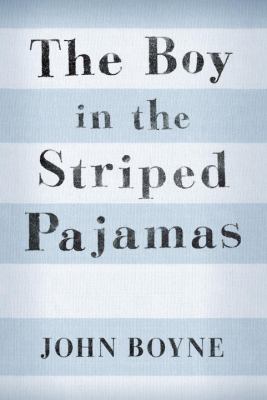
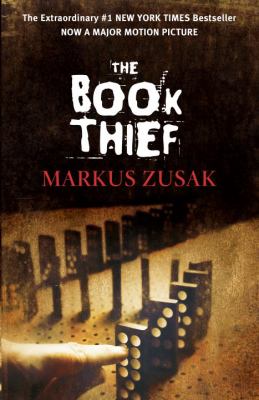
“The Boy in the Striped Pajamas” and “The Book Thief”

book thief1boy in striped

The Boy in the Stripped Pajamas by John Boyne and The Book Thief by Markus Zusak

It’s been a few months since I’ve read these books—one after the other—but I felt like I needed some space away from them before recommending them to you. Though students often ask for “Holocaust book” recommendations, it’s pretty depressing to read too many at once. However, these two deserve to be read. Unlike many ‘young adult’ books that are for kids in the fifth grade and up, “The Boy in the Striped Pajamas” and “The Book Thief” are truly for high school and beyond.

The main character in “The Boy in the Striped Pajamas” is Bruno, a small inquisitive nine-year-old living in Berlin, Germany during World War II. Though the narrative is third person, the point of view is Bruno’s. Although his father is a high-ranking officer, and Hitler (whom Bruno calls “the fury” because Fuhrer is a word he doesn’t know) comes to visit Bruno’s home, the boy has no knowledge of the war, nor any understanding of the Holocaust.

Bruno’s innocence is the one big problem I have with this novel. It’s not that he should understand the Holocaust—at that time, who could have imagined it, especially a little boy? It’s that he has no knowledge of Nazis or anti-Semitism. I gather from several other books on the period that being in the ‘Hitler Youth’ was vital for children if their parents were not to be ostracized. Bruno would have had a little uniform, gone to meetings, marched, and have been indoctrinated. He would have addressed others by saying “Heil Hitler” and he would have known who the Fuhrer was.

But seeing the story of Nazi Germany through the eyes of a total innocent helps the reader to see how truly out of balance Bruno’s world is. When his father is promoted to ‘Commandant’ and the family moves to ‘Out with’ (as Auschwitz sounds to the boy), Bruno can see a death camp from his window, only 50 yards away, but he doesn’t know why the people in it wear striped pajamas. As there are no children to play with (except his twelve-year-old sister, who plays with dolls), Bruno goes exploring and meets a boy who is on the other side of the fence, Shmuel. Though on opposite sides of the fence with very different lives, the boys maintain a friendship through conversation and imagination.

“The Boy in the Striped Pajamas” made my thoughts jump all the way back to a story I read in third grade (and believe me that’s a big leap!) entitled “They Grind Exceedingly Small,” in which a father, through his own acts of selfishness and disregard for others, loses all that matters. (I guess that wasn’t an appropriate story for a third grader, but my teacher thought I was a good reader and gave me a high school literature book to read from.) This quiet book of two boys’ lives ends horrifyingly, heartbreakingly.

Perhaps there is no other way to end a book that takes place in Germany (or Poland) during World War II, but “The Book Thief” is another heart breaker. Even so, I loved reading it—it’s one of the best young adult books I’ve ever read—because the writing is so good, the form of the narrative is creative, and the characters became so important to me.

“The Book Thief” is narrated by Death—and he’s not the cruel being you’d imagine, but he witnesses plenty of cruelty and pointless suffering as he arrives to take souls on their journeys. He becomes fascinated by a little girl, Liesel Meminger. He first ‘meets’ her when she is on a trip with her mother and brother to Molching, Germany, where the children are to live in a foster home because their mother has been branded a “Kommunist.” Liesel’s brother dies on the trip, and it is at his funeral that she steals her first book, a gravedigger’s manual.

Liesel can’t read. However once she is living in her foster home in a poor working class neighborhood, her foster father, Hans Hubermann, teaches her. He is a gentle man and helps Liesel through her nightmares about her brother. He plays the accordion and sleeps in a chair so that Liesel won’t be alone. Rosa, Leisel’s foster mother, is much more gruff—and yet, she has a kind heart, too, despite her use of pejorative language.

We readers not only love these people, but also the neighbor boy Rudy, who wants to be like Jesse Owens and becomes Liesel’s best friend. And when Max arrives, we are riveted, knowing that little good can come to those who refuse to join the Nazi party or to those who are Jewish.

Though Max had a friend who was helping him to escape the Nazis, he has been drafted into the army. Max’s one chance for survival is to get to Molching and find Hans. Years before, in World War I, a Jewish man saved Hans’s life. That man was Max’s father, and Hans had promised him that he would do anything for him. So with Max hidden in the basement, Liesel, though young, must keep the secret.

In the meanwhile, Liesel has learned to steal books from the library of the mayor’s wife (who allows this because she, too, cares for Liesel, a reader.) It is by reading that Liesel calms her terrified neighbors in a bomb shelter. Through all, Max and Liesel become true friends, helping each other to survive their losses. In a beautiful and ironic gesture, Max paints the pages of a copy of Mein Kampf so that he can write a story and paint pictures for Liesel—a gift of a book, a most meaningful choice.

I rarely love characters more than I did these. I wanted them to survive—all of them—but of course, this is Germany in World War II.

I, along with some friends who’ve read “The Book Thief” think it might be a good replacement for “The Diary of Anne Frank” in the eighth grade curriculum. If you have the opportunity, you should read both “The Book Thief” and “The Boy in the Striped Pajamas.” If you are short on time, you should read “The Boy in the Striped Pajamas” (which is a small book). If you have time for one longer book, and you want to remember it for the rest of your life, read “The Book Thief.”

Posted in Fiction, Hi-Low/Quick Read, Literary Read Alike, Over 375 pages, Young Adult Literature | Tagged , | 2 Comments

“Crunch Time”

“Crunch Time” by Mariah Fredericks

Mrs. M in our English Department recommended this novel to me, and I just finished it.

“Crunch Time” is the story of Max, Daisy, Leo and Jane, who, though very different and socially isolated from one another, become friends when they decide that no one is showing up to teach their Princeton Review SAT class. They go out for pizza and then have regular dates at Jane’s house where they study.

Told as first-person observations by the four characters, how they react to one another with trust, anger, loyalty and betrayal is very realistic. Jane is the daughter of a movie star, but has no real life or image of her own. Daisy is an athlete who learns from her parents that saving the world and other people matters. Max is the intelligent school newspaper editor who has a crush on Daisy. Leo is the super-smart, super-cute guy who makes a play for Daisy. Yet all these kids have problems, and these come to the surface when it is discovered that someone at their school cheated on the SAT, jeopardizing all of their scores and thus, college admissions.Two of these characters are suspected, and they all start to suspect one another.

There’s true love, guys who are players, trouble with alcohol, a party where reputations are ruined, difficulties with parents, and an inappropriately interested stepfather. All good stuff. But the best thing about “Crunch Time” is the light it sheds on what happens when we judge people by standardized test scores.

Posted in Fiction, Young Adult Literature | Tagged , , , , | Leave a comment

Classic American Literature

Howdy Mrs. Nicastro’s students! There should be two parts to your post–your discussion of your own novel and your discussion of another student’s novel that is similar to your own. Here are some requirements from Mrs. Nicastro to get you started:

How are the tensions of the time reflected in the classic American Literature novel that was read for your independent reading assignment? Before posting, please research the time period of your piece and create an analysis that connects  the American historical perspective with the content of your novel. This connection can be made by comparing the setting, characters, theme, etc. Begin your post with the Title, Author, genre of the novel, and the time period that the novel takes place.

Posted in Fiction | Tagged | 139 Comments

“Twilight” and “New Moon”

“Twilight” and “New Moon” by Stephanie Meyer

Here’s my confession: I hate the “Twilight” series. It has some of the worse writing I have ever read.

I’ve spent several evenings trying to get through the whole thing. I managed the first book, “Twilight.” I tried the second book, “New Moon,” but I could only stand about one-third of it. I wanted to like it–or at least get through all four books–because so many students like it, because I guess the whole world, except me, likes it.

But, seriously, what good is a vampire boyfriend? I’m thinking Edward is perfect for teen girls because he is dangerous, what with his ability to suck the life out of Bella, but he’s harmless, too, because he has to stay away from her and not make sexual advances since it’s too risky. So I guess if I were younger, I’d think of this as a sort of pure, magical love, too. But having been around boys (and later men) who suck the life out of people, I’ve learned that they just aren’t so much fun to hang out with as you might think they would be.

Bella, as a character, is even worse than Edward. Whine, whine, whine–oh, she does stop for frequent klutzy maneuvers that put everyone in danger. But it doesn’t take her long to get back to pouting. ‘Oh, poor me, it’s my 18th birthday and people want to celebrate it and give me flowers and plan a party–how thoughtless! Why can’t they just let me emo my way through the day? Waa, waa–why don’t I get to be an undead, icy vampire who has to suck fresh blood to exist?’

And the writing! Stephanie Meyer is the Queen of the Adverb. He ‘coldly’ this, he ‘coldly’ that. I can’t figure out what’s thrilling about Edward coldly kissing Bella. I know they have this pure love, but I’m guessing that at some point they’ll marry. With Edward being the undead ice king that he is, if this marriage should include any intimacy, I hope there’s someone nearby with an ice pick and a super hot hair dryer.

So–I want to be enlightened. And I have three prizes to offer to any COHS students who can make a good go of it. Make a comment–tell me why you love this book. I’ll pick the three best answers (totally arbitrary–my opinion) and give these prizes:

Third: A biography (book) of the actor who plays Edward

Second: A “Twilight” poster

First: A book about the making of the “Twilight” movie–lots of color photos and star interviews.

Posted in Fiction, Horror/Mystery/Suspense, Over 375 pages, Young Adult Literature | Tagged , | 8 Comments

“Stargirl” and “Love, Stargirl”

“Stargirl” by Jerry Spinelli

Mrs. M. tells me that some of her students in READ 180 classes have completed some of the novels available in the course and might like to comment on them. I hope that if you’re in the class, you’ve chosen to read “Stargirl.” I love this book.

Stargirl is a true nonconformist, a deeply compassionate one. Unlike the ‘nonconformists’ in most books I’ve read who are secretly cool or quite disturbed, Stargirl is a sweet girl whose quirky behavior makes her, by turns, loved and then hated by her classmates at Mica Area High in Mica, Arizona.

The novel’s narrator, Leo Borlock, is fascinated by Stargirl—the way she carries a ukulele to the cafeteria and sings “Happy Birthday” to classmates, cheerleads for her own basketball team and for the opponents as well, and meditates in the desert. He can overlook the fact that she dresses in a very weird way and has a pet rat. When he starts to fall in love with Stargirl, Leo begins to wish that she would just be normal so that he doesn’t have to be an outcast for dating her. He has to decide whether to be loyal to her (and thus to himself) or to fit in with other students.

If you have read “Stargirl,” then follow it up with “Love, Stargirl.” This is a sequel, but the point of view is Stargirl’s rather than Leo’s. “Love, Stargirl” is touching as well because it details the musings of a broken heart, as Stargirl writes “the world’s longest letter” to Leo. As she baby-sits a clever neighbor child and befriends an agoraphobic townswoman, Stargirl shows us that it’s possible to get to the other side of love-grief–and still be kind.

It’s funny because, usually, this sort of lighthearted whimsy is not my thing. I think that says something about the author’s ability to tell Stargirl’s story.

Posted in Fiction, Hi-Low/Quick Read, Read 180, Young Adult Literature | Tagged , , , | Leave a comment

“Creature of the Night”

Creature of the Night
by Kate Thompson

Bobby’s mother recently moved the family to a cottage in the country, far from his “bad influence friends” in Dublin. Bobby laughs at the simple country folk, such as old Mrs. Dooley, the landlady’s mother, with her tales of malicious fairies. When Bobby steals a car from the cottage and crashes it, he is forced to pay for it by working at the Dooleys’ farm. There he learns the disturbing history of the cottage: the previous renter went missing, the Dooleys say, and a girl was murdered there. And now that Bobby’s brother insists that a strange little woman is visiting the cottage at night, Mrs. Dooley’s tales suddenly seem terrifyingly real.

JLG Review: In Creature of the Night, a chilling suspense tale frames a powerful coming-of-age story. The novel’s eerie cover art and creepy premise will hook readers. However, its authentic teenage voice and realistic depiction of troubled family dynamics are what make this a memorable, affecting read.

NOTE: COHS Titans–The above review is excerpted from the Junior Library Guild. (Meaning that I didn’t write it and don’t want to take credit from something I didn’t do!) We belong to the Junior Library Guild and purchase four books from them each month, so we have access to these reviews. I’m going to start posting excerpts from the reviews in the hope that you will see what great books we get from JLG–and come check them out! If you want to read the whole review, ask your English teacher. I have made copies for him or her to post in the classroom.

Posted in Fiction, Horror/Mystery/Suspense, Young Adult Literature | Tagged , , , , , | Leave a comment

“A Kiss in Time”

A Kiss in Time
by Alex Flinn

Talia is a beautiful royal princess whose minor rebellion against her overprotective parents results in the very thing they fear most. She pricks her finger on a spindle and sends the entire kingdom of Euphrasia into a sleep that can only be broken by true love’s kiss. Jack is a twenty-first-century American slacker who has been sent by his parents to spend the summer in “sucky” Europe. Jack has an idea of what happens when you kiss a sleeping princess, but that doesn’t mean he’s ready for the result in this modern take on the classic tale of Sleeping Beauty.

JLG Review: A funny, irreverent romantic adventure, A Kiss in Time manages to skip between two very different characters’ points of view while still remaining sweet and engrossing. Alex Flinn handles the voices of her main characters (selfish, sulky Jack and spoiled, temperamental Talia)—and their subsequent transformations—with affection and good humor.

NOTE: COHS Titans–The above review is excerpted from the Junior Library Guild. (Meaning that I didn’t write it and don’t want to take credit from something I didn’t do!) We belong to the Junior Library Guild and purchase four books from them each month, so we have access to these reviews. I’m going to start posting excerpts from the reviews in the hope that you will see what great books we get from JLG–and come check them out! If you want to read the whole review, ask your English teacher. I have made copies for him or her to post in the classroom.

Posted in Fable/Fairy Tale/Fantasy, Literary Read Alike, Young Adult Literature | Tagged , , | Leave a comment

“The Rock and the River”

The Rock and the River
by Kekla Magoon

1968: Racial tensions are escalating in cities across America, including fourteen-year-old Sam’s hometown of Chicago. The struggle for racial equality has even divided Sam’s own family—his father is a civil rights activist, but Sam’s older brother, Stephen, a.k.a. Stick, has joined the Black Panthers. Sam respects his father, but as he sees an increasing number of violent acts perpetrated by whites against blacks, he begins to think that Stick has the right idea. Author’s note.

JLG Review: The Rock and the River provides a fresh take on the civil rights movement. Rather than writing only about the division between blacks and whites, debut author Kekla Magoon concentrates on a less-explored aspect of the time period, the split between blacks who practiced nonviolent resistance and those who attempted violent revolution.

NOTE: COHS Titans–The above review is excerpted from the Junior Library Guild. (Meaning that I didn’t write it and don’t want to take credit from something I didn’t do!) We belong to the Junior Library Guild and purchase four books from them each month, so we have access to these reviews. I’m going to start posting excerpts from the reviews in the hope that you will see what great books we get from JLG–and come check them out! If you want to read the whole review, ask your English teacher. I have made copies for him or her to post in the classroom.

Posted in Fiction, Historical Fiction/Historical Element, Human Rights Issues, Multicultural, Young Adult Literature | Tagged , , , , | Leave a comment

“Why I Fight”

NOTE: COHS Titans–The following review is excerpted from the Junior Library Guild. (Meaning that I didn’t write it and don’t want to take credit from something I didn’t do!) We belong to the Junior Library Guild and purchase four books from them each month, so we have access to these reviews. I’m going to start posting excerpts from the reviews in the hope that you will see what great books we get from JLG–and come check them out! If you want to read the whole review, ask your English teacher. I have made copies for him or her to post in the classroom.

Why I Fight by J. Adams Oaks

When Uncle Spade, an unemployed drifter, saves twelve-year-old Wyatt Reaves from his neglectful parents, Wyatt thinks he’s found a real home. But all Spade sees in Wyatt is a potential meal ticket: a taller-than-average kid with a mean punch who could become a bare-fist fighting champion with the proper training. By the time Wyatt is fourteen, he can win any fight—but that doesn’t mean he enjoys it. How can he break away from his uncle when Spade is the only family who’s ever really cared for him?

JLG Review: The moving story of a good-hearted boy thrust into the dangerous world of bare-fist fighting, Why I Fight offers a look at how a sport can become a means of escape for someone in desperate circumstances.

Posted in Fiction, Young Adult Literature | Tagged , , , , | 1 Comment