“Pride and Prejudice” Student Reviews 2009

The following are COHS student reviews of “Pride and Prejudice” by Jane Austen.

Genre: Romance

Pages: 360-392 (depending on publisher/edition)

Reviewer: Nicole C.

Elizabeth is at the age where she is to marry, but turns down a proposal from Mr. Collins. Her sister Jane is involved with Mr. Bingley, but he soon taken away from her by Mr. Darcy. Mr. Darcy has an eye on Elizabeth and proposes. She immediately turns him down for all that he has done and the blames put on him by Mr. Wickham, a man Elizabeth likes. It is soon discovered that Mr. Wickham and Mr. Darcy have an awful relationship and Mr. Wickham is the evil one. Mr. Bingley is reunited with Jane, and in the end Elizabeth and Mr. Darcy marry.

It was an interesting book, but it was hard to sometimes understand the language, for we are not used to hearing it in this time and day. The romance, of course being a girl, captured my attention, and it had a great ending

1. To show the deceit and burden of love. How it can trick you by looking pretty on the outside, but evil within. Once you have learned that you are able to tell what true love is.

2. Your opinions change, so do not let your first impression be your last about a person.

3. Jane Austen made the reader believe that Elizabeth disliked Mr. Darcy so much that nothing would become of them, and then she went 180 degrees in the other direction! The two of them fell in love, which made a good ending.

4. Why does Mr. Darcy keep Mr. Bingley from Jane? Jane and Mr. Bingley are reunited.

Reviewer: Jenevie A.

Elizabeth Bennet is a woman who is very smart, kind, and beautiful. She has four other very beautiful sisters. Her mother, Mrs. Bennet, tries very hard to get her daughters to marry. Jane then falls in love with Mr. Bingley, a rich man she met at a party. Mr. Bingley was very fond of the Bennet Family, yet his friend Mr. Darcy was not. Mr. Darcy is a proud, stuck-up man. He did not leave a good impression on Elizabeth. Mr. Wickham comes in to Elizabeth’s life and tells her lies about Mr. Darcy. Mr. Wickham and Mr. Darcy had a bad relationship in the past. Mr. Bingley had to leave Jane because of something Mr. Darcy said to him.  Jane refuses the proposal to Mr. Collins. Elizabeth finds out the truth about Mr. Wickham and realizes that Mr. Darcy is the good guy. Then at the end of the book Jane is reunited with Mr. Bingley and Elizabeth and Mr. Darcy get married.

My opinion of the book is that it is good. I love “love stories” so I enjoyed this book very much. It had moments where it was boring and slow, but over-all it was a good book. At first, I was confused because the way they talked and what everything meant in the old-days. It is easy to catch on none-the-less. My favorite character was Elizabeth because she is a strong, independent, and intelligent.

1. The Authors purpose was just to tell of a complicated love story that Elizabeth Bennet goes through.

2. The Theme of the book is to never underestimate the power of love. Also your first impression of a person may always not bee correct.

3. The author developed the story around the theme by showing the dislike from Elizabeth towards Mr. Darcy. The author then shows the interest Mr. Darcy has with Elizabeth, yet Elizabeth still does not approve of him. Then the author shows Mr. Wickham comes and tells lies about Mr. Darcy.

4. The main issue that the book raises is the complicated love between Mr. Darcy and Elizabeth Bennet.
Reviewer: Brian K.

The novel starts out with the family discussing the news of Mr. Bingley renting Netherfield Park Manor. Mr. Collins, their cousin, comes to visit after Elizabeth overcomes a cold from traveling in the rain. Mr. Collins proposes to Elizabeth, who refuses him multiple times, and he moves on to ask both Jane and Catherine, who finally says yes. The two get married and move away. Elizabeth also gets proposed to by Mr. Darcy at the end, and she says yes. The book ends with her saying yes.

I really liked this book. I think they should teach this at a younger grade level than they do. Elizabeth Bennet’s character is so much like the modern woman trying to find the “perfect man.” I really enjoyed this book.

1. Jane Austen’s purpose in writing this book was to show the “modern woman” how to act while engaged.

2. The theme of P&P is marriage, while the thesis is choosing your own person to marry.

3. The method of development in P&P is by showing how difficult and negative marriage is, such as this quote; “Happiness in marriage is entirely a matter of chance” by Charlotte.

4. The issue it raises is that women should be independent in their search for marriage, and not allow other people to interfere with their decision.

Reviewer: Olivia d. R.

The novel starts with the family of Elizabeth Bennet at a party, there, they discuss there acquaintance Mr. Bingley who we later find out Jane likes. Mr. Bingley later tells her lies about another acquaintance she meets named, Mr. Darcy, who she is not fond of already. Elizabeth gets sick and it forces Jane to stay with Mr. Bingley. Through the many proposes Mr. Collins asks Elizabeth for her hand in marriage many times, which she denies, until her finally marries a sister of hers. After Elizabeth finds out the truth about Mr. Darcy she likes him and he propose to her, and she agrees.

The crossing paths of the lovers kept me interested in the novel. To my surprise the book was still appealing and I enjoyed the generic and cliché ending.

1. The author’s purpose of writing this novel teaches the reader to not judge a book by its
2. A theme of the story is to not judge a book by its cover and things are not always as they seem. It is displayed in the book by false identities that Mr. Darcy is said to be.
3. Even through Mr. Bingley’s doubts about Mr. Darcy Elizabeth falls in love with him. A quotation that furthers this thought is “Stupid men are the only ones worth knowing, after all.” (pg. 154)
4.  A main issue of Pride and Prejudice is deceitfulness. In the novel Mr. Bingley told Elizabeth lies about Mr. Darcy which made her not like him.

Reviewer: Amylee M.

The book starts off with the Bennet Family, but the story mainly focuses of Jane the eldest and Elizabeth the second eldest.  The females of the family become excited when a wealthy young man named Mr. Bingley moves into the neighborhood.  They meet him at the ball along with Mr. Darcy; during this time, Jane and Mr. Bingley develop a liking for each other and Lizzy develops a hatred for Mr. Darcy.  When Mr. Bingley leaves to the city, the family becomes distressed.  When Lizzy finds out it was Mr. Darcy’s doing, she becomes enraged.  When she meets Mr. Darcy again, he proposes to her and she tells him she will never marry him.  When she coincidentally meets Mr. Darcy again while at her Aunt and Uncle’s house; she is surprised by his civility.  They get to know each other and find a liking of each other.  In the end, they end up falling in love and getting married.

I really enjoyed this book.  It taught me a very helpful and valuable lesson.  I really liked the sarcasm and comedy that the author used.  I also liked the twist of the story, and the deep change that the characters go through throughout the story.  I found the language very sophisticated and intriguing and think the author did a wonderful job.

1. The author’s purpose for writing the book is to entertain, but also to teach the moral lesson that people are not always as they seem and that life is unpredictable as is love.
2. The theme of the book is that people are not always as they appear and that love is unpredictable, and the thesis is the author uses Darcy’s and Lizzy’s relationship to show this.
3. The author shows this in several ways.  At the beginning of the book, Lizzy judged Mr. Darcy and deemed him to be mean and unruly, but at the end of the story they ended up happily married.  For example, when Lizzy was thinking of Mr. Darcy, “No; hatred had vanished long ago, and almost as long been ashamed of feeling a dislike against him that could be so called”(Pg. 255)
4. The main issue that the book raises is that people tend to misread or misunderstand others, which leads to judging their character improperly.  The book takes the stance that you should get to know someone before you judge them.

Reviewer: Stephanie E.

The story beings when everyone in town hears that the Netherfield Hall is now being occupied by rich, upperclassmen. Once they find out that a prominent bachelor is among them, every girl begins to get ready for the town ball which the men and his sister are attending. Upon arrival, the Bennet’s meet the rich man everyone was talking about, Mr. Bingly. He came with his seemingly cold and bitter best friend Mr. Darcy who has twice the income of Mr. Bingly. Mr. Bingly immediately takes an interest in the eldest daughter of the Bennet’s, Jane. Though both are shy, the two people begin to fall in love. During this time, Elizabeth meets Mr. Darcy and sees him as an insufferable proud man, but always seems to run into him. Time goes by and the men go back to London leaving Jane heartbroken and confused. At this time, Elizabeth’s best friend Charlotte invites her over to stay at her new home. Charlotte, Mr. Collins, Elizabeth’s cousin, and Elizabeth all go to dinner at Lady Catherine’s estate. Elizabeth soon finds Mr. Darcy there and realizes that he is her nephew. A few days later, Mr. Darcy drops in on Elizabeth and proclaims his love to her. A disgusted Lizzy tells him that she knows he separated her sister and his best friend. Mr. Darcy defends himself saying that he did it for his own good. After telling the gentleman that he was the last man in the world she would ever marry, Mr. Darcy leaves but comes back later to give her a letter. Elizabeth returns home and finds her aunt and uncle who invite her to go see Pemberly. She accepts and yet again runs into Mr. Darcy who shows her his softer side. After getting a letter from home saying that her sister has run away., however, she leaves again. When the family ordeal gets settled, Mr. Bingly returns with Mr. Darcy. He then proceeds to ask Jane to marry him. She accepts, and that night Elizabeth gets a visit from an angry Lady Catherine asking if her nephew and her are engaged. After telling her no, she leaves. Once Mr. Darcy shows up again, he asks her if her feelings have change. Saying that they had, they become engaged to much anger with his aunt. Both couples end up happily married at the end.

This book quickly became one of my all time favorite books, with Elizabeth’s wit and quick humor, I found myself immersed in the book. The timeless story of forbidden love always makes a good reading, and Jane Austin knew exactly how to write it. Also, it gave me an inside of relationships and regular living during that time. I not only read a good story, but attained a history lesson as well!

1. The Author’s purpose for writing the book was to show the differences and troubles with different social classes intermingling. She also tried to teach people to go against the typical gender stereotypes.
2. Jane Austin’s theme of the book was not being so judgmental and not to jump to conclusions, while the thesis of the book was overcoming social issues with love can benefit in the future.
3. The method Austin supported her thesis by having many people frown upon Lizzy’s social standards. “Heaven and Earth!—of what are you thinking? Are the shades of Pemberly thus polluted?” (346) “his sense of her inferiority, of its being a degradation, of the family obstacles which judgment had always opposed to inclination, were dwelt on with a warmth which seemed due  to the consequence he was wounding but was very unlikely to recommend his suit.” (188). Through this it shows that people actually though Elizabeth was on a lower level as a human then them
4. The main issue of the book was trying to overcome social and economic burdens. The issue first becomes addressed when Mr. Bingly takes an interest in the eldest sister, Jane. Problems also ensue when Mr. Darcy asks for Elizabeth’s hand in marriage. An outraged Lady Catherine attempts to save her family’s upper class ways by making sure they do not wed. The book’s issue becomes solved at the end when both couples end up being married despite warnings.

Reviewer: Amanda G.

Elizabeth’s mother hopes that her children will marry into money. Darcy and Elizabeth first meet at a ball hosted by Mr. Bingley, a rich bachelor. Darcy is soon fond of Elizabeth because of her personality traits. Darcy, much later on, declares his affections and asks for Elizabeth hand in marriage. Elizabeth refuses him because she thinks that he ruined Mr. Wickham and broke up. . .

1. Jane Austen wrote this book to shed light on possessive parents, love, and different social classes.

2. The theme of the book is love, and opposing social classes.

Posted in Classic Fiction, Fiction, Over 375 pages, Romance | Leave a comment

“The Ginger Tree”

The Ginger Tree by Oswald Wynd (294 pp.)

When Mary Mackenzie is sailing from Great Britain to China in order to marry her fiancé, she finds herself feeling restless. Her chaperone is too rigid, and Mary must even hide the fact that she is not wearing her corset under her clothing despite the fact that the humidity and heat are greater then anything she ever has ever before experienced.

Mary arrives in Peking; weds in the Church of England (although she refuses to drop her Presbyterian roots) and upsets the people who know her husband; finds her husband is a tight wad and cannot understand why he married her. She is seated near Kentaro at a few formal dinners and tries to draw him out. On a vacation with her friends, Mary bumps into Kentaro praying at an abandoned temple. They have brief affair which leaves Mary pregnant.  Richard, her husband, is gone on a secret mission as military attaché.

When Richard returns home to find Mary pregnant, he throws her out of the house, not allowing her to ever see her daughter again. The rights of women (or lack of them) are a central theme in this book. We see how Mary is treated by the British, the Chinese, and the Japanese. Mary falls under the protection of Kentaro, who believes it is his duty to support her. She becomes his “second wife,” but this arrangement still leaves her at the will of a man. He comes and goes according to his schedule. When the baby is born and has Japanese features, it seems Kentaro is content and visits and loves the baby.

However, one day, the baby simply “disappears.”  This is the work of Kentaro. He believes the baby will be better off raised in an adoptive family. A family would be easy to find since the child has royal blood. Mary would never have agreed to this scheme and has been left out. When one of the maids, a woman who took part in the scheme, comes back to Mary’s house while she is away in order to collect some belongings, Mary wrestles her to the floor and demands information. The newspapers later say that Mary tried to murder the maid.

Mary decides that she cannot live under the protection of Kentaro since he has taken her son. However, she cannot leave Japan because she hopes to learn something of her son and his fate. The rest of the book is about her search for independence as a foreigner women in a man’s Japan, her opportunities to get back in touch with her daughter and her son, and the difficulties of maintaining relationships as World War II arrives.

This is a good read for budding feminists and for students who want to read (loosely) historical fiction or who wish to start with fiction and then do research on the historical period/setting of the book.

Posted in Fiction, Historical Fiction/Historical Element, Multicultural | Leave a comment

“A Gift of Magic”

A Gift of Magic by Lois Duncan (201 pp.)

When Nancy’s Grandmother dies, she gives all her gifts to her grandchildren. Kirby, the oldest, gets the gift of dance. Nancy, the second gets the gift of magic and Brendon, who is yet unborn when the grandmother dies, gets the gift of music.

Nancy learns that she has ESP. She can sense the past, the future, and can tell where others are and what they’re doing. Upset about her parents’ divorce, she has a bad feeling about Tom Duncan, the high school counselor who used to date her mother.  Nancy also hates her teachers and finds that she can control objects–make things fly out of her teachers’ hands, etc.

One day, Kirby falls down the stairs at school and breaks her leg. Nancy believes she has caused this accident by thinking that she never wants Kirby to leave the family to train as a dancer. It seems Kirby’s career is cut off.

Is Nancy’s ‘gift’ controlling her life?

Posted in Fiction, Hi-Low/Quick Read, Young Adult Literature | Tagged , , , | Leave a comment

“The Last Olympian”

I have a brand new copy of this latest (and last—5th) installment of the “Percy Jackson and the Olympians” series by Rick Riordan. It’s a hardcover format.  I thought it would be fun to give it away to any COHS student out there who is a Percy Jackson fan and may not have a copy.  If any COHS student writes about why s/he likes the Percy Jackson series as a comment on this blog, I’ll give him or her the book. If more than one answers, I’ll choose my favorite answer.

I loved ‘The Last Olympian” as much as the rest of the Percy Jackson series. It’s action-pack from the first scene. Though this completes the series, this is an indication that we will see another series on heroes as the oracle gives this prophecy:

Seven half-bloods shall answer the call.

To storm or fire, the world must fall.

An oath to keep with a final breath,

And foes bear arms to the Doors of Death.

Posted in Adventure Stories, Fable/Fairy Tale/Fantasy, Fiction, Over 375 pages, Young Adult Literature | Leave a comment

“Slam”

“Slam” by Nick Hornby

I finished “Slam” recently, and it’s one of my favorite YA books of all time. The premise and outcome are realistic, but there are some fantasy aspects to Sam’s life that will make this book interesting to teens who are reluctant readers.

Sam is a skater (that’s on a skateboard, he tells us, not ice). At fifteen, he’s pretty easy-going. While his parents are divorced (he lives with his mum), and neither reached their life’s goal, he attributes this to the fact that they married too young because his mom was pregnant with him at sixteen. One of the important lessons of his life is not to repeat that mistake.

Becoming a father too early doesn’t seem like an issue for Sam. He’s no lady’s man and he looks to the skater Tony Hawk for advice—that is, he looks to a poster of Tony Hawk for advice. This is very funny because when Sam asks the poster of Hawk a question, the answer is always a direct quote from Hawk’s autobiography. (Sam has read it so many times that he knows it by heart.) Yet Sam meets a beautiful girl who has just broken up with her boyfriend. They fall madly in love (or so it seems), and are intimate immediately. They can’t bear to be away from one another—that is for about three weeks.

So Sam is already beginning to get bored of the relationship when Alicia sends him an urgent text-message on his sixteenth birthday to tell him she is pregnant. From here, Tony Hawk often propels Sam into the future without Sam having any knowledge of what has passed in the interim. (Why does his son have a dumb name like ‘Roof’? Sam wants to know.)

And here’s where I want to stop the plot summary, and say that this is why I like this book so much. Most books on teen pregnancy that I’ve read have unrealistic endings—they are too happy (the couple gets together) or too sad (no one helps the girl out and she is plunged into despair or suicide). In “Slam,” Sam and Alicia’s parents are trying to make this easier for them, but there is never a doubt that this is a mistake, and it will make both of their lives much harder. In addition, the teens realize about three weeks too late that what they are experiencing isn’t true love and it isn’t long-lasting. They are two very separate people with a baby in common.

Despite the tough subject matter, the novel is often hilarious. And if you are a skater, there’s the bonus that lots of the action and narrative is about something you love. Read it!

Posted in Fiction, Young Adult Literature | Tagged , | 2 Comments

“The Silver Kiss”

“The Silver Kiss” by Annette C. Klause

It’s been a while since I read “The Silver Kiss,” but I want to recommend it to fans of the “Twilight” series.

Zoe, coming home from a hospital visit with her mother, who is dying of cancer, stays out past midnight–sad, lonely, and brimming with memories. While sitting in a playground that she loved as a child, she sees a tall, thin boy with pale skin and silvery hair. She is very afraid, remembering recent news headlines about a woman who was killed and drained of blood.

When Zoe later meets Simon, the two are attracted to one another. That Simon is a vampire causes Zoe to think desperate things—could he keep her mother from dying? Is he the murderer mentioned in the news? The two need each other to understand death, to keep from being caught in grief, and to stop the cycle of murder in town.

“The Silver Kiss” is by the same author who wrote “Blood and Chocolate,” a book several of you liked. This one is less overtly sensual, perhaps a bit more thoughtful. I highly recommend it to fans of vampire romances.

Posted in Fiction, Horror/Mystery/Suspense, Young Adult Literature | Tagged | 2 Comments

“The Divine Secrets of the Ya-Ya Sisterhood”

Divine Secrets of the Ya-Ya Sisterhood by Rebecca Wells

356 pp.

Sidda Lee Walker, engaged to Connor, is coming to terms with the legacy of her mother, Vivi “Dahlin” Walker. Many years earlier, Vivi had “dropped her basket” and beaten her children. Sidda is left with physical as well as mental scars. When she tells an interviewer from the New York Times about the incident, the headline is Tap Dancing Child Abuser. Vivi reads this and refuses to forgive Sidda for misinterpreting her. “My love was a privilege you abused. I have withdrawn that privilege. You are out of my heart. You are banished to the outer reaches. I wish you nothing but unending guilt.”

As the book moves forward, Sidda postpones her wedding. She goes off alone to think about her mother and their relationship, and to bring back memories of her mother at an earlier time. Vivi has lent Sidda a scrapbook entitled the ‘The Divine Secrets of the Ya-Ya Sisterhood’ that chronicles the friendship of Vivi and three other girls.  These girls remain inseparable into adulthood, so the other women are like aunts to Sidda, their children her cousins. As Sidda looks through the scrapbook, alternate chapters give the real story behind each of the mementos. Though Vivi’s life had many difficulties, the Ya-Ya sisterhood helped her survive and grow. The four girls had nights out in the woods pretending to be Indian maidens, giving themselves Indian names; they played several pranks and often got in trouble. In adulthood, they were pregnant at the same time, and in old age, they still picnicked and drank together.

The feel for Louisiana and the South in general adds local color to the novel. It is definitely a “chick” book, glorifying the long, fruitful friendships among women. I found the premise of Sidda as a dramatic director and her need for the scrapbook to help her in directing her next play too contrived.  A homecoming seemed a little easy as the outcome of such anger. However, there are wonderful moments in the book, especially on Vivi’s youth and her time in a convent school—and maybe I’m too harsh a critic because everyone else I know loved this book. If you are asked to read a loosely historical fiction to start a project, this is a good choice.

Posted in Fiction, Junior Project | Leave a comment

“Hatchet”

“Hatchet” by Gary Paulsen

195 pp.

Brian’s parents have divorced and he is going to visit his father in Canada, flying in a small Cessna with a middle-age pilot whose name escapes him (Jim or Jake) The trip is alternately exciting and boring until the pilot has a heart attack and dies. Brian tries to call for help over the radio, but he does not know his flight number or location. Eventually his cries are not heard. When the plane runs out of gas, Brian has been preparing mentally to land as close to the edge of the lake as he can manage to steer.

Brian’s survival in the wilderness is never a certain bet. The book depicts the difficulty of his situation. The only useful tool he has is a hatchet his mother insisted he take. Things that work in the movies don’t work for him; whenever something does work, it is though patience and persistence. Lighting a fire or gathering food can take all day. Mosquitoes nearly eat Brian alive; he is sunburned and blistered and always hungry.

Some of Brian’s first food is raw snapping turtle eggs, and the details of his eating them provide a context for understanding what true hunger is. However, he learns new survival techniques each day and become more aware of his environment. Eventually he is able to spear fish and shoot ruffed grouse with a bow and arrow. When a tornado strikes, Brian’s “house” is ruined, and it’s easy to understand how basic live can become.

This is a good tale of maturing, of survival. It is a detailed description of all that Brian must do to continue to exist and seems very realistic. Many students read this one before they get to high school. If you haven’t read it, do so, just so that you have same experience in reading a good adventure book as the rest of your classmates. (It’s a ‘cultural literacy’ thing.) I don’t like when Paulsen seems to imitate Hemingway’s style, but it may appeal to others—and who knows? Maybe there’s a literary criticism essay on ‘style’ just waiting to be written.

Posted in Adventure Stories, Fiction, Hi-Low/Quick Read, Read 180, Young Adult Literature | Tagged | 5 Comments

“The Giver”

“The Giver” by Lois Lowry

180 pp.

Jonas lives in a future utopia in which everyone seems to behave well and apologizes when they hurt someone’s feelings or do something wrong. In the evenings, families share their days, expressing their happiness and frustrations. In the morning, they dutifully report their dreams to one another.

There are many indicators that children are growing up. All children are presented with jobs or tools at the yearly Ceremony. Jonas’ sister, at 8, will start her volunteer hours and at the age of 12, Jonas receives his assignment for life. Rather then become the usual such as an engineer or nurturer, Jonas is to be the receiver, the most important job in the community. He will go to the current Receiver to be given communal memories which individuals don’t know about. Memory is considered too powerful and painful for the general population. The communities, encased in an artificial and perfect environment, know nothing of the heat of the sun or the cold of the winter snow. Jonas is disturbed by many of the memories he receives–of war especially. But he also receives a memory of love that that is more deep and binding than possible in the rational world of his community.

Jonas’ father is a nurturer. He accepts babies from the birth-givers, and works in a nurturing center where babies are kept until they turn one year old. One baby, Gabriel, is not very healthy, and Jonas’ father gets special permission to bring him home to sleep at night, hoping the extra care will help him gain a little weight. If Gabriel does not do better, he will be “Released”. Jonas helps Gabriel sleep by giving him memories, which is strictly forbidden.

Gabriel does not do as well as Jonas’ father had hoped and is scheduled for Release. Jonas and the Giver hatch a plan to bring memory back to the community, but to do so, Jonas must flee “elsewhere.”

I know that many people read this novel before they get to high school, but if you haven’t read it, do so. It is often censored and would make a good read for “Banned Books Week.”

Posted in "Banned Book", Controversial Issue/Debate, Fiction, Hi-Low/Quick Read, Read 180, Young Adult Literature | 1 Comment

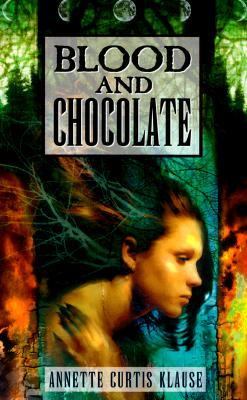
“Blood and Chocolate”

Blood and Chocolate by Annette Curtis Klause

264 pp.

Though “Blood and Chocolate” is a young adult book (that is, it’s meant for a teen audience), it is a very sensuous, even sexual book. Vivian, the she-werewolf, thinks a lot about having Aiden, a human, as a lover. She introduced herself to him after reading a poem he wrote about becoming a wolf. There are many scenes of the two almost having sex. In the end, Vivian decides to show Aiden that she is a werewolf. His reaction and subsequent behavior alienate Vivian from others at her school.

In the meantime, a werewolf is killing people in town. Vivian can’t remember doing the killing, but she keeps finding evidence that she is the culprit.

Throughout the book, Vivian has a conflict about her place in the wolf pack . At one point, a renegade she-werewolf attacks Vivian’s mother. When Vivian defends her mother, she becomes the lead female wolf, but rejects the pack leader Gabriel.

“Having fallen for a human boy, Vivian must battle both her pack mates and the fear of the townspeople to decide where she belongs and with whom.” (book jacket) The beautiful human Aiden or the werewolf Gabriel—with dual wolf and human natures?

If you are looking for a book with supernatural characters and are finished reading the “Twilight” series and “Vampire Academy”, I think you’ll like this one.

Posted in Fiction, Horror/Mystery/Suspense, Mature Readers, Movie Tie-In, Young Adult Literature | Tagged , , | Leave a comment