“The Year of Magical Thinking”

The Year of Magical Thinking by Joan Didion

While this is a book for adults, it’s also a book about grief—the psychology of it, the sense of loss of not just the loved one, but of oneself as well, of the life that has been lived together. It’s a beautiful study of the meaning of memory and of the magical thinking of the title—how completely we forgo logic in order to continue to believe, on some unconscious level, that the beloved will be back. (Didion can’t give her deceased husband’s shoes to the Goodwill because he might need them.)


I read The Year of Magical Thinking recently because it seemed to me that we, members of the Chaffey family, have had many good people to grieve this year. Perhaps I’m imagining that this is truer this year than in others, but it’s come to the point where I dread opening an email with someone’s name in the subject line. (“Oh, God, I hope nothing happened to him!”)


I know, too, that many of our students are experiencing losses that kids their age shouldn’t have to deal with. I remember when I taught English, before standardized testing was all the focus, I used to keep journals back and forth with students. They would write about their lives, and I would write back. One year, a student’s mother died, and he would often write of how unreal that seemed to him, that he just couldn’t stop thinking about her, dreaming about her coming back. So—I think this adult book about grief might also be helpful for students, who sometimes suffer more than we know.


I often don’t like the publisher’s blurb for a book—it’s overblown or doesn’t capture what it should—but the blurb for The Year of Magical Thinking is a good one:


“Several days before Christmas 2003, John Gregory Dunne and Joan Didion saw their only daughter, Quintana, fall ill with what seemed at first flu, then pneumonia, then complete septic shock. She was put into an induced coma and placed on life support. Days later – the night before New Year’s Eve – the Dunnes were just sitting down to dinner after visiting the hospital when John Gregory Dunne suffered a massive and fatal coronary. . . . Four weeks later, their daughter pulled through. Two months after that, arriving at LAX, she collapsed and underwent six hours of brain surgery at UCLA Medical Center to relieve a massive hematoma. This … book is Didion’s attempt to make sense of the ‘weeks and then months that cut loose any fixed idea I ever had about death, about illness . . . about marriage and children and memory . . . about the shallowness of sanity, about life itself.’”

Posted in Biography/Memoir, Non-fiction | Tagged , | Leave a comment

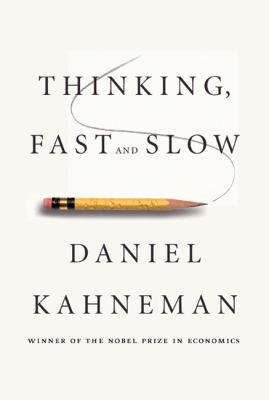
“Thinking Fast and Slow”

Thinking Fast and Slow by Daniel Kahneman

The author is a Nobel Laureate in Economics (2002) and a psychologist by education and training. Thinking Fast and Slow just won the Los Angeles Times Book Prize for Current Interest this past weekend. Clearly, this is a very important book. While such a book would be a good read for smart teens who are heading off to college, I don’t imagine too many will have the time to get through it soon—it’s 450 pages not including the notes and index, and the information is dense. But for educators who are looking at a changing world, this study of decision making helps us to understand fallacies in thinking and to avoid them. It’s a great choice for a serious read, and I ‘think’ that’s why it’s been on the bestseller’s list for months running.

For the sake of ease, Kahneman identifies as two systems our fast thinking and our slower thinking. (These are not systems in a real, biological sense.) Mostly, we use the fast thinking—and mostly it is efficient, giving us what we need. But when we don’t understand something automatically, we have to employ our slower thinking, and that’s where problems start. The slower thinking is lazy and can push back to the faster (and incorrect) response jut to get out of a mental workout.

Kahneman uses statistics to show us how we go wrong in many areas. One fun discussion is on whether super successful people are smarter than others or just luckier than others who also work hard but are less successful. (Mostly lucky—very lucky. But also very immune to worry about failure. They are often good at blaming others or the situation, rarely see themselves as at fault, and so will try over and over when logic would tell another person to give up or at least cop to the fact that s/he has been making big mistakes. Kahneman says if there is one quality you could wish for your kids, it should be optimism.)

I don’t agree with everything Kahneman says. (Actually, I never entirely agree with anything that anyone says 🙂  .) His example of bad thinking in the section “Linda: More is Less” doesn’t take into account that linguistic implicatures are the basis for folks thinking it is more probable that someone is part of a subgroup than part of the larger group. (Example: Linda is involved in women’s rights organizations. Is it more probable that Linda is a bank teller or that Linda is a feminist bank teller?) People really aren’t confused about groups and subgroups just because they were preloaded with information about the subject in question. They’re using the known language patterns of the question to come up with a response.

Honestly, this book is a cornucopia of studies/original research about judgments and choices—political, economic, personal finances, selection of the best candidates for jobs. (Job interviews often lead to the selection of the inferior candidate—but he’ll have charisma. Smart employers look at past performance and hire on that.) It deals with intuition, and how regression to the mean isn’t just about height and smarts. If you read it, you’ll have a new way of thinking about kids, their possibilities (rather than their probabilities); you’ll see who in your class is receiving an unearned ‘halo effect.’ You’ll understand how to question students about their thinking so that they will be more likely to engage in the subject rather than pass it off to their fast thinking when they don’t understand it. As Library Journal says Thinking Fast and Slow is, “a stellar accomplishment, a book for everyone who likes to think and wants to do it better.”

Posted in Non-fiction, Over 375 pages | Tagged , , , , , , , , | Leave a comment

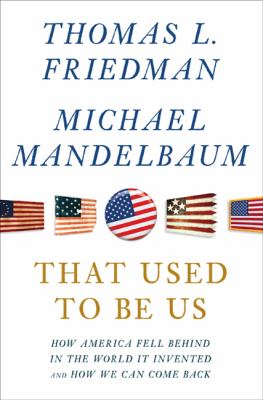
“That Used to Be Us: Part V: Rediscovering America”

Thomas L. Friedman and Michael Mandelbaum

Part I

Part II

Part III

Part IV

Part V: Rediscovering America

The authors reiterate that they are “frustrated optimists” who are inspired by “the number of people and small groups who are summoning themselves with their own trumpets.”

Good Signs

Sacrifice—soldiers who are willing to re-deploy to wars in the Middle East. “Never have so many asked so much of so few—and never have those few delivered so much for so many and asked so little in return.” (Again, a good book on what that sacrifice is like is War by Sebastian Junger.)

Diversity—example of the US military and particularly the Navy. “It’s amazing how you guys can be so many religions, ethnic groups, and still make this thing work, and be the best in the world.” (Authors paraphrasing an Iraqi coast guard officer)

Teach for America—“Kopp said that of all the TFA grads, about one-third stay on as teachers. . . . Not all education experts support the program, because it puts the least experienced teachers in the most challenging classrooms. It will take more time to determine how much of a difference TFA teachers are making in the lives of children . . .”

Inventors—Mike Biddle, founder of MBA Polymers, has invented processes fro separating plastic form pile sof junked computers, etc. and recycling it, using less than 10% of the energy used in making new plastic. (However, he uses plastics from China and the EU because America doesn’t have laws that require manufactures to foot the bill for recycling. According to the authors, manufacturers don’t mind these laws because recyclers compete for the junk.)

Companies that stick it out with American manufacturing and workers. “The role of the CEO now is not to dictate but to empower.” (Robert Stevenson, whose company is the oldest manufacturer in continuous operation in Buffalo, New York.) “Get your people working toward a common goal. . . .I set the goal and show the road and say, ‘How you drive on that is up to you.’”

Last thoughts:

America needs a comprehensive 21st century job strategy. We need to address the “growing mismatch between the needs of the employers and the skills American workers get in school and in the job market.” With this in mind, it’s time to begin again to finance start up companies. (Government involvement, regulations, standards are necessary, but must be clear and simple.)

In the section entitled “Shock Therapy,” the authors say that America needs to understand that it is “’an anchor to the floating world.’ Weaken that anchor and the world will drift in directions we cannot foresee and probably will not like. A declining America will be bad for business—all business, including [that of every country in the world].”

To succeed in a way that will keep the world afloat, America needs a politics of the “radical center.” Moderates are not lukewarm–they are reasonable, and they compromise and get things done. A way of mandating change as a moderate is to have a third party candidate in national elections. Though the candidate won’t be elected, s/he will serve to moderate the opposite ends of the spectrum and influence national policy. S/he will affect the agenda of the two major parties.

The authors claim that voting for a third party candidate is not ‘throwing away’ a vote, and give the (unfortunate) example of George Wallace, but also of Ross Perot, and of the Progressives and Teddy Roosevelt. (I don’t entirely agree that a third party vote isn’t thrown away. I think of the example of Ralph Nader—not in this book. Whether you are a Democrat or not, you’d probably agree that folks who voted for Nader in the Bush v. Gore contest, ended up throwing their votes away by assuring the election of someone whose priorities were far from their own.)

The candidate that America should elect is the one who will specify which taxes s/he will raise and which programs s/he will cut, since both must happen.

Calling America exceptional doesn’t make it so and doesn’t help us. Exceptionalism isn’t a permanent state. We have to make sacrifices and get back on track

Posted in Controversial Issue/Debate, Environmental Issues, Non-fiction | Tagged , , , | Leave a comment

“That Used to Be Us: Part IV–Political Failure” (back to our staff reading)

Back to our staff reading–this is Part IV of fives parts of That Used to Be Us. 
Part I

Part II

Part III

Part IV: Political Failure

No one ever admits they do anything wrong. At least not on Capitol Hill.

Part IV starts out with several stories of people using ‘newspeak’ with Congress, of saying they want to look forward to the future and not talk about the past—sports stars like Mark McGwire, Wall Street stars like Lloyd Blankfein, once chief executive of Goldman Sachs.

However, it is the American people who are taken to task here because we knew what we agreed to when we went to war on math and physics. We jumped into The Great Recession fighting two wars in the Middle East and not only failed to raise the taxes to pay for them, but we cut taxes. All of our artificially-created wealth disappeared. We allowed educational attainment to plunge. We didn’t keep up the country’s infrastructure. We have a brain drain because we are shutting our doors to immigrants. We don’t spend money on projects for energy breakthroughs—research and development has decreased as a fraction of the GDP by 60% in 40 years.

What we do regulate has adverse consequences. What we don’t regulate has adverse consequences.

Income inequality has become so great that it has thwarted collective action for public good. Columbia University professor and Nobel Laureate in Economics Joseph E. Stiglitz states that the top 1% (in income) of Americans takes home 25% of total of America’s income. In terms of wealth, they control 40%. While middle class income has fallen over the last ten years, for those in the top 1% it has increased 18%.

This situation leads to the wealthy opting out of paying for public goods. They don’t need those public goods because they have their own ‘subsociety’ (country clubs=parks, private schools, private jets, etc.)

The US overestimated the challenge posed by 9/11 and spent on Middle Eastern countries when the real challenge is from Asia and ‘winning’ countries. (Both authors supported the war in Iraq, so they discuss what they got right and what they underestimated.)

While the country appears to be split on opposite poles of the political spectrum, the authors make the case that politicians are the ones who are split, but that Americans are closer to the center than the people they elect to office. According to Morris Fiorina, political scientist and author, “Publicly available databases show that the culture war script embraced by journalists and politicos lies somewhere between simple exaggeration and sheer nonsense.” One reason we elect political purists is as a result of gerrymandering.

We need to stop bouncing back and forth between extreme party positions and accept compromise.

The authors discuss lobbying, lobbyists—what they do and how they do it. (This section would actually be very interesting for students.) An increase in lobbyists affects the country’s growth—interest groups, in lobbying on their own behalf, are, according to Mancur Olson (economist) “overwhelmingly oriented to struggle over the distribution of income and wealth rather than to the production of additional output.” This slows down society’s ability to adopt new technologies and to reallocate resources for changing conditions. Some examples of such lobbying are given—the fossil fuel lobby (oil and coal), AARP, etc. (“While reducing Social Security and Medicare may be unfair to older Americans, under-investing in education is harmful to everyone. In this sense, entitlements serve a special interest, while education serves in the national interest. … A dollar wisely invested in early education can do far more to meet the challenges of the world we are living in than a dollar spent on a senior citizen, no matter how deserving he or she may be.”)

The discussion of politics continues with the results of the Citizens United case which struck down the law restricting corporate campaign contributions. Senator Evan Bayh is quoted as saying that hundreds of millions of dollars will be the secret money influencing the elections of the highest offices in the land. Every politician will need a secret group to fight the money of the opponent’s secret group. The authors predict that Congress will simply become a fundraising organization.

Friedman and Mandelbaum turn their attention to media, especially talk radio and partisan political television programming. They feel that ‘narrowcasting’—targeting one end of the political spectrum and then reinforcing the opinions of those in that demographic—contributes to the country’s problems. Having politicians pay attention to what the other guys (even bloggers) say about them is too distracting. In addition, narrowcasters feed their audiences lots of misinformation. Although that misinformation will be corrected, it will happen in another venue, so that the target audience never learns of the correction and believes what it is fed. “’If Walter Cronkite were to be resurrected, nobody would hire him, let alone listen to him.’” (Robert Bennett)

The really frightening part of all this for the rest of the country is that they could end up like California—in deep debt with a crummy educational system—all because of political failure. The state has refused to take collective action to solve its problems and the country needs to see that it will be a ‘California’ if it refuses collective action as well.

The final discussion of Part IV is about the erosion of traditional American values. We don’t have a shared sense of national purpose. In financial markets, we work on the ‘I’ll be gone before this thing blows up’ model. The Boomer generation is blamed for this. (Greatest Generation=sustainable outlook. Boomers=emphasis on short term.) Authority has declined and students don’t accept honest feedback. We are all cynical rather than (healthily) skeptical.

George W, Bush takes a hit for the dissolution of collective purpose. After 9/11, he refused to rally Americans to any collective action (think WW II rationing or a gas tax—‘patriot tax.’) The one place where authority is still respected and earned is the military. (Victoria’s aside: for an interesting/divergent view on this, read War by Sebastian Junger.) We should be willing to pay a war tax, just as previous generations paid for their wars. We should be able to do inspirational things, as were done in the middle twentieth century (e.g., Peace Corps).
Posted in Controversial Issue/Debate, Non-fiction | Tagged , , , , , | Leave a comment

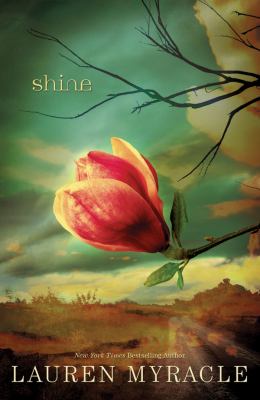
“Shine”

Shine by Lauren Myracle

“Bloody Sunday: Teen Brutally Attacked.”

This is the headline from a (fictional) news article on the pages before chapter one.

“Stunned residents of Black Creek, North Carolina, pray for seventeen-year-old Patrick Truman, beaten and left for dead outside the convenience store where he works.

“’There was blood on his face. . .blood everywhere,’ says Dave Tuttle, the motorist who discovered the unconscious teen early Sunday morning.

“When Tuttle pulled up to the store’s single pump at seven thirty, he found Truman slumped on the pavement, bound to the guardrail of the fuel dispenser. The gasoline nozzle protruded from his mouth, held in place with duct tape. Across the teen’s bare chest, scrawled in blood, were the words Suck this, f–.”

While Shine is a work of fiction—and thus not the story of Matthew Shepard—it clearly begins with the Matthew Shepard murder in mind, and a portion of the proceeds from the sale of the book benefit the Matthew Shepard Foundation.

Black Creek is a small town of about 500 residents. The economic downturn hit the town particularly hard, and many of the young people have turned to partying hard—to drugs, including meth. Lots of them are dropouts, with little hope for the future. Many are dirt poor, and the details of their lives and how they try to add bright touches are heartbreaking.

Cat, the novel’s narrator, hasn’t paid much attention to the change in Black Creek over the last three years. She’s withdrawn from all of her friends after being molested by a local (popular and mean) boy at the end of eighth grade. She’s hurt that her aunt, with whom she lives, just wants her to forget the incident and move on. But Cat’s withdrawal from friends includes a rift in her long-time relationship with her childhood best friend, Patrick Truman—the boy who was attacked at the convenience store. Without him, she has been adrift. As he lies in a coma in the hospital, she realizes she may never have the chance to talk to him again.

When Sheriff Doyle doesn’t seem to be investigating the crime with any thought of finding the culprit(s), Cat realizes that he doesn’t want to know because it’s likely that a local teen committed the hate crime. It’s hard to guess what happened, as Patrick often hangs out with what Cat refers to as ‘the redneck posse,’ and it doesn’t seem any of them—no matter their prejudices—would hurt Patrick. Cat decides that she has to reenter the world of her small town and her friends, and help to find out what happened to her one time soul mate.

While the novel’s end is a tad too tidy, it’s a good mystery as well as a story of prejudice and friendship, of religious hypocrisy, of hard luck and its consequences. A good read.

Posted in Controversial Issue/Debate, Family Problems, Fiction, Horror/Mystery/Suspense, Mature Readers, Young Adult Literature | Tagged , , , | Leave a comment

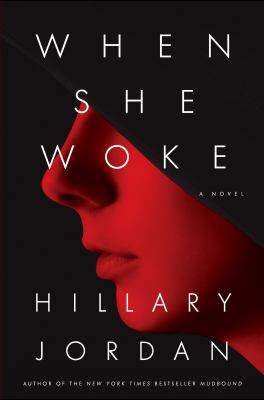
Adult books for teens: “When She Woke”

Adult books for teens: When She Woke by Hillary Jordan 

In a future United States, a scourge has caused pandemic infertility. Abortion is against the law, and when Hannah Payne is caught, she is imprisoned in the “Chrome Ward” where she (as well as other prisoners) are videotaped for public humiliation. After a month of public display, she is released to try to start life anew.

Melachroming is a part of punishment for criminals. They are injected with a virus that makes their skin a color related to their crime. Hannah wakes up entirely red—crimson from head to toe—because she is a murderer. She must remain so for sixteen years. Her punishment is for ten years, but because she refuses to name the abortionist or the father of the unborn baby, three years are tacked on for each. Should she try to flee once her month-long sentence in the Chrome Ward is up, she will die—‘frag out’ as they say in the book. She has another virus implanted that will start to cause mental derangement if she doesn’t go in for her regular sessions to be re-chromed.

Hannah doesn’t name the father of the baby because he is her minister. He is widely known as a holy man and does a lot of good work for the impoverished. Hannah doesn’t want to see that work stopped. If all of these direct connections to The Scarlet Letter don’t grab you, the quote from that novel at the beginning of the book is another big hint. This is a future dystopia with a Hester Prynne and Reverend Dimmsdale (here simply Reverend Dale) working out their sins over video mail.

When Hannah is released from the Chrome Ward, her mother, a very strict, upright Christian, refuses to take her in. She must go to a halfway house run by a (extremely self-righteous and voyeuristic) Christian couple. Only capable of taking so much humiliation, Hannah flees, and, being sought by anti-abortion terrorists, finds herself in the arms of a pro-choice underground group. Ironically, what they have in common with the unforgiving Christians is that they, too, are unwavering in their beliefs. They will not let anything get in the way of their mission.

Although Hannah does question her decision to have an abortion, just as she questions her strict religious upbringing, ultimately—just as with Hester Prynne in The Scarlet Letter—she feels more sinned against than sinning and rejects the moral certitude of those who torment her.

I would love to talk about the end of this book with someone who has also read The Scarlet Letter. When She Woke would be a great read for teens who are looking for literary readalikes. However, here’s a caveat: This novel is not for everyone; I can say with certainty that conservative Christians will object to the content and to the outcome. It’s for mature, older teens, not the middle school set. Mature topics and situations appear throughout the book.

Posted in Controversial Issue/Debate, Faith-Based/Religious Element, Family Problems, Fiction, Human Rights Issues, Literary Read Alike, Mature Readers | Tagged , , , | Leave a comment

“Cloaked”

  What makes Flinn’s fractured fairy tales so enjoyable is that they really incorporate magic. Elves, witches, magical articles like cloaks and rings—they are all at work in Cloaked.

Johnny Marco works at his family’s shoe repair shop in the lobby of a swanky Miami hotel. He’s repaired shoes for the rich; he’s seen the celebrity set (who usually spend money on new shoes rather than repair them). But when Princess Victoriana jets in from Aloria, his mundane life becomes a wild adventure.

Princess Victoriana sees that Johnny is a hardworking teen who values his mother. She decides to trust him and seeks his help in finding her brother, Prince Philippe, who was turned into a frog so that the princess will be forced to marry an unsavory character. In order to help Johnny on his quest, the princess gives him a roll of bills and a magic cloak that transports him wherever he wishes. She offers to marry him if he succeeds. And she is world-class beautiful.

The task is even harder than Johnny had imagined. Each time he has success, it’s because he receives a favor from a bewitched creature or a magical person. So, he always owes something in return, requiring another adventure. He has to talk to swans, round up giants, escape witches, and still find that frog. This is all just such silly good fun.

Flinn tells the reader that he’s always loved fairy tales, and here he incorporates many different tales that he thinks are not familiar enough to today’s readers. He wants teens to enjoy these stories as well. I am surprised to find that the tale of the shoemaker and the elves is no longer familiar; I thought that was a standard. But Flinn includes many others in Cloaked—the six swans and the giants were new to me. However, the tale of the frog prince is one I remember, but Flinn’s version is different—a bit less sweet.

Johnny both gets what he wants and doesn’t get what he wants—and, that is the most realistic thing about the fairytale rendering. As the Rolling Stones put it years ago, you don’t always get what you want, but if you try, sometimes, you get what you need. A fun-for-everyone read.

Posted in Adventure Stories, Fable/Fairy Tale/Fantasy, Fiction, Hi-Low/Quick Read, Romance, Young Adult Literature | Tagged , , | Leave a comment

Adult books for teens: “War”

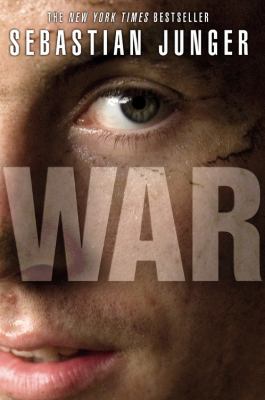
Adult Books for Teens: War by Sebastian Junger

In the year between June 2007 and June 2008, the Korengal Valley was the most dangerous place for a soldier to be at war. The daily temperatures of one hundred degrees, the rough and barren terrain, as well as the many unsympathetic locals (many village elders were working with the Taliban) compounded problems for Second Platoon, Battle Company, which was involved in more firefights than soldiers in any other area of the war, sometimes in more than one battle a day.

During this period, author Sebastian Junger was embedded with Second Platoon, Battle Company. He had photojournalist Tim Hetherington with him. They shot 150 hours of videotape and used that for their documentary film Restrepo. War received many notable book commendations and has been a bestseller. Restrepo received the Grand Jury Prize for best documentary at the 2010 Sundance Film Festival and was nominated for an Academy Award for best documentary in 2011.

Junger tells us at the beginning of the book that he was wholly dependent on the Army for food, shelter, and protection, but that Army officials never tried to censor what he recorded nor to “alter [his] reporting in any way or to show the contents of [his] notebooks or [his] cameras.” So, this is a true picture of warriors in battle. Although it was published for an adult audience, it’s an important read for students who are considering joining a branch of the military because it does give such a realistic picture of war. And, it’s not a bad read for the rest of us either—Americans who are forgetting that one percent of our population is fighting this war without a whole lot of support from the rest of us.

War has scenes of intense battle and of the subsequent deaths and maiming, of how these losses affect the psyches of the men who are not physically harmed. (Junger is there when Second Platoon members are caught in an ambush and an IEU blows up their Humvee.) It also shows the boredom of the men between battles. And Junger delves into the warrior mentally in a way I haven’t read in another book. “War is a lot of things and it’s useless to pretend that exciting isn’t one of them.”

These men are some of the best trained soldiers around, but they are also undisciplined. “O’Byrne’s 203 gunner, Steiner, once got stabbed trying to help deliver a group beating to Sergeant Mac, his squad leader, who had backed into a corner with a combat knife. In Second Platoon you got beat on your birthday, you got beat before you left the platoon—on leave, say—and you got beat when you came back. The only way to leave Second Platoon without a beating was to get shot.”

Junger deals honestly with the fact that a lot of guys in Second Platoon live for the high, for the adrenaline rush, of being in a firefight, of shooting weapons. He shows that returning to civilian life is often difficult for them because they can’t get that rush back. They also can’t duplicate the intense love they have for one another in a situation where each would, without a second thought, sacrifice his life for his warrior brothers. “’I never got in trouble, but Bobby beat up a few MPs, threatened them with a fire extinguisher, pissed on their boot. But what do you expect from the infantry, you know? I know that all the guys that were bad in garrison were perfect f– soldiers in combat. They’re troublemakers and they like to fight. That’s a bad garrison trait but a good combat trait—right?’”

Adults will remember Junger’s work from the bestselling books A Death in Belmont and The Perfect Storm (which was made into a movie). This is an equally good book, and I highly recommend it. It does contain a lot of profanity—perfectly natural as the soldiers are quoted frequently.

Posted in Adventure Stories, Controversial Issue/Debate, Historical Fiction/Historical Element, Mature Readers, Movie Tie-In, Non-fiction, Over 375 pages | Tagged , , , , | Leave a comment

“The Fault in Our Stars”

Lucky me! I have another guest review by future teacher librarian extraordinaire Ms. Thomas. And if you follow reviews here, you know how I love John Green–so this is bonus day!

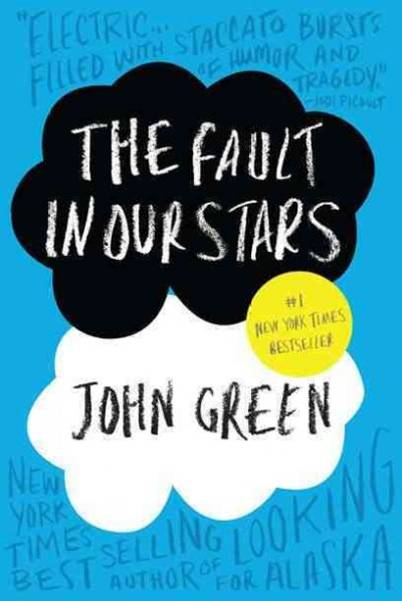
The Fault in Our Stars by John Green

Wise, poetic, 16 year old Hazel Grace Lancaster has terminal thyroid cancer that has metastasized to her lungs.  An experimental drug has kept her alive for the past 3 years.  Her parents want her to be a normal teenager in spite of having to drag her oxygen tank with her wherever she goes.   At her kids-with-cancer support group, Hazel meets good-looking, witty 17-year-old Augustus Waters who finds her “like V for Vendetta Natalie Portman” beautiful.  Gus doesn’t have a terminal diagnosis – his leg was amputated as a result of osteosarcoma (a malignant bone tumor), but he is officially NEC (no evidence of cancer).

Hazel and Gus are star-crossed kindred spirits who reject the belief that all kids with cancer are courageous saints; they are both looking for meaning in their finite lives.  They share with each other their favorite books, movies, video games, dreams, fears, loves, and Cancer Perks. “Grand Gesture Metaphorically Inclined Augustus” takes Hazel on an adventure that she never could have imagined.  The Fault in Our Stars isn’t about cancer (or its sometimes tragic consequences) or even teenagers – it’s a story about love, friendship, and the joy that Hazel and Gus find in their “little infinity.”

The professional reviews and reader reviews of The Fault in Our Stars have been overwhelmingly positive, with many people calling it one of the best novels (for teens or adults) of the year.  Released in January 2012, it was named by Amazon as one of the best books of the month, and it has been on numerous best seller lists.  Like John Green’s other novels, The Fault in Our Stars is written for teenagers (and adults) who appreciate wit, philosophical ponderings, and the realness of life and its characters.

You can hear John Green read the first chapter of The Fault in Our Stars here.

Posted in Adventure Stories, Fiction, Romance, Young Adult Literature | Tagged , , , | 3 Comments

“That Used to Be Us: Part III”–back to our staff recommended reading

Part I

Part II

That Used to Be Us—Part III: The War on Math and Physics

Part III of That Used to Be Us starts with more bad news. Part I tells us that we underestimated the impact of globalization and the IT revolution. Part II says we failed to respond to the above by improving our educational system. Part III? Ditto for the deficit and energy and climate challenges.

“When the flattening of the world created not only two billion more competitors but two billion more consumers, . . . just when all the rising energy demand from all these new consumers was affecting the climate and food prices and creating the need for cheap, clean, renewable energy, and just when China recognized all this and began investing heavily in wind, solar, battery, and nuclear power, America dithered, delayed, and underinvested in energy and in the wider foundations of its economic growth.”

The section on ‘the war on math’ discusses debt and borrowing power (and shows that a company/country can have great debt and great borrowing power as well as long as it has the assets to pay the debt if suddenly called.) The authors argue that when the international monetary system known as “Bretton Woods” (dollar tied to price of gold/fixed international exchange rates) was collapsed—Nixon didn’t want the country to go through a recession to pay for spending on the Vietnam War—ballooning deficits had to follow, but it took time.

But it did happen, and deficits ballooned under Reagan. The authors take Dick Cheney to task over his comment, “Reagan proved deficits don’t matter.” They show that Reagan worried about deficits and called taxes ‘revenue enhancements’ in order to create them. Though deficits were reined in under Clinton, Alan Blinder, Princeton economist and former vice chairman if the Federal Reserve, is quoted from a Wall Street Journal essay as saying that “’The nation took leave of its fiscal senses, and simply stopped paying for anything during President Bush 43’s eight years.’” Under Obama, that deficit blew up.

The Republican Party takes a hit for a few pages, and then the authors turn on the Democrats—both are chastised for their willingness to enact policies that hurt the fiscal health of the country but that bolster their political careers and allies.

The authors believe that reductions in Social Security and Medicare are inevitable. We are not going to be able to spend so much for end-of-life care that doesn’t do anything but prolong the period of wasting away into death; we are going to have to take more responsibility for our health and not be so fat.

Across the board cuts to entitlements are required including in the defense budget.

Taxes must be raised, not just on the rich, but on the middle class as well. Tax loopholes must be closed.

The section on the ‘war on physics’ is about climate change. The authors indicate that climate change is a fact, and we need to stop pretending that it’s still a big question mark. They give examples and documentation from reports and scientists. There’s also a discussion of “low-probability, high-impact” events. (A phrase based on Dick Cheney’s discussion of Pakistani scientist and a 1% chance that they are helping Al Qaeda develop nuclear weapons. Here, it is turned around and used to discuss climate change. In general, Dick Cheney doesn’t come off very well with the authors.)

There are some examples of ways to make changes—one of the most interesting to me was that having the military use renewable power not only is environmentally sound, but can save many service men and women’s lives by avoiding roadside bombs to vehicles trucking fuel around.

The authors are telling us that the country needs oil-addiction rehab, but has refused to have an intervention because “The Democrats were cowardly and the Republicans were crazy. . . . The Democrats understood the world they were living in but didn’t want to pay the political price—alone—for adapting to it. The Republicans simply denied the reality of this world.”

Climate change will create an unstable world with a larger and larger population requiring greater global food production at the same time that global natural resources are stressed and water demand soars. California is commended for some sensible environmental policies that the country should adopt.

Part IV coming soon.  Eventually, the positive stuff arrives.

Posted in Controversial Issue/Debate, Environmental Issues, Non-fiction | Tagged , , , | Leave a comment