Summer Reading: Bullying Books

This slideshow requires JavaScript.

Summer Reading

One of my reading goals this summer is to read and select some books about bullying—both the cyber sort and the in-person attacks. I hope to recommend two bully-themed books per month in the 2013-14 school year.

This is going to be my “Ontario Teens Read” for 2013-14.

If you want to read some of the bullying books this summer before we start the “Ontario Teens Read 2013-14,” below are titles I’m considering.

We’ll begin the school year with a few that we’ve already been talking up for a while—they have become popular on my campuses, but if you haven’t read them, you might start here:

Want to Go Private

(Mature teens only—read the review!—cyberbullying by a sexual predator—the horrible, lasting effects of having the wrong things posted online!)

Thirteen Reasons Why

A new book I want to pair with Thirteen Reasons is:

I Swear by Lane Davis

It’s similar, but the students who pushed the girl too far are trying to cover up their responsibility.

Other bullying books we’ve talked up in the past:

Speak by Laurie Halse Anderson

The Body of Christopher Creed by Carol Plum-Ucci

The Story of a Girl by Sara Zarr

Others I’m considering–some new, some tested and loved, some intense reads, some for reluctant readers–all got good reviews.

There are more than I can feature in a year. If you want to read a few and let me know what you think, I’d appreciate it very much!

The List by Siobhan Vivian

The Hate List by Jennifer Brown

Shooter by Walter Dean Myers

Some Girls Are by Courtney Summers

Burn for Burn by Jenny Han & Siobhan Vivian

Rotters by Daniel Kraus

Bruiser by Neal Shusterman

The Astonishing Adventures of Fanboy and Goth Girl by Barry Lyga

Promises to Keep by Paul Langan

Playground by 50 Cent

The Beckoners by Carri Mac

Breathing Underwater by Alex Flinn

Brutal by Michael B. Harmon, Michael B.

Burn : A Novel  by Suzanne Phillips

By the Time You Read This, I’ll be Dead by Julie Ann Peters

Cracked by K. M. Walton

Crossing Lines by Paul Volponi

Dough Boy by Peter Marino

Dumped by Meredith Costain

Egghead: A Novel by Caroline Pignat

Give a Boy a Gun by Todd Strasser

Letters to a Bullied Girl by Olivia Gardner

Names will Never Hurt Me by Jaime Adoff

Poison Ivy by Amy Goldman Koss

Teen Queens and Has-beens by Cathy Hopkins

What Happened to Cass McBride by Gail Giles

Who I Am by M. L. Rice

Send by Patty Blount

Playground by 50 Cent

Everybody Sees the Ants by A. S. King

Beaten by Suzanne Weyn

I’ll decide on titles as the school year progresses, but I’m still in the selection stage. Any of these would make a great summer read.

Posted in Family Problems, Fiction, Hi-Low/Quick Read, Human Rights Issues, Mature Readers, Read 180, Young Adult Literature | Tagged , , , | Leave a comment

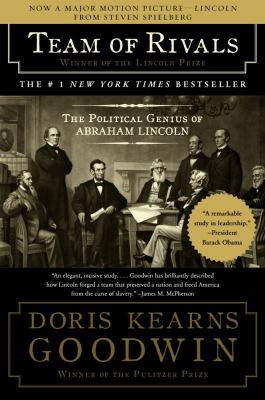
Adult Books for Adults and Teens: “Team of Rivals”

team of rivals

Team of Rivals by Doris Kearns Goodwin

I know this is a long shot, but I’m hoping there’s a student

who will take me up on this.

Summer reading for the truly motivated!

While the focus of Team of Rivals is on Lincoln’s political acumen and on his relationship with his major political rivals turned advisers and friends, there is a lot of interesting discussion of their personal lives. This is a sort of group biography of the men who steered the country through the Civil War, and of the women who influenced them.

Many of the men discussed in Team of Rivals were prominent candidates for the Republican Party’s presidential nomination in 1860. Several of them were better known than Lincoln, particularly William Henry Seward. None of them thought Lincoln would secure the nomination. Yet it was their own rivalries that made Lincoln’s victory possible, as delegates who didn’t want a certain prominent candidate to be nominated would throw their votes to Lincoln.

I admit to knowing little about the Civil war period. This book was a thoroughly enjoyable way to learn about the lives of Abraham Lincoln and the men in his cabinet, of their relationships to family members, and in turn the influence those family members had on the direction of this country. Even more interesting—and instructive—was seeing how Lincoln was able to take all these rivals of his (and of one another) and pull them together in his cabinet—a team whose diverse opinions were crucial to Lincoln as he navigated one of the worst periods in U.S. history.

Once Lincoln had established his cabinet, William Seward, as secretary of state, thought that he would be running the country, with Lincoln as his puppet. But over time, he understood Lincoln’s political genius. The two became great friends. So, too with Edwin Stanton. Stanton had disrespected Lincoln when he was a lawyer working in Springfield, refusing to meet with or even talk to him after engaging him to work on a trial in Cincinnati, and calling him a ‘long-armed ape.’ Yet Lincoln later made Stanton his secretary of war. Stanton became a good friend and is the man who said, on Lincoln’s death, “Now he belongs to the ages.” In addition, the escaped slave, abolitionist and orator Frederick Douglass came to respect Lincoln after meeting him to discuss freeing slaves.

Unfortunately, Salmon Chase, Lincoln’s secretary of the treasury, could never put aside his jealousy of the president. Chase seemed to have no loyalties to friends and people who had helped his career (so it wasn’t just Lincoln), but he did stay loyal to anti-slavery platforms. His behavior appears to be wholly motivated from a desire to be the president—even at the expense of Lincoln’s policy and reputation. He always felt that he was more deserving of the presidency than Lincoln, and he let others know it. He was fond of submitting his resignation when he didn’t get what he wanted, but was surprised on the fifth submission that Lincoln accepted it. However, Lincoln later appointed Chase to be Chief Justice of the Supreme Court. According to Goodwin, Lincoln had a “singular ability to transcend personal vendetta, humiliation, or bitterness.” It is this as much as anything else that makes him a great man.

Another man who comes off poorly is General George McClellan, who couldn’t take action in leading Union troops into battle, yet blamed all his faults on others, and particularly on Lincoln’s leadership.

Deeply revealing of the political climate of the time is the role of the women in these men’s lives. I enjoyed Francis Seward’s abolitionist stance and the letters she wrote to her husband and friends about what brought her to the cause (the immorality of slavery, the pathetic situation of slaves that she saw as she traveled). Not all whites sympathetic to slaves held these same views. Many Northerners and Republicans (the party of Lincoln) held that slavery would naturally end as society became more urban and industrialized.

Kate Chase, daughter of Salmon Chase, was the beauty who was at the top of the social pecking order, the girl everyone wanted to admire or court. She was so popular that Mary Lincoln was sometimes jealous of her. And yet her marriage and subsequent life was tragic.

Mary Todd Lincoln sounds better in Team of Rivals than in the few sources I’ve read before. She appears to have suffered terrible migraine headaches, and this affected her responses in social situations. She does hold more grudges than Lincoln, but to be honest, just about anyone in the world does. (His ability to let go of past hurts is nearly superhuman.) Team of Rivals also discusses the over-the-top spending habits Mary is now so famous for. However, Goodwin also catalogs the necessary improvements she made in the White House, which had been left to fall apart. Mary wasn’t very good at controlling her image in the press—she did much good, such as regularly visiting hospitals to care for wounded Union soldiers. Her work went unnoticed while the wives of other Politicians were lauded for the same activities. And, of course, her grief over the loss of her children—eventually three of her four boys—had to be a major factor in her bouts of depression.

While this point may seem just a sidebar in the evaluation of the book, I think it’s valuable. The deep grief suffered by so many of these ‘major players’ on the national scene changed all of them, for better and for worse. Lincoln suffered the deaths of his mother, his much-loved sister, and two of his sons (another died after Lincoln was assassinated). Chase lost several wives and became dependent on his elder daughter to be his social coordinator. The Sewards lost a daughter. Others close to the Lincolns lost their sons and husbands in the war. That the death of young wives and children was so commonplace in the mid-nineteenth century is important to remember. People learned compassion or they learned to be unnecessarily mean.

Since Team of Rivals covers such an important period of the country’s history, it includes insights on many of the significant issues and legislation of the day, particularly legal wrangling over slavery—the Missouri Compromise, the Kansas Nebraska Act, the Dred Scott decision, the Emancipation Proclamation, the Thirteenth Amendment, and more. Some of the events are shocking. Abolitionist Senator Charles Sumner, while railing against the expansion of slavery, verbally attacked senators who supported it. Congressman Preston Brooks later physically attacked Sumner, feeling that he was defending his relative’s honor. The idea that one man could cane another, nearly to death, right on the Senate floor, boggles the mind. Interestingly, this beating rallied the anti-slavery forces in the country.

This is such a great book on every level—the political, social, historical and personal. Not only that, but it includes many of the funny stories Lincoln was always telling—full of folk wisdom and often making his adversaries see the value of his point. The only thing that will keep you from reading it is the length—over 900 pages. While about 150 pages are endnotes and indices, that still leaves 750 pages. Even students who are good readers and enjoy history may not be able to find the time for such reading, especially if they are memorizing thousands of facts for AP tests!

Would you be willing to read this one over the summer? You won’t be disappointed. During the school year, you might make a deal with teachers who require about 200 pages of outside reading per quarter. Ask them if you can use Team of Rivals for biography as well as other nonfiction, and then as a free choice. That will cover at least 600 pages. I think any teacher would love the idea that you’d choose to read this book and enrich your education. By the time you get to Lincoln’s death, you will be so moved by his story that you’ll be hoping it won’t happen, even though you know it’s a historical fact. You can’t ask for more from a work of nonfiction.
Posted in Biography/Memoir, Family Problems, Historical Fiction/Historical Element, Human Rights Issues, Movie Tie-In, Non-fiction, Over 375 pages | Tagged , , , , , , , , , , , , , , , , | Leave a comment

Teen Book Fest 2013

This slideshow requires JavaScript.

All this–and lunch, too.

(By the way, who said there’s no such thing as a free lunch?)

What more could you ask for? Oh, yeah, a free tote bag!

What a great day!

Posted in Fiction, Young Adult Literature | Tagged , , , , , , , , , , , , , , , | Leave a comment

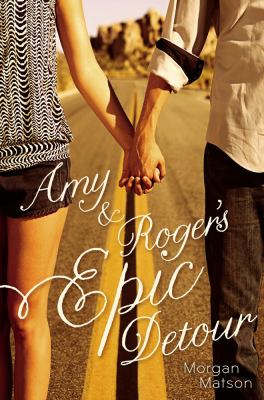
Road Trip! “Amy and Roger’s Epic Detour”

Amy and Roger’s Epic Detour by Morgan Matson   amy and roger

Three months ago Amy’s dad died in a car accident, and Amy hasn’t driven since. Because, after all, she was driving then. She knows she’s responsible for his death.

So when Amy’s mom decides to move cross-country from California to Connecticut, she first puts Amy’s drug-addled twin brother in rehab in North Carolina. She then leaves Amy to look after herself for a month while she finishes her junior year in high school. Once Amy finishes the school year, her mom has a plan for Amy: she will cross the country with Roger, the nineteen-year-old son of a friend who also needs to get back East, to Philadelphia, to see his father. Amy’s mom has provided maps, driving instructions and pre-paid hotel reservations. The two teens should make it to Connecticut in four days.

What could go wrong?

Just about everything.

But what’s so great about this story is that what goes wrong is what goes right—it’s full of the happy mistakes that make memories of a lifetime.

It isn’t that Amy is some happy-go-lucky girl. Quite the opposite. She’s guilt-ridden and her hair is starting to fall out from stress. She’s immersed in grief, thinking of her father’s death as the endless interruption of a conversation. He was a history teacher who loved Elvis Presley. Amy had always been his navigator on long road trips. Theirs was a close relationship, and no one in the family has tried to appropriately deal with his death.

Road trip books are always fun, and Amy and Roger have the valuable experience of ‘getting ready for the party being more fun than the party itself.’ They first get off track when they decide to go to Yosemite. Amy’s family had taken vacations there together, and she longs to see it again. Once the pair is committed to disobeying Amy’s mom and traveling wherever they like, taking as long as they want, it becomes clear that Roger is on this trip because he wants to confront his ex-girlfriend, for whom he still carries a flame. Too bad, because he’s incredibly good looking.

Many of the stops on this cross-country adventure have connections to other books—for example, the detour to Kansas, where Amy questions what home really is, and whether you can go back there when someone in the family is missing. It’s a sweet nod to The Wizard of Oz.

The trip includes unexpected meetings with eccentric characters, all of whom enrich Amy and Roger in some way. There’s lots of good fast food—different franchises in each state—and there’s always good music as Roger creates playlists based on the pair’s emotional state that day or on their destination. (Don’t let the unfortunate opening with Billy Joel songs put you off. The wackier, more creative choices are coming right up!)

Amy’s mother is so angry at her disobedience that she cuts off her credit card. Amy and Roger pool their funds and have to arrive back East just as the money runs out. When they get there, Amy has learned much—about life as well as death. And she’s ready to have the conversation that she and her mother have been putting off.

Just about any teen will enjoy this one.

Note: Morgan Matson, the author of Amy and Roger’s Epic Detour, is scheduled to be at this Saturday’s Ontario Teen Book Fest at Merton Hill Auditorium (on the Chaffey High campus–corner of Euclid and Fifth Street).  The book fest will be  9:00 AM to 5:00 PM. It’s free, but you must reserve a ticket to get in. Call 909-395-2225 to reserve your ticket. You may also pick up a ticket in the quad–May 9 at Chaffey High, May 10 at Colony High.

Posted in Adventure Stories, Family Problems, Fiction, Romance, Young Adult Literature | Tagged , , , , | Leave a comment

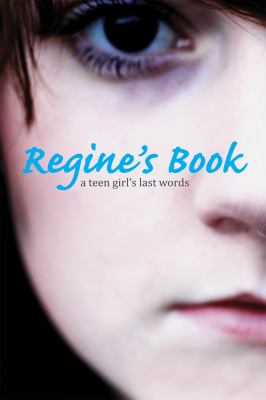
A good nonfiction follow-up to FiOS: “Regine’s Book”

regine    Regine’s Book: A Teen Girl’s Last Words by Regine Stokke

Regine Stokke, a seventeen year old living in Norway, was diagnosed with a particularly virulent form of leukemia (a blood cancer)—acute myelogenous leukemia or AML—in 2008. She decided that she would blog about what it’s like to live with a life-threatening illness. Her blog became the most widely read/popular in Norway, and her story was known to the entire country. Because of her moving tale, many of her countrymen, particularly teens, were motivated to give blood. Others donated to cancer research. But more than just a tale of a ‘cancer hero,’ Regine’s story is an honest portrayal of a girl grabbing the good in life at a time when she knows she is going to die. It is also the story of having to make anguishing decisions at a young age.

As a part of her survival efforts, Regine has many painful treatments, including several bone marrow biopsies. She discusses what it’s like to be in pain so often or to fear imminent pain, and how she tires of trying when she has “one foot in the grave.” The one thing that helps her go on is her support system of friends and relatives. She often comments on how no one can achieve alone. She has a guest blogger, Ashild, who makes a connection between athletes (people with life-threatening illnesses are ‘survival athletes’), actors (‘the show must go on’) and cancer patients.

Treatments aren’t the only nightmares for Regine. She learns early that her cancer treatments will probably cause her to become infertile. She is asked to decide if she will freeze one of her ovaries although it is unknown whether eggs from the frozen ovary will be viable later, should she live.

Regine is not religious (She is asked in comments to her blog whether she is a Christian and her answer is ‘no.’) Yet a few of her most comfortable discussions are with the hospital pastor, mostly because he doesn’t judge her.

Even Regine’s musings on losing her hair are poignant—she worries about whether to wear a wig or to go bald/wear a hat. She has the courage to post photos of herself bald, but still feels that she has lost part of herself in the loss of her hair. Yet, while she is going through all this, she continues to be concerned about nature and the destruction of the forest behind her house.

Regine fully understands what it means to be grateful for just an ordinary life, and that anything can happen to anyone at any time.

Though I’ve ceased to be amazed at the cruel things people happily do to others, I am saddened to see some of the nasty responses to a few of Regine’s blog posts. One person sends a message that he wants to come to Regine’s funeral. (I guess that’s a compliment?) Another asks, “When will you die?” Particularly awful is a post by NN, apparently a celebrity in Norway who blogs on fashion and other really important stuff. He asks if Regine deserves to be on the country’s list of top bloggers. One of Regine’s friends, Sofie Froysaa, writes a guest post to comment on these nincompoops. Sofie’s witty takedown of them is priceless.

Nevertheless, people are mostly supportive, and Regine’s story becomes news. Several newspapers seek interviews with her and post videos online. (She is bummed that one of them comments that she is “sentenced to death.”)

A goal of Regine’s is to make it to her eighteenth birthday and to be well enough to go to the Quart Festival, a music festival that includes some of her favorite bands and musicians (she’s a huge metal fan). Not only does she get to go, but she has all expenses paid for her and her best friend, and they both get VIP passes so that they are able to take close-up photos of the rockers. (Some of the photos are included in the book.) She also hopes to attend a Metallica concert, but is too ill. Later, when the RaumaRock (music festival) comes to town, the festival manager has Regine picked up in a helicopter so that she can attend.

An important concern about death for Regine is that her family will be devastated by the loss—and that, therefore, it would have been better if she had never been born. There’s a letter from Regine’s mother to the reader, addressing this issue.

The final section of the book is “After Regine” with reflections by her sister, her mother, and her good friends.

This is such a beautiful book—not just Regine Stokke’s writing, which proves her to be a thoughtful, discerning teen—but also the physical book itself, with its high-quality paper and print, its lovely photos and artwork. Regine is a talented photographer whose images were shown in two Nordic Light Photography Festivals; several of these are included in the book. I hope Regine’s Book will move you as much as it did me. I highly recommend it to all teens.

Posted in Biography/Memoir, Non-fiction, Young Adult Literature | Tagged , , , , , , , | Leave a comment

Ontario Teen Book Fest

This slideshow requires JavaScript.

Ontario City Library and Best Buy Children’s Foundation

are sponsoring another Teen Book Fest!

May 11, 2013

9:00 AM-5:00 PM

Merton E. Hill Auditorium

(on the Chaffey campus–next to the district offices)

211 W. Fifth Street, Ontario

You must reserve a ticket, but it’s free. Call 909-395-2225.

Doors open at 8:30. Come early and buy a book

so that you can have the author sign it!

This year’s authors include:

Carrie Arcos–Out of Reach

Leigh Bardugo–Shadow and Bone

Jennifer Bosworth–Struck

Jessica Brody–My Life Undecided

Stephen Chbosky–The Perks of Being a Wallflower

Sara Wilson Etienne–Harbinger

Suzanne Lazear–Innocent Darkness

Marie Lu–The Legend series

Morgan Matson–Amy and Roger’s Epic Detour

Gretchen McNeil–Ten and Possess

Gregg Olsen–The Empty Coffin series

Andrew Smith–The Marbury Lens and others

Ann Stampler–Where  It Began

Lex Thomas–Quarantine: The Loners

See you there!

Posted in Family Problems, Fiction, Horror/Mystery/Suspense, Movie Tie-In, Romance, Supernatural, Young Adult Literature | Tagged , , | Leave a comment

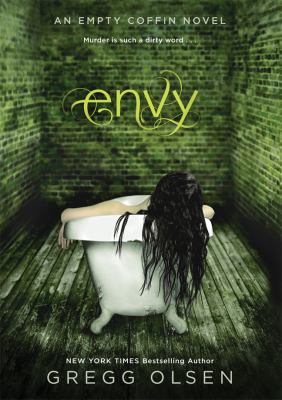
Teen Book Fest book: “Envy”

Envy by Gregg Olsen envy

Katelyn Berkley dies in a freak accident. She is electrocuted in the bathtub when her expresso machine either falls into the water or when she threw it in. Or when someone else threw it in.

Katelyn is a ‘cutter’ whose many serious problems included an alcoholic mother. So is her death a suicide or an accident? Or maybe even murder?

Port Gamble is Katelyn’s home. It’s a seemingly perfect historic town in Washington with a lot of rules—the past has to be preserved—and a lot of secrets. It’s called “Empty Coffin” as a nod to an old tale about the mysterious disappearance of a body that was supposed to be buried at sea.

Katelyn’s death occurs just before the tenth anniversary of a horrific bus accident in which several Port Gamble children were killed. Thrown from the vehicle, Katelyn survived the bus accident only to later meet her bizarre fate in the bathtub. Two other girls, twins Hayley and Taylor Ryan, also survived the accident, but their survival was implausible. They had been plunged into a freezing river. They remained in comas for a month before waking. Now, no one talks about what happened.

While the truth about Katelyn’s death is surfacing, a nosey reporter is also uncovering some uncomfortable truths about the twins. Taylor and Hayley prove to be the snoops who take it upon themselves to investigate strange occurrences, to dig into the uncomfortable past. This seems natural for them. Their mother is a psychiatric nurse; their father is a writer of true crime books, a man who researches the lives of serial murderers; the girls themselves have a powerful paranormal connection and can visualize letters and words which they must deconstruct to get clues to the crimes.

Envy is the first in the Empty Coffin series. An important element of the book is based on a true cyber-bullying story. If you are one to follow big news stories, you’ll guess pretty quickly some of what happened to Katelyn—although knowing this news story won’t resolve the circumstances of her death, so you’ll still be in for some surprises.

Envy name drops many pop stars and current TV personalities, which may date the novel quickly. And some of the characters are one-dimensional. The twins are unrealistically sweet; opposite them is the super-witchy, egocentric Starla. She’s the school’s queen bee and cheerleading beauty, who had formerly been Katelyn’s BFF, but has dropped her for some reason. She’s the girl we’ll love to hate as the series moves forward. Still, the book is a lot of fun. It reminds me of the old TV series Murder, She Wrote because of the small town setting. But the twins have a lot more teen appeal than Jessica Fletcher. Maybe they are a super-updated version of Nancy Drew.

If you like quick murder mysteries with topical themes (like cyber-bullying or cyber-stalking), you’ll enjoy this who-done-it. If you are a fan of the Dead Is series, you’ll appreciate the paranormal element. A quick read for any teen.

Note: Author Gregg Olsen will be at the Teen Book Fest on May 11. Tickets are free, but to go, you need to have a ticket. Call 909-395-2225 to reserve one.

Posted in Family Problems, Fiction, Horror/Mystery/Suspense, Supernatural, Young Adult Literature | Tagged , , , , , , | Leave a comment

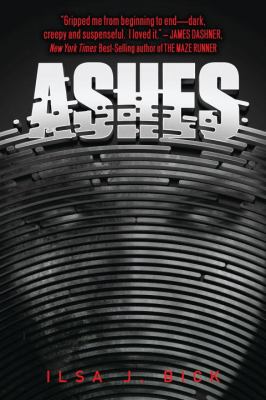
“Ashes”

ashes   Ashes by Ilsa Bick (first in a trilogy)

Alex, seventeen and traveling alone in the Michigan wilderness, is on a mission to bid her goodbyes to the world. She has a brain tumor that appears unstoppable, even with experimental treatments. While Alex is on her backpacking adventure, an electromagnetic pulse—EMP—rocks the earth, killing many people. Yet after the EMP, Alex is not only alive, but changed. The sense of smell she had lost due to her cancer treatments is now so keen that she can smell emotions, such as fear.

Alex discovers that almost all others who are left alive are very old or very young. Generally, after the EMP blast, middle-ages folks are dead and teens become zombie-like—Alex refers to them as ‘brain-zapped.’ While the brain-zapped don’t eat one another, they crave human flesh. The combination of troubles is post-apocalyptic: teen zombies, a dying earth with fried technology and no means of modern communication, and a remaining population with no means of producing goods, including food. The worst in people comes out, and they fight and kill for survival supplies.

When the EMP takes place, Alex happens to be talking to a few people she met on her wilderness hike, a little girl named Ellie and Elle’s grandfather. The grandfather dies immediately, and Alex becomes Ellie’s protector. Later she teams with the hunky but shadowy Tom, who is on leave from the war in Afghanistan. They fear that they, too, will become brain-zapped. Their goal is to travel to safety, to find a town and some help. But along the way, danger separates them. Tom is wounded as survivors are stealing his provisions, and his wounds become infected. In seeking help, Alex finds a surviving town called Rule.

Rule is an odd place. Folks are deeply religious, but in a way that demands subservience from women. The fact that the folks in Rule are helping Alex is more sinister than it first seems. These survivors appear to be as dangerous as the zombies. Except for Chris, who has a crush on Alex.

Bick does a great job of framing her post-apocalyptic world and of explaining how such a thing might happen as well as hinting at the reasons why some young people like Alex, Tom, and Chris have survived. In all, she does a great job with drawing the reader in. Her writing is also very good. Given these things, and the fact that no plot points are concluded, most teens will quickly leap to the next book. However, Bick also spends a good portion of the novel with lengthy descriptions of the gross realities of this new world. Ashes is an A-One gore-fest. Bick has that paradoxical ability to stop the story dead in its tracks to wax on about zombies plucking out eyeballs and livers, and yet to make it feels like this is fast-paced action.

I’ve mentioned before that I’m something of a sissy in these matters. While the blood jets, the shootings and other violence didn’t get to me, I couldn’t stomach the frequent and vivid descriptions of pus—yellow-green, oozing, stinking. I read while waiting for appointments—and thus in public places—and often found myself unable to continue, the bile rising in my throat, the gag reflex operating. For this reason, I’m not going to continue the series. But if you don’t have these sorts of issues, this is a heart-smacking work for mature readers (about 14 years and up).

I’ve thought about why my reaction to books like Ashes is so different from Cormac McCarthy’s The Road, which is also set in a post-apocalyptic, violent world of survivalists and cannibals. I think it just comes down to the writing. McCarthy can make me realize all the terror of his world. I have the full emotional impact, the genuine sense of horror and concern for the characters. But I’m never at risk of puking while waiting for the dentist.

Posted in Adventure Stories, Fiction, Mature Readers, Over 375 pages, Romance, Sci-Fi/Futuristic, Young Adult Literature | Tagged , , , , , | Leave a comment

Raffle:Thanks for our year with “The Fault in Our Stars”

This slideshow requires JavaScript.

Fans of The Fault in Our Stars:

We are finishing up our Ontario Teens Read 2012-2013 as the school year comes to a close. We have a few more prizes to give away, so we’re having a raffle. The prizes include ten hardcover copies of The Fault in Our Stars, some posters, bookmarks, a leather journal, some little goody baskets. The raffle will include both Colony and Chaffey High Schools. Come over to the library to get a ticket–if I’m not there, ask one of the other school library folks (at Colony, that is Mrs. Wilken and Mrs. Thornhill in the textbook room).

I want to say thanks to the many of you who participated and read this wonderful book, and to the teachers who promoted it to their students. Everyone has come back saying how much they loved it. It has been our top circulating title for months. And we aren’t the only ones who have loved it. Even back in December (Dec. 10 issue), Publishers Weekly reported that:

  • 825,000 copies of FiOS were in print
  • the author toured 17 cities
  • at the time, he had 1.3 million Twitter followers
  • he was named one of Entertainment Weekly’s entertainers of the year 2012
  • Time picked FiOS as the top fiction book of 2012

The even better news is that if you haven’t had a chance to read this great book yet, you can always check it out at our library.  (And thanks again to Donors Choose for providing all those copies!)

If you can’t get enough of John Green, you can check out the vlog with his brother Hank and view Green’s Carnegie Hall appearance on YouTube.

Posted in Fiction, Young Adult Literature | Tagged , , , , | 4 Comments

Solitary: Escape from Furnace, book two

solitary

Solitary: Book Two of the Escape from Furnace series

by Alexander Gordon Smith

Just a quick heads up on this series. I reviewed the first book, Lockdown here. I thought it was great entertainment and a perfect choice for guys who have a hard time finding a book they like. I wanted to continue the series and see if the same quick-paced action/adventure continued. It does.

This time Alex is locked up in solitary confinement after his escape attempt. The cell is more like a coffin standing upright. His buddy Zee is also locked in a solitary cell nearby and the two figure out a communication system that helps them stay sane. Still, Alex has many hallucinations, particularly of his old cellmate Donovan, who was taken by the men in black suits and the Wheezers in book one.

The Wheezers are back as are the mutant rat boys, only this time they are out for Alex’s blood. In Solitary we also get a good look of the horror of the infirmary—we figured Donovan had been taken there to be transformed into some sort of creature at the end of book one. Now we know for sure.

This book, like the first, certainly has lots of disturbing images and description. It’s hard for me to say why it doesn’t bother me in the same way that it bothers me in many books. I think, for me, it all plays pretty well into the nightmare of Furnace, so it doesn’t have the same gratuitous feel that I’ve experienced with other science fiction for reluctant guy readers. However, I’ll give you an idea of what some professional reviewers thought:

“The gross-out factor is high in many sections” (School Library Journal)

“Readers who relish lurid imagery and melodramatic prose will continue to be riveted and left eager for the next disgust-o-rama episode” (Booklist)

So, that’s the caveat (warning)—meanwhile, I’m on to book three, Death Sentence.

Posted in Fiction, Hi-Low/Quick Read, Human Rights Issues, Mature Readers, Read 180, Sci-Fi/Futuristic, Young Adult Literature | Tagged , , , , , , | Leave a comment