“I Will Save You”

I Will Save You by Matt de la Peñai will save

I Will Save You opens with a startling scene as Kidd Ellison appears to throw himself and his old frenemy, Devon, into wild danger in an irrational attempt to save Olivia, the girl he loves, from Devon.

The danger that Kidd sees is not apparent to the reader. As Kidd finds himself in deep trouble for his actions, he moves through the past and through dreams and hallucinations to explain how he knows that Olivia was in serious danger–and why he had to do what he did.

Kidd has run away from Horizons, a home for kids who have experienced trauma. Early in the novel, the reader understands what some of the trauma is as it’s clear that Kidd’s father was abusive. But just how much trauma Kidd has undergone, the horror of it, comes to light slowly.

Kidd decides to go to Cardiff-by-the-Sea and work with Mr. Red maintaining the campsite where wealthier teens spend the summer. There Kidd meets Olivia, whom he finds beautiful (even though she is always hiding the side of her face under a ski cap) and smart. She’s quiet and introspective. The two have wonderful and honest conversations and appear to be falling in love. But just as things are looking up for Kidd, Devon appears on the scene, hoping to convince Kidd that Olivia, who has led a much more privileged life, is an enemy and can’t truly feel anything for Kidd. While Kidd would like to seek advice from Mr. Red, the campsite manager is dealing with his own demons. He had once been a pro surfer, but became an alcoholic after the tragic loss of his son. Though he’s been sober for years, every day is a challenge to him. Unable to seek help, Kidd attempts to manage the unmanageable alone.
High school housekeeping: At a little over 300 pages, I Will Save You is a little longer than some ‘reluctant reader’ recommendations. However, the story is weird and powerful in a way that will appeal to guys (and girls as well) who have had difficult lives and don’t know how to straighten them out. It’s an easy read–the Lexile level is 770–but this novel doesn’t have the tidy ending that many easy reads have. So, you have a book that calls for thoughtful examination of a situation and an ending that is open–not so much to interpretation, but to discussion about Kidd–and yet is accessible to readers of all levels. Because it will make you think of life’s many imperfections and shows the reader how even a kid with many strikes against him can act with love and courage, I recommend this book to all teen readers.

Posted in Family Problems, Fiction, Grief, Horror/Mystery/Suspense, Young Adult Literature | Tagged , , , , , , , , , , , | Leave a comment

Adult Books for Teens: Nonfiction: “Dead Wake”

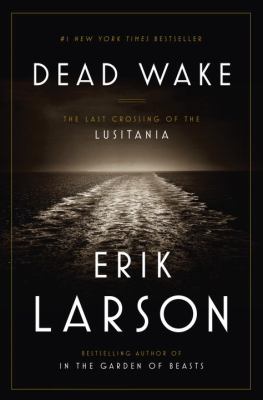
Dead wakeDead Wake: The Last Crossing of the Lusitania by Erik Larson

The Lusitania, a British ship in the Cunard Line, was considered the most elegant passenger liner of its day. It was fast and luxurious, and a trip aboard was worthy of excitement even for third-class passengers. Yet on its last trip in May of 1915–during World War I–it was a floating target for German U-boats.

On May 1, 1915, the Lusitania left New York City to return to its home port of Liverpool. The Imperial German government had issued a warning in newspapers all over America that passengers should beware of traveling on the ship in a war zone (which it would have to do to reach Liverpool). Passengers seem blithely ignorant of the dangers despite that warning. Several reasons are given for this, including the busyness of preparing for such a journey (no time to read the paper), the assurances of Cunard lines that it was safe, and the fact that the ship was to be accompanied in British waters by a British Naval escort (sadly, it was not).

The Lusitania was sunk off the coast of Ireland on May 7, 2015 by the German submarine U-20. Nearly 1,200 people were killed, including children and babies. Of these, approximately 125 were Americans. Although the United States did not immediately enter the war, the heartless sinking of the Lusitania–without warning and against rules of warfare–was a factor that turned the previously neutral Americans against Germany and was the foundation of their willingness to fight on the side of the British.

Since these facts are well known, a reader may wonder what Larson will have to say about the last trip of the Lusitania. Yet, as he did in The Devil in the White City and In the Garden of Beasts, Larson creates a thriller. This time, a thriller of a chase in which the reader learns about submarine warfare. She becomes very interested in the lives of several passengers, whose hopes, dreams, and accomplishments are detailed.

One of the main characters in the book is not a passenger, but rather President Woodrow Wilson. During the war, he is in such grief over the death of his wife that he felt that he wanted to die. Later, he finds a new love and is pretty love sick and distracted as he tries to keep the country neutral in an environment where that is less and less possible. The discussion of his course and decisions make the reader realize just how human powerful world leaders are. This is also true of the discussion of Winston Churchill, who seems to act less on the best interest of passengers in danger and more with a willingness to allow a tragedy that will bring the United States into the war, thus helping Britain. Due to submarine warfare, the British were losing far more battleships than they could afford to.

German submarines or U-boats were taking out a lot of British ships. In response, the British were flying their ships under false flags. The Germans retaliated by saying that they would hit any ship that was in British waters around the British Isles, including neutral merchant ships and passenger liners. This made it very dangerous for passengers to cross the ocean. Generally speaking, the British, including Churchill, didn’t believe this would happen. It was too savage. However, Larson points out that mystery writer Sir Arthur Conan Doyle (of Sherlock Holmes fame) wrote a short story about just such an incident a year-and-a-half before the war began. Unfortunately, people thought it was pure fantasy.

Some of the best parts of Dead Wake are the discussions of Captain Schwieger and the German crew of U-boat 20 as they hunt down and torpedo ships. The submarine or U-boat life is difficult. The heat is intense and the atmosphere swampy due to the refiltering of oxygen. The men never bathe (no water) and all smells hang in the air–fried fish and onions, the toilet, etc. Yet U-20’s captain and crew are vicious predators, often ignoring the rules of warfare and foregoing warnings that would save lives in an effort to rack up hits and sink as much tonnage as possible–the measure through which the German Navy judges them successful.

Equaling the description of life aboard a submarine is the intrigue in Room 40–a British spy secret which shows that the British, headed by spymaster Blinker Hall, know a great deal about U-20 and its whereabouts, possibly enough to prevent the sinking of the Lusitania. The questionable choices of British Naval Intelligence officers frustrate the reader, who can’t put the book down, hoping that they will alter their course in an effort to save innocent lives.

High school housekeeping: Although Dead Wake is an adult book of average length (430 pages), it’s longer than most YA books. But it is perfect for the student interested in history.

The preparations for the voyage and the insights into the lives of many of the passengers bring them to life. The reader cares about them, and this makes the many deaths the truly great tragedy that it is.

In addition, the reader gets a feel for what life was like one hundred years ago. Some of the stranger aspects include a general interest in the occult, including the use of Ouija boards and seances with psychics. And then there is life on a luxury liner–the food, the games, the things people do to occupy their time.

The suspense of the shipwreck and its aftermath is engaging for teens. Passengers and crew alike see the bubbling wake of the torpedo as it rushes toward them for an agonizing 35 seconds. Though they believe the ship won’t sink, within 15 minutes they realize the truth as it lists more and more. Sadly, many lifeboats become useless. On one side, they hug the boat; on the other the tilt of the sinking ship moves them too far outward to easily board. People panic, running to find their children, who are playing just about anywhere on the giant ship. People jump overboard, sometimes without their life vests. Some of them are pulled under in the wake of the ship and never surface. It’s a horrifying scene. Larson describes all this, allowing the horror to arise from facts rather than descriptive gore. And, of course, good writing helps the reader to connect this tragedy to the general tragedy of war and the countless lives that are regularly lost because of it.
I highly recommend Dead Wake to teens who are interested in history, in the 1910’s, in WW I or in submarine warfare.


Posted in Historical Fiction/Historical Element, Non-fiction, Over 375 pages | Tagged , , , , , , , , , , , , , | Leave a comment

Mystery: “The Night She Disappeared”

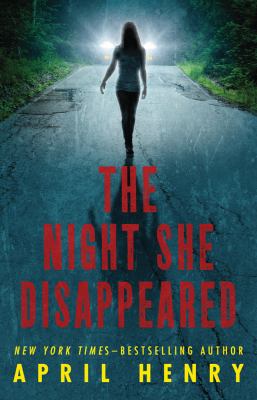
The Night She Disappeared by April Henry   night disappeared

Gabie agrees to switch nights working at Pete’s Pizza so that Kayla can do something else. Probably go on a date although she’s recently broken up with her boyfriend and doesn’t say exactly what she has in mind. Just a routine favor between coworkers. But something goes very wrong. When Drew answers a call for a pizza delivery and the man on the other end of the line asks whether the girl with the Mini Cooper–that’s Gabie–is delivering that night, Drew doesn’t think much of it. Gabie’s not there on her usual night. Drew answers that someone will deliver. And Kayla is the one.

Kayla doesn’t come back from the delivery and Drew calls the police. An investigation is launched. It’s clear that whoever took her had wanted Gabie, had known that this was Gabie’s usual night to work. What has he done to Kayla?

Days pass and the leads don’t look good. The primary suspect is shifty and untrustworthy. As is true in most all these cases, the police believe that Kayla is dead. While they are dragging the river for her body, Gabie convinces Drew that she feels Kayla’s presence and knows that she is alive. But for how long? How long does a psychopathic murder allow a girl to live–and under what conditions?
High school housekeeping: I enjoyed The Girl Who was Supposed to Die a few weeks back, so I decided to try another April Henry mystery. Again, I enjoyed the novel–the pace, the suspense, the way that teens Gabie and Drew feel inadequate to help and yet have very important skills to offer in the investigation. This is a fun summer read–quick and satisfying. I believe it’ll be entertaining to most teens including reluctant readers as well as those who are struggling and improving their reading skills. The inter-chapters include police reports, lab results from the crime scene, police interview transcripts and more. All of these tidbits drive the narrative forward. If you’re a mystery fan and want teen characters, Henry has given you another great option to choose from.

Posted in Family Problems, Fiction, Horror/Mystery/Suspense, Read 180 | Tagged , , , , , , , , , , , | 1 Comment

Adult Books for Teens: “Girls and Sex”

girls and sex  Girls and Sex by Peggy Orenstein

For adults who really want to be honest with teens about sexuality, this is the books we’ve been waiting for. For teens–guys as well as girls–who are having trouble navigating teen sexual culture, this is the book you’ve been waiting for.

Will you enjoy reading it? Honestly, it made liberal-hearted me a bit squeamish as it covered all the bases: hook-up culture in both high school and college, including the demand on girls that they give guys whom they don’t even know blow jobs (because the current generation of teens has a mantra that this isn’t real sex)–and the need for these girls to get pretty drunk in order to allow themselves to think this was OK/normal; the culture of ‘purity pledges’ that has come as a backlash (and the research that shows that the purity pledges don’t work/that teens who take them are more likely to get pregnant than those who don’t); date rape; rape on college campuses; binge drinking and rape; sexist images and stereotyping of female bodies; pornography that degrades and objectifies women as one of the only sex education tools that teens use because they are getting ‘abstinence only’ education at school; the negative to disastrous sexual encounters that result from ‘porn-ed’ and’ abstinence-only-ed’ (painful, humiliating sexual encounters modeled after porn and tens of millions of dollars of taxpayer money poured into abstinence with virtually no resulting decline in teen sex); the bizarre and very public tightrope walk girls must take between frigid prude and social-media-shamed slut.

Yes, the issues are so vast and numerous, it makes you spin. While there is discussion in the book of LGBTQIA issues (and interviews of lesbians girls), the book is largely about cisgender teens, about how girls and boys see themselves relating to one another sexually; about discomfort in challenging norms and about how to be assertive in taking back authority for one’s own body and one’s own pleasure.

Orenstein navigates the charged environment of high school and college sexual practices by interviewing over 70 girls about their experiences; she attends purity balls; she attends abstinence-only sex ed classes and classes where the discussion of sexuality is much more frank and without any judgment. Her research is eye-opening. By the time she arrives at her final chapter, which includes some suggestions for supporting girls and young women to be assertive about their sexual needs, even the faint-hearted will be agreeing with her. As she discusses the much more open and frank education that teens in Holland are given, we wish for the same for our own children. Yes, the conversations are difficult, even embarrassing for some adults (who had their own very lousy sex education as teens–so this is not a blame game). But when teens–boys and girls–are told the truth about their desires and then encouraged not to subvert them into a hook-up culture, but to form loving, respectful partnerships, everyone benefits. As it now stands–and as Girls and Sex makes very clear–the sexual culture for girls is one where girls are coerced into giving sexual pleasure to boys (often by somehow ‘owing’ oral sex to boys because they ended up at the same party) without getting any sort of sexual pleasure in return. So, uncomfortable as it is to discuss, the sexual pleasure of girls must be addressed.

Orenstein summarizes very well in her final paragraph:

“I want sexuality to be a source of self-knowledge and creativity and communication despite its potential risks. I want them to revel in their bodies’ sensuality without being reduced to it. . . . I want them to be safe from disease, unwanted pregnancy, cruelty, dehumanization, and violence. If they are assaulted, I want them to have recourse from their school administrators, employers, the courts. . . . We’ve raised a generation of girls to have a voice, to expect egalitarian treatment in the home, in the classroom, in the workplace. Now it’s time to demand that ‘intimate justice’ in their personal lives as well.”
High school housekeeping: While this is an adult book–and a very frank one–the discussions with the interviewees are about real life in high school and on college campuses. It would be sad to force you to navigate this craziness alone–but that’s what adults are doing when they hide the frank conversation and the possible solutions from you. So–I recommend that all high school students read this. Yes, boys, you need to read it, too. It will help you to understand why having sex with a passed-out girl (or boy, as in one case in the book) is rape. And it will help those of you who would never consider such a thing to understand how to talk to girls about what they want and need. So, yes, read it.

Posted in bullying, Human Rights Issues, Mature Readers, Non-fiction | Tagged , , , , , , , , , , , , , | Leave a comment

“The Last Good Place of Lily Odilon”

Last Good Place of Lily Odilon by Sara Beitia  last good place

Eighteen-year-old Lily Odilon has been in trouble before. When Albert Morales meets her, there are plenty of rumors swirling around her–she had been a party girl, but isn’t anymore; she had an ‘accident’ and was hospitalized for a long time; she sometimes acts very strangely.

None of that matters to Albert. He’s the new big city kid in the small high school in the small Idaho town of Little Solace. (Is that a great name for a town or what? Love the double meaning which added to the story.)  It seems that all the teens have known one another all their lives. Making friends is difficult. And yet, Albert finds Lily attractive, and she responds to his interest.

As the novel opens, Albert is on the run with Olivia, whom, we discover, is Lily’s younger, cynical sister. Albert had snuck into Lily’s bedroom and spent the night with her. She disappeared. Now the police and Lily’s parents are looking for her. Albert is the prime suspect, having seen her last. While Albert’s parents believe that he couldn’t have been involved in harming Lily, they think she has been nothing but trouble for him and have grounded him. Only Olivia believes that together she and Albert can find Lily before there’s another accident. Albert, usually one to fly under the radar, decides to take the risk for the girl he loves.

 
High school housekeeping: The Last Good Place of Lily Odilon is a great book for a suspense-filled journey in search of a missing girl. The story has a lot of reluctant-reader appeal with its suspense, its subject at the heart of the problem, and its satisfying conclusion. However, there are three storylines running at once, so someone who is a struggling reader might not follow the action. For the average reader, the three lines add interest and background knowledge, creating more suspense in the search. The reader learns about the relationship between Albert and Lily; what happened in the few days before Lily disappeared; and what happens on Albert and Olivia’s search (on foot, no less!) for Lily. Good pacing and lots of opportunities to root for the heroes. Give it a read!

Posted in Adventure Stories, Family Problems, Fiction, Horror/Mystery/Suspense, Romance, Young Adult Literature | Tagged , , , , , , , , , | Leave a comment

many cool entries in our ‘Blackout Poetry’ Contest

This gallery contains 38 photos.

More Galleries | Tagged , , | Leave a comment

Winners in the Blackout Poetry Contest

This gallery contains 5 photos.

More Galleries | Tagged , , | Leave a comment

Mystery, Romance: “Period.8”

period 8Period.8 by Chris Crutcher

The problem with having too great a time span between reading Chris Crutcher books is that I forget how good they are. Forget how the fast-talking, conscience-driven teens can connect with teachers who care about them. Forget about how teens are always seeking answers to the real questions of their lives, and that this sometimes means that zombies and fantasy worlds have to take a back seat.

The real world question that opens Period.8 is about sexual cheating. The novel doesn’t mince words. When Paulie Bomb (Baum) confesses to his girlfriend Hannah that he has cheated, she asks for clarification: “‘Did you put your dick into someone who wasn’t me?’”

The thing is, Paulie could have gotten away with cheating–no one knew–but he doesn’t want to end up being a jerk like his dad, who is a serial cheater, one who makes Paulie’s mom pathetic in her need for him. In Period 8–which is something like a counseling session and not a regular class (no credit, no attendance and anyone can join)–Hannah lets everyone know what’s up. The guys argue that it’s their genetic destiny to cheat, and that their brains aren’t quite formed yet. The girls are not buying their excuses. When the students ask the teacher, Logs (Mr. Logsdon), about his experience with counseling and how well it worked, he answers, “‘I live with a cat.’” So yes, there’s humor in all this as well.

Unfortunately, teen romance and cheating aren’t the worst things that happen. An A student, Mary Wells, (aka ‘Virgin Mary’ because her dad is so strict and she is so perfect) appears to be missing although she’d never missed a day of school in four years. What happens to her and why is the mystery on which Period.8 is centered. That the madness involves Paulie and Hannah in ways that they can’t imagine, that the confidential cocoon of Period 8 appears to be violated, that people will be running for–and risking–their lives, makes this one a heartstopper.

High school housekeeping: The reading level is easy although there are many characters whose personalities must be sorted immediately. And the Lexile level (HL 660) doesn’t indicate how deeply Crutcher is willing to explore teen emotionality, the inner psyche, and the difficulty with long term relationships. Also, the wittiness of the banter among students and teacher is a cut above much YA novel dialogue. So on the whole, Period.8 works at many levels. It’s a great read for the reluctant reader with intrigue that will drive him or her along. For more sophisticated teen readers, the thoughtful discussion of relationships, not just romantic, but parent-child relationships`, will also add interest.

Bonus round: As in many of Crutcher’s books, several of the students (boys and girls) are athletes–swimmers, rowers, and wrestlers. There’s a lot of  basketball action very well described. When the stuff hits the fan, the athletes push their ability to endure pain and fatigue to the outer limits, something that any true sportsperson can connect with.

OK–I admit it. I love Chris Crutcher. But this is my new favorite because it has all the edginess that teens now demand combined with all the author’s usual insights. Don’t miss this one!

Posted in bullying, Family Problems, Fiction, Hi-Low/Quick Read, Horror/Mystery/Suspense, Mature Readers, Read 180, Young Adult Literature | Tagged , , , , , , , , , , , , , , , , | 1 Comment

Mystery: “The Girl Who was Supposed to Die”

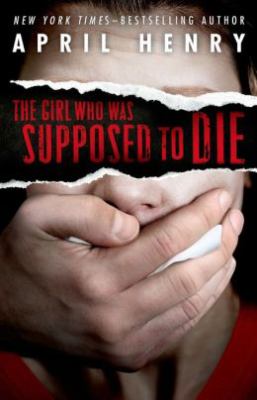
The Girl Who was Supposed to Die by April Henry  girl supposed to die

A teen girl comes to consciousness on the floor of a cabin in the woods. She can’t remember anything. She’s sore and when she touches her fingers to the floor, excruciating pain rips up her arm. Two of her fingernails have been torn out. As she wonders who she is, why she is in the woods, and why she has been tortured, she hears two men talking about taking her out into the woods to finish her off.

When one of the men stays to do the job, the girl discovers she has some great self-defense skills. How did she learn them?

This girl–whom we finds out is named Cady–must run for her life. She pairs up with a guy she’s never met before, and they work against time as well as an unknown enemy that has apparently murdered her family for reasons that aren’t clear to her. The police are looking for Cady as an escapee from a mental institution. Is she sane? Has she hallucinated her experiences? Or worse–did she kill her family?

The Girl Who was Supposed to Die is a fast-action thriller of a mystery. In just over a day, Cady must learn the truth and work to uncover the terrible secret that threatens all she has known. But first, she has to remember her past.

High school Housekeeping: The Girl Who was Supposed to Die is a super-quick white knuckler that will appeal to all teen fans of mystery and thrillers. It’s also a great read for the reluctant reader because s/he’ll need to speed from chapter to chapter to put together the pieces of Cady’s past. Henry hasn’t made the mistake of stopping to add chapters of unbelievable romance, She sticks with the jet-fuel of the story. The short form and easy reading level (about grade 5) make it accessible to all teens (but the subject matter is a bit too brutal for your younger siblings–it’s meant for you). If you are a teen looking to get hooked on books, try this one. The author, April Henry, has written several such mysteries. Keep going!


Posted in Fiction, Horror/Mystery/Suspense, Young Adult Literature | Tagged , , , , , , | Leave a comment

Romance: “Forever for a Year”

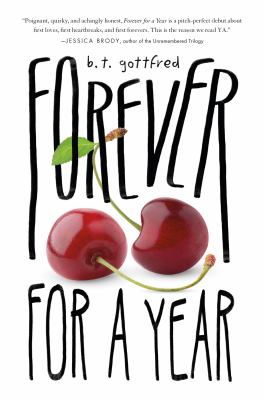
Forever for a Year by B. T. Gottfred  forever for year

Fans of romance, teen angst, realistic fiction, child-parent relationship issues–this is your next read! Yes, all of you.

I’m so glad I went to the Ontario Teen Book Fest and found some authors who are new to me. If you are one of my students, you know how blah I feel about formula romance (but that I still have lots of it in my library because I am a big believer in reading stuff you want to read, stuff you enjoy). I decided to give Forever for a Year a try because the discussion at the book fest made it sound like it was worth a chance. So glad I did–because, sweeties, this is NOT your formula romance. But here’s the great thing for you formula romance readers–I think you’re going to like the book as much as the rest of us.

Carolina and Trevor seem to be an unlikely couple-to-be on the first day of their freshman year of high school. Not because they hate each other and then stop hating each other. They are immediately, irresistibly drawn toward one another. But Carolina’s best friend’s older sister, who is popular and going to show the two girls how to become popular, puts the nix on the possibility of the relationship.

For his part, Trevor has just relocated from California to the small town of Riverbend, Illinois so that his family can try a fresh start after his depressed mother tried to commit suicide. Emotionally, Trevor is also in a dark place. He has no real sympathy for his mom. His little sister appears to be the adult in the family. They have a truly hot mess of a dynamic. Though Trevor is unenthusiastic about school, he is interested in Carolina the moment she lends him a few sheets of paper. But his cousin lets him know that Carolina was a nerd in eighth grade, so she is not someone to bother with.

Happily, the pair decide to make their own moves. Their first love is sweet, silly, obsessive and realistic, including early slobbery kisses and the need to search for information about ‘sex stuff’ on the internet. As they increase their sexual expertise, they increase their obsession with one another, endlessly texting, making declarations of love and more.

Eventually, the sort of obsession the pair have with one another has to falter; they have to remember the other things they care about in their lives like friends, school, and sports. They question their own relationship just as they question their parents’ relationships (Carolina’s family situation is a hot mess that almost equals Trevor’s.) Still, it’s very hard to come apart, so–very realistically, I believe–they continue to make up. How they negotiate their first love is a lot of fun for the reader.

High school housekeeping: Although Forever for a Year is a long book (over 400 pages), it moves very quickly with the back and forth between the two characters’ narrations of events. Trevor and Carolina are both very sweet, but they do explore both their emotionality and their sexuality, so this is a book for mature readers. While the issue of first love is at the heart of the novel, the tour through family dynamics and behaviors of far-less-than-perfect parents will enhance the book for teen readers.  If you’ve read Rainbow Rowell’s books Eleanor and Park and Fangirl–and liked them–definitely give Forever for a Year a try.

Posted in Family Problems, Fiction, Mature Readers, Over 375 pages, Romance, Young Adult Literature | Tagged , , , , , , , , , , | Leave a comment