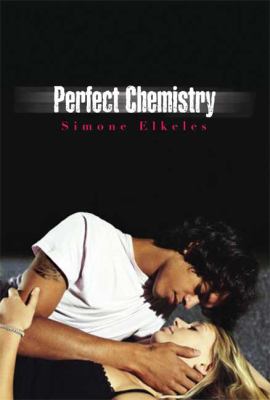
‘Perfect Chemistry”

   Perfect Chemistry by Simone Elkeles

Perfect Chemistry is neither new nor unknown to students—and even though those are the two reasons I usually review books, I wanted to find out about this novel because it’s wildly popular at Chaffey High. I thought I might ‘sell’ it at Colony. Since it’s not on my summer reading list, I tried to get my son to have a go at it and then tell me about it, but he just said, “Is this a parody?” and that was it for him.

Now that I’ve read it, I know exactly why he made that comment. The characters are pretty one-dimensional. Super popular pom-pom girl Brittany Ellis dates the super popular star football player. Alex Fuentes, a Mexican gang member can’t find his way out of his life—one he’s only chosen into order to protect his family from the Latino Bloods. Brittany’s mom is utterly superficial, wants Brittany to be perfect in order to make up for the fact that Brittany’s sister, Shelley, has cerebral palsy and is also mentally slow. Her dad is pretty much absent, always at work, making lots of money. Alex’s mom is a loving, overprotective stereotype of the Hispanic mama. Brittany’s friends are pretty much shallow, and Alex’s friends are pretty much gang bangers.

Brittany and Alex fall for one another when they are forced to be partners in chemistry class—a subject they are both good at when they aren’t too busy dealing with personal issues. Should Brit break up with her hot boyfriend—also in the same chem class—and go for Alex? Should Alex try to straighten out his life for Brit? Well, of course they should! If they do, they can strive for those things that really matter to them. Alex secretly wants to go to college. Brit is sick of being seen as half of the ‘golden couple’ on campus. She can become ‘real.’

So, yeah—it’s an old story, not told very well. BUT, let’s face it—if you like stories about star-crossed lovers, if you’d like to read a modern, suburban version of the Romeo and Juliet story, you are going to love this book. And it does deal with the choices teens have to make when life isn’t offering them what they want. Romance fans, this is your novel.
Posted in Family Problems, Fiction, Hi-Low/Quick Read, Literary Read Alike, Romance, Young Adult Literature | Tagged , | 1 Comment

“Matched” (on Ms. W’s summer reading list)

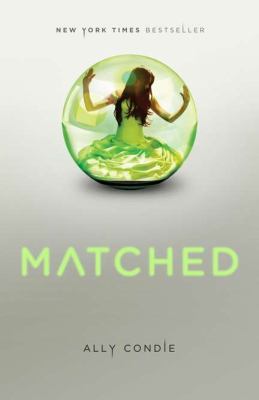
Matched by Ally Condie  

“It is difficult to get the news from poems, yet men die miserably every day for lack of what is found there.”
—William Carlos Williams

Yes, Matched is another future dystopia, but like Hunger Games, this one is a great read. And yet the story itself isn’t similar to Hunger Games. So—enjoy it on its own terms.

Matched takes its title from the important milestone in teens’ lives—at age seventeen—when they are formally matched to their life’s partner. This person is someone they don’t know, living in another area of the country, perhaps. Yet matches succeed because the society has all the data necessary to pick the two people who are most perfect for one another. The two will get to know one another over the next four years, and, at twenty-one, will be united. They will have until they are thirty-one to produce children (maximum two); after that, childbearing isn’t allowed because, statistically, it can produce kids that aren’t perfect. Some members of society are ‘singles’ and don’t receive matches.

Oddly, when Cassia goes to her matching banquet (the only time she is allowed to wear something beautiful and colorful), she is matched with her best friend, Xander. Everyone is envious because she already knows and loves this boy. But later, when she goes home and places his data card into her reader, he disappears momentarily and a different match shows on the screen, another boy she knows—Ky, who is from the outer regions, whose parents are dead, and who was adopted by his aunt and uncle.

Right after Cassia’s ‘match banquet,’ her grandfather has his 80th birthday banquet, which is really the last celebration before death, as the society requires everyone to die on the 80th birthday (data shows it’s the best time to die). On this night, Grandfather lets Cassia know of poems he had hidden, poems not belonging to the 100 preserved by the Society—and therefore illegal to have. One of the poems is Dylan Thomas’s “Go Not Gentle into that Good Night,” and Cassia realizes this isn’t just about death but also about not obeying (gently) the Society when it doesn’t allow individuality.

Cassia says that she, like others, has always believed, “Following the rules. Staying safe. These are the things that matter.” But once she finds Ky in the data port, everything is open to question. She realizes that her father breaks simple rules and laws out of love for the family—and that her mother follows all the rules for the same reason. Cassia needs to find out if ‘falling in love with someone’s story is the same thing as falling in love with the person.’ She needs to know if danger and uncertainty are worth the opportunity to make choices about life and love.

YA dystopian novels are taking a hit right now. The Wall Street Journal (a conservative business newspaper) just published an opinion piece about this. (If you’d like to read it, click here.) This surprises me as the new YA novels are very much like George Orwell’s books (Animal Farm and 1984), which are generally loved by conservatives. I think a discussion of this social issue would be a great topic for a research paper or a literary analysis paper. Another great topic would be to compare Matched to the literary and art works it discusses (and which are outlawed by its Society), particularly the Dylan Thomas poem. By the way—the quote from the poet William Carlos Williams isn’t in the novel, but it was so much of what the book is about, I had to mention it.

If you’re just looking for a good read and nothing more, this is still your novel. The characters are complex and no one is a ‘bad guy’ in the love triangle that evolves. As a bonus, its star-crossed lovers, just like Romeo and Juliet, are bound for trouble.

Posted in Adventure Stories, Controversial Issue/Debate, Fiction, Human Rights Issues, Literary Read Alike, Romance, Sci-Fi/Futuristic, Young Adult Literature | Tagged , , | 1 Comment

“Between Shades of Gray” (on Ms. W’s summer reading list)

Between Shades of Gray by Ruta Sepetys   

As teens, we don’t hear much about Joseph Stalin’s reign of terror in the 1940s. The terrible things that he was responsible for are often placed in the shadow of the Holocaust. Yet Stalin was responsible for the death of 20 million civilians, and his reasons for deporting them from eastern European countries to work camps and prisons in Russia made no more sense than the Holocaust. As students are working on their senior projects, they often ask me for a work of fiction that discusses something monumental like the Holocaust. But they know that all of their classmates are selecting novels about the Holocaust, and they want to work on something different.

If you are one of those students, here’s your book. And if you are interested in the great tragedies of history, this is your book. But of you just want to read a well-told story about a teenage girl living through the most difficult circumstances imaginable and yet maintaining her will to live, then—this is your book.

Lina is a fifteen-year-old Lithuanian in 1941. Her father has been removed, apparently to a Russian prison camp. She, along with her mother, Elena, and her brother, Jonas, is taken to a labor camp in Siberia. On the way, the cattle-car train stops in front of a hospital and the prisoners believe that those who are wounded or infirm will be helped. Instead, a woman who has just had a baby minutes earlier is thrown on the car with the newborn. You can guess the outcome of that, but reading of the baby’s death and then of the mother’s fate is no less tragic for it’s predictability.

The journey to Siberia will remind you of narratives of the Holocaust or movies like Schindler’s List. The circumstances in the cattle cars—crowding, darkness, hunger, no toilets, people dying and being thrown off when the train cars stop at stations—are absolutely horrific. Lina’s mother, Elena, is wise to have sewn valuables into her coat because she’ll need them to barter for the lives of her children.

And life in the labor camps in Siberia is a continuation of the horror. The Lithuanian prisoners’ only crime is that that are considered enemies of the Soviet state—that is they are well-educated thinkers or the innocent children of those thinkers. (In Lina’s group, we have a teacher and a librarian. Her own father is a college professor). Lina’s thoughts move back to her ordinary life: the local librarian and story hours, Christmases past, her teacher discovering her promise as an artist, and her hope of attending an art program in the Lithuanian capital. These past events punctuate her current reality.

Lina is a fighter. And the way she can fight through starvation, through the freezing cold of living in the Arctic Circle, and through the backbreaking labor of digging for beets and potatoes is to record the truth in her art. She takes a great risk in drawing the members of the NKVD (Secret Police), the prisoners, and the circumstances of their existence. She creates a record of the truth, to be found by a future generation.

One of the characters makes an interesting observation when he says that Hitler and Stalin are competing to be the ruler of hell. You know that there are people for whom power is everything. But you also question: Why create hell to rule over?

Posted in Fiction, Historical Fiction/Historical Element, Human Rights Issues, Young Adult Literature | Tagged , , , | Leave a comment

California Young Readers Medal Nominees 2011-12

This slideshow requires JavaScript.

The California Young Reader Medal is one of the few programs in which the students/kids themselves vote for the winners. Millions of California students participate. I wish I had more time to encourage and provide the program, but it’s tough, especially with two schools. However, let’s look at this year’s nominees and see what we can do to get voting in the 2011-12 school year.

In order to vote, you have to have read all three of the books. I’ve already read and reviewed two of the three. (Sadly, I can’t vote because I’m not a teen!) One of the books is on my summer reading list; another is the first book in a series–and the second is on my summer reading list. So if you don’t know what to read this summer, why not these?

The California Young Reader Medal Program Nominees for 21011-12 school year:

YOUNG ADULT (Grades 9-12)

Graceling by Kristin Cashore. Harcourt, 2008.

Beastly by Alex Flinn. Harper Teen, 2007.

If I Stay by Gayle Forman. Penguin Group, USA, 2009.

Posted in Adventure Stories, Fable/Fairy Tale/Fantasy, Family Problems, Fiction, Romance, Young Adult Literature | Tagged | 1 Comment

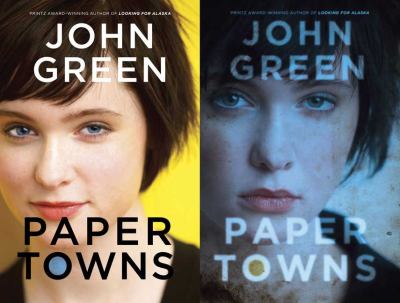
“Paper Towns” (On Ms. W’s summer reading list)

Paper Towns by John Green                                      

Unscrew the locks from the doors!

Unscrew the doors themselves from their jambs!

–Walt Whitman, “Song of Myself”

I admit it. I just love John Green’s books. I started with Will Grayson, Will Grayson, which I guess is sort of backwards because it was his most recent work. But I loved it so much that I stepped back into Looking for Alaska and now Paper Towns. Once again, Green has done a great job of showing teen relationships—the group of guys at the center of this story (our protagonist and his two best friends) is hilarious. Q (for Quentin), Ben, and Radar (who edits Omnictionary, a fictional Wikipedia, and whose parents own the world’s largest collection of Black Santas) are spot-on in their conversations, their ‘dissing’ one another, their geekiness, and in the way they ultimately have one another’s backs. But while we do have a bit of ‘bromance’ here, the deeper story is about Q’s relationship with Margo Roth Spiegelman.

The story grabs the reader in the prologue when Q and Margo, living in Orlando, Florida, are only 10 years old. On a trip to a local park, they find a dead man under an oak tree. Later they learn that he’s killed himself. While Q is very much afraid, Margo is curious and steps ever closer. This tells us a lot about their personalities. Later a character will say of her, “’She’s the kind of person who either dies tragically at twenty-seven like Jimi Hendrix or Janis Joplin, or else grows up to win, like, the first-ever Nobel Prize for Awesome.’”

The story itself takes place just weeks before Q, Ben, Radar and Margo are to graduate. Q and Margo live next door from one another, but over the years, they have separated as friends because Margo is beautiful and hangs with a cooler crowd than the band geeks. Q has always had a crush on Margo, and so when she appears at his bedroom window and tells him they are going to pull an all-nighter in which she plans revenge on her not-true friends (including one who is sleeping with Margo’s boyfriend and that boyfriend himself), Q ditches his safety/comfort-first personality for the chance to hang out with Margo. Their adventures are wacky—the kinds of things you wish you could really do to the people who betray you, but never can. (So live that fantasy through this book—it’s entertaining! Just to whet your appetite—they use 3 whole catfishes, Veet, Vaseline, Mountain Dew, tulips, water, tissues, blue spray paint.)

At school the next day, Q is wondering if he’ll be able to connect with Margo once again. But she’s not there. In fact, she’s disappeared, something that’s happened a few times before as she has careless parents and seeks attention. But this time, she doesn’t return. And now Q has a mission—to find her, to figure out if she’s committed suicide—certainly a possibility judging from the clues she’s left. He begins to follow her path starting with a volume of Walt Whitman’s Leaves of Grass and using passages she’s highlighted. Q seeks Margo in ‘paper towns,’ neighborhoods/subdivisions that were built and then abandoned.

“’I can hear Margo that night as we drove around Orlando. I can hear her saying to me, “I don’t want some kids to find me swarmed with flies on a Saturday morning in Jefferson Park.” Not wanting to be found by some kids in Jefferson Park isn’t the same thing as not wanting to die.’”

In seeking Margo, the guys and one of Margo’s friends (now also girlfriend of Ben) take a 24-hour road trip. It’s life-changing, just the way a graduation should be.

Just a note here: If you need to write a literary analysis, comparing the action/characters in this book to the characters/authors in the classic literature they are reading (Walt Whitman, Captain Ahab in Moby-Dick) would be a lot of fun. It’d be creative, too, and your teacher would think you were wonderful for bridging the literary canon and YA literature. 😉 )

Posted in Adventure Stories, Family Problems, Fiction, Literary Read Alike, Young Adult Literature | Leave a comment

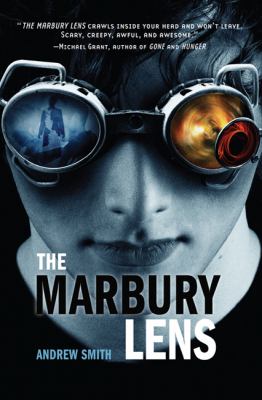
“The Marbury Lens”

    The Marbury Lens by Andrew Smith

Wow—this is the creepiest YA book I’ve ever read!

Before I get to the details, I do want to admit that it’s deeply flawed—because if you read it and then are disappointed in the fact that the Marbury world and Jack’s ‘real’ world don’t meld well, you won’t think, ‘Dang! Ms. W. will say anything to get us to read a book.’ So for the sake of honesty, I admit that I was mad when the book ended as it did—it felt like the author just couldn’t work out his vision, and so he quit. That said, perhaps he was saving the tie-up for a sequel as so many YA books these days are trilogies. The fact remains that I was riveted by the first chapters and had to finish the book ASAP. The fact remains that I think this is a book that guys who almost never read will be pulled into and have to finish.

The blurb that downloads with The Marbury Lens’ cataloging information is a good summary:

“After being kidnapped and barely escaping, sixteen-year-old Jack goes to London with his best friend Connor, where someone gives him a pair of glasses that send him to an alternate universe where war is raging, he is responsible for the survival of two younger boys, and Connor is trying to kill them all. ”

The alternate world is Marbury—it’s a brutal, post-apocalyptic universe where bands of monstrous people with one black eye and one white eye, dressed in nothing but codpieces (little garments to cover their genitals) made of human scalps and necklaces made of human teeth roam the desert and mountains, finding and killing ordinary humans, who are then eaten by hoards of large insects. Connor, Jack’s best friend in life, is one of these monsters in Marbury.

Over and over, Jack uses the lens, or glasses, that are an entrance to Marbury because he knows that in that world, he is responsible for the well being of two younger boys.

I am very interested in what students think of this book, but here’s an important caveat: It has a record attached that says it’s for 9 years and up. I think this is there because all YA books just get that designation automatically from the publisher. But some are for more mature readers, and I (yes, liberal reader that I am) would NOT recommend this book for anyone under 14 years. I do believe that teens can read about scary, terrible things because scary, terrible things happen in the real world, and it helps to know what they are. But in fairness to more conservative readers, I’ll add that I went online to see if I could find a review by a parent. I did find one from a woman who bought the book for her 15-year-old son, but read it first and thought it was totally inappropriate. So, keep that in mind.

Jack, who is drunk and passed out in a park, is kidnapped early on. His kidnapper is mentally ill and a sexual abuser. Clearly he has kidnapped (and very possibly killed) other kids. Clearly, he intends to kill Jack, but he wants to rape him first. Though he doesn’t succeed, the details of his efforts really aren’t for kids. Nor are the details of Marbury, which has reverted to a sort of Dark Ages, with violent hand-to-hand combat, heads cut off and nailed to walls through eye sockets—well, you get the idea.

Jack has redeeming qualities, including his needs to protect the two younger boys in Marbury. He’s actually a very nice guy in a horrific situation. I just needed there to be some explanation of how he got there, how the terror of his kidnapping was connected to Marbury.

Posted in Controversial Issue/Debate, Fiction, Horror/Mystery/Suspense, Mature Readers, Sci-Fi/Futuristic, Young Adult Literature | 1 Comment

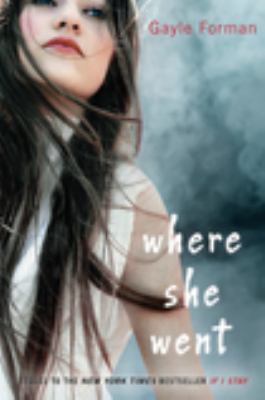
“Where She Went” (on Ms. W’s summer reading list)

Where She Went by Gayle Forman 

I loved If I Stay, so I had to jump into Where She Went. This time, Adam, Mia’s guitar-playing boyfriend, is the narrator. And in the three plus years since Mia’s accident, Adam has become a rock star—a real one. And since Mia has cut off all communication with him, he now has a fabulous movie-star/perfectly beautiful girlfriend who is several years older than he is (but still only in her late twenties).

Adam does a great job of narrating all the difficulties of being way too famous. It’s hard not to be able to walk outside without everyone flipping open cell phones for a picture, without the paparazzi tagging along trying to catch him in a compromising position, the tabloids always looking for a ‘baby bump’ on his girlfriend.  Add to this the fact that his band is coming apart because his band mates are starting to see him as a prima dona—interviewers want to talk only to him because Adam writes the songs.

And then there’s the irony. Adam and his band, (same one as in If I Stay—Shooting Star) became famous because Adam’s creativity exploded when Mia left him. In his anguish over her desertion, song after song poured out of him, culminating in the ultra-platinum album Collateral Damage. Now the fame is inhibiting his creativity. And though he once thought that rock stars who were hooked on drugs were pathetic and weak, he finds that he needs anti-anxiety medication to deal with the fans and sleep meds to get any shut eye. In short, at only twenty years old, Adam is falling apart.

Mia chose to go to Julliard as she had planned to do before the accident. She worked hard to regain her competence as a cello player, and she became the virtuoso that she was destined to be. In the smaller world of classical music, Mia is also a star.

One day, when Adam is in New York and decides that he is too stressed out to join his band mates on a flight to London to kick off a 67-stop tour (he doesn’t want to tour at all), his manager suggests that he stay over an extra day to rest. Adam sees Mia’s photo on a poster for a classical concert in Carnegie Hall and decides to go.

Getting an opportunity to talk to Mia, Adam also gets that rare chance that almost none of us ever have, but that all of us crave—closure. He gets to ask those angry questions—‘Why the hell did you dump me? Wasn’t I good enough for you? Do you have any idea how much I loved you?’

While I think the novel has too jolly an ending, I did love the way Mia and Adam negotiated the minefield of their relationship.  Mia’s reasons for doing what she did are surprising, but make good sense in the context of her tragedy.

Warning: This is one of those sequels that I wouldn’t read until I read the first book—If I Stay. Both are short and absolutely worth the trouble.

Posted in Fiction, Hi-Low/Quick Read, Romance, Young Adult Literature | Tagged , | Leave a comment

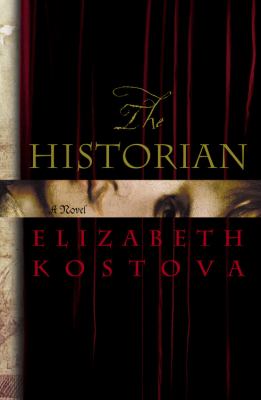
“The Historian”

The Historian by Elizabeth Kostova 

This one isn’t on my summer reading list, but I want to make a quick note of it because I have a couple of students each year who want to read something with vampires that doesn’t fit the teen ‘Twilight’ mold. These students are happy to read a longer book and are looking for some serious vampire lore. Well, it’s been a few years since I read The Historian, and while I don’t remember many of the details (ah, aging!), I can tell you that it’s the perfect book for those students who want to read something that encompasses the vast store of vampire mythology.

The Historian centers around a sixteen-year-old American girl in the 1970s whose father is a diplomat and travels a lot, leaving her with a caretaker in Amsterdam. (Her mother is dead. And although I’m calling her ‘the girl,’ that isn’t just because my memory is bad. She remains unnamed.) One day she discovers a weird journal in her father’s paper. It has nothing written in its pages, but it does have a strange dragon image on the first page with the word “Drakulya” imprinted there. With it is a packet of letters. She begins to read, “My dear and unfortunate successor…” Right then, she knows that her dad has a second, secret life, that he is in constant danger and that he has been protecting her from the truth.

Basically, when her father tells her how he got the journal and how it has affected his life—it appears that his own mentor, history professor Bartholomew Rossi, was killed over it—she starts a trip across Europe seeking out the historical and cruel Vlad the Impaler. And she has to go it without dad because he mysteriously disappears (as did Rossi years before). However, she isn’t entirely alone; she has a companion (and romantic interest) to help her.

The novel will take you through all the folklore that causes people to associate the real Vlad with the preeminent vampire Dracula (and tell you all the horrific stuff the historical Vlad actually did to people—they didn’t call him the Impaler for nothing). One of the most important things that she has to do is figure out whether Dracula is still alive, not an easy task. If he is dead, where was he really buried? She tracks down all the places that legend says he has been interred. Did someone really cut off his head? This novel is as much a mystery as it is a book of the supernatural. Reading it, you’ll become engrossed in the heroine’s search as she uses research, maps, old manuscripts—anything she can find—to go from city to city throughout Europe in her quest for Dracula and to find out what happened to her father.

Generally, I review books that have wide appeal, but I needed to add this because it is such a ‘big’ story—large scale, romance, gothic/horror, intense vampire lore—that it’s perfect for the two or three of you each year who seek just such a novel. And, hey—one of the details that I do remember is that it has a truly evil, living-dead librarian. Enjoy.


Posted in Fiction, Historical Fiction/Historical Element, Horror/Mystery/Suspense, Over 375 pages, Romance, Supernatural | Tagged | Leave a comment

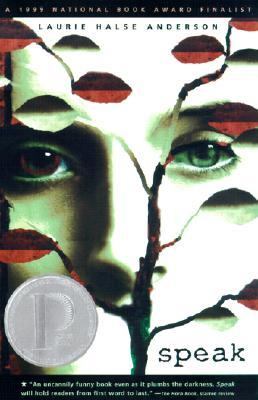
“Speak” (on Ms. W’s summer reading list)

    Speak by Laurie Halse Anderson

I’ve ‘book talked’ Speak often and used Anderson’s 10th anniversary poem to celebrate Banned Books Week this school year. We ‘library ladies’ at Chaffey and Colony have had such a great response to the book that it feels like everyone knows about it. But that may be off the mark—and it is one of the best books about school harassment that I’ve read. So, since it’s on some quality summer reading lists, I didn’t want to leave it off here. If you missed it, this is one to have on your own summer list.

Just before the start of her freshman year, Melinda makes a 911 call to break up a party. When her classmates find out that she was the caller, she is ostracized—no one will speak to her or interact with her in any way, except one new girl that Melinda doesn’t actually like.

Melinda loses her voice. She is utterly silent and alone. It won’t take you very long to figure out what happened to her at the party and why she called 911, but you will feel such compassion for her as she tries to make her way back to normalcy. The way the book is broken into grading periods, with Melinda’s grades sinking further in each quarter, is creative. You’ll identify with the narrative of the kids at school who torment her and of the school employees who are less than helpful. But Melinda has that one great teacher that everyone needs—in her case, it’s her art teacher—and he helps her to find her voice.

While the final scenes in which Melinda must find her voice might be a bit unrealistic, you’ll still be cheering out loud for her. This is one of the books you’ll always remember. After you read it, watch Anderson’s reading of her poem celebrating Speak’s 10th anniversary. Find it here.

Posted in Controversial Issue/Debate, Family Problems, Fiction, Young Adult Literature | 1 Comment

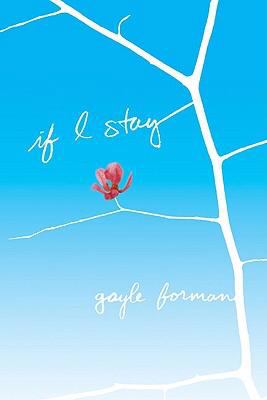
“If I Stay” (One on Ms. W’s summer reading list)

If I Stay by Gayle Forman  

Mia plays the cello and is an oddball in her family, which is made up of punk mom and tattooed, eccentric, bicycle-riding, punk band-member, record-store employee dad; and sweet little brother. While they are all blonde and blue-eyed, she is not. (And if you’ve been paying attention to the genetics unit in your science class, this should strike you as strange.) But Mia has inherited the family music talent and is headed for Julliard to train as a classical cellist. And lucky girl—she’s got a great punk guitarist boyfriend, who loves her for all that she is.

The world tilts off its axis when Mia’s family decides to take a little drive on a ‘snow day’ off from school and is involved in an accident. The scene is narrated in a heartrending mix of reality and emotion as Mia stands beside her own body and watches her dead parents as well as the paramedics who are working on her. “You hang in there,” one tells her. (Yes, you will cry.) Even while Mia’s best friend, Kim, visits her in the hospital, you laugh at her sense of humor while understanding how devastated she is. (“If you die, there’s going to be one of those cheesy Princess Diana memorials at school,” she tells the comatose Mia.)

Throughout her hospital stay—her surgeries and critical care—Mia thinks about the progress of her relationship with her boyfriend, Adam and how they fell in love over time—mostly sweet and beautiful, a little bit sexy. Though Mia is comatose, she understands all that happens around her. She knows that her family members are dead. When her grandfather visits her and tells her he would like her to stay but understands if she, too, must leave, it becomes clear that Mia doesn’t know what to do. Should she live—and stay—when there’s so little left for her and so much pain and grieving to deal with if she wakes up?

What makes a person want to live? Why should a person try to live in the face of terrible tragedy? This short novel is a lovely look at what makes life worth living, at the beauty of young romance and at the endurance of family ties. I’m kind of an old fart who’s read a lot and pretty much never cries about a book. This was a significant exception. Read it.

Note: For the entire list of Ms. W’s Young Adult summer reading, click here.

Posted in Family Problems, Fiction, Hi-Low/Quick Read, Romance, Young Adult Literature | Tagged | Leave a comment