“What Happened to Goodbye”

What Happened to Goodbye by Sarah Dessen 
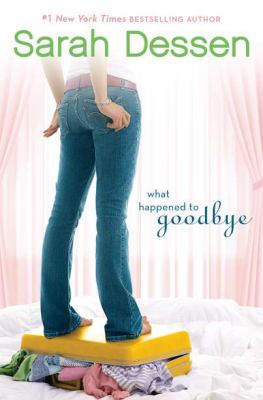
I wanted a good book—realistic, but one in which characters could work out their problems. Some good writing. So I picked up Sarah Dessen because I knew she’d deliver.

In What Happened to Goodbye, McLean, now in her senior year, has been on the move with her dad for a couple of years. This following a really ugly divorce after her mother admitted that she was having an affair and in fact, was pregnant, as it ends up, with twins. To make matters worse, her mom’s new husband (and father of the twins) is the coach of the Defriese University basketball team. McLean is named after the previous coach and her dad is a rabid fan. Or was, until his wife left him for the new coach and for the scandal that ensued.

McLean’s dad is a restaurant consultant. He works for a company that buys restaurants and reinvents them, creating profitable businesses. He has to move after each restaurant is fixed. McLean moves with him, reinventing herself at each new school—she changes her name and becomes a cheerleader in one place, a goth girl in another. Yet when the two arrive in Lakeview, McLean makes friends and realizes that she cares about others, especially her super-smart nerdy next-door neighbor, Dave.

Though as a child McLean always had great times with her mom when her dad was working night and day trying to make his own restaurant profitable, and though she is told that her parents’ breakup was both their faults, she can’t forgive her mom and doesn’t want to be around her or her new family. By not complying with the legal terms of custody, she frustrates her mom, who consistently tries to reconnect with her and is willing to involve lawyers to get what she wants.

Though Dessen makes some weird writing choices in the last quarter of the book, giving outcomes of scenes and then giving the details of the scene (thus foregoing some of the suspense), I loved the characters and how they interact with one another. I love how McLean has to come to terms with her new life, with her mother, and with her new friends.

It was fun watching a character work out serious problems in a way that’s not perfect—things can’t be perfect—but in a way that’s positive. Because I liked McLean and wanted a good future for her. I think you will, too.
Posted in Family Problems, Fiction, Romance, Young Adult Literature | Tagged , , , , | 2 Comments

New Series–Quick Reads

This slideshow requires JavaScript.

Two New Series 

I’m always on the lookout for books that appeal to teens who are English learners. Unfortunately, they aren’t always easy to find. Most books written at a reading level that challenges you and pushes your reading skills are boring—they don’t discuss teen issues.

I found two new book series that I think may work for English learners. The first is called Night Fall. It’s horror fiction. The second is called Surviving Southside. It’s about urban (inner-city) teens at Southside High School. We now have some of the titles in our library and others are on the way. Come on over to the library and check one out—if you like it, check back for new titles. Let me know what you think!

Posted in Controversial Issue/Debate, Fiction, Hi-Low/Quick Read, Horror/Mystery/Suspense, Romance, Sports, Supernatural, Young Adult Literature | Tagged , , , | Leave a comment

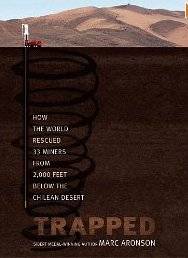
“Trapped”

Trapped: How the World Rescued 33 Miners from 2,000 Feet below the Chilean Desert by Marc Aronson

You’ve heard about the Chilean (and one Bolivian) miners trapped 2,300 feet underground from August 5 until October 13, 2010–more than two months–after 708,000 tons of rock sealed them in complete darkness. But what do you know about how the rescue played out?

I thought I knew this story from the news reports, but Trapped showed me how little I really knew. It moves back and forth between what happened above ground and what happening underground for that two months.

The lives of the men show their real heroism: how they decided they would not resort to cannibalism (they were slowly starving before above-ground contact was made); how they worked and found leaders. Meanwhile, they could hear drills and knew that people were trying to find them, but the maps of the mine were so bad and so far off from reality that rescuers were hitting the wrong places. With each failed attempt, the men had to keep themselves from despair.

The many problems above ground—drills that worked too slowly and that broke against metal underground, wildly inaccurate maps of the mine shafts—show us why it took folks from all over the world to save the men. The stories of NASA scientists, Center Rock (a drilling company), the ‘paloma (dove) shafts, just wide enough to carry food and necessities and working around the clock—all the details—will give you faith in humankind. Knowing what happened affirms the resilience of the human spirit.

This is also a cautionary tale, as noted in the afterword. Though the miners lived because they behaved so well in the first 17 days when they had no contact from above ground and were rescued with the benefit of great technology, a big reason they were trapped is because the San Jose Mine, where they were working, had no escape routes. Mining is always very dangerous, but the mines are required to have two escape routes. In addition, the mine owners never updated their maps of the mine shafts, making rescue very difficult, ‘a shot in the dark.’ The author cautions us to also be people who ‘behave well,’ just as the miners did—and that means valuing miners and being alert to companies that have good mining practices.

This easy reading, tiny book—a little over a hundred pages—has lots of bonus material: diagrams, charts, color photos, a glossary, a timeline, and useful websites. In addition, the couple of pages on “How I wrote this book” discuss “What I learned that could be useful for students writing research reports.” It’s both powerful and succinct. I recommend this book to all our teachers and students, including those who are working on their reading skills. Check it out!

Posted in Adventure Stories, Hi-Low/Quick Read, Non-fiction, Young Adult Literature | Tagged , , , | Leave a comment

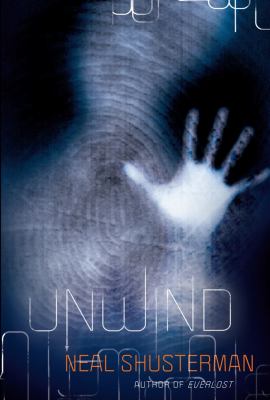
“Unwind”

Unwind by Neal Shusterman 

“The Second Civil War, also known as “The Heartland War,” was a long and bloody conflict fought over a single issue.

“To end the war, a set of constitutional amendments, known as “The Bill of Life” was passed.

“It satisfied both the Pro-life and the Pro-Choice armies.

“The Bill of Life states that human life may not be touched from the moment of conception until a child reaches the age of thirteen.

“However, between the ages of thirteen and eighteen, a parent may choose to retroactively ‘abort’ a child . . .

“. . .on the condition that the child’s life doesn’t ‘technically’ end.

“The process by which a child is both terminated and yet kept alive is called ‘unwinding.’

“Unwinding is now a common and accepted practice in society.”

So opens the YA novel Unwind by Neal Shusterman. I read the first few pages aloud on Saturday at a banned and challenged book event because I figured no one else would have chosen this book to read as it’s fairly new. From the above opening prologue, you can guess that the book is controversial. But it’s a thoughtful piece on the value of the individual in a free society, and on what happens when people just can’t admit that they don’t have all the answers.

It’s also a great read.

Connor, who can’t control his anger, is sixteen and his parents have had it. He discovers that they secretly plan to unwind him, and he heads out on the run. Risa is a ward of the state, who, having failed at becoming a top-tier classical pianist, will be unwound because there just isn’t money for the state to keep useless teens. Lev is a ‘tithe’—because of his parents’ religious fervor, they will unwind him—their tenth child–as an offering to God.

All three are on the run. If they can make it to age eighteen, they might go to jail for awhile, but they are safe from being unwound.

The novel presents a sort of future ‘underground railroad,’ through which dedicated folks help unwinds escape to freedom. But generally speaking, teens who are about to be unwound have criminal records or anger issues—so hiding them in bunches can lead to an explosive situation. The actual unwinding process (at ‘harvest camp’) is bone chilling. (Note: If you are a sophomore on up, you can’t help but notice the nod to The Lord of the Flies—including a boy others call ‘the Mouth Breather’ because he has asthma. If you need to write a paper connecting LoTF with contemporary literature, this would be great fun.)

Action-packed, full of suspense, posing some deeper questions—this is another book for varied readers looking for very different things. I think just about everyone will like it. And that includes guys who usually don’t read. Check it out!

Posted in "Banned Book", Adventure Stories, Controversial Issue/Debate, Family Problems, Fiction, Human Rights Issues, Literary Read Alike, Sci-Fi/Futuristic, Young Adult Literature | 1 Comment

“Into the Beautiful North”

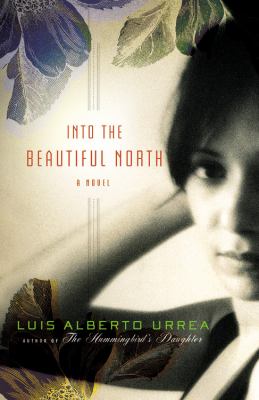
Into the Beautiful North by Luis Alberto Urrea     

Tres Camarones, Sinaloa, Mexico just isn’t what it used to be. Looking for work, nearly all of the men have disappeared “into the beautiful north”—the United States. Nayeli, the young woman who has this revelation, decides to do something about it. After seeing her Aunt Irma’s favorite movie The Magnificent Seven (a classic Western, super popular in the 1960s), Nayeli decides to take her three best friends and cross the border. She is going to bring back seven Mexican men to help protect her little town from bandidos and drug smugglers. And she has secret motives as well. She wants to find her crush, a cute Southern California surfer who was also a Christian missionary in Sinaloa years before. Even more importantly, she wants to find her father, who disappeared into Illinois three years earlier.

Into the Beautiful North is by turns sad, frightening and comic. Nayeli (karate queen and soccer star), Yolo, Vampie (the only goth girl in town), and Tacho (openly gay, but feeling like a misfit) have a harrying journey through Mexico even before they try to cross the border. Their experiences on their journey—including their dealings with ‘coyotes,’ skin heads, drug smugglers, police, and Homeland Security, are realistic and frightening. Their experiences with kind strangers, some who live in a dump and yet still have the heart to help others, is also realistic.

All the characters are well drawn and quirky: Aunt Irma, the former bowling champion, women’s rights advocate and now Mayor of Tres Camarones; Atomiko, the dump ‘rat,’ who is also hero and protector to the group of friends; Tacho, gay in a closeted society but nevertheless enjoying life and becoming Nayeli’s hero.

The way that Urrea includes all points of view is unusual for a contemporary book, but it works very well. As the group takes a road trip—and later, when Nayeli and Tacho are crossing the United States on their own—the descriptions of the landscape and the atmosphere peculiar to each town are poetic. As the characters see the country for the first time, we readers see it anew through each individual’s eyes (and recognize the scents through their noses and the sensations through their fingertips). Though Nayeli’s ‘hero’s quest’ ends exactly as I knew it would (and from the writing, it seems the author thinks I’ll be surprised), I was wondering throughout the book how Nayeli herself would react to her disillusionment. Urrea did a great job with that.

This is a wonderful book for looking into the hope and desperation of people seeking a better life—and how a home town, with a little help from the good guys (and gals) can work to help all its residents. If your teacher asks you to take a modern novel and describe the hero’s journey, this would be a fun one to use because you’ll enjoy it so much for so many reasons.

Posted in Adventure Stories, Controversial Issue/Debate, Family Problems, Fiction, Human Rights Issues, Multicultural | Leave a comment

Reading “Unwind” at Banned Books Event

Today I got to read from the book of my choice at Claremont Library’s banned books event. I chose Neal Shusterman’s Unwind because it’s new for me, I enjoyed it, and I want you to have the change to enjoy it too. I will post a review soon.


This slideshow requires JavaScript.

Posted in "Banned Book" | Leave a comment

HORROR! “Bliss”

This slideshow requires JavaScript.

Horror: The Top Ten for Teens

With teachers bringing classes in for horror and mystery book talks near Halloween, I thought it was a good time to look at our collection of teen horror and update it. One of the problems I have anymore is in defining horror. So many books with vampires, werewolves and zombies are just romances with differently-abled characters. One of the book review magazines I read –Booklist—decided to rescue librarians by picking their favorite ten teen horror novels. None of the novels are heartwarming nor are they romances.

They’re horror.

I had most of the titles at Colony, but none at Chaffey, so I went shopping. (So Tigers, check before Halloween. I think they’ll be here.) I read my first on the list. And, yes, I thought it had the creepy factor. It’s also by the author whose books are most often challenged right now—and since it’s Banned Books Week and since our frosh classes are having a look at this author—I decided to start with Lauren Myracle.

Bliss by Lauren Myracle

Publisher’s blurb on the novel: Having grown up in a California commune, Bliss sees her aloof grandmother’s Atlanta world as a foreign country, but she is determined to be nice as a freshman at an elite high school, which makes her the perfect target for . . . a girl obsessed with the occult.

Reason Booklist picked it: Creepiest sleepover scene of all time.

What other pros say: Publishers’ Weekly “Charles Manson Family murders, racism, ghosts, blood sacrifices and prom queens–and, remarkably, supports this outré mix with clever timing and well-placed red herrings.”

VOYA: “kept me reading all through the night. It’s geared toward a mature audience of readers who are strong in what they believe.”

What I have to say: hippie-dippy craziness of the Summer of Love (1969) turns sinister, plus the main character has an ESP connection with spirits, so what’s better than that? Myracle does make it better with deeper probing of the period—the KKK; interracial dating; the Charles Mansion Family murders (The Tate-LaBianca murders) set against the ultra-sweet popular TV show of that time, The Andy Griffith Show, and the wonderful town of Mayberry.

No silly, make-believe endings here. This one’s serious enough for your teachers to love—a good choice for outside reading. In general, it’s not blood and guts violence, but it is for mature readers because it is creepy, creepy, creepy.

Posted in "Banned Book", Fiction, Horror/Mystery/Suspense, Over 375 pages, Supernatural, Young Adult Literature | Leave a comment

Hunger Games Action Movie Poster

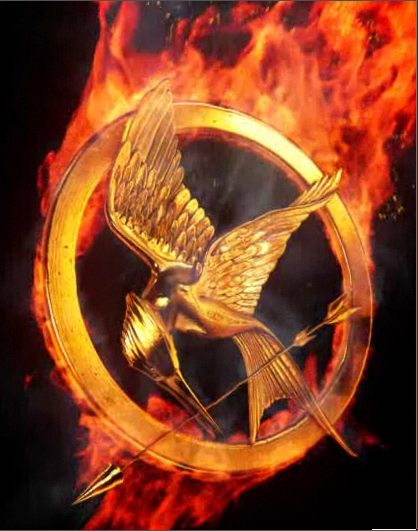
Check out the Hunger Games movie poster. Click here to see and hear it in action. Give it a chance to upload–it may take a minute. What a cool riff on the theme of Katniss, the girl on fire.

I can hardly wait: March 23, 2012.

Meanwhile, I’ve bought more copies of The Hunger Games for our library. You’ve got to read all three books before the movie comes out!

Posted in Adventure Stories, Controversial Issue/Debate, Fiction, Movie Tie-In, Romance, Sci-Fi/Futuristic, Young Adult Literature | Leave a comment

“After the Moment”

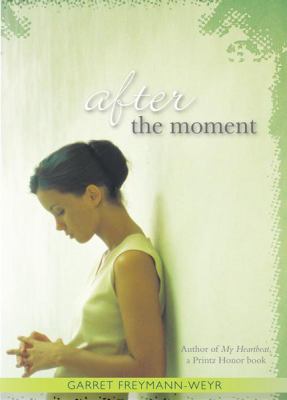
After the Moment by Garret Freymann-Weyr 

I want to give After the Moment its own space and its own quick review because when I discussed it in the review of Uglies, I only commented that it wasn’t a book I’d recommend to reluctant readers. And that’s still true.

But what if you already like reading? Then After the Moment could become one of your favorite books. Freymann-Weyr sets up the characters as though she’s showing you, the reader, how to play a new board game. She names the pieces, shows you how powerful they are—or if they lack empowerment, and sets them into their designated squares. Once everyone is in position, you hope for a sweet romance between Leigh and Maia.

Leigh is such a great guy; any girl would want him. He’s considerate, decent, and spends a lot of time caring for and about others in his life. Maia has a lot of problems from the beginning—she’s anorexic and self-abusing. She’s nothing like Leigh’s girlfriend, Astra. Yet, she has her own beauty and sweetness, and it’s easy to see why Leigh’s younger step-sister is crazy about Maia.

But when other students, including some not-too-nice guys from Leigh and Maia’s exclusive private school, enter the mix, the couple’s destiny somehow spins out of their control. All Leigh’s thoughts on violence and the war in Iraq take on a connection to his own life. All Maia’s past problems work against her as she seeks to understand her own actions as well as those of her classmates.

I read this book because I was looking for a love story that didn’t have a perfect (and perfectly phony) ending. And I got that. But there’s also a lot of good writing, mostly in the second half of the book (and that’s one reason why I think reading it requires patience). And there’s the thing that YA books almost never talk about—what happens after things go wrong? Where do the lovers end up both physically and emotionally? Reading about that made the entire experience worthwhile.

Posted in Family Problems, Fiction, Mature Readers, Romance, Young Adult Literature | Leave a comment

“Waves”

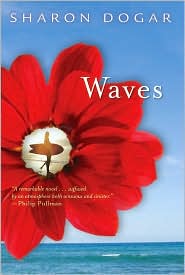
    Waves by Sharon Dogar

I bought this book when I was looking for a novel with a surfing connection. (I get requests for those periodically, and they aren’t that easy to find.) Waves is a beautiful book on more than one level, and I think our regular readers, surfers or not, will like it, especially if they enjoy characters with extrasensory perception.

Hal, his older sister Charley, his little sister Sarah and their parents go to Cornwall, on the west coast of England, every summer. That is until this summer, when the family finally makes the difficult decision to go without Charley. Charley is in a hospital in a coma. She’s been there since the previous summer when she had a strange accident in the water. Hal found her washed up on the rocks. She has never spoken since. She has a breathing machine to help her, and Hal thinks of her as more dead than alive. He is angry at his parents, who talk to Charley as though she can hear them; yet he also understands how difficult it must be let go of a beloved child.

So Hal is surprised when, after going to the beach and meeting Jackie, the sister of Charley’s boyfriend Pete, Charley comes very much alive for him. He can hear her voice in his head—and in fact, Charley can hear Hal’s voice and see through his eyes as she lies motionless in her hospital bed. As the two inhabit one another, Hal slowly pulls together the pieces of what happened to Charley, alone on the water in the middle of the night. He learns about Pete’s past, about his old girlfriend Am and her crazy dad, and about Charley falling in love, Charley’s fears. (Yes, this does happen slowly. If you can’t read unless something is exploding on each page, you may not be able to get into this one. But if you like tracing the psychology of young love—the excitement and the jealousy–I think you’re going to like it.)

A bonus of Waves is that it’s well-written—so you not only have a good story, but you’ll enjoy the beautiful language, which pulls you into that seaside rhythm.

Posted in Family Problems, Fiction, Romance, Sports, Supernatural, Young Adult Literature | Tagged | Leave a comment