More new books in the Orca Soundings series 3

This slideshow requires JavaScript.

The Orca Soundings series books are really just books that are not connected to one another, but are all published by a company whose mission is to provide interesting books to teens who are improving their reading skills. I’ve enjoyed those that I’ve read, and they are pretty popular in our library, so we’ve got some new titles for you. Check these out from the 372.41 special collection:

Cellular by Ellen Schwartz

When Brendan is diagnosed with leukemia, his life is turned upside down. With a smothering family and distant friends, all seems hopeless until he meets Lark, terminally ill yet full of life.

Back by Nora McClintock

When Jojo is released from prison after serving time for beating a man into a coma, Ardell, the victim’s brother, makes plans to get revenge.

Outback by Robin Stevenson

Since his girlfriend dumped him, Jayden has been avoiding school-and life in general. When his eccentric uncle Mel invites him to help with his biology research at an Australian university, he figures he has nothing to lose. Once he arrives, he discovers Mel is obsessed with finding a new species of lizard and is determined to be the first to discover it. Unfortunately, this means an expedition into the scorching desert heat of the Australian outback…with the increasingly paranoid Mel and an unfriendly biology student named Natalie. Then disaster strikes, and Jayden and Nat find themselves many miles from civilization fighting for their survival.

Posted in Fiction, Hi-Low/Quick Read, Read 180, Young Adult Literature | Tagged , , , , , | Leave a comment

Let’s Shop! Book Fair February 27-March 2

This slideshow requires JavaScript.

The library will be having its Scholastic Book Fair again this year during the week of February 27 to March 2 from 8 AM to 3 PM.

We’ll be open Wednesday evening February 29 until 7 PM so that parents can shop as well.

 We’ll have lots of Hunger Games items—The Hunger Games trilogy books, ‘mockingjay’ jewelry, posters and more—as well as many popular titles.

Please help us by shopping for books, posters, bookmarks, journals, pencils, pens. Proceeds from the book fair earn new books for our library.

We need your support!

Posted in Adventure Stories, Fable/Fairy Tale/Fantasy, Family Problems, Fiction, Graphic Novel, Hi-Low/Quick Read, Historical Fiction/Historical Element, Horror/Mystery/Suspense, Movie Tie-In, Multicultural, Non-fiction, Read 180, Romance, Sci-Fi/Futuristic, Sports, Supernatural, Young Adult Literature | Leave a comment

Lots of New Books for Read 180 and EL Students!

This slideshow requires JavaScript.

We have new books for new readers!

Are you learning to read?

The Dark Man books are for you.

If you are already a reader who is working on your reading skills,  the next few posts will be for you. We have more Night Fall series books, more Southside series books and some really good Orca titles. Stay tuned!


Posted in Fiction, Horror/Mystery/Suspense, Uncategorized, Young Adult Literature | Tagged | Leave a comment

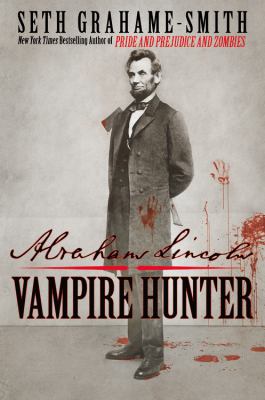
“Abraham Lincoln: Vampire Hunter”

Abraham Lincoln: Vampire Hunter by Seth Grahame-Smith

What do we make of the long-secret journal of Abraham Lincoln in which he details his life as a vampire hunter? What drove him to his vigilance against the undead? And why is his fight so important?

I read Abraham Lincoln: Vampire Hunter when it was published in 2010, but somehow I missed reviewing it. Now, it’s coming out in a movie, and today a student asked if we have it in the library. (Answer: COHS, yes. CHS—coming soon.) So let me step back and remember why I enjoyed this wacky mix of history and the supernatural.

Though it’s obvious that some of the journal quoted in the novel is pure fiction—the vampire parts—I want to mention for students that the entire journal is fiction, though some of the events described are historical. Lincoln’s mother did die when he was a boy, though we have no child’s journal describing his pain and grief.

In Grahame-Smith’s novel, we learn the secret behind the ‘milk sickness’ that killed Abe’s mom. It’s actually a vampire bite, as is all milk sickness. So—at a mere eleven years old—Abe takes a lifelong vow to kill any and all vampires he can hunt down. This personal pledge becomes an issue of national honor as Lincoln is slowing uncovering the connection between slaveholders and vampires.

Believable? No. A good piece of writing? No. Enjoyable? You bet. Unless you’re squeamish—there are many (gratuitous?) vampire battles and the methods of killing them (or of being killed, if you are an unlucky or unskilled vampire hunter) are legion. I’m guessing the movie is going to be a pretty bloody event. But if you aren’t taking it seriously, if you just like the mashup element of the book, you find it a very quick read that taps into your love of the perfectly ludicrous.

Posted in Adventure Stories, Fiction, Historical Fiction/Historical Element, Movie Tie-In, Supernatural | Tagged | Leave a comment

“Legend”

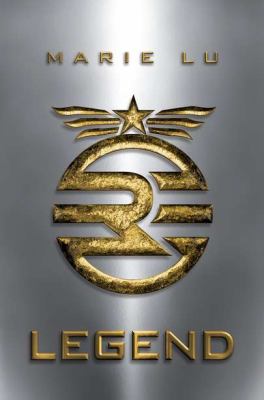
Legend by Marie Lu 

The moment that Day, street rebel against the Republic, saves June, a young and brilliant soldier of the Republic, from an illegal Skiz fight, we know the two are destined to walk the same path. As they learn Republic secrets they know they will have to fight the regime, possibly with the Patriots (an organized group of dissidents), and unseat the Elector.

Legend takes place in a future Los Angeles, and is narrated alternately by Day (golden-brown ink) and June (black ink). Day is a criminal in that he fights an evil, oppressive government, one which monitors an ongoing plague, but doesn’t allow the poor multitudes to receive expensive vaccinations or cures, both of which exist. Day also scrounges on the streets to provide for his family of two brothers and a mother although his younger brother and mother believe he’s dead. His image is constantly flashed on the city’s many JumboTrons as he is one of country’s most wanted criminals.

Day’s criminal life began when, at age ten, he failed his Trial. “It’s almost always the slum-sector kids who fail. If you’re in this unlucky category, the Republic sends officials to your family’s home. They made your parents sign a contract giving the government full custody over you. They say that you’ve been sent away to the Republic’s labor camps and that your family will not see you again. Your parents have to nod and agree.”

June is from a wealthy family, but her parents are dead. It’s her brother Metias who cares for this prodigy of a girl. That is, until he, too, is killed by a rebel. After he dies, there is nothing that June wants more than revenge. And she’s the perfect person to exact that revenge. She’s the only person in the Republic to ever have gotten a perfect score of 1500 on her Trial. She’s smart, she notices detail, and she’s quite the warrior.

The publishers of Legend want you to connect it to The Hunger Games. Again, as I mentioned with Divergent, the book cover design will cause a subconscious connection with the Mockingjay pin.

Fans of dystopian fiction, particularly The Hunger Games have told me that the romance is equally as important as the fight against the dictatorships. And although I’ve only read stellar reviews of Legend, the romance between Day and June is the one part of the book I find fault with. It seems to happen because it is supposed to. Both teens easily let go of whatever issues they had with the other, especially Day. His forgiveness of June is a tough sell, and the reader should be given more of the process. These two have the hots for one another, but no sparks come off the page, as they do with Katniss and Peta or Trice and Four. Still, this is the first book in a trilogy, and we’ll have the chance to understand the couple’s affection in the next installment. Meanwhile, we get to enjoy a quick, tightly written piece of science fiction full of adventure. Based on my reading, I’m guessing we’ll see some soylent green action, but who knows? I’ll have to get my hands on book two.

Posted in Adventure Stories, Fiction, Human Rights Issues, Literary Read Alike, Romance, Sci-Fi/Futuristic, Young Adult Literature | Tagged , | Leave a comment

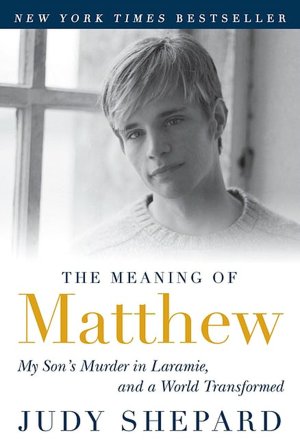
“The Meaning of Matthew: My Son’s Murder in Laramie and a World Transformed”

This week–February 8, 9, 10, and 11–the Colony High School Theater Arts Department is producing the play The Laramie Project. After seeing this powerful production, students who want to learn more about Matthew Shepard should consider reading The Meaning of Matthew: My Son’s Murder in Laramie and a World Transformed. It’s available in our library.

“The mother of Matthew Shepard shares her story about her son’s death and the choice she made to become an international gay rights activist. Today, the name Matthew Shepard is synonymous with gay rights, but before his grisly murder in 1998, Matthew was simply her son. For the first time in book form, Judy Shepard speaks about her loss, sharing memories of Matthew, their life as a typical American family, and the pivotal event that changed everything. The book follows the Shepard family in the days after the crime, when their incapacitated son was on life support; how they learned of the response from strangers all across America who held candlelit vigils and memorial services for their child; and finally, how they struggled to navigate the legal system as Matthew’s murderers were on trial. It not only captures the historical significance and civil rights issues, but it also chronicles one ordinary woman’s struggle to cope with the unthinkable.”–From publisher description.

Posted in Biography/Memoir, Controversial Issue/Debate, Human Rights Issues, Non-fiction | Tagged , , , | Leave a comment

“Bossypants”

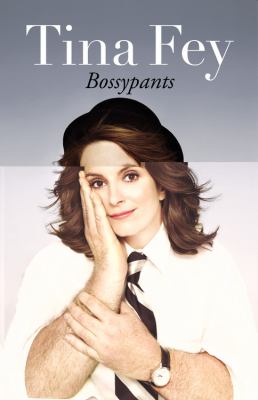
Bossypants by Tina Fey

Bossypants is the most fun biography I’ve read. As you probably know, Fey was a writer and then an actor on Saturday Night Live. She produces and stars in the TV comedy 30 Rock and has won numerous awards, including Emmys. In her autobiography, she takes a wacky look at her life. One of the best things about her is that she doesn’t take herself too seriously. She treats others kindly in her telling of growing up (well, mostly—beware if you were a girl who stole her boyfriend). Based on her own upbringing by older, loving, yet stern parents, Fey gives advice on raising “an achievement-oriented, obedient, drug-free, virgin adult.” Her love interests and honeymoon are hilarious, and her work with male comedy writers is enlightening. (OK, maybe they are a little gross.)

I asked my husband to read this book, and while he liked it, he didn’t enjoy it as much as I did because, as he said, its audience is women and girls. I think that’s true. This is really a feminist book, couched in comedic riffs on gender-based issues and raising children. Fey has a lot of great advice for girls who will soon go to college or enter the workplace. Granted, she doles it out with some off-color language and some bawdy stories, but her points are well-taken. I think one of the most important is this: male coworkers will always question what you do and tell you they don’t like what you do. If the man is your boss, you have to figure out how to get through that. But if the man who questions you or your motives is just another coworker, you just need to tell him that you don’t care what he thinks about what you do or say. That’s advice I wish I’d had as a young woman, new in the working world.

Some teachers have asked students to read a biography by a famous American. Unfortunately, students can usually only think of two famous Americans and everyone tries to get the same two books. So, when you get this assignment, think about Bossypants. It’s a lot if fun and Fey’s advice is pretty solid.

Posted in Biography/Memoir, Non-fiction | Tagged , , , | Leave a comment

“Divergent”

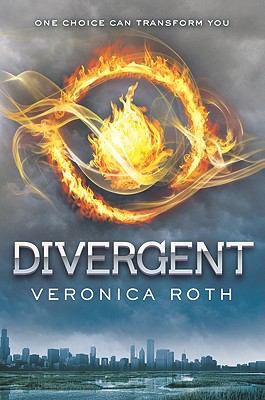
Divergent by Veronica Roth

“Every faction conditions its members to think and act a certain way. And most people do it. For most people, it’s not hard to learn, to find a pattern of thought that works and stay that way. . . . But our minds move in a dozen different directions. We can’t be contained to one way of thinking. And that terrifies our leaders. It means we can’t be controlled.”

Beatrice Prior is a Divergent. And she’d better keep that a secret. Because in the future, specifically in the future Chicago of the novel, society is broken down into five factions based on the qualities of character that individuals demonstrate. The motto “Faction before blood” means that families are less important than factions. At sixteen, children attend a ceremony in which they choose the faction they will live with from then on. To choose a faction different from that of his parents means that the teen will be separated from his family for life.

Beatrice is from the Abnegation faction, the group of people who are self-sacrificing. They run the government since it is unlikely that they will make selfish grabs for power. The four other factors are: Candor (always tells the truth, no matter how rude or mean); Amity (friendship); Erudite (intelligent and bookish—love learning); and Dauntless (brave, fierce).

Living in the Abnegation faction is hard. Everyone is expected to always give up comforts for others. They are nice, they take turns, they listen to others, they don’t worry about fashion (all clothes are gray), and they don’t speak up before hearing someone else’s issues. Still, despite the lack of individualism in this, as a group, Abnegation plays nice. Not all groups do.

Like all sixteen year olds, Beatrice goes through a simulation that, based on her reaction to various situations, will indicate to which of the five factions she belongs. But her simulation results are inconclusive. She reacts to the virtual dangers as an Abnegation, a Dauntless, and an Erudite. The woman monitoring the simulation whispers that she is a Divergent. This is dangerous. She is not to tell anyone, but she should choose a faction. Unsure of what she should do, Beatrice (henceforward Tris) chooses Dauntless.

The Dauntless, traditionally brave, have the job of protecting the city. But in recent times, the leaders are more sadistic than courageous and the initiates are treated cruelly and encouraged to be brutal to one another. Only ten initiates will be accepted into the faction. Those who are cut will be factionless for the rest of their lives, impoverished nobodies, living on the street. The vicious, even gruesome, initiation process is heart-stopping. You won’t be able to stop reading through it—and it covers most of the book.

At the same time the initiates are vying for a spot in Dauntless, there is a rumor that Abnegation is misusing its power and that the Erudite want war and hope the Dauntless will cooperate. One of the young trainers of the initiates is Four, who tells Tris, “They don’t want you to act a certain way. They want you to think a certain way.” As a Divergent, her mind isn’t easy for others to control, so she’s a primary target, a girl who may be able to help Abnegation because of her many qualities.

If you’re looking for a good read after finishing The Hunger Games trilogy, this is a great choice. (I think the cover even tries for a subconscious Hunger Games feeling.) Be mindful that it’s for mature readers who aren’t sickened by the violence, which is excessive and somewhat repetitive. And, yes, the romance is there, too, a very sweet one that will have you rooting for Tris and Four. This is obviously the beginning of a trilogy. We don’t even know how the world outside of Chicago functions—whether this is something neglected by the writer as she was swept away with her descriptions of Dauntless sadism or purposeful, something we will learn as society breaks apart and moves outward remains to be seen. But we will certainly check out ‘book two’ because we want to find out.

Posted in Adventure Stories, Controversial Issue/Debate, Family Problems, Fiction, Human Rights Issues, Literary Read Alike, Mature Readers, Over 375 pages, Sci-Fi/Futuristic, Young Adult Literature | Tagged | 2 Comments

Holocaust Survivor to speak

Titans,

Last year we had Holocaust survivor Stephen Nasser speak at Colony High. He is the author of the book My Brother’s Voice, which I reviewed here. He gave a great presentation and students gave him a standing ovation.

At that time, we couldn’t work out a schedule for him to come to Chaffey High. Fortunately, we are able to have him at the Gardner Springs Auditorium on the Chaffey High campus after school on Monday. Since the presentation begins at 3 PM, I’m hoping you can attend.

World War II ended in 1945, so survivors of the war and the Holocaust are becoming fewer as they reach their mid-80s and older. This is a great opportunity for you and your family members to hear firsthand about one of the most tragic events in history.

Gardner Springs Auditorium

on the Chaffey High campus

Monday, January 30, 2012

3:00 PM

If you are interested in buying Nasser’s book, he will be selling and signing copies. (Paperback copies are $15.00, cash or check only.)

I hope to see you there!

Posted in Biography/Memoir, Historical Fiction/Historical Element, Non-fiction | Leave a comment

“Elizabeth and Hazel: Two Women of Little Rock”

This slideshow requires JavaScript.

Elizabeth and Hazel: Two Women of Little Rock by David Margolick

When young and learning about desegregation in the South, for me, one photograph stood as the example of the deep southern racial divide. It portrays all the hatred of the Southern whites for the Blacks who were trying to get equal access to a good education. It is one of the most powerful images I’ve ever seen.

That image—a photograph of a white student at Central High in Little Rock, Arkansas screaming obscenities at Elizabeth Eckford—one of the Little Rock Nine who were chosen to integrate Central High—has stood as the iconic image of racism for more than fifty years.

And for many years now, whenever I see the picture posted on display for a celebration of the Civil Rights Movement, I’ve wondered: Who is that screaming white girl? How did she have that much hate at that age? Times have changed and she must be an old woman now. What does she think today?

One thing always bothered me more than anything else. What the girl did was truly awful, but she just happened to be captured at what was probably the worse moment of her life and given out to the world as a demon-child. She was fifteen. What would it be like to become the face of racism, permanently, in every textbook and display for fifty years? What would it be like to have your entire life judged on something you did at fifteen?

Finally, Elizabeth and Hazel is the book with my answer. The girl is Hazel Bryan, and her story is told along with that of Elizabeth Eckford’s. The book gives the reader background to the date of the photograph (the Brown v. The Board of Education decision three years earlier, how the Little Rock Nine were chosen, etc.)

On September 4, 1957, the first day of the school year for Little Rock Central High and its first day of court-ordered desegregation, eight of the Little Rock Nine met and went to school together as a safety measure. Elizabeth didn’t get the message (her family had no phone) and, after being barred from entering the school by the National Guard, she had to walk a gauntlet of screaming whites to go back to a bus stop and wait to go home. (While she waited, people continued to harangue her. When a white woman who was a Communist tried to shame the crowd, people accused the Little Rock Nine of being in cahoots with the Communists.) During this walk, Will Counts, a young local reporter, snapped the iconic photo.

“When it comes down to it, Count’s famous photograph of Elizabeth is really more of Hazel Bryan; it is on Hazel that the eyes land, and linger. Despite the tricky lighting, her face is perfectly exposed: the early September sun shines on her like a spotlight. It hits her from the side, painting her face in a stark chiaroscuro that makes it look more demonic still. She’s caught mid-vowel, with her mouth gapingly, ferociously open. At that instant, and in perpetuity, Hazel Bryan, always the performer, has the stage completely to herself. Others played their own small parts in the picture, but ‘the mouth,’ she later said, ‘was mine.’”

Elizabeth is also an icon of the Civil Rights Movement because of her dignity in that frightening, lonely walk. She continued at Little Rock High for the year although a group of students was always slamming her into lockers, pushing her, spitting on her. However, Hazel was not one of those students. Her parents took her out of the school after seeing her in the newspaper photo. She never attended school with Elizabeth. In fact, Elizabeth didn’t like to look at the photo, and didn’t know about Hazel.

The photograph took on a life of its own. A white farmer paid to have it republished in a newspaper with the heading, “Study This Picture and Know Shame.” Some of the kids at Central High felt the same. They were all being judged for the bad behavior of a small group of vicious students. News men were interviewing them, trying to trip them up, the ASB president thought.

Hazel married and had children very young. Also young, she began to question her upbringing and her life. She did things that would have been considered very odd at the time. In pregnancy, she took Lamaze classes. She practiced yoga and learned to belly dance. But most important, she realized how bad her behavior was on September 4, 1957.

“When she was around twenty years old, Hazel found herself lying awake, thinking about Elizabeth, and about her won legacy. She wanted to be for her sons the role model on racial tolerance she’d never has herself. To put it more brutally, she didn’t want either of them to become the bigot she had been.”

She tracked down Elizabeth so that she could apologize. Afterward, she did a lot of volunteer work with underprivileged youth. She was “disfellowshipped” from her church for her rebellious attitudes. She didn’t fit in.

Elizabeth has had a difficult life although she has met presidents and received many awards, including the Congressional Gold Medal. She appears to have suffered from Post Traumatic Stress Syndrome before it was recognized. Her mother was mentally ill as was her son, and she appears to have suffered from depression herself throughout her life.

That these two women could become friends seems too good to be true. And maybe it was because they couldn’t maintain their friendship for more than a few years. But how their lives converge is an interesting story. Elizabeth and Hazel is a very readable book, and a wonderful look at important moments in U.S. history.

And, after all these years, I can finally look at that haunting photograph and have some answers.
Posted in Biography/Memoir, Controversial Issue/Debate, Human Rights Issues, Non-fiction | Tagged , , , , | 1 Comment