Bullying Books: “Bruiser”

 Bruiser by Neal Shusterman  bruiser

If you loved someone, how much would you be willing to do for him or her? If someone loved you, would you allow him to suffer so that you could succeed?

There are a lot questions to ponder in Bruiser. I picked it because I thought it was a book about bullying—and that’s one of my current themes—but, though it does deal with bullying, it is a more complicated look at relationships and what it means to take advantage of others. What it means to be responsible for ourselves.

Brewster Rawlins is called ‘Bruiser’ at school and is voted the ‘Most Likely to Get the Death Penalty.’ He’s a loner and kids at his high school tell tales of his strange home life with his uncle and his brother Cody. No one is sure what happened to his parents.

When Bronte sees the Bruiser in the library looking for a book of Alan Ginsberg poetry, she is intrigued. She decides to go out with him although her twin brother, Tennyson, objects. When Tennyson later sees Brewster in the locker room without his shirt, sees the incredible mess of his battered back, he starts to understand that Brewster is the abused, not the abuser.

Both Tennyson and Bronte come to know Brewster. There’s a strange ‘reveal’ to his situation, and it’s not far into the book. Telling you what it is would help me talk about the book, but it’s something that I think shouldn’t be given away in a review.

I’ve been book-talking Shusterman’s Unwind for a while, and it’s a quick-paced adventure through a dystopian future. This one is different—it slows down a bit, gives you the chance to think about individuals and their situations, about friendship and sacrifice. Not only about what we’re willing to sacrifice for others, but what is appropriate in asking others to sacrifice for us.

Posted in Family Problems, Fiction, Sports, Young Adult Literature | Tagged , , , , | 1 Comment

Adult books for teens: Biography: “Until Tuesday”

Until Tuesday by Luis Carlos Montalvan  Until Tuesday


Montalvan returned from two extended tours in Iraq a wounded warrior. Two Iraqis attempted to assassinate him because he was working hard to stop bribery and a thriving black market of US goods where he was stationed.


Though Montalvan knew he was hurt, he didn’t get all of the medical care he needed, partly because he was afraid that admitting how bad he felt, including the fact that he had posttraumatic stress disorder (PTSD), would hurt his army career. Above all, he wanted to be a good soldier.


Finally, after three years of terrific back pain and unbearable migraines, after self- medicating and turning to alcohol, Montalvan learned that he had three cracked vertebrate and several brain injuries. He was growing distant from his family. His father, a Cuban American whom Montalvan describes as having a macho code, believed that he didn’t want to get better. When he attempted to get help from the Veterans’ Administration Hospital, he was forced to see a different doctor with each visit, one who always asked, “So, what’s wrong with you?” This is the exact wrong treatment for PTSD because strange situations invoke the symptom of needing to be on high alert.


What saved Montalvan from self-destructive drinking, withdrawal from loved ones, and a phobia of strangers and public spaces? Tuesday, the golden retriever that he received as one of the first dogs trained for wounded warriors.


Tuesday was a graduate of Puppies Behind Bars, a program in which inmates help to train dogs that will go to wounded vets or become EOD dogs. It was great to learn about this program and how it helps both inmates and soldiers. The man who helped to train Tuesday had been in prison for thirty years. After training seven dogs—and having an unheard of 100% success rate—he was paroled. What could he do for a living on the outside after all that time? Train more dogs, of course.


Part of Montalvan’s story is political. He discusses his sense of betrayal by the United States government—both of service personnel and of the Iraqi people who helped the Americans on the promise that the US would protect them. On this, the author has much to say—how the war was conducted with insufficient oversight, how high ranking officials lied about the troops having enough members or enough equipment so that the picture given to the media was rosy (and totally false). Montalvan tells a sorry tale about his best Iraqi friends, who, after devoting themselves to the US cause, were left to be murdered or flee the country and fend for themselves as nearly starving refugees. He also tells the very discomforting story of a military couple having a baby. Before the baby is born, they know she is missing several vital organs, but don’t abort her because the military (for moral reasons) doesn’t cover abortion. Instead, the baby is born, and suffers torment for several weeks before dying—and an infant death was the only possible outcome. The couple splits. Montalvan is certainly making a statement about morality.  Not everyone will like everything that he has to say—but he regards it as a point of honor to tell the truth about his experience in war. He wants the reader to understand why we lost the war for the ‘hearts and minds’ of the Iraqis, and he lays it on corrupt and incompetent leadership.


Montalvan also regards it as a point of honor to tell the truth about the violation of the rights of the disabled, especially those with service dogs. Many store owners, bus drivers, subway employees, restaurant owners and more keep Montalvan away because they don’t think Tuesday is really a service dog, although he wears a vest. (They expect to see a harness such as guide dogs for the blind use.) After undergoing persistent harassment, which exacerbated his PTSD, Montalvan found that his new tour of duty was to education companies about service dogs.


This memoir is both a heartwarming and cautionary tale—not an easy mix to write. It’s one of several good books I’ve read recently about the heroism of our military men and women on the ground and our lack of support for them when they want to tell us the truth about war. But we need to hear that truth, and reading Until Tuesday is a good way to start.

Posted in Biography/Memoir, Controversial Issue/Debate, Family Problems, Human Rights Issues, Non-fiction | Tagged , , , , , , , , , , , , , , | Leave a comment

Bullying Books: “Rotters”

 rotters

Rotters by Daniel Kraus


Such a weird story! The combination of bullying and horror story compelled me to finish the book, and I think it will appeal to anyone who likes really quirky stuff.

Joey Crouch has lived with his mother all of his life in Chicago. They don’t go out much and he’s never been over the Illinois state line. But when his mother is hit by a bus and killed, Joey is removed to a small town in Iowa to live with a father he’s never known.

Things are very bad from the start. Ken Harnett, Joey’s dad, doesn’t bother to pick him up at the depot. He immediately leaves the house upon Joey’s arrival and doesn’t return for three days. Meanwhile, Joey sleeps on the floor, has nothing to eat and notices a strange, nasty odor in the shack that he can’t identify.

Dressed poorly, hungry and stinking, Joey immediately becomes a target of bullying in his new high school—not only by jocks but by a sadistic biology teacher as well, one who daily makes Joey stand in front of the class and then uses him to point out body parts and their functions. (Just a note here from the teacher in me: I had a hard time believing that any teacher anywhere could get away with treating a student the way Joey was treated—but if one tried, I would hope that someone in the class would speak up and tell outsiders.)

The situation only gets worse when we discover what that terrific stink is: Ken is a modern-day grave robber. With nothing to lose at school, Joey decides to learn the trade, and we enter the bizarre brotherhood of this underworld. They are criminals with a strange code of honor, and the one of them who has broken the code is terrorizing all the others. He may have the power to use Joey to get at the whole group.

Rotters are people—because all people will die and then they will rot if they are not cremated. The descriptions of grave robbing, of disintegrating corpses, are the stuff of nightmares.  (So beware.) Yet the story is oddly original and well-written. There are a lot of interesting facts about the history of grave robbing and the ‘resurrection men’ who dug up corpses for scientists and professors to use in study. (Remember Jerry Cruncher in Charles Dickens’ A Tale of Two Cities?) When Joey has been bullied beyond endurance and he seeks revenge—well, imagine what a grave robber could do.

Posted in Family Problems, Fiction, Horror/Mystery/Suspense, Over 375 pages, Young Adult Literature | Tagged , , , , , , , | Leave a comment

Adult Books for Teens: Memoir: “Wild”

Wild by Cheryl Strayed  wild
In her prologue, Strayed describes losing her hiking boots—yes, really losing them , knocked over the side of a mountain—in the middle of her quest to hike 1,100 of the 2,663 miles of the Pacific Crest Trail. So, how much worse can this get? You wonder.
Plenty, and Wild details it all. But even as she suffered heat, cold, dehydration, hunger, pennilessness and a supreme loneliness, Strayed also found many kind people on her path (and a couple of very scary dudes). Her story is about triumph over adversity, about starting over and doing something really, really hard in the hope of proving to herself that she could be something better than what she had been.
“My hike on the Pacific Crest Trail hadn’t begun when I made the snap decision to do it. It had begun before I even imagined it, precisely four years, seven months, and three days before, when I’d stood in a little room at the Mayo Clinic in Rochester, Minnesota, and learned that my mother was going to die.”
Strayed was particularly close to her mother and her grief over her painful and untimely death from lung cancer appeared boundless. She was something like those hiking boots—she went off an emotional cliff, lost herself to sleeping around, cheating on her husband, to drinking and to heroin. The thing that she had most longed for just before her mother died was to be told she had been the best daughter in the world. Three years later, as she began to sleep around, she felt that she understood why a person would cut herself on purpose. “Not pretty, but clean. Not good, but void of regrets. I was trying to heal. Trying to get the bad out of my system so I could be good again.”
Of course, this doesn’t work. To get off ‘Planet Heroin,’ Strayed had to walk the PCT. “Which, it turns out, is not very much like walking at all. Which in fact, resembles walking less than it does hell.”
But this hell is purifying in the way Strayed hoped for. “I had to change. I had to change was the thought that drove me in those months of planning. Not into a different person, but back to the person I used to be—strong and responsible, clear-eyed and driven, ethical and good.”
It worked. And this is what I love so much about this book. There are ways back to goodness. There are ways out of grief. Not easy ways, but deep, life-altering possibilities.
Many teens tell me how they think they’ve messed up and ruined their lives. Strayed’s story will inspire you to see that life is always about turning around, about second chances, about the do-overs that make us whole.
This is a beautiful, well-told memoir that doesn’t waste words. And a heck of an adventure story. Pick it when your teacher asks you to read an inspiring biography. Or when you feel that you’ve messed up and don’t know how to get back to the wonderful person you once were.
Posted in Adventure Stories, Biography/Memoir, Environmental Issues, Family Problems, Non-fiction | Tagged , , , , , , | Leave a comment

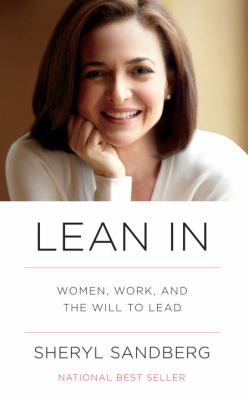
Adult Books for Teens: “Lean In”

lean in

Lean In: Women, Work, and the Will to Lead by Sheryl Sandberg

Sheryl Sandberg is an enormously successful businesswoman who is now the COO (chief operating officer) of Facebook. She decided to write Lean In to argue that in the last thirty years little has changed for women who hope to succeed in careers. Sandberg has been criticized for skimming over the murk-filled quarry of women’s issues with her multimillion-dollar jet of a self. Actually, ‘criticized’ is too mild a word. Many professional critics and pundits have slammed her.

There is merit in the criticism of Lean In because it often reiterates well-known studies and facts. But I think it’s a perfect book for teens because they are so busy with schoolwork that they probably don’t know much of what Sandberg has to say. Add to this that the book is short by adult standards—228 pages—and it’s as unthreatening as it is informative.

Sandberg takes on the fact that there are few women in very powerful positions. Something she says which is new in my reading is that nothing is going to change if women don’t help one another. Women see that one woman is in a powerful position in a company, and they want to be that queen bee. But they have to change the vision from queen bee to seeing half of the powerful people in any endeavor as women since they are half of the population. She also gives advice on what a mentor really is and how someone finds this life-changing person. She notes that too often women sacrifice for work when the sacrifice is wholly unnecessary—so they shouldn’t be afraid to find out what is necessary and then only make necessary sacrifices. She contends that women have a way of mentally leaving the group of successful people long before they leave the workforce by assuming that their futures will not allow them to succeed at a high level because they will become mothers, etc. She asks them not to leave before they leave—not to give up challenges even before they get married or becomes pregnant. She asks them to think differently. And that bit of new advice makes for interesting reading.

This is a good read for both guys and girls. Guys can see how to support women in future relationships (and that support will benefit the guys in many ways). Girls can take on a new mindset about their own success and about supporting one another to the benefit of all.

Posted in Biography/Memoir, Non-fiction | Tagged , , , , , , | Leave a comment

Adult Books for Teens: Memoir: “My Beloved World”

my beloved worldMy Beloved World by Sonia Sotomayor

Sonia Sotomayor is one of the first women (the third) and the first Hispanic to become a Supreme Court justice. Her memoir, My Beloved World, is not quite an autobiography because she stops the story just as she secures her first judgeship. This makes sense as there are reasons both political and legal for not discussing her career. So, since she stops before she has become historically important, why would you want to read her story?

The book’s prologue contains an answer. Sotomayor discusses an argument between her parents that she overheard at age eight. She had just been diagnosed with juvenile diabetes—a very serious type of the disease that at the time was often a cause of early death. Neither parent wanted to give her the required daily shot of insulin. She tells them she will do it herself. This self-injection indicates her grit as a child, an important part of her personality that binds her to success throughout her life.

Sotomayor’s father died of alcoholism when she was nine. She discusses how women were always blamed for the faults in a man—and thus her abuelita, her father’s mother, blamed her mother for her father’s shortcomings. But Sotomayor realized that people are responsible for themselves and didn’t fall into the trap.

So Sonia Sotomayor began very early to be responsible for her life. She knows that she had many breaks—good luck—that helped her to get where she is today, but her determination can’t be overestimated. She grew up in a housing project in the Bronx. While her brilliant cousin succumbed to drugs, she persisted. Her mother worked hard to keep Sonia and her brother in Catholic school. Her education there, and the nuns who ran the schools with iron fists, was both blessing and curse.

Sotomayor loved reading—she discusses how reading The Lord of the Flies rocked her world because she pondered it and connected it to the real world of the Bronx. She came up with the answer to the question she had been asking herself—“How does this [meaning evil, people willing to harm others] happen?”  She realized it was because people can’t see others’ points of view.

Another aspect of her pre-college schooling, besides reading, to which Sotomayor attributes her success, is being involved in forensics (debate). By having to argue both sides of an issue, she learned to always see both sides; this was training in fairness. And she liked it. She could envision herself arguing in a courtroom, and she later became a public prosecutor in the DA’s office in New York. There she also learned that if you want people to understand you, you need to appeal to their emotional side as well as to their logic and rationality.

Another important educational tool arrived in Sotomayor’s home when the family got its first TV. This broadened her world to show her what was outside the Bronx, to give her other models. The adults in her world, the nuns and priests, worried about the influence television would have on the students. I mention this because I think there’s a contemporary analogy with the Internet. I admit to being one of those worrying adults, but I also see the world opening to students who have the savvy to use the Internet by assessing the information it contains.

Being as driven as Sotomayor was, and working in law enforcement (where divorce rates are very high), ruined her marriage. She discusses this with honesty. In addition, as a prosecutor, she worried that there was a futility to her work as she would see repeat offenders. When she started prosecuting the big felony cases, including a particular murder case, she felt that the devil was alive and in the courtroom with her. For the first time in her life, she met people who were beyond redemption. Eventually, she felt that she couldn’t continue to witness that much sorrow and depravity without drowning in it.

Sotomayor was always very focused on success—and she had always wanted to be a judge. She realized that she would need to practice on civil cases as well as criminal cases if she expected to get to the bench. She made a great career choice in deciding to work for a small firm where she found excellent mentors.

Sotomayor relates stories that anyone can find a connection to. Particularly poignant is her discussion of having a sense of shame when others would belittle her accomplishments. The way she gets past that and owns her accomplishments without accepting the belittlement is an important lesson for the reader.

Ultimately, Sotomayor believes that what separates her from others who are equally intelligent, but whose lives go adrift, is her will. She wishes that there were a way to instill it in every kid—and I’m sure all teachers agree.

This is a very inspiring book, by turns poignant, funny, and triumphant. It’s a great choice for reading about an inspiring American.
Posted in Biography/Memoir, Family Problems, Non-fiction | Tagged , , , , , , , | Leave a comment

Bullying Books: “Shooter”

 shooter

Shooter by Walter Dean Myers

Myers does his usual good job with a tough topic. The book opens as an investigation of a school shooting ‘last April.’ Various adults (psychologist, police personnel) interview the two best friends of the shooter, Leonard Gray, to see whether they are connected to the ‘incident’ and to try to find out where all responsibility lies, including that of the school.

Through the interviews, the reader gets into the minds of Cameron and Carla, both of whom are reserved about their victimization by bullies, particularly Brad and his jock friends. In details of the interviews, it becomes clear that both Carla and Cameron have lousy home lives although for entirely different reasons. They are each victims of different forms of abuse, and the needs of both are neglected. The reader understands through these interviews how they might befriend a guy like Leonard. And how both of them are just trying to get through being pegged as losers in the social milieu of high school.

But what about the shooter? After killing his nemesis, Brad, and wounding others, Len commits suicide. He can’t be interviewed, but it is through Leonard’s own words, in the form of a hand-written journal, that the reader comes to some insight. His words are sometimes windows to his distorted ego and into his mental problems, but they also show that he, like his friends, has been abused. He has watched his father physically torment his mother while she just tries to forget and survive.

So who is to blame in all this? The bully Brad? Len—did he act alone or did Cameron and Carla know what he was up to and agree to help him?

As usual, Myers leaves it to you to sort the details. He won’t let you get away without thinking.

Short, on-point in every moment—a can’t-put-it-down for all teens, including reluctant readers.

Note: I’m going to feature bullying books (fiction and nonfiction) and, on the opposite end of the spectrum, books on inspirational people (biographies, memoir and fiction) for the 2013-14 school year. Shooter is on my list for next year’s book talks.

Posted in Controversial Issue/Debate, Family Problems, Fiction, Hi-Low/Quick Read, Read 180, Young Adult Literature | Tagged , , , , , | Leave a comment

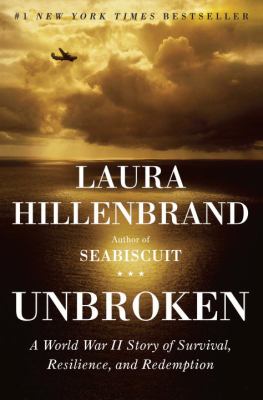
Adult Books for Teens: Inspiring Biographies: Unbroken

Unbroken: A World War II Story of Survival, Resilience, and Redemption by Laura Hillenbrand unbroken

Unbroken is the incredible, nearly mythic, story of Louis Zamperini, an army air forces bomber whose plane crashed in the Pacific Ocean in 1943. Before the war, he had been an Olympic miler, and probably would have been the first man to break the four-minute mile if the war had not intervened.

Louie and his raft mates survived more than a month on the Pacific Ocean—through starvation and dehydration, shark attacks, and even a strafing by a Japanese bomber. One of Zamperini’s raft mates finally succumbed to starvation and the elements. Louie and the other, ‘Phil’ Allen Phillips, viewed land after forty-seven days at sea in the life raft. Unfortunately, they were spotted by a Japanese boat crew and taken prisoner. From the boat, they were sent to Kwajalein—or as it was commonly known, ‘Execution Island.’

On Execution Island, the true hell of their POW experience began. ‘The crash of The Green Hornet had left Louie and Phil in the most desperate physical extremity, without food, water or shelter. But in Kwajalein, the guards sought to deprive them of something that had sustained them even as all else had been lost: dignity.”

Both Louie and Phil were moved from one POW prison to another, always without being registered with the Red Cross so that no one would know they were alive. They were consistently mistreated. Having no other information, the army reported to their families that they were dead.

In the 1940s, the Japanese considered it shameful to be a prisoner of war and many Japanese soldiers killed themselves rather than be captured. When they captured Allied soldiers, they often felt that they were fair game for abuse. Because of this, Allied POWs in the Pacific fared far worse than those in Europe.

“The average army or army air forces Pacific POW had lost sixty-one pounds in captivity . . ..  Tuberculosis, malaria, dysentery, malnutrition, anemia, eye ailments, and festering wounds were widespread. [In one survey], 77 percent of POWs [were found to have] wet beriberi . . .. Among Canadian POWs, 84 percent had neurologic damage . . .. Men had been crippled and disfigured by unset broken bones, and their teeth had been ruined by beatings and years of chewing grit in their food. Others had gone blind from malnutrition.”

Louie, Phil, and their fellow POWs suffered all these ailments and more because they are starved and tortured. In the Omori POW camp, outside Tokyo, the men fell under the cruel persecution of Mutsuhiro Watanabe (‘The Bird’). The Bird is a true sociopath, brutalizing men one minute, possibly asking for forgiveness the next, and getting sexual pleasure from administering brutal beatings, clubbings and grotesque punishments involving excrement. He particularly hated Louie, singled him out and beat him, sometimes with a belt buckle, every day.

That anyone could have survived such terror appears miraculous.

Some of your teachers ask me to look for biographies or memoirs of inspirational Americans. I bought Unbroken awhile back when it was getting stellar reviews. Then it became a longtime bestseller. I’m so glad I finally had the chance to read it myself. (Sometimes it seems that this is what my summer break is for. J) Not only is it one of the best biographies I’ve read, but it also has the long list of acknowledgements and endnotes that give you an understanding of what serious research looks like.

If you are looking for inspiration, just read the two-page forward of this book. You’ll be hooked.

Posted in Adventure Stories, Biography/Memoir, Faith-Based/Religious Element, Family Problems, Historical Fiction/Historical Element, Human Rights Issues, Non-fiction, Over 375 pages | Tagged , , , , , , , , , | 1 Comment

Summer Reading: Books into Movies

This slideshow requires JavaScript.

When we think of summer reading, we think of books we choose because we like them—books for fun.

In the past I’ve read long lists of YA books over the summer and have encouraged you to read some of them as well. This year I think I need to feed my soul with some not-so-light adult books that probably don’t have wide teen appeal. I will also be reading some books about bullying—both the cyber sort and the in-person attacks. (I listed choices in a recent post.)

Since I think you should pick some fun reads for summer, I hope you’ll read some YA books that are soon to be movies. Reading the book before you see the movie provides a good opportunity for you to compare and contrast two works; it’s a great way to think at a higher level without even realizing that your brain is working.

 Win-win.

 So many good teen books are coming as movies in the next few years. Here are some that I’ve read and reviewed:

 2013:

Catching Fire

(Second book in the Hunger Games trilogy)

Mortal Instruments: City of Bones

Percy Jackson: Sea of Monsters

The Great Gatsby

(OK, it’s an adult book, but teens read it in school, it’s short, and it’s great—

romance, betrayal, mobsters–all the stuff teens love)

2014 and possibly 2015:

Divergent

Graceling

The Knife of Never Letting Go

(first book in the Chaos Walking series)

Incarceron

The Maze Runner

Miss Peregrine’s Home for Peculiar Children

The Fault in Our Stars

(Yea! It will star Shailene Woodley as Hazel. No word on Gus yet.)

Coming as movies soon, but I haven’t had the chance to read the books yet:

Infernal Devices by Cassandra Clare

Tunnels by Roderick Gordon

The Scorpio Races by Maggie Stiefvater

Wonder by R.J. Palacio

The Spectacular Now by Tim Tharp

Pride and Prejudice and Zombies by Seth Grahame-Smith (and Jane Austen, of course.)

Actually, I have had the chance to read this one,

but I didn’t like it, and I quit after a few chapters.

Shadow and Bone by Leigh Bardugo

Have a great summer reading on your own and at the theater!

Posted in Adventure Stories, Fable/Fairy Tale/Fantasy, Fiction, Horror/Mystery/Suspense, Mature Readers, Movie Tie-In, Romance, Sci-Fi/Futuristic, Supernatural, Young Adult Literature | Tagged , , | Leave a comment

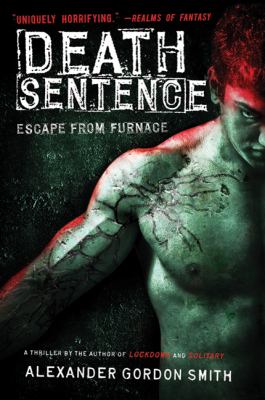
Death Sentence: Escape from Furnace, Book Three

Just a quick note on Death Sentence: Book Three of Escape from Furnace. death sentence

I read it.

It still has the appeal of the first two books, but it does have that middle of the series lag, at least at the beginning of the book. It’s not so much that Smith is trying to go over what’s in the first two books–thankfully, he doesn’t fall into that trap. (Start at the beginning of the series if you want to know, right?) But he does begin with lots of gory details about Alex becoming a ‘Black Suit.’ The depth of this description will have appeal to many readers–it may hook some guys who don’t often choose, of their own free will, to read (teens whom libraries and schools call ‘reluctant readers’).

I’m not a reluctant reader, so I was getting agitated–where had the storyline gone off to? Whatever was going to happen in the novel was left to wander the desert for–what seemed to me–forty years, while I was bogged down in page after page of Alex’s surgeries, hallucinations, bloody towels and intravenous drips. To be fair, the hallucinations are later connected to the story. (It’s hard to understand how the ‘nectar’ that the warden is having pumped into Alex can make him see historical events while sedated, but there is an explanation, and it’s worth just rolling with it.)

The story does get moving along, and we reunite with Simon and Zee, have a great jailbreak scene, and more. So, if you enjoy the long descriptions of effluvia, stretched skin, painful procedures and an immoderate number of hallucinations, great. If not, it’s OK to give the first third of the book a cursory (quick, fast) read, skimming the pages. And then get down to the story.

I continue to recommend this series, particularly for ‘reluctant readers.’

Posted in Fiction, Hi-Low/Quick Read, Read 180, Sci-Fi/Futuristic, Young Adult Literature | Tagged , , | Leave a comment