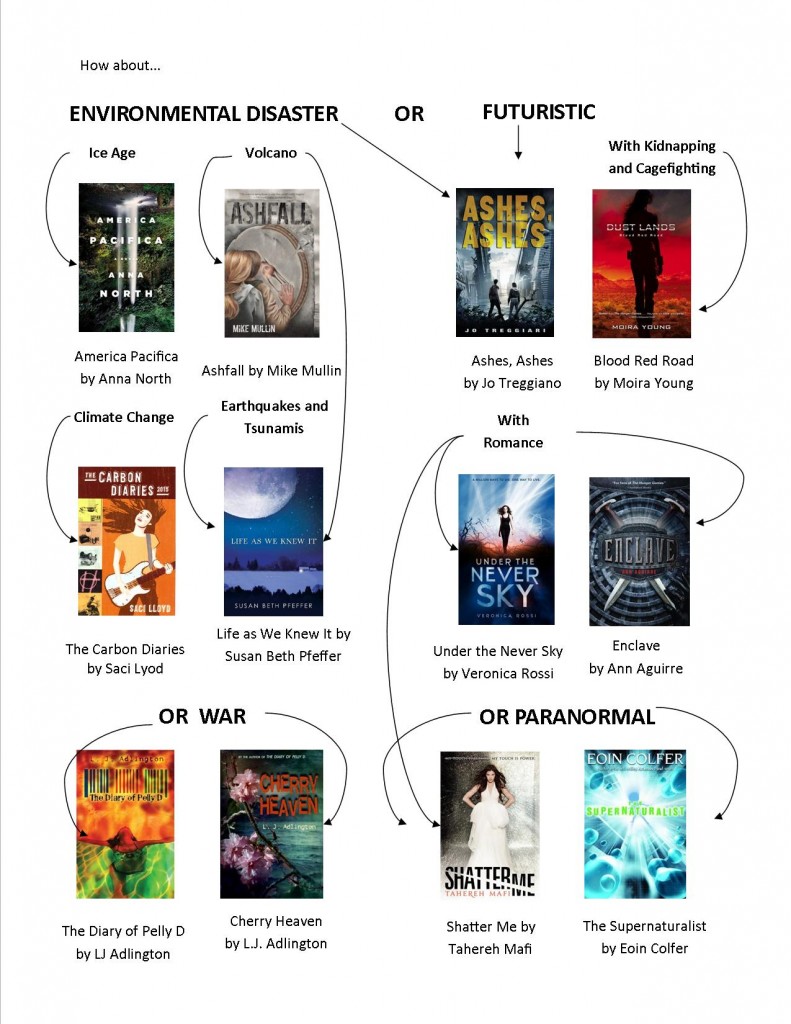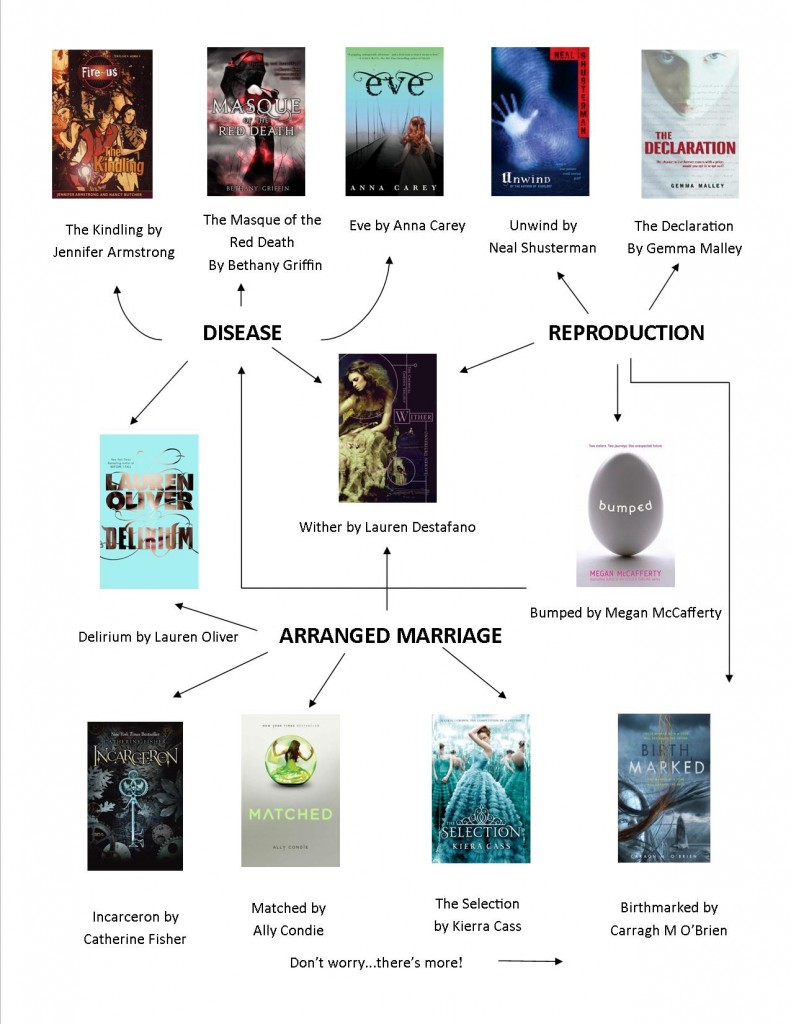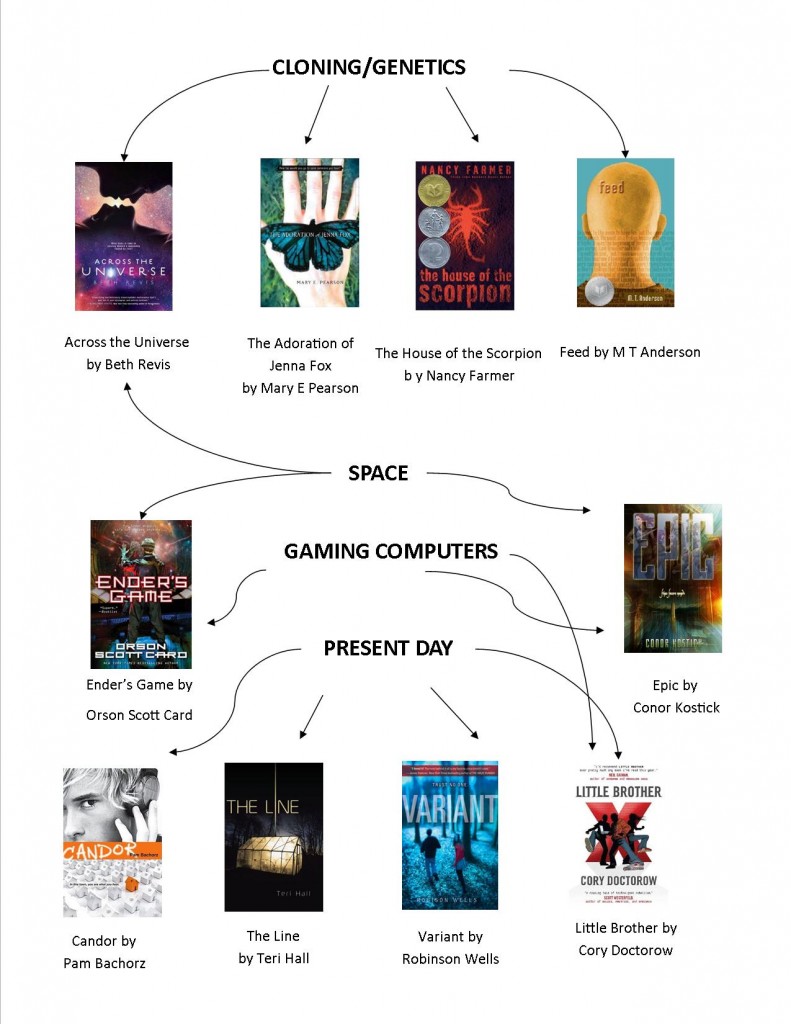
Dystopian Fiction Flow Chart

Happy New Year and welcome back to school!

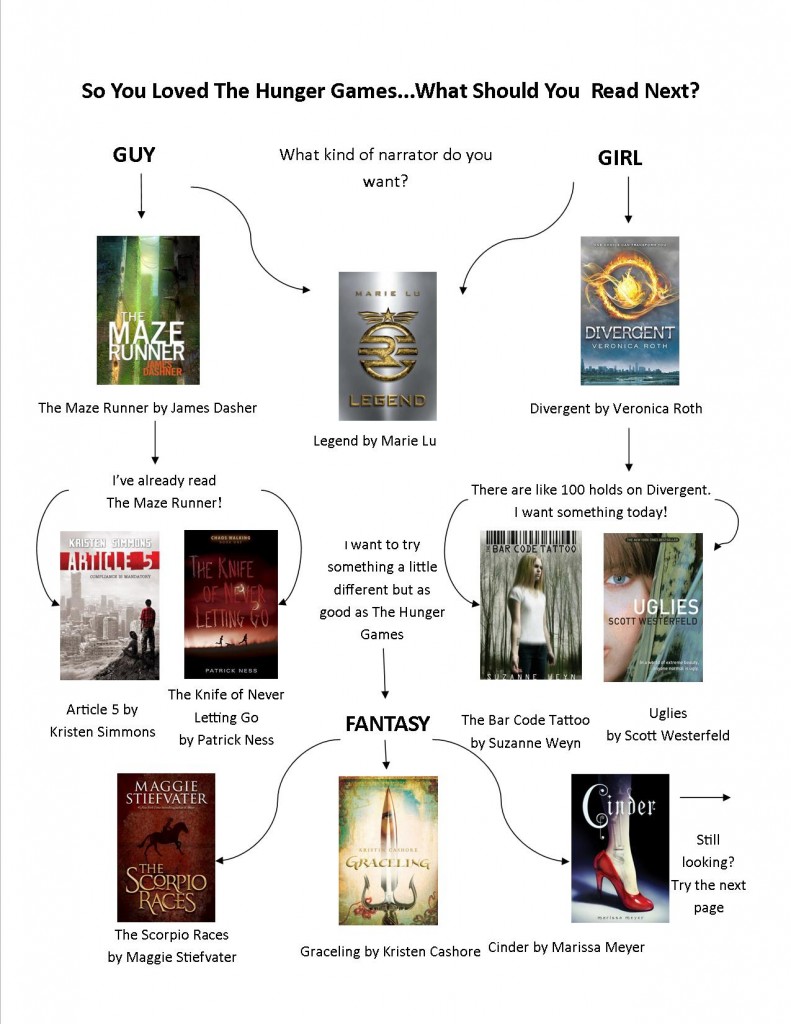
This cool “So You Loved The Hunger Games–What Should You Read Next?” flow chart was shared with me–and the link is to the Boston Public library, but they got it from the Lawrence Public Library in Lawrence, KS.

I’ve read many of these books. Come over and ask me about a title you are interested in!

DYSTOPIANFLOWCHART

DYSTOPIANFLOWCHART2DYSTOPIANFLOWCHART3DYSTOPIANFLOWCHART4DYSTOPIANFLOWCHART5

Posted in Classic Fiction, Controversial Issue/Debate, Fable/Fairy Tale/Fantasy, Family Problems, Fiction, Human Rights Issues, Movie Tie-In, Romance, Sci-Fi/Futuristic, Young Adult Literature | Tagged , , , , , , , , | Leave a comment

“Responsible”

responsible2Responsible by Darlene Ryan

I know everyone is focused on finals and the winter break. Study hard and then then relax with a good book over the holidays!

 I’m thinking about the Read 180 classes because they are the first I’ll see for book talks when we come back from break. So I read Responsible this week. It’s from the Orca Soundings series.

Kevin Frazier moves from school to school because his dad’s work isn’t stable. Dad works in construction, and he moves to where the jobs are. For Kevin, that has meant four moves in only one school year. Still, he’s trying to get along.

Kevin is befriended by Nick who is pretty much a school bully. He acts like he is involved in mishaps—knocking into people, accidentally tripping them, etc., but, of course, he’s hurting others on purpose, for fun.

One girl in the school, Erin, refuses to put up with Nick. It seems he is on her case because she wouldn’t go out with him. Every time he does something bad to her, she calls him out. Erin tells the school vice principal. Accuses Nick loudly in the halls.  Nick doesn’t like that Erin isn’t acting like a silent lamb. Now he’s really out to get her.

Although Kevin is not involved in the plan to really damage Erin, he learns about it by accident. And he knows that standing up to Nick will mean that he is going to get badly hurt. What should he do? Is there any way out of the mess? Why is doing the right thing so hard?

High school housekeeping: Responsible has a Lexile level of 620, which puts it at about the 4th-5th grade reading level. As part of the Orca Soundings series, it’s meant for high school students working on their reading skills. And for those students, Responsible is a great choice. I’m amazed at how much character development and story the author can pack into this little book.  I became so worried about Erin and what would happen to her—she is in far more trouble than she realizes. And then for Kevin, too, who has a terrible dilemma. Darlene Ryan has done a great job here, and I’m looking forward to more of her books. If you are looking for other hi-low books, I’ve reviewed some on this blog. One of my favorite hi-low authors is Norah McClintock.

Posted in Controversial Issue/Debate, Family Problems, Fiction, Hi-Low/Quick Read, Young Adult Literature | Tagged , , , , , | Leave a comment

“Waiting for You”

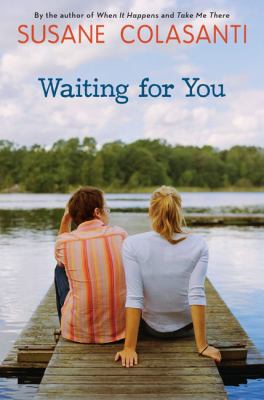
Waiting for You by Susane Colasanti   waiting for you

Marisa has had the hots for Derek for a long time and she has the opportunity to pounce when he breaks up with his girlfriend—even though he seems to be still connected to that other girl. Nash is Marisa’s old friend and neighbor, who for years has shared conversations at the end of a dock. He’s smart but geeky. Somehow, the two drifted from one another, but find themselves hanging out again when Nash is able to help Marisa with her homework.

So—you can guess the rest. Nash admits that he has the hots for Marisa. But he’s uncool, she’s not feeling it. Who, really, is boyfriend material here?

I’ve been ordering several of Colasanti’s books for my libraries, and thought I should read one, see if I could talk it up.  Girls are always asking for good romances, and Colasanti writes romance. But here’s my problem: I think, deep down, I just may hate YA romance. And this makes it hard for me to help girls pick out a good one.

Waiting for You drove me crazy on many levels. The story is a formula romance—if you don’t know what is going to happen after chapter one, you probably are pretending to be reading while texting. I’m someone who doesn’t like knowing exactly what will take place in a book. Even the big secret Internet radio star Dirty Dirk—am I really not supposed to know—immediately—who this is?

Then there is the writing. Instead of using the usual tags of “I said” or “she said” at the end of a line of dialogue, Colasanti uses “I go” and “he goes.” I know that people talk this way, and talking this way doesn’t bother me in the least. But reading this—along with the many “I was, like, surprised” doesn’t work for me. It jerks my attention out of the story to notice that tag line, that ‘like.’ Reading is not the same as participating in a conversation. Author, don’t pull me out of the story to acknowledge how cool you are with the hip language. Just—stop it and let me fall for the characters.

OK—I want to say that if you are looking for a formula romance  in which you know what’s coming and that the ending will be happy, Waiting for You is your book. And that sounds so snotty because it has the sense that such a story is not worth reading. But the thing is, such a story is worth reading—if that’s what you’re looking for. And looking for that story is great. Because reading should be pleasurable. So, I don’t want to be snotty. I just want you to know that this is that book, and that Colasanti has several similar titles if you get hooked. Fans of Simone Elkeles have raced through all of her books in our library. If you are someone who has also read all of Elkeles’s books, move on to Colasanti. I think you’ll enjoy her as well.

I take it back—I don’t really hate YA romance. I have enjoyed Sarah Dessen’s books because she strikes me as fresh, a good writer. And I loved This is What Happy Looks Like. It was very sweet, and I’m looking forward to more from the author, Jennifer E. Smith. I guess I’m just seeking more writers like those two. So that I can share them with our romance-crazed teens and be honest in saying I loved them.

There. It’s not the judgmental thing I’m after. Writing is a tough gig, and anyone who succeeds in being published deserves plenty of credit for perseverance. What I’m really after is the honest enthusiasm I feel for a book I can’t put down. I’ll keep looking for that in teen romances.

Posted in Family Problems, Fiction, Romance, Young Adult Literature | Tagged , , , , , , , | Leave a comment

“Out”

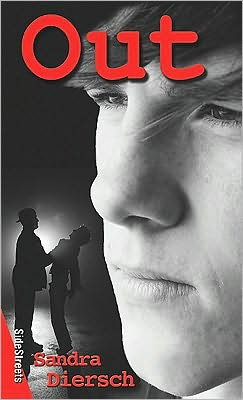
Out by Sandra Diersch    out

Late one night, Alex is about to pull out of a gas station parking lot when he sees shadowy figures across the lot. As he leaves, his car headlights show that the couple in the shadows are a young woman and Mr. Caruthers, the father of his good friend Emma. Mr. Caruthers is a leader in the Catholic Church where Alex goes to mass. Alex has been questioning his faith and seeing Mr. Caruthers’s hypocrisy is the final thing that makes him decide not to go to church anymore.

But Alex has met a great girl named Laura who is interested in the church. His parents, especially his father, are upset that he doesn’t want to attend church services. Even Alex’s brother Mark doesn’t seem to doubt his faith. Still, Alex can hear him sobbing during his prayers every night. Why?

Well, I don’t think it’s giving away too much—because you guess from the title—that Mark is trying to work through his sexuality. The mix of faith, religious hypocrisy about infidelity (cheating on one’s husband or wife), religious discomfort with homosexuality, and violence against gays is the story of Out.

High school housekeeping: Out is part of the SideStreets series for teens working on their reading skills. In a short space it deals well with some serious issues. The Lexile level for Out is 690, so the reading level is the fifth to sixth grade. I recommend the book for teens reading at that level.

Posted in Controversial Issue/Debate, Faith-Based/Religious Element, Family Problems, Fiction, Hi-Low/Quick Read, Read 180, Young Adult Literature | Tagged , , , , , , , , , | Leave a comment

“Stupid Fast”

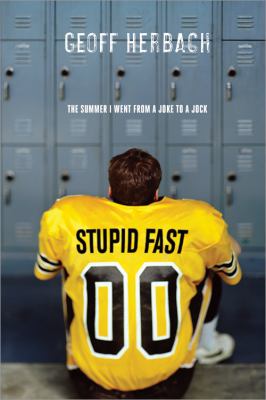
Stupid Fast by Geoff Herbach  stupid fast

Felton Reinstein has never had it easy. Only five years old, he was the one who found his father dead, hanging in the garage. His mother decided the best thing to do was to burn all artifacts that would remind the family of their father and to move on. But Felton has a myth of his father in his mind—a small, nice, Jewish guy.

Felton’s a small guy, too, with what he calls a ‘Jewfro.’ Until he’s not. Until he’s a hulking, big guy. A big, very hairy guy who, as he tells it, smells like pee stink when he sweats. Because when his very late puberty rolls in during his sophomore year of high school, Felton discovers that he’s ‘stupid fast.’ And all the coaches are interested in him, especially the football and track coaches. He may have the opportunity to change the direction of his life—from social outcast to star jock.

But Felton’s not sure he wants to hang out with the ‘honkies’ and ‘poopstinkers’ (his word for kids at his school that treat him badly) of ‘Suckville’—Bluffton, Wisconsin. They call him Rein Stone and Squirrel Nut. He’s often the butt of their jokes. But what are his options? His only friend has gone to Venezuela for the summer and he’s falling for a beautiful pianist that he sees on his paper route. The paper route that he hates and had to take over for the summer as a favor to that best friend, Gus. On which he delivers the news to a nursing home, a “hot, stinky prison for innocent old ladies who have lived too long (like that’s a crime).”

“You know what isn’t pretty? Old ladies in their underwear. You know what I got to see lots of? Old ladies in their underwear.”

Felton knows that the Suckville jocks are very rude and bullying. Except when they aren’t. One of the most popular athletes and football players on campus decides to mentor him. So Felton is learning not to judge everyone by their school activities. Maybe using his incredible physical skill is his best option. After all, his wish to be a comedian isn’t working out very well. If only his mother, whom he calls Jerri because she insists, hadn’t gone off the deep end when Felton started growing. Why does she react like this?

Jerri is clearly in the grip of mental illness, leaving Felton and his younger brother, Andrew to fend for themselves. While she locks herself in her room with the TV, the two boys scrounge around for food. Andrew is looking for answers—and he thinks he’ll find them in the true story of his father. But the closer he gets, the deeper Jerri sinks.

High school housekeeping: Judging from the topics—suicide, bullying, small town prejudices—you’d think that Stupid Fast is a dark novel. But it’s actually very funny. Felton has a weird sense of humor and an odd take on the world around him. People can relate to his social miscues and mistakes. This is a book about friendship and romance with a girl who doesn’t care very much about what other people think is cool (she is, after all, a brilliant, world-class pianist). It’s about high school dynamics and cliques. It takes on a dysfunctional family and family secrets in a way that makes you identify with Felton without feeling despair. It has enough football practice and game action to satisfy fans. And, well—it’s just funny. I recommend it to all teens, but particularly to guys and football fans. Important to note is that it’s the first novel in the Reinstein Brothers series, so if you read it and like it, there’s more where that came from.

Posted in Family Problems, Fiction, Sports, Young Adult Literature | Tagged , , , , , , , , , | 2 Comments

Adult Books for Teens: Common Core: Nonfiction: “David and Goliath”

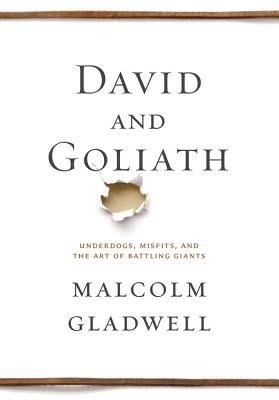
david and goliath   David and Goliath: Underdogs, Misfits, and the Art of Battling Giants by Malcolm Gladwell

Like just about everyone else who has read Malcolm Gladwell, I’m a fan. But with David and Goliath, I wasn’t as easily swayed by his arguments because my experiences as an educator are in direct conflict with some of his assertions.

Gladwell begins with the Biblical quote (Goliath speaking to David) “Am I a dog that you should come to me with sticks?” He makes much of the word ‘sticks’—using it as proof that Goliath couldn’t see well. But I’ve read in other sources that earlier versions of the story use the singular word, ‘stick.’ So, Gladwell might be quite off the mark in relying so heavily on this. And even if he is right in his argument that the roles of David and Goliath are actually the reverse of what we believe–that Goliath has debilitating handicaps that will, if not ensure, then at least tip, the scales toward David’s victory, it just seems that he isn’t paying attention to the mythological/religious purpose of the story. While he’s right that in the ancient world a well-trainer slinger might beat a fuzzy-sighted giant, it doesn’t matter. It isn’t a new idea that the underdog has a trick up his sleeve. The important thing in this story is that the trick up David’s sleeve is God. And if this is a story made for the Bible, well, you can’t beat that.

Gladwell breaks his argument down to three parts: sometimes what seem to be advantages are disadvantages; some difficulties, which would seem to break a person, are actually desirable; and power has its limits.

In discussing the advantages that are actually disadvantages, Gladwell uses research on class size. God help us educators—I hope no politician hears about this and decides to believe it. Because the class sizes that Gladwell is talking about aren’t really very large. He’s right that classes can be too small—try having a good discussion with ten students. But calling a class of twenty-five or twenty-nine ‘large’ and then saying it isn’t worse than twenty-two or so? Here in California, we routinely have class sizes of thirty-eight in high schools. I once had a class of forty-two. And, yeah, it makes a difference. A hell of a difference. So politically-minded teacher-haters—please read the fine print on this.

Gladwell also goes to great lengths to show that dyslexia can be a huge advantage, a ‘desirable difficulty.’ “If you take away the gift of reading, you create the gift of listening.” Again, my experience as an educator makes me answer—actually, no, not very often. Gladwell gives some examples of stellar thinkers and creators who are dyslexic—a successful lawyer, the founder of IKEA, the president of Goldman Sachs. But his quote early in chapter four from Nadine Gaab, a dyslexia researcher at Harvard, holds true: “‘You get frustrated. Your peers may think you’re stupid. Your parents may think you’re lazy. You have very low self-esteem, which leads to an increased rate of depression. Kids with dyslexia are more likely to end up in the juvenile system, because they act up. It’s because they can’t figure things out. It’s so important in our society to read.’”  So, it might be good to check the percentage of incarcerated folks who have learning disabilities. Such disabilities can be advantages in building character, in overcoming fear of failure, in creating a willingness to try anything. But usually—not.

As always, Gladwell has some great stories about individual successes. The story of Jay Freireich (under ‘desirable difficulties’) is worth of price of the book. Despite his father’s probable suicide, his mother’s unavoidable neglect (she worked eighteen hours a day) and his Depression-era upbringing in grinding poverty, Freireich, a doctor at the National Cancer Institute, along with a colleague, worked out a system to save the lives of children with leukemia. Before Freireich, those kids didn’t stand a chance of being treated because they bled out. Gladwell argues that Freireich was able to push for change because he was someone who could see painful, terrible treatments through. He was willing to experiment on children After all, he had seen worse. Using various poisonous drugs at once (a cocktail), he managed to kill the leukemia. Adding chemotherapy because he realized that some cancer cells lurked in the bone marrow, was an additional torment to patients. A more empathetic man wouldn’t have found this cure.

Equally intriguing is the story of Wyatt Walker, which is really the story of the Civil Rights Movement. It not only deals with desirable difficulty, but leads the reader to meditate on the questions of morality. In Birmingham, putting kids in front of fire hoses and police dogs wasn’t right, but it worked for the greater good. And what is right is generally defined by people in positions of power who want to close the door on those without it. And those without it, like David, have nothing to lose, and so don’t follow rules.

Gladwell continues to make his point in ‘The Limits of Power.’ This is that although we wouldn’t wish it on anyone, society needs people who have gone through terrible trauma. And while all the anecdotal stories he enlists don’t add up to research on the statistical probability that trauma will elicit courage and creativity, Gladwell asks some very intriguing, offbeat questions that make the reader thinks about things he wouldn’t have considered before. That’s what he always does well, and in this, David and Goliath is no exception.

High school housekeeping: Your teachers probably love Gladwell’s books and will be duly impressed if you read them. I’ve reviewed others by Gladwell on this blog—Outliers and Blink. I enjoyed those as well as What the Dog Saw. Gladwell is good stuff for meeting new Common Core standards. A good choice for teens looking for adult nonfiction. You’ll be engaged throughout.

Posted in Non-fiction | Tagged , , , , , | Leave a comment

“Wonder”

wonder   Wonder by R. J. Palacio

Augustine—Auggie—Pullman has been homeschooled all his life, but for fifth grade, he is going to go to a private middle school. He’s smart enough, but he’s anxious. This will be the first time he’s had to deal with the push and pull of the middle school society. And he’s right to worry. Due to an extremely rare genetic disorder, Auggie has severe facial deformities. He knows people will make fun of him, and that it won’t be easy.

Auggie tells the reader that whatever s/he imagines that his face looks like, it is worse. He has no ears—no outer ears, so none that show. His eyes are too far down, in the vertical middle of his face. Everything about his face is misshapen, and though he’s had nearly 30 surgeries, his face is still a shock to those who see him for the first time.

For a kid with so much going against him, Auggie is pretty centered. He has parents and a sister who really love him. And the principal at his new school has selected good students, ‘good kids,’ to show him around before the school year starts, to be nice to him.

That some of these students put on a face of kindness in front of the adults at school and then bully him behind his back shouldn’t be a surprise. That one of them can get almost the entire school to turn against Auggie isn’t a surprise either. What is a surprise is how the author catches the nuance of this bullying—from kids who are truly mean to those who just don’t know what to do and are having a crisis of conscience.

In fact, Palacio catches pretty much everything about middle school that illuminates what a difficult time of transition into adolescence it can be.

One of the things I really liked about Wonder is that it isn’t peopled by saints/heroes and demons/villains. Auggie’s older sister is tired of being thought of as the girl with the deformed brother (who takes up most of her parents’ energy through no fault of his own). Still, she is fiercely devoted to Auggie. And even good people really are taken aback at Auggie’s appearance. But while the novel accepts that this is normal, it also reminds us that after a week or two, people get used to the unusual features of Auggie’s face and then forget about them. He just becomes Auggie, a kid, a schoolmate.

I’m always a sucker for good writing, and Wonder has got it. Palacio captures the kids—their conversations and interactions—realistically.

While Wonder is a children’s book, with a target audience that is Auggie’s age, give or take a few years, it’s a quick read that even adults will enjoy. I highly recommend it to all.

High school housekeeping: Another thing that I love about this book is that, since anyone of any age can enjoy it, it’s a great read for high school students working on their reading skills. This isn’t true of most middle school books—they just don’t interest high schoolers. And because teens like edgier stuff, books written for high school students who are reading below grade level usually deal with issues of teen pregnancy, drugs, gangs, etc. There’s nothing wrong with that, and there are many of those books I recommend. But Wonder is another option—an opportunity to become immersed in beautiful writing, in Auggie’s emotional responses to his classmates as well as the feelings of everyone who comes in contact with him. It’s an opportunity to see how perceptions can and do change, how everything in the world isn’t black and white. And that’s great for anyone, struggling reader or not.

Posted in Family Problems, Fiction, Hi-Low/Quick Read, Read 180, Young Adult Literature | Tagged , , , , , , , , , , | 2 Comments

“Reaction”

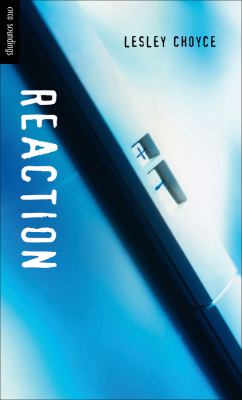
Reaction by Lesley Choyce   reaction

Ashley drops the bomb on Zach—she’s pregnant and doesn’t know what to do. At first they try to figure things out together, but their fear and anger cause them to pull apart. Ashley is so mad at Zach when she finds out about a secret he kept from her. She tells her friends that Zach forced her to have sex with him. And Ashley’s parents? Boy are they mad, especially her father.

Zach is trying to be mature—he has to get Ashley to talk things out—look at all the options. He has to decide whether he is mature enough to become a father at sixteen, the difficulties of which he can’t imagine.

High school housekeeping: Reaction is one of the Orca Sounding series for high school readers working on their reading skills. The Lexile level is 520, which is somewhere in the third to fourth grade reading level. So Reaction is a bit easier and even a bit shorter than most novels in the series. Knowing that, I wish that the book would have continued to show Ashley and Zach making their final decision. Still, it deals with a current teen topic and shows how teens can keep changing their minds when none of the options are very good.

Posted in Family Problems, Fiction, Hi-Low/Quick Read, Read 180, Young Adult Literature | Tagged , , , , , , , , | Leave a comment

Adult Books for Teens: “The Ocean at the End of the Lane”

The Ocean at the End of the Lane by Neil Gaiman ocean lane

“‘Oh monsters are scared,’ said Letty. ‘That’s why they’re monsters. . . .  As for grownups. . . .  I’m going to tell you something important. Grownups don’t look like grownups on the inside either. Outside they’re big and thoughtless and they always know what they’re doing. Inside they look just like they always have. Like they did when they were your age. The truth is there aren’t any grownups. Not one, in the whole wide world.’”

The narrator of The Ocean at the End of the Lane is back in Sussex, England to attend a funeral. He is drawn to the farmhouse at end of the lane through his memory of the girl who once lived there, Lettie Hempstock. As he stakes out a spot near the duck pond, he remembers that Lettie once called this an ocean. Through memory, he dives in, and takes the reader through its magical and metaphoric depths.

And while magic is afoot, a great deal of it is pure evil. That is, from the narrator’s point of view. Lettie dismisses monsters as creatures who just do what they were created to do. But what they were created to do is deadly business.

As a child of seven, the narrator gives up his room to a boarder, an opal miner from Australia, who takes the family car down the lane and commits suicide. This event unleashes the dark character of the world and it immediately goes to destroy the boy and his family. Its first incarnation appears as the most benign of creatures, Ursula Monkton, the pretty young seductress, who is hired as the narrator’s nanny. “She was power incarnate . . . she was the adult world . . . and all its foolish casual cruelty . . . huge and greedy.”

Whatever their form, there is no escape from creatures who would devour the very earth, except through hanging on to Lettie, who, though she appears to be eleven years old, seems to have existed from the beginning of time. Her friendship is an awesome force of good, and along with her mother and grandmother, she is fiercely loyal.

Gaiman is so great at hair-raising, spine-tingling horror that he has no need of the bloody-slasher cheap thrills. The Ocean at the End of the Lane is no exception to this fact, but it is more than excellent horror.

I was so infatuated with The Ocean at the End of the Lane by the end of the story that I didn’t want to start another book the next day—not to read, not to listen. I had dreamed of the past because of the novel. I want to make clear that I’m not talking about the nightmares that horror will sometime bring.     Just about loss—the inescapable kind that aging brings—and the necessity of forgetfulness. In this work, Gaiman pulled me back to King’s Stand by Me and even further to Bradbury’s Something Wicked This Way Comes—not so much through style or subject, but in emotional resonance. All draw out that same longing that will leave you pensive for days.

Genius. A treat on so many levels. Enjoy.

High school housekeeping: This is a great choice for high school students. It’s got excellent writing that both you and your teacher will appreciate, and a story that will rivet you to your seat—you won’t be able to put it down. Plus, it’s short, so if you’re busy with a lot of homework, it won’t be an issue. And you know Gaiman from his children’s stories. Take your pleasure with those and times it by ten. You’ll love, love this one. Read it.

Posted in Family Problems, Fiction, Horror/Mystery/Suspense | Tagged , , , , , | 3 Comments

“The Book Thief”

This slideshow requires JavaScript.

I’ve got to see the movie–for those of you who haven’t read the book yet, here’s my original review comparing it to The Boy in the Striped Pajamas. The Book Thief is one you need to make time to read. It’ll stay with you for a long time to come.

Posted in Family Problems, Fiction, Historical Fiction/Historical Element, Human Rights Issues, Movie Tie-In, Over 375 pages, Young Adult Literature | Tagged , , , , , , | 2 Comments