Teen Book Fest Author: “Where Things Come Back”

where things

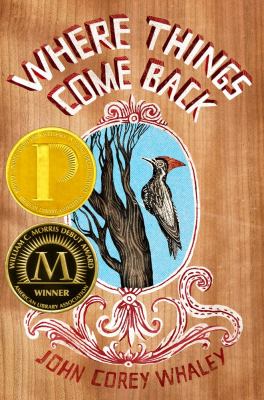
Where Things Come Back by John Corey Whaley

Cullen Witter must identify the body of Oslo, his teen cousin, who has just died of a drug overdose.

The experience in the morgue leads Cullen to reflect on his life in Lily, Arkansas, a small town with pretty much nothing to recommend it except trees. He thinks of how the high school is divided into the usual cliques—preps, etc.—and of bullying and name calling.

Cullen doesn’t cry over his cousin. In fact, whenever things are tough, he falls into fantasies; he wants to write a book about zombies. He sees everything that goes on in his town as part of his zombie apocalypse. When he focuses on reality, he wonders why he is so angry and rude to his father now that his dad has given up drinking. He contemplates Ada, the girl of his dreams. She’s known as the’ black widow’ because two of her boyfriends died in accidents within a year. Still—every guy in the school wants her.

Cullen’s one good friend, Lucas, spends a lot of time at the Cullen house in order to avoid his own crazy family life. And he’s a friend well worth the trouble—wacky, funny, understanding. But the only person to truly rise above the small town life is Cullen’s brother, Gabriel. He’s thoughtful, kind, and very cool to have as a brother. Until he goes missing.

No one has a clue about what could have happened to Gabriel. And as the weeks drag on, Cullen’s mom becomes depressed and checks out, eating meals in her bedroom, refusing to go to work. Cullen imagines all the things that his brother could be suffering in some kidnapper’s basement. And he is furious that the town is focused on a possible sighting of a supposedly extinct giant woodpecker rather than the missing Gabriel.

Where Things Come Back is, by turns, funny, poignant and mysterious. It’s a testament to faith and a window into religious zealotry and mental illness. There are two story lines that come together as the family waits for news of Gabriel, as their grief deepens and becomes very real to the reader. There’s a lot to love here.

High school housekeeping: I think there is something for everyone in Where Things Come Back. If you are not used to reading or if you haven’t read a book with two separate storylines, be patient. It takes a while, but these come together nicely and will make you glad that you found out how they are related. This is very good writing and that’s always a bonus to a good plot line. Come check this one out!

Author John Corey Whaley will be here in Ontario for the Teen Book Fest! If you enjoy his work, you can buy Where Things Come Back—or his new book (coming out today!), Noggin—and have him sign it. Come on over to COHS for the Book Fest and say hello to your favorite authors.

May 17, 2014
9 AM-5 PM
Call 909-395-2225 for more information.
Posted in Faith-Based/Religious Element, Family Problems, Fiction, Horror/Mystery/Suspense, Young Adult Literature | Tagged , , , , , , , , , , , , , | Leave a comment

John Green to receive LA Times Book Prize this Friday

This Friday, John Green will receive the Innovator’s Award at the Los Angeles Times Book Prizes ceremony “for his work building a vibrant community at the intersection of literature, technology and activism.”

The Times interviewed him about those three things, and he says some great stuff about teens. I think you’d enjoy the interview (You can read it here.) A bit about Nerdfighters and decreasing ‘world suck.’ A bit about teen readers and the great number of good books that are being published for you. Fun.

Green will also be at the Los Angeles Times‘ Festival of Books on Saturday. He has a session at 12:30 PM–Conversation with John Green–which is sold out.


Posted in Fiction, Young Adult Literature | Tagged , , , , , , | Leave a comment

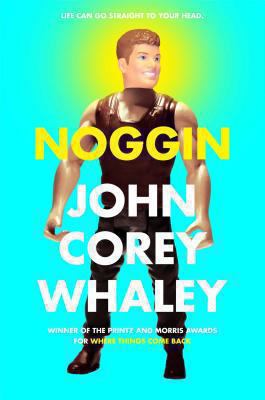
Teen Book Fest Author: Check out trailer for “Noggin”

noggin

“Listen—Travis Coates was alive once and then he wasn’t.
Now he’s alive again.
Simple as that.

“The in between part is still a little fuzzy, but Travis can tell you that, at some point or another, his head got chopped off and shoved into a freezer in Denver, Colorado. Five years later, it was reattached to some other guy’s body, and well, here he is.”–From publisher’s description.

John Corey Whaley is coming to the Ontario City Library Teen Book Fest on May 16, 2014. I’m enjoying his novel Where Things Come Back and will review it as soon as I finish. But in the meantime, why don’t you check out this MTV interview with Whaley about his new book Noggin, due for release on April 8. The MTV interview has a great book trailer as well.

http://www.mtv.com/news/articles/1724044/noggin-ya-novel-to-movie-trailer-premiere.jhtml

Posted in Family Problems, Fiction, Romance, Sci-Fi/Futuristic, Young Adult Literature | Tagged , , , , , , , | Leave a comment

Origami

origami

After the students’ lunch break, I saw this when I looked across the library and thought, “Oh some brat left gum wrappers on the table.”

When I got closer, I found this wonderful surprise little gift. Thanks anonymous paper-folder! You brightened my day!

Posted in Uncategorized | Tagged , | Leave a comment

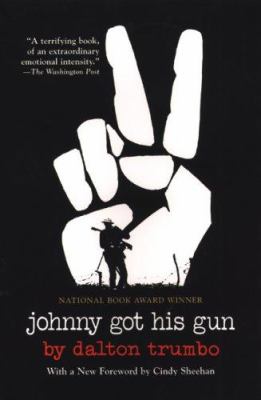
Adult Classics for Teens: “Johnny Got His Gun”

Johnny Got His Gun by Dalton Trumbo                johnny got his gun
Yes, an’ how many times must the cannon balls fly
Before they’re forever banned?
The answer, my friend, is blowin’ in the wind
The answer is blowin’ in the wind
Bob Dylan

Johnny Gun His Gun is a novel that asks this question through the tragedy of World War I soldier Joe Bonham.

Fighting in Europe, Joe steps on a land mine and is blown to pieces—almost. When he comes to consciousness afterward, in a hospital, he doesn’t know how much time has passed. He figures that it could be a year. What he does slowly discover is that he is deaf from the blast. And that he is mute and unable to smell, having lost the features of his face in the blast. And that he has no arms. And no legs. They may have survived the blast, but then were amputated to stop infection. Otherwise, why would the doctors have worked to save him? He is isolated, with tubes into his lungs and stomach for air and nourishment.

Unable to communicate with others, Joe’s world consists of waiting for the nurse to bathe him. In order not to lose his mind, he times the visits to get an idea of the passing days. He detects daytime by the warmth he feels. He thinks back on many of the very ordinary incidents of his life—his first true love, fishing with his dad, goofing around with his friends, working hard in a commercial bakery. Contrasted with his current situation, these events take on an indescribable beauty.

Joe knows that his suffering is a fate worse than death. But why? The war seems meaningless. Words like ‘freedom’ and ‘liberty’ are intangible. And he certainly has neither now. His youth, his freedom, his happiness, and his future were all taken by war generals and older (upper class) men who are happy to take young (lower class) men’s lives for indistinct causes. At one point, Joe realizes that he is being given a medal—he can feel it being pinned to his garment. He tries desperately to twist and throw off the mask covering his face. He wants others to see the reality of war, to forget the sentimental parades and hero stories.

Joe comes to understand that the only thing remaining for him to do is to be a proof of the ugly reality of war, to make others think about the true damage war inflicts. His years’ long effort to be able to communicate this are heroic. The result of his efforts are tragic.

High school housekeeping: Johnny Got His Gun is something of a cult classic as well as a critically-acclaimed anti-war book. It was published in 1939, on the cusp of World War II, but has remained a favorite ever since. If you find a new imprint, you’ll see that it has several introductions, including those from war protestors of both the Vietnam War and the more recent Iraq War. I happen to be thinking about it now because I was book talking to students on books that have some connection to events in history. In going over Johnny again, I was reminded of its power to move the reader, to make her question conventional wisdom.

The story of the author is also a powerful cautionary tale on censorship. Though Trumbo agreed that the book shouldn’t be published during World War II (he distinguished WW II from WW I, which he thought of as a ‘romantic war’), in the later McCarthy era, Trumbo was called to testify before the House Committee on Un-American Activities. (He had been a member of the Communist party.) He was one of the ‘Hollywood Ten’ who refused to give information on other suspects. He was blacklisted from the film industry and spent a year in jail.

For many good reasons—not the least of which is its teen appeal—this is a book you shouldn’t miss.


Posted in "Banned Book", Classic Fiction, Controversial Issue/Debate, Fiction, Historical Fiction/Historical Element | Tagged , , , , , , , | 1 Comment

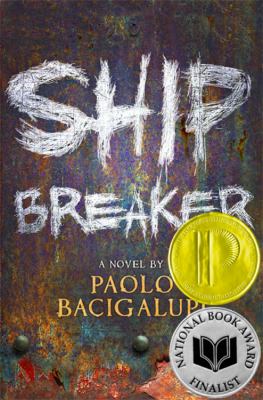
Sci-Fi: “Ship Breaker”

Ship Breaker by Paolo Bacigalupi  ship breaker

In the aftermath of environmental apocalypse, in the world of ship breaking on the Gulf Coast, Nailer survives by pulling copper wire from grounded oil tankers. He, like everyone else he knows, is looking for a ‘lucky strike’—the chance to find something valuable such as oil or gold—that he can keep a secret from the crew bosses and from his ultra-violent, drug-sliding father. But lucky strikes are few and far between—legendary, really. When Nailer thinks he has found one, he nearly loses his life as a crew mate refuses to keep the loyalty oath and tries to cash in for herself.

But there is a high price to pay for breeches in crew loyalty. Once put off a ship breaking crew, a teen will have no choice but to sell his or her body—first sexually, and finally in parts—collecting small sums for eyes and kidneys—until death finally arrives through starvation.

Though Nailer has a true mate in Pima, his crew boss, his existence in threatened everyday by his crystal-sliding father.  Also a threat is the extreme weather. When a hurricane hits, Nailer and Pima seem to have found a lucky strike in the form of a grounded yacht. Only ‘swanks,’ people who are rich beyond imagination, can afford these clippers of the sea. And sure enough, when Pima and Nailer board the clipper, hoping to seal all the gold and silver before Nailer’s father and the powerfully violent men get word of it, the pair find impossible riches.

They also find some dead people. Just as they are about to cut the jewelry off a swank girl, she shows signs of life. Now Pima and Nailer have a dilemma: do they slit her throat, which might be a humane way to end her suffering? Or do they try to save her and hope for a vast reward?

Like Nailer’s first lucky strike, this one, too, leads to extraordinary danger. Nailer becomes wrapped up in the world of transcontinental shipping companies and the multi-billionaires whose business practices have caused the poverty and depravation of most of the world’s population.

Can a lice-picker like him survive?

High school housekeeping: This is a fast-paced sci-fi thriller that completes one element of the storyline and prepares you for another. I think it’s a great choice for guys who have a hard time finding a good book, but everyone will like it for its high-stakes adventure. There’s a lot of social commentary. Ship Breaker, while it’s great sci-fi, leaves you thinking on the consequences of environmental devastation and a world where very few people control the lives of the masses. Super bonus: excellent writing.

Posted in Adventure Stories, Environmental Issues, Family Problems, Fiction, Human Rights Issues, Sci-Fi/Futuristic, Young Adult Literature | Tagged , , , , , , , , , , , , , , , , | Leave a comment

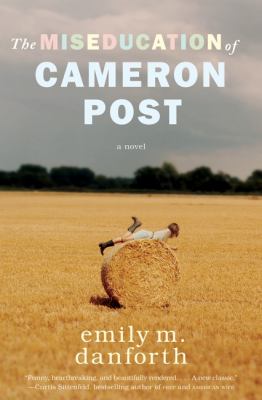
“The Miseducation of Cameron Post”

The Miseducation of Cameron Post by Emily M. Danforth  miseducation of cameron

Cameron Post and Irene Klauson have always been best friends. They do everything together including all those things they shouldn’t do, like shoplift. And there’s always been an edge to their relationship because they compete with one another. So when they are twelve years old and they decide to practice kissing, there’s nothing particularly strange about that. But what they both discover is that they like their kisses and want more. Cameron Post is realizing that she is a lesbian, and it seems that Irene is too. They are already thinking about being careful, keeping it a secret, and looking for an opportunity to do it again.

The night following their discovery, Cameron is staying at Irene’s house. Irene’s father wakes her up in the middle of the night and tells her that he has to take her home. Have the girls been discovered? They are so worried. But, unfortunately, the news is much worse than that. Cam’s parents have been killed in a car accident at Quake Lake in Montana. Ironically, this very lake was created in an earthquake decades before, and Cam’s mom had just coincidentally escaped it.

Cameron’s life is pulled apart. Although she still has her much-beloved, oddball grandmother (mother of her father) to help take care of her, her mother’s sister, a recently reborn Christian, gives up her own life to take care of Cam. And worst of all is the thought that keeps running through Cam’s head—she’s glad that her parents will never know about her kiss with Irene. And she believes that the kiss itself may have been the cause of her parents’ death—a punishment. And so the guilt begins.

As Cameron grows into her teen life, she also grows more distant from Irene, who has become wealthy and leaves for private school. She hangs out with mostly guys, who dare one another to do dangerous things and spend a lot of time smoking dope. She now has Lindsey, a girl from Seattle, that she competes against in swimming. Lindsey is openly gay and much more knowledgeable than Cam. She makes Cam feel the stultifying nature of her life in eastern Montana and in the Gates of Praise church (which is always shortened to the acronym GOP—and, yes, I was amused). At GOP, Cam often hears sermons against homosexuality. She’s surprised one day when she hears her aunt having sex with her boyfriend—after all, that’s one of the sins on the GOP list. Why are the standards for the two different?

With Cam exploring and working out her sexuality, you can pretty much figure she’s going to get caught. Her downfall is a beautiful girl of her dreams, the super popular Coley, who is also a member of the GOP church. A girl with a boyfriend, one who is either secretly bisexual or at least is exploring. When the two are caught, Coley hurls all of the blame on Cameron; her betrayal, as we see it later, is breathtaking.

Once caught, Cam’s life is again turned upside down. She is sent away to God’s Promise, a conversion therapy school/camp. Up to this point, the novel has been very good. But at God’s Promise, it soars. There Cam has no privileges until she earns them. She has to deal with her roommate ‘Viking Erin,’ who wants her conversion to work. But she also makes a few great friends and still manages to get up to no good.

Guilt is a major theme of this novel, beginning with that first kiss between twelve-year olds. The big question that hangs over all the ‘disciples’ (students) at God’s promise is whether their conversation therapy will work. There’s no evidence that it does and the psychic price that the students pay is high—even tragic in some cases.

High school housekeeping: The Miseducation of Cameron Post is a literary-quality novel. The characters are well drawn—no stick figures here, including Cam’s Aunt Ruth who does love her, feels that Cam’s ‘problem’ may be as much her fault as it is Cam’s, and who truly believes that she is helping Cam by sending her to God’s Promise.

I did worry a bit reading the book because Cam is such a pothead and has several other bad traits to boot. Obviously, I’m not someone to promote drug use, but I think that with all the issues in Cam’s life, her behavior is pretty realistic. The intimate and sexual scene are well done. They aren’t gratuitous nor are they pornographic. Nevertheless, this is a book for mature readers, and I think high school rather than younger YA readers are the audience.

Posted in Controversial Issue/Debate, Faith-Based/Religious Element, Family Problems, Fiction, Human Rights Issues, Mature Readers, Over 375 pages, Young Adult Literature | Tagged , , , , , , , , , , , , , | Leave a comment

Divergent: the Movie

The next young adult novel to hit the theater–Divergent on March 21, 2014. You have almost three weeks to finish the book! Click the link for my review. (Liked it a lot–but didn’t love it the way most everyone else does.)

Posted in Uncategorized | Tagged , , | 1 Comment

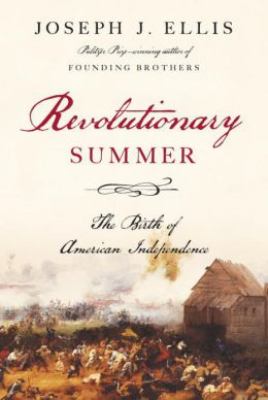
Common Core: Adult Books for Teens: “Revolutionary Summer”

revolutionary summer   Revolutionary Summer by Joseph J. Ellis

The summer of 1776 is the revolutionary summer that Ellis discusses in his book, one in which the fate of the war for independence looked pretty bleak.

Ellis says of Washington’s ragtag army, ‘They were not the kind of men you wanted living in your neighborhood.’ (They spit tobacco every few feet, mocked their officers, were undisciplined and unable to hold their ground in a fight. Ironically, the fact that so many of them turned and ran in the first battles in New York that summer gave Washington the chance to reorganize without the massive losses he would otherwise have had.)

New York was strategically significant in 1776, in part because of the Hudson River. So it was an obvious place for an early clash between the British and the states. And it proved particularly difficult for Washington and his rebel army. New York was full of loyalists who didn’t want to be defended against the British. As the British landed, many New Yorkers hailed them as saviors. Washington was in a no-win situation; his retreat from it was nearly miraculous.

How did these newly Unites States ever pull off a win in the Revolutionary War? As Ellis tells it, they learned that they just had to keep from losing and the British would succumb because they were fighting from too far away with too little direction. He also details the story of the Howe brothers—Admiral Lord Richard Howe and the younger General William Howe, who commanded the British due to his proven military brilliance as a regimental commander and his notable courage. These men, while well-positioned to win this war, saw themselves as peacemakers and diplomats. This is not so odd as it seems—you’ll understand why as you read—but this view deeply hurt their strategy in the end. They really weren’t winning hearts and minds. (Hum . . .)

Still—things did have to change for the Continental Army if they were going to win battles. The new country had to invent and standardize the rules of the army, and admit that having ‘turnstile’ soldiers, who left after a year of service couldn’t work. Just as the men were finally learning what it meant to fight a battle, they were heading back home. And yet to have a standing army was something that the colonies had always objected to—it smacked of the imperial government they were trying to throw off.

While the action around New York was coming to a head, the United States not only had to standardize their army. They had to declare their independence. The story of how Thomas Jefferson was chosen to write the document is genuine fun. (Ben Franklin, the rock star of the period, couldn’t stand writing by committee and didn’t want to create a document that would be edited by others later.) At the time, Jefferson’s first two paragraphs were regarded as a “rhetorical overture, the flamboyant windup before the real pitch.” As we know now, “We hold these truths to be self-evident,” etc. are some of history’s most famous and most important words.

Because of Ellis’s fluid writing style, the summer of 1776 comes alive for the reader. In addition to Washington’s early lack of resolve (later eliminated), the unimaginable success of the Continental Army’s retreat from New York and then the burning of that city, we see: Jefferson writing the Declaration of Independence; John Adams coming to realize the significance of what he is involved in; John Adams’s relationship to his wife Abigail and the significance of their letters to each other; the importance of Benjamin Franklin and how his opinion of American independence evolved.

High school housekeeping: Some reviewers note that the topic of Revolutionary Summer has been written about ad nauseum. And yet, for those of us who know little about the details of this historic moment, Ellis is the perfect choice. In addition to his excellent writing, the high school student will love him for his brevity—not including the endnotes and index, this book is well under 200 pages. (And yet, including those, it is over that magic 200 page marker that many teachers require. 😉 ) There are also some helpful color illustrations and black and white maps. I highly recommend this book to you. If you want to read about the entire year, David McCullough’s 1776, which is a sort of anthem to George Washington, is also an excellent book.

Posted in Historical Fiction/Historical Element, Non-fiction | Tagged , , , , , , , , , , , , , | Leave a comment

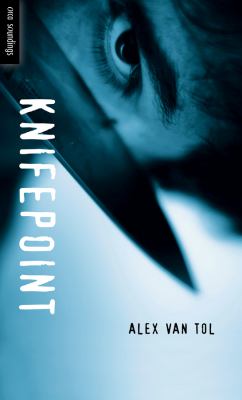
“Knifepoint”

Knifepoint by Alex Van Tol  knifepoint

In a very short book, Van Tol has done a great job of telling a story of suspense, of getting into the mind of a crazed killer.

Jill is working on a mountain ranch for the summer. It sounded like a great job—riding horses, hanging with other teens. But she finds that what she thought would be her weekly salary is actually her monthly salary. After all, she gets room and board on the ranch, right? And then the other teens, who are great to party with, aren’t so great to work with. After a hard night of drinking, they don’t want to get up in the morning and take the ranch guests out on horse trails.

When the son of the ranch owner insists that Jill do more than her share of work while he slacks off, Jill has had it. A man from another local ranch wants to be taken on a wilderness ride, off trail, where the experienced riders go. Jill is so mad that she doesn’t bother to register the guest. She just takes off with him into the wilderness.

The problem is that this is no fellow rider from a nearby ranch. He’s a psychopath and his goal is to get Jill far into the mountains and then kill her. He plays a cat and mouse game. Jill knows the area and is a strong rider. But is that enough to get away from a well-prepared weirdo?

High school housekeeping: Knifepoint is one of the books in the Orca Soundings series and is meant for students working on their reading skills. The Lexile level is 610, so it is somewhere in the 4th to 5th grade reading level. If you are working to improve your reading skills, this is a great choice for a story you won’t be able to put down.

Posted in Fiction, Hi-Low/Quick Read, Horror/Mystery/Suspense, Read 180, Young Adult Literature | Tagged , , , , , , , , , , , | Leave a comment