Supernatural: “Frozen Fire”

Frozen Fire by Tim Bowler  frozen fire

Fifteen-year-old Dusty picks up her phone to find that a strange boy is calling her to say that he is dying. She tells him to call the police, but he refuses. As they talk further, the boy sounds more and more like Dusty’s missing brother Josh.  Just before he hangs up, he says, “‘I’m sorry little Dusty. Good-bye, little Dusty.’”

Those are the last words Josh had spoken to her.

Feeling that the strange boy must know something about Josh’s whereabouts, Dusty braves a freezing night. She hurries out into the wooded areas beyond her town and into the thick snow. Just as she’s sure she’s tracked the boy through footprints, a strange man, his sons, and two pit bulls are after her. The chase is on, with more to follow, right to the end of this supernatural thrill ride.

As Dusty’s search for the strange, elusive boy evolves, she finds herself in more and more trouble. She has a difficult time talking to her dad about her comings and goings because he is trying to get over his separation from Dusty’s mom, a rift that is partly a consequence of Josh’s disappearance. It’s clear that Dusty wants to find Josh because she loves and misses him, but it’s also true that she believes knowing what happened to Josh will help her befuddled dad. So maybe that’s why she lies to the police as well when they insist that the boy is dangerous and that she must stay away from him.

In her quest for the truth, Dusty is pushing away her friends and taking on many enemies. She is fearless, which leads to some of the most suspenseful scenes in the novel–she’ll take on anyone, boys and men included.

The chills and suspense of the novel derive not only from the real dangers that Dusty finds herself in, but from the ‘frozen fire’ of the title. It’s an atmosphere that she shares with the ghostly boy, and Bowler perfectly creates and holds it. While others do not sense it, as the snow falls endlessly, the supreme chill is often cut by a burning heat. The air, the sky, the world is so brightly lit that it is sometimes impossible to see. All is white. Quiet. Spooky.

Why is it that Dusty sees the world as the boy does? How can this specter of a boy know so much about Dusty? How can he so often speak aloud exactly what she is thinking?
High school housekeeping: As I often admit, I love horror that is spine-tingling rather than ‘slasher’ driven. Frozen Fire doesn’t quite fit the horror genre although the boy who drives Dusty to seek Josh appears to be supernatural in his weird whiteness and his ability to absorb realities of which he has no part. It’s certainly a thriller. I had hoped it was  a book for reluctant readers, but after finishing it, I’d say it’s a book for readers. That is, although there are many white-knuckle chase scenes and scenes full of danger and intent to kill, understanding of the ghostly boy comes slowly because he is so elusive. If you are ready to follow that strange kid, you’ll find yourself richly rewarded with a creepy, open-ended finale, one that will begin great discussion with friends who have read the book as well. This would make a wonderful teen book group read. Try it.

Posted in Family Problems, Fiction, Grief, Horror/Mystery/Suspense, Supernatural, Young Adult Literature | Tagged , , , , , , , , | Leave a comment

“How to be Brave”

How to be Brave by E. Katherine Kottaras  How to be Brave

Georgia Askeridis defines herself through her fears, which are many. She has every right to remain the girl in the shadows. Her severely overweight mother has recently died of complications of obesity and diabetes. Georgia begins her story with her own early shame at her mother’s size, which she thinks of as ‘planetary’ next to others. With her mother’s death, she must work through the guilt she feels at having been embarrassed to be seen in public with her mother, Diana. Because her mom was so much more than fat.

Diana was the one who promised Georgia a beautiful shining life. The one who saw that Georgia is stunning in a bright orange dress. The college instructor. The artist, who was constantly painting and creating. At the end, not knowing what else to ask for, Georgia has her mother write to her. After writing that Georgia has filled her life with joy and pride, her mother ended by telling her, “Do what I never did. I lived too fearfully. . . . do everything. Try it all once.”

So, on the first day of her senior year, Georgia begins her journey to be brave. To start over and live for her mother. She is immediately challenged by the school mean girls, Avery and Chloe. But Georgia has backup in her great friend, Liss. And she actually has a conversation with cute Daniel Antell.

After learning about Georgia’s mother’s letter, Liss decides a bucket list is in order. But, as Georgia has no plans to die soon, it becomes a ‘I Want to Live Life’ list. Liss will join in on the fun, some of which is daring (skydive), some of which is just fun and new (learn to fish, do tribal dancing) and some of which would earn a parent’s disapproval (cut class, smoke pot). But vowing to ask Daniel out on a date and kiss him are the two most frightening (and if she succeeds, rewarding) challenges of all.

Once Georgia and Liss meet Baseline Evelyn (so called because she has to take drug tests every month to prove to her parents that she hasn’t been using), the trio are ready for all the challenges on the ‘Want to Live’ list. Or so Georgia believes. But during her senior year, she discovers something not on the list–her own artistic talent, her own mode of brave expression.

As things don’t always go well, and Georgia finds herself on the losing end of love and friendship, she has to ask herself: who am I doing this for, and what does it mean to live for myself?

High school housekeeping: How to be Brave is both poignant and fun. Georgia’s journey is particularly difficult because she has lost her mother. She’s a good, struggling girl, who needs to find herself and in doing so, makes some mistakes (and launches quite a few F-bombs). These mistakes, as well as Georgia’s sense of herself and of her place in her world are highly relatable for most teens, who will connect to both her elation and her despair. Her grief over the painful and difficult death of her mother is often evoked in free-verse poetry that transforms the experience. The more Georgia worked through her “I Want to Live Life’ list, the more I liked her. I’ll be purchasing more copies of this one and book talking it because I’m absolutely sure that you’ll root for Georgia as I did.

Posted in bullying, Family Problems, Fiction, Grief, Romance, Young Adult Literature | Tagged , , , , , , , | Leave a comment

Adult Books for Teens: “Between the World and Me”

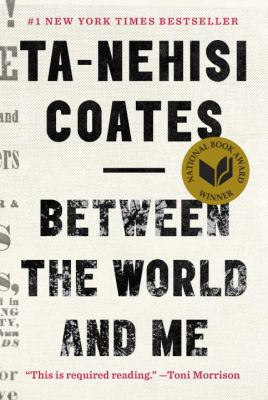
Between the World and Me by Ta-Nehisi Coates  between world and me

“This is your country, this is your world, this is your body, and you must find some way to live within the all of it.”

Often books have an opening sentence–or a sentence very early in–that summarizes the significance of the work. The above sentence does this in Between the World and Me.

Between the World and Me is a letter to the author’s son, Samori. Coates is helping his son define how to live and in doing so, is having a conversation with African American youths. To do this is to have  an honest conversation with us all about what it is like to be an African American male in contemporary America. And in doing this, Coates needs to talk about his own life, his own experiences, his own body. And thus, he must address the history of race relations in the Unites States, which means he must address the concept of race and how it has been created by racism rather than vice versa. To this complex layering of the most perplexing and significant issue in the history of the country, add great writing, and it’s no wonder Between the World and Me is the recipient of multiple awards, including The National Book Award for nonfiction.

Coates immediately addresses the issue of the black body in danger because it is black.  

“That was the week you learned that the killers of Michael Brown would go free. The men who had left his body in the street like some awesome declaration of their inviolable power would never be punished. It was not my expectation that anyone would ever be punished. But you were young and still believed. You stayed up till 11 p.m. that night, waiting for the announcement of an indictment, and when instead it was announced that there was none you said, ‘I’ve got to go,’ and you went into your room, and I heard you crying.”

While I don’t usually quote a book at length, I do so in the following because this direct address to his son is an admonition to us all–we shouldn’t be looking away, can’t be looking away if we expect change.

“I write you in your fifteenth year. I am writing you because this was the year you saw Eric Garner choked to death for selling cigarettes; because you know now that Renisha McBride was shot for seeking help, that John Crawford was shot down for browsing in a department store. And you have seen men in uniform drive by and murder Tamir Rice, a twelve-­year-­old child whom they were oath-­bound to protect. And you have seen men in the same uniforms pummel Marlene Pinnock, someone’s grandmother, on the side of a road. And you know now, if you did not before, that the police departments of your country have been endowed with the authority to destroy your body. It does not matter if the destruction is the result of an unfortunate overreaction. It does not matter if it originates in a misunderstanding. It does not matter if the destruction springs from a foolish policy. Sell cigarettes without the proper authority and your body can be destroyed. Resent the people trying to entrap your body and it can be destroyed. Turn into a dark stairwell and your body can be destroyed. The destroyers will rarely be held accountable. Mostly they will receive pensions. And destruction is merely the superlative form of a dominion whose prerogatives include friskings, detainings, beatings, and humiliations. All of this is common to black people. And all of this is old for black people. No one is held responsible. There is nothing uniquely evil in these destroyers or even in this moment. The destroyers are merely men enforcing the whims of our country, correctly interpreting its heritage and legacy. It is hard to face this. But all our phrasing–­race relations, racial chasm, racial justice, racial profiling, white privilege, even white supremacy–­serves to obscure that racism is a visceral experience, that it dislodges brains, blocks airways, rips muscle, extracts organs, cracks bones, breaks teeth. You must never look away from this.”

Coates reveals his own past as he contemplates the burden that racism has placed on his back. He immerses the reader in details of his childhood in Baltimore, of his youth at the traditionally African- American Howard University (‘the Mecca’), of visits to Civil War battlefields, of  Chicago’s  South Side, and of  a freer sense of existence in Paris. His deep sense of injustice is anchored in the tragic killing of a Howard University classmate, not long after after Coates left the university. In 2000, Prince Jones–unarmed–was killed by an undercover police officer. Jones was the young man one images as on the road to escape such a fate–a deeply religious, kind, and smart university student with a bright future. (This is not to suggest that others deserve such a fate–but only that Jones appears to be escaping it.) He is the young man who consistently brings the book back to its center, from whom it can never drift very far.

High school housekeeping: Yes, this is a complex text, and the author dives into the deep. But it’s not very long–and if, on special display in a library, its brevity is what attracts the teen reader, that’s fine. Because the topic and the tone will carry him or her through the important task of thinking about the American concept of race, of about what it means, in Coates’ words, to ‘think you are white.’ A reader might at first consider Between the World and Me an angry book. But s/he’ll quickly realize it is really righteous outrage that drives the author to bring this discussion into our collective consciousness.


Posted in Biography/Memoir, Grief, Human Rights Issues, Multicultural, Non-fiction | Tagged , , , , , , , , , , , , | 1 Comment

Ontario Teen Book Fest!

Having a great time with keynote speakers Jay Asher, Marissa Meyer and Andrew Smith. During “Speed Date the Author,” we met most of the writers and got to ask them anything!


This slideshow requires JavaScript.

Posted in Uncategorized | Tagged , | 1 Comment

Adult Books for Teens: “The Meursault Investigation”

meursault investigation  The Meursault Investigation by Kamel Daoud
Many teens read Albert Camus’s The Stranger in high school. From what they tell me, it’s a book they like.  Algerian journalist Kamel Daoud  has given us Albert Camus’s The Stranger from the Arab perspective. Although you can read this wonderful and compelling little novel without having read The Stranger, it’s a much deeper read if you have–and recently, if possible, because some of the scenes in The Meursault Investigation mirror those in Camus’s work.

The narrator of The Meursault Investigation is Harun. He is the brother of the long dead Musa, Their names are significant because they are the Islamic names for the biblical Moses and his brother Aaron. Musa was killed by Meursault in Algiers on a beach in 1942. Anyone who’s read The Stranger knows immediately that its protagonist is the murderer discussed in this book. But here the story is about how the murder has affected the family of the dead man–an alternate point of view.

Harun tells the tale of his brother’s death and its aftermath to a ‘double’ that he sees in a bar over many visits. We learn that Musa’s body was never recovered, that Harun is incensed that Musa remains unnamed in the news article describing the murder (as if his existence is meaningless), and that justice is never concluded as everyone forgets the incident . His mother, a widow, spends her life seeking answers and retribution. Where she decides to live and all that she hopes to do center on Musa to the point that Harun becomes only a filter through which to see Musa, to reflect on his life and, she hopes, to avenge his death. Harun’s life is destroyed by his mother’s obsession. Even when Algiers achieves independence from the French, Harun is haunted by the past, the present, and his own guilt.

Early on, it appears that The Meursault Investigation is going to be a book about colonialism and its effects on the colonized, on those whose stories have not been told. It is this, but it’s much more. Life becomes so untenable for Harun that we feel his shift to an existential philosophy of existence–his strange embrace of Camus. The read intensifies as we realize that more and more Harun’s life reflects Meursault’s–his relationship with a woman, his life and death decisions. Some of the scenes exactly mirror events in The Stranger. Finally, when Harun says of the ‘double,’ “I’m his Arab. Or maybe he’s mine,” he is completely ambiguous. Perhaps he is talking to a ghost, as he sometimes supposes–or to his own consciousness. Or maybe to Camus. The fact that it could be all of these makes The Meursault Investigation a compelling read.

High school housekeeping: If you’ve read The Stranger, grab a copy of The Meursault Investigation. It’s a short, quick read that belies the depth and intensity of the book. It’s a New York Times Top Book of 2015 and it won several literary prizes in France. If you like books about underdogs, you’ll be intrigued. If you are a deeper thinker and interested in philosophy, you’ll be doubled rewarded.


Posted in Classic Fiction, Family Problems, Fiction, Multicultural | Tagged , , , , , , , , , , | 1 Comment

“The Alex Crow”

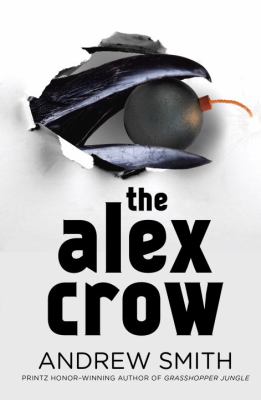
The Alex Crow by Andrew Smith  alex crow

Andrew Smith has another novel that will easily become a hit with teens and YA librarians. The publisher describes it as the interweaving of four stories–that of “of Ariel, a Middle Eastern refugee who lives with an adoptive family in Sunday, West Virginia, . .  a schizophrenic bomber, the diaries of a failed arctic expedition from the late nineteenth century, and a depressed, bionic reincarnated crow.” However the reincarnated crow could be any animal and is just a plot device to link the name of the ship in the nineteenth century expedition to the present, so let’s say there are three stories working consistently.

The story of Ariel is the most gripping. He’s a war refugee from an unnamed country. He’s survived the decimation of his community, physical brutality at a refugee camp, and more. He’s found himself in West Virginia, adopted by the Burgess family. He now has a brother, Max, who is the same age–fifteen. As the story opens, they have been shipped off to Camp Merrie-Seymour for Boys. Ostensibly, the camp is for boys who are addicted to technology (cell phones and video games), but they are not addicted; they seem to be going because the camp is free to children of parents who work for the nefarious Merrie-Seymour Research Group. Their dad is a Merrie-Seymour researcher and an oddball. Their mom is more of a prop than a character–a nonentity who functions (in a very unbelievable way) to connect a couple of the storylines. The two boys haven’t been getting along–Max is very nasty to Ariel–and it is hoped that they will bond at the camp.

While the nature of the Merrie-Seymour Research Group and of the camp they run is morally evil, the zaniness of the boys in ‘Jupiter’ cabin provides loads of humor, much of it off-color. Max thinks about very little other than the fact that his opportunities to masturbate have been limited by the sleeping and shower arrangements at the camp. His endless euphemisms for masturbation are really very funny.

The storyline of Lenny is a sad one. I think aspects of his mental illness–he is hearing the voices of Stalin and others telling him what to do–are meant partly to be entertainingly funny and mostly very dark. As an adult reader who has seen mental illness ruin the lives of people I know, I found Lenny’s story only dark, and my sympathy for him made these sections difficult to read. Still, Smith is showing the reader the morally repugnant aspect of unethical research (Lenny is the victim of a bio-implant by the Merrie-Seymour Research Group). So he succeeds spectacularly in this.

The story of the nineteenth-century polar expedition on the ship The Alex Crow is not well integrated into the other storylines although Smith makes an effort to patch it in. It could have been left out and the novel would have stood. It seems to be a ‘darling’ (an idea that is lots of fun, but maybe just doesn’t really belong) that Smith was unwilling to kill off.

High school housekeeping: Smith is a very good writer, and he is willing to be outrageous in a way that is very appealing to teens. I often talk up his books, particularly to reluctant reader boys. I have felt more than once that he doesn’t knit all his threads together. I think this is a shame; I wish he would edit more heavily and create a great book instead of a very good one because he appears to be capable of doing so. As professional reviewers only praise Smith, never pointing out serious plot holes, it’s likely that he doesn’t need to change his work. One of the story pieces that didn’t work well was the behavior of the character Mrs. (MD/PhD/Dr.) Nussbaum, the psychiatrist at Camp Merrie-Seymour for Boys. I don’t want to add a spoiler here, so I’ll just say that she appears to want to hide information but also has already given it out freely. And the way that other Merrie-Seymour folks work to discover what’s up with her is very silly considering how easy it would be to find out. In life, they would already know what, in this fiction, they are seeking.

Mrs. Nussbaum and Mrs. Burgess are the primary female characters in the novel. Both give me pause about recommending the novel to teens. In doing so, am I implying that women are like either of them? Both are one-dimensional. One is a wholly evil sociopath with the typical trait of being nice only when seeking something that benefits the self; the other is a blob of pudding without any real human characteristics. I know Smith has been accused of being a misogynist (a hater of women), and while I don’t come to that conclusion, it does appear that he can’t write female characters with any of the creativity he employs when writing about males. (Maybe he doesn’t know how to have them endlessly discussing masturbation.) Again, if professional reviewers don’t call him on this, there is no reason for it to change. But teen girls may find little to like in the portrayal of their gender.

Note: I’m not big on trigger warnings, but there is a very detailed rape scene in this novel. I think it’s important, and Smith uses it to great effect. So, while it belongs in the novel–caveat if this is too upsetting for you.


Posted in Family Problems, Fiction, Horror/Mystery/Suspense, Humor, Mature Readers, Sci-Fi/Futuristic, Young Adult Literature | Tagged , , , , , , , , , , , , | 1 Comment

“The Girl on the Train”

The Girl on the Train by Paula Hawkins  girl on train

Rachel Watsons might be able to stop obsessing over her ex-husband,–who is now remarried and has a child–if she could stop drinking, stop envying the new wife, and most of all, stop taking the train to London on which, for a moment each day, she sits adjacent to the neighborhood where she and Tom lived.

Rachel now rents a room from a friend, but her life is off-track. Her alcoholism leads to the loss of her job. Rather than take any steps to fix her own life, she imagines a perfect life for a couple that lives four doors down from where she and Tom had lived–from the hosue where Tom has installed his new wife. The new couple are a good-looking pair and seem perfect in all ways. Rachel creates names, a backstory and a life for them; she feels that she knows them intimately.

One day, out of the blue, the woman of the ‘perfect couple’–Megan Hipwell–disappears. Rachel sees in the papers that Megan is missing. Rachel appears to be a suspect when Tom’s new wife, Anna, tells the police that Rachel hangs out–stalking her and the new baby–in the area. Anna saw Rachel there very drunk on the night Megan disappeared. Rachel truly was wasted and can’t remember the details of that night. Or of many nights of her life. Still, she thinks she can help solve the mystery and inserts herself into the lives of not only her ex-husband and his wife, but of the husband of the missing woman.

The novel is narrated by all three women–continually drinken Rachel, who can’t remember anything clearly; narcissistic Anna, who had an affair with Rachel’s husband and happily ‘stole’ him from under her nose; and Megan, whose sad life story is far from the perfection Rachel imagines. Weirdly, we have very little sympathy with any of them, but as the investigation proceeds, we start taking sides.

It wasn’t too hard to figure out who the murderer was; nevertheless, this is a psychological thriller that ends on a crazy note (‘going off the rails on a crazy train’). This stew of unreliable narrators and self-centered characters leads to a hair-raising conclusion that will leave you breathless.

High school housekeeping: The Girl on the Train is a good entry for teens into psychological thrillers/murder mysteries. It’s not a tough read, and it’s not very long. Though the story moves back and forth among three narrators, they are distinct and easy to recognize. It will keep you interested in the investigation, and you’ll be stunned by the ending. Give it a try if you’re ready to move up from YA mysteries.


Posted in Family Problems, Fiction, Horror/Mystery/Suspense | Tagged , , , , , , | 1 Comment

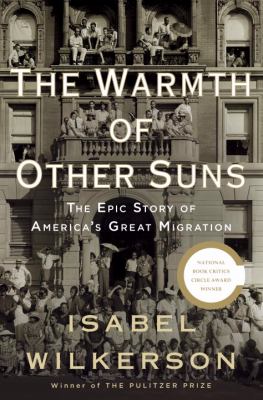
Nonfiction: “The Warmth of Other Suns”

Warmth of Other Suns by Isabel Wilkerson  warmth of suns.pjg

While I found The Warmth of Other Suns enlightening in many ways, I was truly astonished by the revelation that African Americans leaving the South during the early years of the Great Migration (a period from about 1914-1970), had to escape in the same manner as slaves did earlier. Plantation owners, housewives, owners of citrus groves and industrialists all depended on cheap African American labor to maintain their lifestyles. When African Americans wanted to go north to seek social freedoms, some regions enacted laws to prevent their leaving. Others used intimidation and violence. People left in the dead of night, abandoning their goods for fear that if they had been seen packing, they’d be arrested. Some even tried tricks out of the pre-Civil War days such as hiding in coffins and having those shipped north.

The Warmth of Other Suns largely follows three migrants who left the South in three decades–the 1930s, 40s and 50s. Ida Mae Brandon Gladney and her husband picked cotton and raised turkeys in Mississippi to scrape out a living. They were sharecroppers, and thus had to give the plantation owner half of all they raised. While their balance sheet at the end of each year wasn’t in the negative as many sharecroppers’ were (most sharecroppers were consistently cheated and had no means of redress), they decided to leave after a cousin was falsely accused of stealing turkeys and severely beaten for it. When the vigilantes discovered that they were wrong, they showed no remorse. Ida Mae herself was nearly slashed with a chain during the incident. And so the couple left to Milwaukee and then Chicago in 1937.

George Swanson Starling (not Ida May’s husband, whose name was also George) was a good student and had completed his sophomore year of college. But his father said he wouldn’t continue to pay for George’s schooling. In a fit of anger and hoping to get back at his father, George married a young girl who was a bad match for him. He had to work picking oranges in Florida groves. Tired of the work and of being taken advantage of, George tried to organize for better wages during World War II. At the time, many men were away at war, and there was a shortage of workers, giving African Americans some hope for leeway in their working conditions and wages. But George became known as a troublemaker, and, fearing for his life (he’d heard grove owners were planning a ‘necktie party’ for him), he fled to New York in 1945, later bringing his wife.

Pershing Robert Foster was the bright son of educated parents. His father was a high school principal and his mother a teacher at a segregated Black school. Though Pershing’s parents only made 43% of the salary of  white teachers, they managed to save and send their kids to college. Pershing’s older brother was a doctor, but he could attend only to Black patients, who had little money to pay. Pershing had dreams of financial and social success. He married a girl from the Atlanta African American upper crust, one whose father was an university president. He enrolled in the Army as a surgeon. After his tour of duty, he decided that California is the land of dreams and moved there in the 1953, hoping to bring his wife and children out after he established a practice.

All three families had a very rough go, even after they left the South. Prejudice still existed, even if it wasn’t written into the law. (A good example is the way all motels were always ‘full’ when Pershing Robert was looking for a place to sleep as he drove to California. Another is how African American neighborhoods in the North had very steep rents while apartments were substandard.) Life in the big cities was rough in ways new to country people who knew nothing of the drug abuse and crime that could (and did) swallow their children. Nevertheless, looking back, they were glad for their decision to flee. They had more control over their lives once out of the South. They could vote and had better jobs.

High school housekeeping: The Warmth of Other Suns covers an important aspect of American history. It is very much worth reading. A high school student who reads at grade level should have no problem enjoying the book as background information is included. In addition, by following the lives of three people, the author increases the readers’ interest in their fates because we feel like we know them. There are enough facts and statistics to prove that some of the bias against African American migrants from the South–such as the sense that they had high birth rates and less education than others in the cities to which they fled–are not based in reality. The author’s comparison of the Great Migration of African Americans to immigration to a new country is also an interesting parallel for students.

Note: The author uses the terms colored, Black, and African American to describe the people whose stories she tells because she wants to situate the reader in the time period she is addressing. So–don’t be surprised at the use of outdated vocabulary.

Posted in Family Problems, Historical Fiction/Historical Element, Human Rights Issues, Multicultural, Non-fiction, Over 375 pages | Tagged , , , , , | 1 Comment

Ontario Teen Book Fest 2016

Posted in Uncategorized | Leave a comment

Public Domain Collections: Free to Share & Reuse | The New York Public Library

Did you know that more than 180,000 of the items in our Digital Collections are in the public domain? That means everyone has the freedom to enjoy and reuse these materials in almost limitless ways.

Source: Public Domain Collections: Free to Share & Reuse | The New York Public Library

Posted in Uncategorized | Leave a comment