The Boy Next Door

In The Boy Next Door by Sinclair Smith, Randy finds herself frightened when her father goes away on a business trip for three weeks, leaving her alone in the house. She also seems to be misplacing items that she never loses such as her cheerleading sweater. When a new boy appears from nowhere and tells Randy that he is working on the “fixer upper” next door so that his family can move in soon, she is glad for his companionship.


Julian is always pushing Randy to live on the edge. Eventually, he asks her to do terrible things, causing injury to some of her classmates. Alice, Randy’s best friend, is convinced that Julian doesn’t exist because only Randy has seen him. It appears that Randy is hearing voices and is mentally ill. This is a quick-read thriller with an eerie ending.

Posted in Fiction, Hi-Low/Quick Read, Horror/Mystery/Suspense, Young Adult Literature | Leave a comment

Boy

Though the title Boy might suggest that this is a book for children, the tales of Roald Dahl’s own childhood is wacky good fun that young adults will enjoy. Dahl briefly discusses his parents, but he concentrates on memorable incidents from his early childhood and school years.


Dahl discusses Mrs. Pachett, the dirty candy shop owner who always has an evil eye for small children. He and his friends seek revenge on her by putting a dead rat into one of the candy jars. Later, he is caned for this. In fact, he is caned several times during his school years, and discusses the cruelty of English public schools. When the boys wrote home, the headmaster would overlook their letters so that they could not say that they were being mistreated or that they hated their food, etc. The young, busty matron who keeps the boys in line is caught by Dahl in her room in an amorous embrace with a teacher. In a fit of homesickness, Dahl pretends to have an appendicitis attack.


Dahl reviews the good times as well. He especially loved his summers in Norway. Even frightening events are made funny, such as the time the family rode with the “Ancient Half-Sister” on her first automobile drive. She crashed the car, and Dahl’s nose was cut off, hanging by a piece of skin. On the whole, the book is a good laugh.

Posted in Biography/Memoir, Hi-Low/Quick Read | Leave a comment

Baby Help

Baby Help is a novel about teen partner abuse. Melissa is frequently beaten by her boyfriend, Rudy. Although the couple has a baby, Cheyenne, they live with Rudy’s mother, Irma, who uses Melissa’s welfare check to help pay the rent. Melissa finds no help with the abuse from Irma. Her advice is for Melissa to learn when to shut up so that she won’t provoke Rudy’s anger. In the meanwhile, Melissa cooks dinner and cleans up Irma’s house, takes Cheyenne to an on-campus daycare center for children of students, and attends school. In spite of her busy schedule, Melissa receives good grades and hopes to graduate.


When Melissa hears a guest speaker talk about partner abuse in her Peer Counseling class, she knows that many of the indicators of abuse fit her life, but she believes that things will be better soon, when she and Rudy go up to Las Vegas to be married. However, in one of his fits of anger, Rudy shoves Cheyenne into her crib and Melissa realizes that a life with him may include child abuse as well as partner abuse. She decides to get help and finds herself in a shelter for battered women (all the women there seem to be young—teenagers).


It would seem that the rest of the story will center on Melissa’s progress toward a successful life without Rudy. However, she misses him and in a fit of loneliness and weariness of the shelter, Melissa calls Irma and has her come to take her and Cheyenne “home.” Irma is angry and says that if Melissa ever runs away again, she will have the police out after her for kidnapping and child endangerment. Melissa doesn’t know if this is possible since Cheyenne is her own child. Irma reminds Melissa that Melissa’s own mother rarely sees her and has made no effort to care for her or the baby.


Melissa continues to suffer more violent assaults as well as threats about going to school. Though Melissa’s teachers think she is an exemplary student, Rudy is paranoid that Melissa is having an affair with a teacher. She must decide what to do about his bizarre behavior.

Posted in Fiction, Young Adult Literature | Leave a comment

The Autobiography of Malcolm X

We often hear of Malcolm X and his militancy, but The Autobiography of Malcolm X by Alex Haley helps the reader understand where Malcolm X came from, why he believed as he did, and how he came to change his views shortly before his death.


Malcolm (Little) grew up in Lansing, MI. His father was apparently killed by members of a racist organization similar to the Ku Klux Klan. His insurance company called it suicide and refused to pay out. His family—this was during the Great Depression—descended into utter poverty. His mother became mentally unstable, and her children were removed from the home, split up among other family members.


Malcolm (with justification) blames his mother’s illness and the family break-up on whites. He comes, in fact, to blame whites for everything bad that ever happens to him. Any positive thing—such as being elected class president in an otherwise all-white school—is lightly passed over. However, Malcolm does show he has good reason for what he feels. Although he is bright, even teachers and counselors that he thought were his mentors insist that a black man can never attain a professional job.


In his teen years, Malcolm becomes a dope peddler and later a drug addict. When he goes to prison, he finds that he has the opportunity to educate himself and becomes well read. It is while in prison that Malcolm learns from his brother of Black Muslims. Reginald teaches him that God has revealed himself to a black man., Elijah Muhammad, and that the white man is the devil. Malcolm thinks through all his interaction with whites and finds this to be true. His sister Hilda gives him a lesson on how the white man came to earth—though black men were the original race, an ancient scientist, “embittered toward Allah now, decided, as revenge, to create upon the earth a devil race—a bleached-out, white race of people.” (Later, Malcolm, on a pilgrimage to Mecca, learns that this story infuriates the Muslims in the east.)


When Malcolm is released from prison, he meets Elijah Muhammad and becomes one of his most devoted followers. He later marries and has children, but continues to open temples and speak in public. It is only when he senses that Elijah Muhammad mistrusts him, and that he is being ostracized by the Black Muslims, that he takes his pilgrimage to Mecca. There he learns that there are Muslims of all races who get along with love and respect. His views on the white man begin to change, and he sees the structure of American society as the culprit. He also continues to see Christianity as a religion of double standards, as evidenced in the segregated churches of the South.

Posted in Biography/Memoir, Multicultural, Non-fiction | 2 Comments

Always Running

Always Running is recommended reading for the college-bound student, but every student I know who has read it liked it. Its author, Luis J. Rodriguez, was born in Mexico, but grew up in Los Angeles, in many impoverished neighborhoods. He recounts his early life in Watts when his brother, who had “a hunger for cruelty,” regularly beat him up. He also spent time with friends recounting local urban legends and Mexican myths.

 His parents had a hard time keeping jobs although his father had been a teacher and high school principal in Mexico. Stories of the prejudice against his mother are many. She was helpless without knowledge of the English language.

Rodriguez began running from the police early in life as he pilfered from local markets and broke rules such as entering school grounds after 4:40 P.M. On one such trip, his friend, running from the sheriff, fell through the roof of a building and died.

The first time Rodriguez saw gang shootings was on school grounds. Seeing the fear they put in everyone including the teachers, the “broken boy, shy and fearful . . . wanted what Thee Mystics had; . . . the power to hurt somebody.” Conditions in his life helped him move in the direction he wanted to go—Garvey High School is so bad that Luis had three teachers and five substitutes in his homeroom the first year. When a shop teacher accidentally cut off his own finger, Rodriguez found it and saved it in his locker, showing it around until it decays. When cliques are forced to join gangs, Rodriguez joins. Eventually, most of the gang’s members are dead or on drugs, so Luis was initiated into Las Lomas, enemy to Sangra. On this night, he was beaten and later told to plunge a screwdriver into an innocent man—which he did.

There are many stories of Rodriguez being set up by the police, of heavy drinking, burglary, being shot at, and eventually sniffing “anything”—paint, gasoline, clear plastic, etc. Later Luis will use PCP and heroin. He thinks of killing himself.

Rodriguez entered Mark Keppel High School where there is a yearly ‘tradition’ of violent fighting between the Chicanos and the whites. As gang activity heated up, several youth centers open up in the area. The gangs took them over, but Rodriguez met Chente, who helped form MEChA and other Chicano groups—someone who “could get the best from the system . . . without being a snitch or giving in.”

Rodriguez discusses hits on rival gangs, a rival gang’s decision to kill his sister for his deeds, the raping of many girls by local gangs, and his own early sexual relationships. Though all this would offend a sensitive reader, that same reader would have already been made sick or given up reading over the incessant violence.

Miraculously, although Luis is kicked out of school after school, he began to frequent the junior college library. Book displays on Puerto Ricans, Chicanos and African Americans were an opening to a better world for him, one that made him feel connected to the best in people. He finally went back to high school and made connections, becoming a leader. After more trials as an adult in the old neighborhood, he realized that there is no more life for him there.

Though Rodriguez states that he wrote this book to help his own son stay away from gangs, I’m afraid that what will draw some of teens to the book is the graphic violence and sexual encounters. For my own part, I had a rough time with Rodriguez because he didn’t seem particularly contrite about anything he had done. My sense was that he found his own actions beyond his control because of his environment.

Posted in Biography/Memoir, Multicultural, Non-fiction | 2 Comments

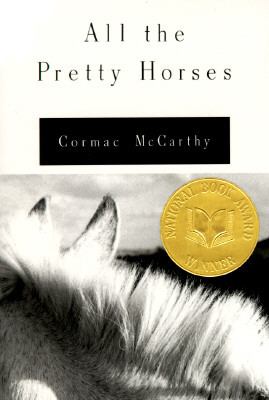
All the Pretty Horses

 (Revisited December 2011)


It’s 1949, and sixteen-year-old John Grady Cole plans to leave Texas after his grandfather’s funeral. His mother is selling the old family ranch, built in 1872. John Grady has a deep love of horses and the ranch life. If allowed, he would try to run the ranch himself, but his mother refuses to consider it. It is clear that he and his mother don’t get along, but that they love one another. John’s father, divorced from his mother, is dying. He and John get along well.

John sets out to Mexico with his friend, Lacy Rawlings. Before leaving, the two run into a girl John has dated. When Rawlings comments that girls aren’t worth the trouble John puts into them, John answers, “Yes, they are.” He seems a modern-day Romeo who will fall deeply and tragically for the right girl.

The two guys have many adventures on their way through Mexico. Of most significance is their meeting with the young Jimmy Belvins. Jimmy, riding a beautiful stolen horse, follows them, and trouble begins. On the run, Jimmy separates from the two older boys. John Grady and Lacey find work at the Hacienda de Nuestra Senora de la Concepcionin Coahuila. The owner, Don Hector Rocha y Villareal, treats them well and entrusts John Grady with breaking wild horses. But Grady is smitten with Alejandra of the black hair and blue eyes. When Alejandra’s great-aunt finds out that the two are star-crossed, she intervenes. She’s a philosophical woman and her stories of the Mexican Revolution and of life are fascinating for the reader. However, she knows what a bad reputation can do to a woman in Mexico, and has decided against John Grady. One day, seemingly out of the blue, John Grady and Lacey are arrested.

The adventures keep coming with jail, the reappearance of Jimmy Belvins the thief and more.

This book was recommended to me in way back time when I asked for ‘guys’ titles. Although I do think this will be a good read for high school guys—and lament the choice of a title, which I think guys will automatically turn away from—I also thoroughly enjoyed it myself. It has the stuff of a great bildungsroman (coming of age story)—an odyssey away from home, death of/break with the parents, a great romance, imprisonment, loss of the loved one, recovery of property, etc. Yet the language is poetic and the description vivid—it draws the reader to its rhythm. Conversations are often metaphysical without seeming unnatural. It’s a great read, and while hardly gentle—in fact, there’s lots of violence—it’s a way to ease into the stunning work of its author, Cormac McCarthy.

In a periodic series on difficult topics for teen reading (violence, teen sexuality, and the like), I’ll be posting on McCarthy’s work. Check back.


Posted in Adventure Stories, Family Problems, Fiction, Historical Fiction/Historical Element, Literary Read Alike, Mature Readers, Movie Tie-In, Multicultural, Romance | 2 Comments

Grendel

I’ve always thought that Beowulf would make a great movie because it has all the elements of high drama—friendship and betrayal, good v. evil, monsters and murder. Now that a film version of Beowulf is coming soon, I think that there will be COHS students who want to read a book with a Beowulf connection. A great choice would be Grendel by John Gardner. As in Beowulf, many of the great themes are there: the struggle between good and evil, the conflict between order and disorder, the hero and his sacrifice for the common good, man’s achievement of immortality, the importance of art and the artist, who gives meaning to life.


To enjoy the novel Grendel, the reader has to be somewhat familiar with the Beowulf epic. Gardner was a professor of medieval literature and quite knowledgeable on the subject. He takes Grendel, the first monster to appear in Beowulf, as the first person narrator of the novel. Though in the epic Grendel is the representation of darkness, death, and the very elements that tear community apart, one might make a case (or write a paper) that in the novel he is the protagonist. I don’t believe this myself, but it’s an interesting point of view.


Grendel has as one of its themes the ways in which art and language bring order and beauty to life. Though Grendel’s mother is inarticulate, Grendal can speak. Although he lives with her in a cave under a burning lake, as the more developed of the two monsters, Grendel wants to approach civilization and is affected by the words of the Shaper, or poet. He seems to seek purpose to his existence and the reader will at times sympathize with him.


Grendel’s approach to civilization only frightens men, and the king, Hrothgar, throws an ax at him. At the same time the Shaper, a blind poet, arrives at the king’s mead hall and sings of Grendel as one of the race of Cain (evil). Grendel seeks understanding from a dragon (another monster that appears in the epic although not for the same purpose). He only learns that life is meaningless, that the Shaper deceives men. He goes away with a curse on him, so that he can’t be injured by men’s weapons. At this point an outcast, Grendel raids the mead hall with impunity, killing and eating men. Only with the arrival by sea of Beowulf can Grendel be overcome. Beowulf doesn’t use a weapon but rather his own hands to tear Grendels’ arm at the shoulder socket.


There is much more to this novel, and it is deeply symbolic so that a reader can enjoy it for the philosophies it exams as well as for the story of overcoming a monster (or sympathizing with the monster who is overcome).

Posted in Fiction, Literary Read Alike | Leave a comment

The Color of Water

The Color of Water is a dual biography of a man and his mother. By telling his mother’s story, says author James McBride, he is learning about his own. The narration alternates between McBride telling of his life growing up as one of twelve children and the life of his mother, Ruchel Dwajra Zylska (Ruth McBride Jordan). His own father died when his mother was pregnant with him—the eighth child. She later married Jordan and had four more children. McBride’s step-father is painted as a loving man who made no distinction between his step-children and his own. He was supportive to all, and his death is a blow to McBride. For McBride’s mother, it is an event that sends her into a tailspin.


McBride’s family is always poor, but his mother manages, in her own wild and sometimes neurotic manner, to raise a dozen smart, creative professionals. When McBride wavers between professional careers (he’s a man of many talents), he is compelled to ask his mother about her own life. This is terribly difficult for her as she has spent years forgetting her roots. It takes McBride nearly a decade to squeeze the story out of her.


Rachel (Ruth) was born Jewish in Poland to a mother crippled from polio and to a small, vicious, and mean-spirited father. Her childhood and youth are unhappy. She is an outcast in Suffolk, VA because she is Jewish. Her father buys a store in the Black section of (the segregated) town and becomes wealthy overcharging his customers. He hates Blacks and berates them in Yiddish. He molests Ruth, and she is afraid of him.


Ruth has a natural affinity for her Black neighbors and customers. Eventually, she has a Black boyfriend and becomes pregnant by him. Since this is the late 1930s, if people found out, the boy would be lynched. Ruth ends up in New York with relatives who will barely abide her but offer knowledge of a doctor who performs abortions. Ruth decides to stay in New York and avoid her father as well as the suffocating South. Here she meets her first husband, McBride.


Ruth’s family disowns her for marrying a Black man. Feeling a deep need for forgiveness—and for forgiving—Ruth becomes a Christian. Her family then considers her dead and will not speak to her, even when she is a pregnant widow with seven children.


This is a bittersweet story. McBride is right to be amazed by his mother, who is often the only white woman in the neighborhood. She refuses to see color lines and doesn’t acknowledge the stares and taunts of those around her. Her belief in the value of an education, tempered by her religious zeal, help to mold the author into the creative and successful man he becomes.

Posted in Biography/Memoir, Multicultural, Non-fiction | 4 Comments

Cold Mountain

Cold Mountain, by Charles Frazier, is the story of a Confederate soldier during the Civil War, Inman, who decides to walk home to the Blue Ridge Mountains after participating in the fighting at St. Petersburg. Although not historical fiction as the genre is defined, COHS teachers may accept it when asking you to read historical fiction. It’s a nice novel with which to start the junior project, and it has lots of bonuses including adventure and romance.


The novel opens with Inman in the hospital, a deep wound on the back of his neck, one that his comrades in arms assumed would kill him. Somehow he survives, and the amazing repetition of this survival against all odds makes up a good deal of the story. However, Inman is bitter and disillusioned. He escapes the hospital and decides to walk home and see if Ada, a woman he left behind, will have him for a husband. He thinks often about the changes in himself and whether he is any longer fit to be a husband.


Having gone AWOL, Inman is an “outlier” and thus on the run; although he meets may people who aid him as he heads home, he must be wary of them all. This sense of everyone being the enemy is the pervasive element of Inman’s existence and provides much of the tension in the novel. He lives through surreal situations, betrayals by both men and women, more brushes with death, and even being buried alive. Inman’s chance meeting with the ‘goatwoman’ saves him as she has spent twenty years alone in the woods and knows herbal remedies for his wounds. He thinks about her solitary existence and realizes that though it’s tempting to live away from civilization, he wouldn’t be able to do it.


There are some gruesome scenes in the novel, particularly when Inman has promised to help a young woman whose pig—and only source of food—has been stolen by Federal soldiers. He is able to hunt the men down with his backwoods knowledge (he even uses turkey calls from a tree). When Inman returns the pig and helps Sally—an eighteen-year-old widow with an infant—slaughter it, his actions in killing the Federal soldiers seem justified. (The idea of righteousness and morality would be a good starting point for a paper on the book.)


While Inman is making his way home, alternating chapters cover the life of Ada. She is well-educated, but has no practical knowledge about running a farm. When her father dies, she is helped by Ruby, the child of a ne’er-do-well father who has raised herself and is utterly competent as well as self-reliant. Their story, along with that of the ne’er-do-well father, Stobrod, is just as compelling as Inman’s. Overall, Cold Mountain is a gripping novel—a great choice for outside reading.

Posted in Adventure Stories, Fiction, Junior Project | 1 Comment

Into the Wild

Soon to be a movie, Into the Wild by Jon Krakauer is the story of Chris McCandless’s adventure in the Alaskan wilderness. It includes several others of Chris’s adventures in order to show the reader that Chris was not an idealistic greenhorn when he walked into the Alaskan rough country. It is no mystery that Chris died—that is stated immediately. The circumstances that brought about his death make up the bulk of the book. The reader comes to understand how Chris ended up starving—what in his personality and background brought him to this pass. It’s a good adventure read, but COHS English teachers will probably accept it when they ask you to read a biography or memoir. It’s a connection to the American writer Thoreau. And once again, like Ordinary Wolves, it shows the reality of the harsh Alaskan wilderness. Fans of Jack London might enjoy Into the Wild as well.

After graduating from Emory College, Chris changes his name to Alexander Supertramp and goes out to live a Thoreauian self-reliant existence. Much of his journey is documented in a journal in the third person, and some of that journal is quoted in the book.

Once he’s graduated, Chris “disappears” and his family never hears from him again. (They hire a private investigator, but the PI is unsuccessful.) He ventures to Mexico, takes a canoe trip, loses 25 pounds; but through it all he is exhilarated by his adventures. Ridding himself of his worldly good, he works for a time in Las Vegas and then Bullhead City. He even convinces a religious man to give up his worldly possessions and find God on the road, through self-reliance. (This man is so taken by Alex—Chris—that when he hears of his death in Alaska, he loses his faith in God.) Finally, McCandless spends months in Carthage, South Dakota working as a mill hand for a man named Westerburg.

Krakauer details the mistakes that he believes killed Alex, including the possibility of eating the poisonous seeds of a wild potato plant. The saddest fact for the reader is that if Alex had only brought a topographical map, he would have known how close he was to a little basket of salvation—but for Alex, that would have been less than self-reliant.

Posted in Adventure Stories, Biography/Memoir, Environmental Issues, Non-fiction | 1 Comment