“The Brothers Karamazov” Student Reviews 2009

The following reviews by COHS students are on “The ” by Fyodor Dostoevsky.
Genre: Realistic Fiction
Pages: 776
Reviewer: Michael T.

The book begins with Alyosha dedicating his life to religion and the highly respected monk Zosima who he will study under. Alyosha is the youngest of three brothers and a very benevolent character.. The oldest is Dmitri the middle is Ivan. Ivan is a very logical character and he struggles with morality throughout the story, not being able to accept the evil in the world and the idea of a benevolent good at the same time, though he wishes he could and flips back and fourth between the ideas many times. Dimitri is a very sensual and impulsive person, but through the progression of the book he begins to regret his past ways, especially the many love triangles he was involved in: him, Ivan and Katerina and him his father and Grushenka. The ladder of these two affairs leads to the climax of the book when he is wrongly accused of patricide. This is also the tipping point for Ivan, when he is confronted by Smerdyakov he is told that it was actually him who committed the murder, using Ivan’s own logic to justify it. This leaves Ivan in a state of confusion. Dmitri is found guilty, and sentenced to 20 years hard labor in Siberia, something the finally confirms him to the man he was trying to become.

The Brother Karamazov was a truly inspirational and thought provoking book. It posed many questions that I have already been struggling with. Things such as: do good and evil exist, and how do you define them? What is morality? Does god exist and if he does is he malevolent of benevolent? Not only was the content good, but the presentation was nothing less than respectable, the extreme character development and vastly deep and dynamic characters made items of everyday life seem philosophically deep as it offered new insight into them from three completely different perspectives. Though it was a little hard to follow at times the plot never dragged and it most certainly makes my list of top ten books.

1. The author of The Brothers Karamazov wrote the novel in order to show the classic struggles and burdens that man is encumbered by throughout his life; good versus evil.
2. The theme of this novel is the classic struggle between good and evil and the complications that ideas like freewill and religion can impose on this struggle.
3. This central theme is developed by several very dynamic characters, at the center of which are the three brothers. The story is told through the eyes Alexei Fyodrorvich, or Alyosha as he is called, though he is not the narrator. He is a man of very pure and kind hearted ideals, while his brothers, Dimitri and Ivan, are more sensual and logical respectively. And through the trials that these brother go through the theme is presented.
4. The main issue the book raises is that of morality and religious faith, a question of logic versus reason. This is to push the question of what these thing mean to a persons life, is it better to be logical or faithful? The book clearly sides with faith.

Posted in Classic Fiction, Faith-Based/Religious Element, Fiction, Over 375 pages | 1 Comment

“Oliver Twist” Student Reviews 2009

The following reviews by COHS students are on “Oliver Twist” by Charles Dickens
Genre: Classic drama
Pages:350
Reviewer: Zachary D.

First Oliver gets kicked out of his orphanage then he goes to a coffin making place. After that he runs away because he feels that he is being mistreated. When he gets to his next destination he becomes a pick pocket. By the end of the book Oliver is living with a rich family becomes like a son.

I did not like this book one bit it was horrible. The characters bugged me and I did not like there personality. Overall I just thought the book was cheesy. The thesis was morally good but the way the author made was horrible.

1. The author’s purpose is to tell a child’s fight for freedom and a better life.
2.  The theme of the story is identity because of the orphans and the thesis of the story is to try to save the poor and orphans.
3. Oliver develops through out the book by becoming more and more mature and finding new ways to have freedom. The author supports the thesis because in the end of the story Oliver gets a good home.
4. What main issue does the book raise and what stance does it take in addressing and solving the issue? That in America even if you are poor and have no parents you can still have a good life. The author addresses the issue by giving Oliver a better life in the end.

Posted in Classic Fiction, Fiction, Over 375 pages | 1 Comment

“Crime and Punishment” Student Reviews 2009

The following reviews by COHS students are on “Crime and Punishment” by Fyodor Dostoyevsky.
Genre: Fiction
Pages: 542
Reviewer: Alejandra M.

Raskolnikov kills two people and robs them. Later on he is speaking with the murderers and faints so the police start to suspect him. He calls off his friends wedding and later falls in love with the bride-to-be. His friend Sonya tries to make him confess and it works. Raskolnikov is taken to the prison in Siberia and Sonya moves to the town outside the prison. After he is freed Razumikhin and Dunya are married for a short while. Then he realizes his true feelings for Sonya.

Crime and Punishment was an interesting book because of the issues. At the same time it was hard to know what was happening. Even though I didn’t enjoy it as much as I had hoped I would still recommend it to friends because of the entertaining story.

1. Dostoyevsky’s purpose for writing Crime and Punishment was to show that people can change overtime.
2. The theme of Crime and Punishment is to think about the consequences before you commit the action.
3. The way the author shows changes in the novel is very slowly; with an increase in tension.
4.  The main issue that Crime and Punishment raises is: is it correct to cause someone psychological pain? The way the author solves the issue is by punishing Raskolnikov years later.

Posted in Classic Fiction, Faith-Based/Religious Element, Fiction, Over 375 pages | 1 Comment

“Jane Eyre” Student Reviews 2009

The following reviews by COHS students are about “Jane Eyre” by Charlotte Bronte.

Genre: Historical Fiction

Pages: 560

Reviewer: Robert S.

Jane Eyre, an orphan whose father and mother was killed by typhus, lives in Gateshead at age ten with her aunt Reed, spiteful of her since Jane’s mother married Jane’s father, a priest. Jane lives an unhappy life with Mrs. Reed and her children, and during her experience in staying in the room where the late Mr. Reed lived, she is scared intensely and is seen by a doctor, who recommends that she go to school after she confesses her misery living in Gateshead. She is then sent off to Lowood, an orphan school based on the charity of others. She meets Helen Burns, a passive, Scottish girl who take insults from one of her teachers; Jane befriends her and one of the teachers there, Miss Temple. Later at Lowood, Helen dies of typhus. Later, at age eighteen, Jane has become a teacher at Lowood and wants to adventure out.   She becomes a mentor at Thornfield, at the Fairfield residence, where later she falls in love with Edward Rochester, a gentleman “disturbed” by his experiences with his family. They are about to be married when Jane finds that Edward is already married to Bertha Mason, an insane woman who Rochester  tried to hide from his life. Jane then leaves Thornfield, poor and starving, to Norton, where she is saved by St. John Rivers, who Jane finds out to be her cousin. After working there as a teacher, Jane is asked to marry him so she can accompany him to India for missionary work, but she refuses. She then returns to Rochester, who is now in Fernandan manor after a fire at his house in Thornfield and marries him secretly, and she is happy and blissful ten years later.

Jane Eyre a slightly slow, yet good tale about love. I recommend checking it out. Although it is an “acquired taste,” the novel is still solid. The characters each have some type of emotional complexity which I find refreshing in a novel. One thing that I thought Bronte could have done more is make the love story more seamless with his socioeconomic analysis of Victorian society in England.

  1. The author’s purpose in writing the book is the idea of love as well as analyzing English Victorian society.
  2. The same theme, in better detail, says that love can surpass socioeconomic norms.
  3. The characters help raise that theme. The character Edward is an example; he is a gentleman who is cast down by his family, and falls in love with Jane, a socially low lady, which goes against the Victorian social standards during the day.
  4. The book surprisingly on love as a transcending factor, as well as the main issue of social class in Victorian society. Over the course of the novel, Jane is mocked by the aristocratic class because of her position. She is even coldly considered a criminal and based beggar when she arrives in Norton. This issue is solved by her love, and eventual marriage to Edward. Edward, even though he socially surpasses Jane, considers her as his intellectual equal, and their marriage dashes all what Victorian society expects of the two. This helps highlight the issue’s resolution, that social class is not a determining factor, and love can transcend all things.
Posted in Classic Fiction, Over 375 pages | 3 Comments

“Trainspotting” Student Reviews 2009

The following review of  “Trainspotting” by Irvine Welsh was written by COHS student Nicole A.

Genre: Fiction

Pages: 348

This novel is the tale of a group of  Scottish heroin addicts, mainly a man named Renton. Similar to “Joy Luck Club,” Trainspotting weaves many stories loosely together to create a powerful story. Thought at times monotonous, the language and happenings of the story –ranging from the occasional bar fight to the urge for a good hit- really help to give the story character. It takes you down into the dark depths of withdrawl, to the point where you can almost feel your veins screaming.

Though difficult to get through because of the dialect, Trainspotting is worth the read. Give yourself time to read this one.

With Trainspotting, Welsh is attempting to present the problem of drug addiction; not only is it is widespread, it is treated as a trivial matter.

Welsh is simply saying that addiction can be overcome, even in the most serious cases, with time and effort.

Using vivid imagery and a powerful dose of the human element, Welsh presents the theme in a simple, captivating tale.

Trainspotting reminds us that such a serious matter as drug addiction is treated so simply in the world; instead of getting the attention and care it needs, it is swept under the rug.

Posted in Fiction | Tagged | Leave a comment

“The Picture of Dorian Gray” Student Reviews 2009

The following are reviews by COHS students of “The Picture of Dorian Gray” by  Oscar Wilde.

Genre: Faustian theme, horror gothic fiction

Pages: 235

Reviewer: Charmaine M.

Dorian Gray was this man of whom everyone liked so much for his beauty, although rather careless but for himself. He introduces homosexuality, as well as hendonism, when lord Henry shows him this new world at which is a philosophy of ultimate pleasure of humanity. Dorian thought this was his beauty. His friend Basil, whom ought to think that it was the greatest art he has ever made, painted Dorian his own portrait. As Dorian hopes to look beautiful all his life, he decides he wanted to just live long life and let the painting age instead. This then happens, and his portrait reveals how evil he is and how old he is. Dorian then gets desparate and blackmails a friend, kills his friend, and at last, his own portrait. After stabbing the portrait, he ends up destroyed instead.

I think this book opened me up to a lot of things, especially philosophy. I think it’s a great book, but I suggest that if given this to another person, it is highly recommended that they are mature enough. It is an amazing mystery and truth behind everything.

1. The author’s purpose in writing this book is introducing a very controversial topic: hendonism, horror-gothic, and fautism. These basically state a person’s philosophy.

2. The theme and Thesis kind of state homosexuality, and double life.

3. The author supports its thesis and theme by using Dorian, the main character, as the big issue. Everyone liked him so much, that even his good friend, Basil, thinks he is so beautiful. Lord Henry also supports the thesis and introduces hendonism to him. The double life is supported by Dorian wanting the portrait to age rather than himself, for his beauty is so important to him, soon taking a double life.

Ex. Of quotes:

“But beauty, real beauty, ends where an intellectual expression begins. Intellect is in itself a mode of exaggeration, and destroys the harmony of any face.”
– Oscar Wilde, The Picture of Dorian Gray Ch. 1

“Some day you will look at your friend, and he will seem to you to be a little out of drawing, or you won’t like his tone of colour, or something.”
– Oscar Wilde, The Picture of Dorian Gray Ch. 1

4. The main issue of this book is a person taking double life, because the main character is “hendonistic”, and he believes his beauty us way important than anything else. When he got sick of looking at his real  ugly self, he decided to stab his painting and he ends up dying himself, as the portrait ascends back to its original form.

Posted in Classic Fiction, Fiction, Horror/Mystery/Suspense | Leave a comment

“The Strange Case of Dr. Jekyll and Mr. Hyde” Student Reviews 2009

The following are reviews by COHS students of “The Strange Tale of Dr. Jekyll and Mr. Hyde” by Robert Louis Stevenson.

Genre: Gothic Horror

Pages: 224

Reviewer: Gavin G.

The book follows a lawyer named Mr. Utterson, as he tries to figure out the mystery that surrounds one of his best friends Dr. Jekyll. Dr. Jekyll is a troubled scientist that hates the fact that he has to hide secrets from his most beloved friends and family. He eventually concocts a potion and is then turned into the embodiment of what he most hates about himself, a man named Mr. Hyde. As Mr. Utterson begins to discover the strange similarities between the two seemingly individual people, Dr. Jekyll begins to increase the rate at which he takes the potion, and eventually Dr. Jekyll is able to induce his Mr. Hyde state without taking the potion. The book ends with Mr. Utterson having knowledge of Dr. Jekyll’s condition and Mr. Hyde still being on the loose.

I really enjoyed this book, even though the dated language that was used made it hard to follow. I enjoyed the dual personalities of Dr. Jekyll, because it always managed to turn the book upside down and gave you a new perspective on the things that occurred in it. The Strange Case of Dr. Jekyll & Mr. Hyde was very enticing.

1. Stevenson’s purpose for writing this book was to show that all humans no matter who they are have the capability to be either good or evil.

2. The theme of Dr. Jekyll & Mr. Hyde is that every person has two sides that make up their own individual personality.

3. The theme and thesis are developed by the split personality that Dr. Jekyll has. By using two characters in one, Stevenson chose to develop the characters in any way that was beneficial to where the story was heading.

4. The book shows that good and evil truly lies in all of us, even though we don’t realize it. raise and what stance does it take in addressing and solving the issue?

Posted in Classic Fiction, Fiction, Horror/Mystery/Suspense | 3 Comments

‘Like Water for Chocolate” Student Review 2009

The following are reviews by COHS students for “Like Water for Chocolate” by Laura Esquivel.

Genre: Magical Realism

Pages: 246

Reviewer: Alejandra Q.

Like water for Chocolate is a story about a girl, Tita De La Garza, who wants to marry her love, Pedro. But her mom, Mama Elena, does not approve of it. Since Tita is the youngest of the family, she must care for her mom until the day she dies. Mama Elena does, however, let Tita’s sister, Rosaura, marry Pedro. Pedro accepts just to be able to stay close to Tita. This hurts Tita very much. All her emotions pour out into her food while she’s cooking, and everyone who eats it feels what she’s feeling. Mama Elena, however does not like Pedro being there in the house to distract Tita, so she sends Pedro and Rosaura off to San Antonio. From there, a bunch of wacky stuff starts happening between the whole family.

I really enjoyed the book. I started reading it, and did not stop until I finished. I love how it connects to the Mexican Culture, it gives me a chance to compare to certain things. The story is told really good and is really easy to follow along to the story line. This book I would definitely recommend to someone else.

1. The author’s purpose of telling the story was to tell us the story of a girl, who has to go through her life seeing the man she loves married to her sister.

2. The theme of the book is how traditions in family are not always a good thing. Tita did everything she could to change the family tradition.

3. This is shown by everything that Tita does. When she hears that her sisters daughter is destined to take care of her mother until she dies, Tita is automatically heartbroken because she knows what its like to be in that position.

4. The main issue the book raises is that Tita’s mom wont let her get married because she’s the youngest of the family. Tita’s mom lets Tita’s sister, Rosaura, marry the guy.

Posted in Fable/Fairy Tale/Fantasy, Fiction, Multicultural | Tagged | 1 Comment

“The Time Machine” Student Reviews 2009

The following are COHS student reviews of “The Time Machine” by H. G. Wells.

Genre: Science and World Fiction

Pages: 190

Reviewer: Josh B.
The book starts in the late 1800’s with the protagonist, known as the Time Traveler, suddenly entering his house very tired and looking as if he has been through quite an ordeal. At this moment, he proceeds to tell his story to his fellow peers.  He tells of his time machine that took him to the year 802,701. While there he meets a group of  beings called The Eloi. While there, he takes the time to study the Eloi and learn about them. Then all of a sudden, the traveler notices that his time machine is missing and is incapable of asking the Eloi where it is. As time goes on he encounters the brutish Morlocks who have control over the Eloi, as if they were cattle. As the story progress, the time traveler and one of the Eloi encounter several Morlock and find themselves fighting for their lives. He is than able to locate his time machine and escape to safety. He then travels even further into the future to discover a barren land. After that he returns back to the present, which is where the book started. After he tells his story, he tells his peers that he is going to travel again and will be back shortly. Much time past and where is went remains a mystery…
Very interesting book. It had lots of action and a nerve-racking story. You also felt an emotional bond with the characters.

1. To better illustrate the wrong that is done with having a somewhat class structure.

2. To show a still existing class struggle, thousands of years in the future.

3. The author supports the theme by showing that there is a class struggle among the creatures (The Peaceful Eloi and the brutish Morlocks) he meets, thousands of years in the future.

4. It has a continuing struggle between the two classes (Eloi and Morlocks). During the book, the protagonist finds himself siding with the peace loving Eloi. Unfortunately, the two classes are so different and the Morlocks are so brutish that there is no chance of change. This leaves the protagonist no choice, but to continue finding his way back to the present as he intended to.

Posted in Classic Fiction, Fiction, Sci-Fi/Futuristic | Leave a comment

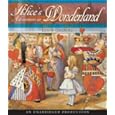
“Alice’s Adventures in Wonderland” Student Reviews 2009

The following are student reviews of “Alice’s Adventures in Wonderland” by Lewis Carroll.

Genre: Fantasy

Pages: 208

Reviewer: Hannah A.

Alice falls asleep under a tree and travels to a wonderland.  When she’s asleep, she meets mad hatters, white rabbits, and a crazy queen.  She is trying to get out the whole time, but she just can’t do it.  It helped her realize that not al reality is as it seems.

I think it was written well and Lewis Carroll got his point across.  It was hard to follow part of the time, and it was disturbing, but I liked it.

1. He wrote it for a little girl and her sister’s who had read the original text.

2. The theme of the book is that sometimes you can get carried away with things and sometimes reality is not the way it seems.

3. Alice starts off reading under a tree, unsuspecting of anything because she’s a young girl.  She is then transported to Wonderland where she cannot figure out whether what she’s seeing is real or not, testing her judgment.

4. It addresses the fact that many things in reality are not as they seem, because they are all clouded by our judgment and because of the government.  Lewis Carroll was showing this when Alice was in Wonderland because she wasn’t able to tell if what she was seeing was real or not.

Reviewer: Logan J.

Alice is a young girl that follows a white rabbit down a mysterious rabbit hole. After growing and shrinking many times, she is able to meet many strange characters. She encounters things that she has never heard of, while all the time forgetting who she is. After playing a frightening game of croquette with the Queen, she finally wakes up to find her sister watching over her. As Alice explains the dream to her sister, she wonders if it was really a dream or reality.

I really liked this book! I thought it was bizarre and twisted just enough. I know that my thinking pattern is a little different then others, so I completely understood the story and it was easy for me to follow. I can see where this book might be a little difficult for others to read, though. The language used is different from every day talk.

1. He wrote it to entertain a little girl that he knew.

2. The theme of this book is that reality is not always what it seems to be. It is also is not to as too many questions and interrupt. Alice did so and learned that it only get others that could help you upset at you. The thesis of the story is Alice is stuck in Wonderland, and she does not know how to get out.

3. Lewis Carroll develops this thesis by expressing Alice’s worries and having her ask directions from multiple people. She also constantly reminisces about her cat Dinah, “Oh, my cat Dinah”……. “Oh well Dinah would never….”

4. The main issue raised is “How is Alice going to get home?” Although the book is about her getting home, it seems as if the author really wants to make it difficult for her to do so. Carroll likes to pick fun and tease his main character, thinking that he would have liked to make Alice stay in Wonderland.

Reviewer: Savanah H.

Alice’s Adventures in Wonderland follows the imaginative adventures that the main character, Alice, faces in her journey to go home. Her journey starts off as she adventures into a land that she is unfamiliar with. She goes through obstacles to get home. She faces many events that she is not familiar with, but she gets through the struggles. She realizes that her adventure only happened because she was dreaming and escaping her reality.

Alice’s Adventures in Wonderland by Lewis Carroll is a well written novel. It captures the reader’s interest and takes them on a journey in which they can possibly relate to their own dreams. I think that it expressed the imaginative mind of a child; I was able to relate her imagination to mine. The novel could have been longer; it would have been more page turning if it had more of an adventure to it. All in all it was a great book and interested me in many different ways.

1. Carroll’s purpose in writing this book was to show the imaginative minds of children.
2. The theme of Alice’s Adventures in Wonderland is imagination is key; without imagination one cannot enjoy life peacefully with relaxation.
3. The author, Lewis Carroll, uses the method of the literary element, imagery. He describes the scenery so well that the reader feels as if they are there.
4. The main issue that the book raises is that imagination can be a relaxing way to get away from reality. The stance that the book takes in resolving the issue is that being imaginative can relax one’s mind, but it can be taken to a beyond what is reasonable.

Posted in Classic Fiction, Fable/Fairy Tale/Fantasy, Fiction | Leave a comment