“Oliver Twist” Student Reviews 2009

The following reviews by COHS students are on “Oliver Twist” by Charles Dickens
Genre: Classic drama
Pages:350
Reviewer: Zachary D.

First Oliver gets kicked out of his orphanage then he goes to a coffin making place. After that he runs away because he feels that he is being mistreated. When he gets to his next destination he becomes a pick pocket. By the end of the book Oliver is living with a rich family becomes like a son.

I did not like this book one bit it was horrible. The characters bugged me and I did not like there personality. Overall I just thought the book was cheesy. The thesis was morally good but the way the author made was horrible.

1. The author’s purpose is to tell a child’s fight for freedom and a better life.
2.  The theme of the story is identity because of the orphans and the thesis of the story is to try to save the poor and orphans.
3. Oliver develops through out the book by becoming more and more mature and finding new ways to have freedom. The author supports the thesis because in the end of the story Oliver gets a good home.
4. What main issue does the book raise and what stance does it take in addressing and solving the issue? That in America even if you are poor and have no parents you can still have a good life. The author addresses the issue by giving Oliver a better life in the end.

Posted in Classic Fiction, Fiction, Over 375 pages | 1 Comment

“Crime and Punishment” Student Reviews 2009

The following reviews by COHS students are on “Crime and Punishment” by Fyodor Dostoyevsky.
Genre: Fiction
Pages: 542
Reviewer: Alejandra M.

Raskolnikov kills two people and robs them. Later on he is speaking with the murderers and faints so the police start to suspect him. He calls off his friends wedding and later falls in love with the bride-to-be. His friend Sonya tries to make him confess and it works. Raskolnikov is taken to the prison in Siberia and Sonya moves to the town outside the prison. After he is freed Razumikhin and Dunya are married for a short while. Then he realizes his true feelings for Sonya.

Crime and Punishment was an interesting book because of the issues. At the same time it was hard to know what was happening. Even though I didn’t enjoy it as much as I had hoped I would still recommend it to friends because of the entertaining story.

1. Dostoyevsky’s purpose for writing Crime and Punishment was to show that people can change overtime.
2. The theme of Crime and Punishment is to think about the consequences before you commit the action.
3. The way the author shows changes in the novel is very slowly; with an increase in tension.
4.  The main issue that Crime and Punishment raises is: is it correct to cause someone psychological pain? The way the author solves the issue is by punishing Raskolnikov years later.

Posted in Classic Fiction, Faith-Based/Religious Element, Fiction, Over 375 pages | 1 Comment

“Jane Eyre” Student Reviews 2009

The following reviews by COHS students are about “Jane Eyre” by Charlotte Bronte.

Genre: Historical Fiction

Pages: 560

Reviewer: Robert S.

Jane Eyre, an orphan whose father and mother was killed by typhus, lives in Gateshead at age ten with her aunt Reed, spiteful of her since Jane’s mother married Jane’s father, a priest. Jane lives an unhappy life with Mrs. Reed and her children, and during her experience in staying in the room where the late Mr. Reed lived, she is scared intensely and is seen by a doctor, who recommends that she go to school after she confesses her misery living in Gateshead. She is then sent off to Lowood, an orphan school based on the charity of others. She meets Helen Burns, a passive, Scottish girl who take insults from one of her teachers; Jane befriends her and one of the teachers there, Miss Temple. Later at Lowood, Helen dies of typhus. Later, at age eighteen, Jane has become a teacher at Lowood and wants to adventure out.   She becomes a mentor at Thornfield, at the Fairfield residence, where later she falls in love with Edward Rochester, a gentleman “disturbed” by his experiences with his family. They are about to be married when Jane finds that Edward is already married to Bertha Mason, an insane woman who Rochester  tried to hide from his life. Jane then leaves Thornfield, poor and starving, to Norton, where she is saved by St. John Rivers, who Jane finds out to be her cousin. After working there as a teacher, Jane is asked to marry him so she can accompany him to India for missionary work, but she refuses. She then returns to Rochester, who is now in Fernandan manor after a fire at his house in Thornfield and marries him secretly, and she is happy and blissful ten years later.

Jane Eyre a slightly slow, yet good tale about love. I recommend checking it out. Although it is an “acquired taste,” the novel is still solid. The characters each have some type of emotional complexity which I find refreshing in a novel. One thing that I thought Bronte could have done more is make the love story more seamless with his socioeconomic analysis of Victorian society in England.

  1. The author’s purpose in writing the book is the idea of love as well as analyzing English Victorian society.
  2. The same theme, in better detail, says that love can surpass socioeconomic norms.
  3. The characters help raise that theme. The character Edward is an example; he is a gentleman who is cast down by his family, and falls in love with Jane, a socially low lady, which goes against the Victorian social standards during the day.
  4. The book surprisingly on love as a transcending factor, as well as the main issue of social class in Victorian society. Over the course of the novel, Jane is mocked by the aristocratic class because of her position. She is even coldly considered a criminal and based beggar when she arrives in Norton. This issue is solved by her love, and eventual marriage to Edward. Edward, even though he socially surpasses Jane, considers her as his intellectual equal, and their marriage dashes all what Victorian society expects of the two. This helps highlight the issue’s resolution, that social class is not a determining factor, and love can transcend all things.
Posted in Classic Fiction, Over 375 pages | 3 Comments

“Trainspotting” Student Reviews 2009

The following review of  “Trainspotting” by Irvine Welsh was written by COHS student Nicole A.

Genre: Fiction

Pages: 348

This novel is the tale of a group of  Scottish heroin addicts, mainly a man named Renton. Similar to “Joy Luck Club,” Trainspotting weaves many stories loosely together to create a powerful story. Thought at times monotonous, the language and happenings of the story –ranging from the occasional bar fight to the urge for a good hit- really help to give the story character. It takes you down into the dark depths of withdrawl, to the point where you can almost feel your veins screaming.

Though difficult to get through because of the dialect, Trainspotting is worth the read. Give yourself time to read this one.

With Trainspotting, Welsh is attempting to present the problem of drug addiction; not only is it is widespread, it is treated as a trivial matter.

Welsh is simply saying that addiction can be overcome, even in the most serious cases, with time and effort.

Using vivid imagery and a powerful dose of the human element, Welsh presents the theme in a simple, captivating tale.

Trainspotting reminds us that such a serious matter as drug addiction is treated so simply in the world; instead of getting the attention and care it needs, it is swept under the rug.

Posted in Fiction | Tagged | Leave a comment

“The Picture of Dorian Gray” Student Reviews 2009

The following are reviews by COHS students of “The Picture of Dorian Gray” by  Oscar Wilde.

Genre: Faustian theme, horror gothic fiction

Pages: 235

Reviewer: Charmaine M.

Dorian Gray was this man of whom everyone liked so much for his beauty, although rather careless but for himself. He introduces homosexuality, as well as hendonism, when lord Henry shows him this new world at which is a philosophy of ultimate pleasure of humanity. Dorian thought this was his beauty. His friend Basil, whom ought to think that it was the greatest art he has ever made, painted Dorian his own portrait. As Dorian hopes to look beautiful all his life, he decides he wanted to just live long life and let the painting age instead. This then happens, and his portrait reveals how evil he is and how old he is. Dorian then gets desparate and blackmails a friend, kills his friend, and at last, his own portrait. After stabbing the portrait, he ends up destroyed instead.

I think this book opened me up to a lot of things, especially philosophy. I think it’s a great book, but I suggest that if given this to another person, it is highly recommended that they are mature enough. It is an amazing mystery and truth behind everything.

1. The author’s purpose in writing this book is introducing a very controversial topic: hendonism, horror-gothic, and fautism. These basically state a person’s philosophy.

2. The theme and Thesis kind of state homosexuality, and double life.

3. The author supports its thesis and theme by using Dorian, the main character, as the big issue. Everyone liked him so much, that even his good friend, Basil, thinks he is so beautiful. Lord Henry also supports the thesis and introduces hendonism to him. The double life is supported by Dorian wanting the portrait to age rather than himself, for his beauty is so important to him, soon taking a double life.

Ex. Of quotes:

“But beauty, real beauty, ends where an intellectual expression begins. Intellect is in itself a mode of exaggeration, and destroys the harmony of any face.”
– Oscar Wilde, The Picture of Dorian Gray Ch. 1

“Some day you will look at your friend, and he will seem to you to be a little out of drawing, or you won’t like his tone of colour, or something.”
– Oscar Wilde, The Picture of Dorian Gray Ch. 1

4. The main issue of this book is a person taking double life, because the main character is “hendonistic”, and he believes his beauty us way important than anything else. When he got sick of looking at his real  ugly self, he decided to stab his painting and he ends up dying himself, as the portrait ascends back to its original form.

Posted in Classic Fiction, Fiction, Horror/Mystery/Suspense | Leave a comment

“The Strange Case of Dr. Jekyll and Mr. Hyde” Student Reviews 2009

The following are reviews by COHS students of “The Strange Tale of Dr. Jekyll and Mr. Hyde” by Robert Louis Stevenson.

Genre: Gothic Horror

Pages: 224

Reviewer: Gavin G.

The book follows a lawyer named Mr. Utterson, as he tries to figure out the mystery that surrounds one of his best friends Dr. Jekyll. Dr. Jekyll is a troubled scientist that hates the fact that he has to hide secrets from his most beloved friends and family. He eventually concocts a potion and is then turned into the embodiment of what he most hates about himself, a man named Mr. Hyde. As Mr. Utterson begins to discover the strange similarities between the two seemingly individual people, Dr. Jekyll begins to increase the rate at which he takes the potion, and eventually Dr. Jekyll is able to induce his Mr. Hyde state without taking the potion. The book ends with Mr. Utterson having knowledge of Dr. Jekyll’s condition and Mr. Hyde still being on the loose.

I really enjoyed this book, even though the dated language that was used made it hard to follow. I enjoyed the dual personalities of Dr. Jekyll, because it always managed to turn the book upside down and gave you a new perspective on the things that occurred in it. The Strange Case of Dr. Jekyll & Mr. Hyde was very enticing.

1. Stevenson’s purpose for writing this book was to show that all humans no matter who they are have the capability to be either good or evil.

2. The theme of Dr. Jekyll & Mr. Hyde is that every person has two sides that make up their own individual personality.

3. The theme and thesis are developed by the split personality that Dr. Jekyll has. By using two characters in one, Stevenson chose to develop the characters in any way that was beneficial to where the story was heading.

4. The book shows that good and evil truly lies in all of us, even though we don’t realize it. raise and what stance does it take in addressing and solving the issue?

Posted in Classic Fiction, Fiction, Horror/Mystery/Suspense | 3 Comments

‘Like Water for Chocolate” Student Review 2009

The following are reviews by COHS students for “Like Water for Chocolate” by Laura Esquivel.

Genre: Magical Realism

Pages: 246

Reviewer: Alejandra Q.

Like water for Chocolate is a story about a girl, Tita De La Garza, who wants to marry her love, Pedro. But her mom, Mama Elena, does not approve of it. Since Tita is the youngest of the family, she must care for her mom until the day she dies. Mama Elena does, however, let Tita’s sister, Rosaura, marry Pedro. Pedro accepts just to be able to stay close to Tita. This hurts Tita very much. All her emotions pour out into her food while she’s cooking, and everyone who eats it feels what she’s feeling. Mama Elena, however does not like Pedro being there in the house to distract Tita, so she sends Pedro and Rosaura off to San Antonio. From there, a bunch of wacky stuff starts happening between the whole family.

I really enjoyed the book. I started reading it, and did not stop until I finished. I love how it connects to the Mexican Culture, it gives me a chance to compare to certain things. The story is told really good and is really easy to follow along to the story line. This book I would definitely recommend to someone else.

1. The author’s purpose of telling the story was to tell us the story of a girl, who has to go through her life seeing the man she loves married to her sister.

2. The theme of the book is how traditions in family are not always a good thing. Tita did everything she could to change the family tradition.

3. This is shown by everything that Tita does. When she hears that her sisters daughter is destined to take care of her mother until she dies, Tita is automatically heartbroken because she knows what its like to be in that position.

4. The main issue the book raises is that Tita’s mom wont let her get married because she’s the youngest of the family. Tita’s mom lets Tita’s sister, Rosaura, marry the guy.

Posted in Fable/Fairy Tale/Fantasy, Fiction, Multicultural | Tagged | 1 Comment

“The Time Machine” Student Reviews 2009

The following are COHS student reviews of “The Time Machine” by H. G. Wells.

Genre: Science and World Fiction

Pages: 190

Reviewer: Josh B.
The book starts in the late 1800’s with the protagonist, known as the Time Traveler, suddenly entering his house very tired and looking as if he has been through quite an ordeal. At this moment, he proceeds to tell his story to his fellow peers.  He tells of his time machine that took him to the year 802,701. While there he meets a group of  beings called The Eloi. While there, he takes the time to study the Eloi and learn about them. Then all of a sudden, the traveler notices that his time machine is missing and is incapable of asking the Eloi where it is. As time goes on he encounters the brutish Morlocks who have control over the Eloi, as if they were cattle. As the story progress, the time traveler and one of the Eloi encounter several Morlock and find themselves fighting for their lives. He is than able to locate his time machine and escape to safety. He then travels even further into the future to discover a barren land. After that he returns back to the present, which is where the book started. After he tells his story, he tells his peers that he is going to travel again and will be back shortly. Much time past and where is went remains a mystery…
Very interesting book. It had lots of action and a nerve-racking story. You also felt an emotional bond with the characters.

1. To better illustrate the wrong that is done with having a somewhat class structure.

2. To show a still existing class struggle, thousands of years in the future.

3. The author supports the theme by showing that there is a class struggle among the creatures (The Peaceful Eloi and the brutish Morlocks) he meets, thousands of years in the future.

4. It has a continuing struggle between the two classes (Eloi and Morlocks). During the book, the protagonist finds himself siding with the peace loving Eloi. Unfortunately, the two classes are so different and the Morlocks are so brutish that there is no chance of change. This leaves the protagonist no choice, but to continue finding his way back to the present as he intended to.

Posted in Classic Fiction, Fiction, Sci-Fi/Futuristic | Leave a comment

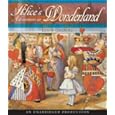
“Alice’s Adventures in Wonderland” Student Reviews 2009

The following are student reviews of “Alice’s Adventures in Wonderland” by Lewis Carroll.

Genre: Fantasy

Pages: 208

Reviewer: Hannah A.

Alice falls asleep under a tree and travels to a wonderland.  When she’s asleep, she meets mad hatters, white rabbits, and a crazy queen.  She is trying to get out the whole time, but she just can’t do it.  It helped her realize that not al reality is as it seems.

I think it was written well and Lewis Carroll got his point across.  It was hard to follow part of the time, and it was disturbing, but I liked it.

1. He wrote it for a little girl and her sister’s who had read the original text.

2. The theme of the book is that sometimes you can get carried away with things and sometimes reality is not the way it seems.

3. Alice starts off reading under a tree, unsuspecting of anything because she’s a young girl.  She is then transported to Wonderland where she cannot figure out whether what she’s seeing is real or not, testing her judgment.

4. It addresses the fact that many things in reality are not as they seem, because they are all clouded by our judgment and because of the government.  Lewis Carroll was showing this when Alice was in Wonderland because she wasn’t able to tell if what she was seeing was real or not.

Reviewer: Logan J.

Alice is a young girl that follows a white rabbit down a mysterious rabbit hole. After growing and shrinking many times, she is able to meet many strange characters. She encounters things that she has never heard of, while all the time forgetting who she is. After playing a frightening game of croquette with the Queen, she finally wakes up to find her sister watching over her. As Alice explains the dream to her sister, she wonders if it was really a dream or reality.

I really liked this book! I thought it was bizarre and twisted just enough. I know that my thinking pattern is a little different then others, so I completely understood the story and it was easy for me to follow. I can see where this book might be a little difficult for others to read, though. The language used is different from every day talk.

1. He wrote it to entertain a little girl that he knew.

2. The theme of this book is that reality is not always what it seems to be. It is also is not to as too many questions and interrupt. Alice did so and learned that it only get others that could help you upset at you. The thesis of the story is Alice is stuck in Wonderland, and she does not know how to get out.

3. Lewis Carroll develops this thesis by expressing Alice’s worries and having her ask directions from multiple people. She also constantly reminisces about her cat Dinah, “Oh, my cat Dinah”……. “Oh well Dinah would never….”

4. The main issue raised is “How is Alice going to get home?” Although the book is about her getting home, it seems as if the author really wants to make it difficult for her to do so. Carroll likes to pick fun and tease his main character, thinking that he would have liked to make Alice stay in Wonderland.

Reviewer: Savanah H.

Alice’s Adventures in Wonderland follows the imaginative adventures that the main character, Alice, faces in her journey to go home. Her journey starts off as she adventures into a land that she is unfamiliar with. She goes through obstacles to get home. She faces many events that she is not familiar with, but she gets through the struggles. She realizes that her adventure only happened because she was dreaming and escaping her reality.

Alice’s Adventures in Wonderland by Lewis Carroll is a well written novel. It captures the reader’s interest and takes them on a journey in which they can possibly relate to their own dreams. I think that it expressed the imaginative mind of a child; I was able to relate her imagination to mine. The novel could have been longer; it would have been more page turning if it had more of an adventure to it. All in all it was a great book and interested me in many different ways.

1. Carroll’s purpose in writing this book was to show the imaginative minds of children.
2. The theme of Alice’s Adventures in Wonderland is imagination is key; without imagination one cannot enjoy life peacefully with relaxation.
3. The author, Lewis Carroll, uses the method of the literary element, imagery. He describes the scenery so well that the reader feels as if they are there.
4. The main issue that the book raises is that imagination can be a relaxing way to get away from reality. The stance that the book takes in resolving the issue is that being imaginative can relax one’s mind, but it can be taken to a beyond what is reasonable.

Posted in Classic Fiction, Fable/Fairy Tale/Fantasy, Fiction | Leave a comment

“Pride and Prejudice” Student Reviews 2009

The following are COHS student reviews of “Pride and Prejudice” by Jane Austen.

Genre: Romance

Pages: 360-392 (depending on publisher/edition)

Reviewer: Nicole C.

Elizabeth is at the age where she is to marry, but turns down a proposal from Mr. Collins. Her sister Jane is involved with Mr. Bingley, but he soon taken away from her by Mr. Darcy. Mr. Darcy has an eye on Elizabeth and proposes. She immediately turns him down for all that he has done and the blames put on him by Mr. Wickham, a man Elizabeth likes. It is soon discovered that Mr. Wickham and Mr. Darcy have an awful relationship and Mr. Wickham is the evil one. Mr. Bingley is reunited with Jane, and in the end Elizabeth and Mr. Darcy marry.

It was an interesting book, but it was hard to sometimes understand the language, for we are not used to hearing it in this time and day. The romance, of course being a girl, captured my attention, and it had a great ending

1. To show the deceit and burden of love. How it can trick you by looking pretty on the outside, but evil within. Once you have learned that you are able to tell what true love is.

2. Your opinions change, so do not let your first impression be your last about a person.

3. Jane Austen made the reader believe that Elizabeth disliked Mr. Darcy so much that nothing would become of them, and then she went 180 degrees in the other direction! The two of them fell in love, which made a good ending.

4. Why does Mr. Darcy keep Mr. Bingley from Jane? Jane and Mr. Bingley are reunited.

Reviewer: Jenevie A.

Elizabeth Bennet is a woman who is very smart, kind, and beautiful. She has four other very beautiful sisters. Her mother, Mrs. Bennet, tries very hard to get her daughters to marry. Jane then falls in love with Mr. Bingley, a rich man she met at a party. Mr. Bingley was very fond of the Bennet Family, yet his friend Mr. Darcy was not. Mr. Darcy is a proud, stuck-up man. He did not leave a good impression on Elizabeth. Mr. Wickham comes in to Elizabeth’s life and tells her lies about Mr. Darcy. Mr. Wickham and Mr. Darcy had a bad relationship in the past. Mr. Bingley had to leave Jane because of something Mr. Darcy said to him.  Jane refuses the proposal to Mr. Collins. Elizabeth finds out the truth about Mr. Wickham and realizes that Mr. Darcy is the good guy. Then at the end of the book Jane is reunited with Mr. Bingley and Elizabeth and Mr. Darcy get married.

My opinion of the book is that it is good. I love “love stories” so I enjoyed this book very much. It had moments where it was boring and slow, but over-all it was a good book. At first, I was confused because the way they talked and what everything meant in the old-days. It is easy to catch on none-the-less. My favorite character was Elizabeth because she is a strong, independent, and intelligent.

1. The Authors purpose was just to tell of a complicated love story that Elizabeth Bennet goes through.

2. The Theme of the book is to never underestimate the power of love. Also your first impression of a person may always not bee correct.

3. The author developed the story around the theme by showing the dislike from Elizabeth towards Mr. Darcy. The author then shows the interest Mr. Darcy has with Elizabeth, yet Elizabeth still does not approve of him. Then the author shows Mr. Wickham comes and tells lies about Mr. Darcy.

4. The main issue that the book raises is the complicated love between Mr. Darcy and Elizabeth Bennet.
Reviewer: Brian K.

The novel starts out with the family discussing the news of Mr. Bingley renting Netherfield Park Manor. Mr. Collins, their cousin, comes to visit after Elizabeth overcomes a cold from traveling in the rain. Mr. Collins proposes to Elizabeth, who refuses him multiple times, and he moves on to ask both Jane and Catherine, who finally says yes. The two get married and move away. Elizabeth also gets proposed to by Mr. Darcy at the end, and she says yes. The book ends with her saying yes.

I really liked this book. I think they should teach this at a younger grade level than they do. Elizabeth Bennet’s character is so much like the modern woman trying to find the “perfect man.” I really enjoyed this book.

1. Jane Austen’s purpose in writing this book was to show the “modern woman” how to act while engaged.

2. The theme of P&P is marriage, while the thesis is choosing your own person to marry.

3. The method of development in P&P is by showing how difficult and negative marriage is, such as this quote; “Happiness in marriage is entirely a matter of chance” by Charlotte.

4. The issue it raises is that women should be independent in their search for marriage, and not allow other people to interfere with their decision.

Reviewer: Olivia d. R.

The novel starts with the family of Elizabeth Bennet at a party, there, they discuss there acquaintance Mr. Bingley who we later find out Jane likes. Mr. Bingley later tells her lies about another acquaintance she meets named, Mr. Darcy, who she is not fond of already. Elizabeth gets sick and it forces Jane to stay with Mr. Bingley. Through the many proposes Mr. Collins asks Elizabeth for her hand in marriage many times, which she denies, until her finally marries a sister of hers. After Elizabeth finds out the truth about Mr. Darcy she likes him and he propose to her, and she agrees.

The crossing paths of the lovers kept me interested in the novel. To my surprise the book was still appealing and I enjoyed the generic and cliché ending.

1. The author’s purpose of writing this novel teaches the reader to not judge a book by its
2. A theme of the story is to not judge a book by its cover and things are not always as they seem. It is displayed in the book by false identities that Mr. Darcy is said to be.
3. Even through Mr. Bingley’s doubts about Mr. Darcy Elizabeth falls in love with him. A quotation that furthers this thought is “Stupid men are the only ones worth knowing, after all.” (pg. 154)
4.  A main issue of Pride and Prejudice is deceitfulness. In the novel Mr. Bingley told Elizabeth lies about Mr. Darcy which made her not like him.

Reviewer: Amylee M.

The book starts off with the Bennet Family, but the story mainly focuses of Jane the eldest and Elizabeth the second eldest.  The females of the family become excited when a wealthy young man named Mr. Bingley moves into the neighborhood.  They meet him at the ball along with Mr. Darcy; during this time, Jane and Mr. Bingley develop a liking for each other and Lizzy develops a hatred for Mr. Darcy.  When Mr. Bingley leaves to the city, the family becomes distressed.  When Lizzy finds out it was Mr. Darcy’s doing, she becomes enraged.  When she meets Mr. Darcy again, he proposes to her and she tells him she will never marry him.  When she coincidentally meets Mr. Darcy again while at her Aunt and Uncle’s house; she is surprised by his civility.  They get to know each other and find a liking of each other.  In the end, they end up falling in love and getting married.

I really enjoyed this book.  It taught me a very helpful and valuable lesson.  I really liked the sarcasm and comedy that the author used.  I also liked the twist of the story, and the deep change that the characters go through throughout the story.  I found the language very sophisticated and intriguing and think the author did a wonderful job.

1. The author’s purpose for writing the book is to entertain, but also to teach the moral lesson that people are not always as they seem and that life is unpredictable as is love.
2. The theme of the book is that people are not always as they appear and that love is unpredictable, and the thesis is the author uses Darcy’s and Lizzy’s relationship to show this.
3. The author shows this in several ways.  At the beginning of the book, Lizzy judged Mr. Darcy and deemed him to be mean and unruly, but at the end of the story they ended up happily married.  For example, when Lizzy was thinking of Mr. Darcy, “No; hatred had vanished long ago, and almost as long been ashamed of feeling a dislike against him that could be so called”(Pg. 255)
4. The main issue that the book raises is that people tend to misread or misunderstand others, which leads to judging their character improperly.  The book takes the stance that you should get to know someone before you judge them.

Reviewer: Stephanie E.

The story beings when everyone in town hears that the Netherfield Hall is now being occupied by rich, upperclassmen. Once they find out that a prominent bachelor is among them, every girl begins to get ready for the town ball which the men and his sister are attending. Upon arrival, the Bennet’s meet the rich man everyone was talking about, Mr. Bingly. He came with his seemingly cold and bitter best friend Mr. Darcy who has twice the income of Mr. Bingly. Mr. Bingly immediately takes an interest in the eldest daughter of the Bennet’s, Jane. Though both are shy, the two people begin to fall in love. During this time, Elizabeth meets Mr. Darcy and sees him as an insufferable proud man, but always seems to run into him. Time goes by and the men go back to London leaving Jane heartbroken and confused. At this time, Elizabeth’s best friend Charlotte invites her over to stay at her new home. Charlotte, Mr. Collins, Elizabeth’s cousin, and Elizabeth all go to dinner at Lady Catherine’s estate. Elizabeth soon finds Mr. Darcy there and realizes that he is her nephew. A few days later, Mr. Darcy drops in on Elizabeth and proclaims his love to her. A disgusted Lizzy tells him that she knows he separated her sister and his best friend. Mr. Darcy defends himself saying that he did it for his own good. After telling the gentleman that he was the last man in the world she would ever marry, Mr. Darcy leaves but comes back later to give her a letter. Elizabeth returns home and finds her aunt and uncle who invite her to go see Pemberly. She accepts and yet again runs into Mr. Darcy who shows her his softer side. After getting a letter from home saying that her sister has run away., however, she leaves again. When the family ordeal gets settled, Mr. Bingly returns with Mr. Darcy. He then proceeds to ask Jane to marry him. She accepts, and that night Elizabeth gets a visit from an angry Lady Catherine asking if her nephew and her are engaged. After telling her no, she leaves. Once Mr. Darcy shows up again, he asks her if her feelings have change. Saying that they had, they become engaged to much anger with his aunt. Both couples end up happily married at the end.

This book quickly became one of my all time favorite books, with Elizabeth’s wit and quick humor, I found myself immersed in the book. The timeless story of forbidden love always makes a good reading, and Jane Austin knew exactly how to write it. Also, it gave me an inside of relationships and regular living during that time. I not only read a good story, but attained a history lesson as well!

1. The Author’s purpose for writing the book was to show the differences and troubles with different social classes intermingling. She also tried to teach people to go against the typical gender stereotypes.
2. Jane Austin’s theme of the book was not being so judgmental and not to jump to conclusions, while the thesis of the book was overcoming social issues with love can benefit in the future.
3. The method Austin supported her thesis by having many people frown upon Lizzy’s social standards. “Heaven and Earth!—of what are you thinking? Are the shades of Pemberly thus polluted?” (346) “his sense of her inferiority, of its being a degradation, of the family obstacles which judgment had always opposed to inclination, were dwelt on with a warmth which seemed due  to the consequence he was wounding but was very unlikely to recommend his suit.” (188). Through this it shows that people actually though Elizabeth was on a lower level as a human then them
4. The main issue of the book was trying to overcome social and economic burdens. The issue first becomes addressed when Mr. Bingly takes an interest in the eldest sister, Jane. Problems also ensue when Mr. Darcy asks for Elizabeth’s hand in marriage. An outraged Lady Catherine attempts to save her family’s upper class ways by making sure they do not wed. The book’s issue becomes solved at the end when both couples end up being married despite warnings.

Reviewer: Amanda G.

Elizabeth’s mother hopes that her children will marry into money. Darcy and Elizabeth first meet at a ball hosted by Mr. Bingley, a rich bachelor. Darcy is soon fond of Elizabeth because of her personality traits. Darcy, much later on, declares his affections and asks for Elizabeth hand in marriage. Elizabeth refuses him because she thinks that he ruined Mr. Wickham and broke up. . .

1. Jane Austen wrote this book to shed light on possessive parents, love, and different social classes.

2. The theme of the book is love, and opposing social classes.

Posted in Classic Fiction, Fiction, Over 375 pages, Romance | Leave a comment