“Freakonomics”


Freakonomics by Steven D. Levitt and Stephen J. Dubner 

When your econ teacher assigns some outside reading, this is the book to grab. It’s entertaining as well as informative. Its authors are a well-respected economist (as you’ll learn from your reading, back in 2003, Levitt received the Clark Medal as the best economist under 40) and a journalist who writes for some great publications including The New York Times and The New Yorker. Together, they look at some very odd issues and apply the science of economics to them. The result is written in a style that anyone can understand and that makes the subject fun. I mean it’s really a wacky book.

Freakonomics asks questions such as: What do school teachers and sumo wrestlers have in common? (Given the right incentives, these people, known for integrity, will cheat). What does the legalization of abortion in the U.S. have to do with declining crime rates? (This discussion is quite politically incorrect and sadly enlightening.) Why do drug dealers still live with their mothers? (Unless they are on the top of their business pyramid, they don’t make enough money to move out–but drug dealing is a ‘glamour’ job like being a movie star. Everyone dreams of making it to the top.) What can parents do to make their children smart and successful? (Sadly, everything they can do must be done long before they become pregnant or have children. So forget Baby Einstein.) Do first names help or hinder children in being successful? (The names that successful people give their children are later popular with less successful parents, and they don’t alter lives very much.) How are member of the Ku Klux Klan like real estate agents? (When they’re looking out for number one, don’t get the idea that it’s you.) What kind of profile on a dating service gets results?

In Freakonomics, you’ll learn that incentives matter—and how odd some incentives are; that the phrase ‘conventional wisdom’ was never meant to indicate that it was ‘smart’ or ‘right’ (and it still isn’t most of the time). The authors tell us that there’s no unifying theme in this book, and that turns out to be true. Reading it is just a chance to look at economics in a new way and to turn some old assumptions upside down. Lots of fun—and it just meets that 200 page requirement, so it’s a quick red. Come check it out.

P.S.—The authors wrote another book—Superfreakonomics. I haven’t read it yet, but I bet it would make another great outside reading book for econ class.
Posted in Controversial Issue/Debate, Non-fiction | Tagged | Leave a comment

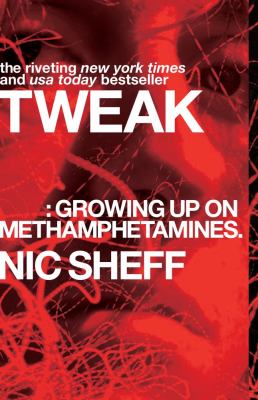
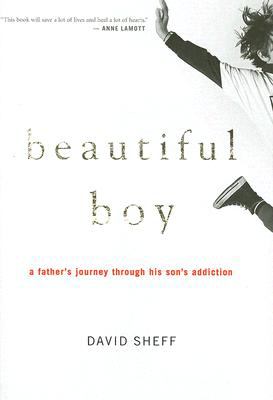
“Beautiful Boy” and “Tweak”

tweak beautiful boy

“It hurts so bad that I cannot save him, protect him, keep him out of harm’s way, shield him from

pain. What good are fathers if not for these things?” Thomas Lynch, “The Way We Are”

David Sheff begins Beautiful Boy with this quote. The fact that he can’t save his son Nic, from his addiction to meth doesn’t stop him from trying again and again, doesn’t stop him from blaming himself for any and every mistake, small or large, that he made in raising Nic, doesn’t keep him from the intense research about meth addiction that informs this memoir.

To say I was riveted from page one is not hyperbole. I wanted so badly for everything to get better, for Nic to wake up and see what his addiction was doing to his family, to him. But as a meth addict this wasn’t even possible for Nic. The research tells you why and Sheff explains it. It seems the best possible hope to stop meth addiction is never to start, not once. If this is hard for you to believe, if this just seems like the sort of fairy tale that teachers tell, YOU MUST READ THIS BOOK. And—if you are suffering because someone in your family is an addict—if a parent, brother or sister is lying, stealing your money, breaking into your house or your room, promising to do better but never acting on that promise—YOU MUST READ THIS BOOK. It will reinforce the “three C’s of Al-Anon” for you: you didn’t cause it, you can’t control it and you can’t cure it. One focus of this book is to help addicts’ family members to stop being ‘addicted to addiction’—to work on living their own lives.

Beautiful Boy is as much a story about relapse as it is about anything. As it opens, Nic returns from college very excited to see his family, his little brother and sister. But he’s relapsed into crystal meth addiction and life explodes. From here, we track back to look at the course of Nic’s addiction. David Sheff, as Nic’s father, will blame himself about so many things: his divorce from his first wife, his unconventional raising of Nic, the fact that he did drugs himself when he was young. Yet to the reader—who will acknowledge that Nic’s joint-custody life must be lousy because it requires him to jockey between the Bay Area (San Francisco) and Los Angeles—parts of Nic’s childhood seem ideal. He is allowed so much creativity; he lives with his father, step-mother, sister and brother in one of the most beautiful, desirable neighborhoods in the country (in Marin County); his step-mother is an artist and encourages Nic’s own artistic skills. He is not only smart and well-loved by his teachers at his exclusive private school—he’s an agile athlete too, and has the time and money to surf. His father joins him and takes the kind of interest in Nic’s activities that most kids only dream about.

How does all this turn out so terribly wrong? Nic experiments with alcohol and marijuana in middle school. From there, he moves on to harder drugs. After going away to Paris as an exchange student, he not only comes home with an ulcer, but has become an addict. His many efforts at rehab fail over and over in a heartbreaking cycle of addiction and sobriety. He is depressed. He uses up his health insurance allowance for rehab and then his parents dive into their bank accounts. Meanwhile, David Sheff, the father, has a brain hemorrhage and nearly dies. It seems he’s going to have to let go or he won’t be around to raise his younger children. Yet even his father’s near death doesn’t stop Nic’s addiction. He takes up with a girlfriend who shoots meth and speedballs with him.

Since Sheff has done so much research, he will tell the reader how meth burns away nerve endings and wipes out the brain’s dopamine (a neurotransmitter responsible for feeling good, for feeling pleasure); how addicts cough up the lining of their lungs. He points out the fact that if the body and mind are to heal, the addict must be sober for two years. Nic is sober once for eighteen months and relapses; then again for almost two years and relapses.

Tweak is Nic Sheff’s telling of his own tale, but he covers a shorter time period than his father does in Beautiful Boy. Tweak is a young adult book (it’s meant to be read by teens), and it covers some pretty scary territory. As a crystal meth addict, Nic has ‘turned tricks’ for drug money; he gets an infection from shooting up and nearly has his arm amputated. It’s tough to read about someone destroying himself—especially if you’ve read Beautiful Boy first and are thinking of Nic as his father portrays him. However, Nic’s story might be the incentive you need to bolter yourself against peer pressure, to reject a life in ruins.

Posted in Biography/Memoir, Controversial Issue/Debate, Non-fiction, Young Adult Literature | Tagged , , , , | Leave a comment

“Skulduggery Pleasant”

Skulduggery Pleasant by Derek Landy

Stephanie Edgley is brokenhearted over the death of her Uncle Gordon, who, in a surprise move, has left Stephanie his estate. He was a bestselling author of fantasy and magic, and hung out with what his family considered a weird, low-life crowd. One of this crowd comes to the reading of Gordon’s will. He is hidden by his dark glasses, muffler and overcoat. When Stephanie is later staying the night in the house she inherited from Gordon, this strange man saves her life. It quickly becomes apparent that Gordon was murdered and Stephanie, bored with life on the east coast of Ireland, wants to help find the killer.

But the strange Skulduggery Pleasant isn’t a man—at least not a live one—he’s a skeleton, and a powerful one at that, a detective who takes on cases in the world of magic, vampires, sorcerers, ‘cleavers,’ Elders and Hollow Men. Apparently, Gordon’s best selling novels were based on reality. And thus begins Stephanie’s adventures in the world of the supernatural.

Skulduggery and Stephanie (aka Valkyrie Cain) are a smart-mouthed, wise cracking pair as they fight the evil Nefarian Serpine, who hopes to resurrect the Faceless Ones and destroy mankind. They dodge bullets (or are shot), outrun vampires, escape cleavers and more. They survive broken bones, burning and torture. The action never stops—violence, danger nor magic—but through all they are cool. (Skulduggery even drives a 1954 Bentley.)

Skulduggery Pleasant has many great twists and turns that keep you involved in detective books. Though Stephanie is twelve, she acts much older. The violence in the book, while not gratuitous, is also more suited to teens than to kids. So don’t pass this one up if you find a copy shelved with the kids’ books. Oh—and it has that always sought after ‘more than 375 page’ benefit—even though the pages are short and the action so fast that you’ll finish in no time at all. And if you really like it, sequels are here.

Posted in Fiction, Hi-Low/Quick Read, Horror/Mystery/Suspense, Over 375 pages, Young Adult Literature | Tagged , | Leave a comment

“The Graveyard Book”

“There was a hand in the darkness, and it held a knife.”

The first sentence of The Graveyard Book

Though The Graveyard Book has been marketed to younger teens in the U.S., it is sold as an adult book in some places. As soon as you start reading, you’ll see why. The tale opens with a man and a knife and a family being murdered. Though three are killed, the youngest, a baby about a year and a half old, climbs out of his crib and wanders away, ending up in a nearby graveyard—an old graveyard, no longer in use except as a nature sanctuary.

The inhabitants of the graveyard—all ghosts except for Silas, who is neither alive nor dead—argue mightily about the boy’s fate, but in the end, he is kept by the Owens’, who in life never had children. Silas agrees to be the boy’s guardian. Thus Bod—short for Nobody Owens (“so named because he “looks like nobody but himself”)—is raised where he is given ‘the freedom of the graveyard’ and therefore can practice skills like fading and haunting. He grows up exploring chapel mausoleums, ancient burial chambers and the home of the monstrous creatures as well as accidentally entering the ghoul gate and endangering his life. Outside the graveyard danger also awaits as the man Jack, who assassinated Bod’s family, is still looking for him.

The community of the dead includes several teachers and other useful sorts. Bod learns what he needs to know, but longs for the friendship of the living as well as the dead. But when he goes outside the graveyard, he learns of the ancient order responsible for his family’s death.

This is a quick read and a very original book. It’s not all dark—there are lots of puns and much fun to be made of the inhabitants of the graveyard, like the failed poet who recites some (pretty awful) lines for Bod. A plus is the inclusion of illustrations.

Posted in Fiction, Hi-Low/Quick Read, Horror/Mystery/Suspense, Young Adult Literature | Tagged , , | 4 Comments

“Twice Told: Original Stories Inspired by Original Art”

Twice Told: Original Stories Inspired by Original Art has stories by many wonderful YA writers and drawings by Scott Hunt.

When a teacher asks you to read short stories, check this book out. Each section has art work–a pencil drawing. Following the drawing are two stories that interpret that piece of art. It’s great to see what a creative mind comes up with–how different the two stories can be and how far they can venture  from that beginning in the drawing (which is the point–the art is something of a prompt, but once the creativity gets going, the story takes on a whole new dimension).  Some of the story writers happen also to be some of my favorite YA authors–Sarah Dessen, Bruce Coville, Neal Shusterman, Margaret Peterson Haddix, M. T. Anderson, and Alex Flinn. Judging from books that checkout here, I think these are some of your favorites as well. Other story authors are new to me–which is great because it gives me the opportunity to meet them and then find out about other works they’ve written.

I also want to recommend this book to you if you’re a budding writer. What sort of story will you write after contemplating the drawing? The art is just right to start those creative juices flowing.

Posted in Adventure Stories, Fiction, Hi-Low/Quick Read, Short Stories, Young Adult Literature | Tagged , , | Leave a comment

“Twisted”

Twisted by Laurie Halse Anderson

I loved Speak and when someone told me that Twisted was Speak for guys, I had to read it.

The New York Times Book Review (Oct. 27, 2009) tells us that Anderson’s “novel Speak (1999) was one of the first seriously good books published for teenagers to be read widely by them. It tells the story of Melinda Sordino, a clanless outcast who barely endures her freshman year at a suburban high school, and it features one of the best young narrative voices this side of Holden Caulfield.”

So, did Twisted meet the high mark of Speak? Well, it might be too much to ask for another book that good by the same author, but I think Twisted comes close.

Tyler is a former geek with a geek best friend. At the end of his junior year, when he’s had it with being a bullied nobody, he spray paints graffiti all over his school. (He regrets misspelling ‘testicle.’) He’s caught. His punishment is to do community service hours with a landscape community. In doing so, he builds big muscles and gets a great tan. He begins his senior year looking beautiful and attracting the goddess girl of his dreams—Bethany Milbury, sister of the jock who antagonizes him, daughter of Tyler’s father’s boss. So, yeah, Tyler’s life is still complicated.

Tyler seems to be trending lightly, but somewhat successfully, between two worlds. That is until Bethany invites him to a wild party where she proceeds to get very drunk and asks Tyler to have sex with her. Of course, he wants to. But if he doesn’t, he thinks he can be a sort of hero to her, the good guy—and that she’ll really love him. But that’s not what happens. Especially not after sexually explicit pictures of an unconscious Bethany hit the Internet and Tyler is accused of this assault.

There are many good themes in this book—much about class privilege and the rich always coming out on top; teens making ethical choices; how teens are viewed as ‘bad’ people after one mistake; how rotten parents (Tyler’s dad is cruel and emotionally abuse) affect the course of a kid’s life—and whether the kid can alter that course. Twisted will speak to all readers, but especially to guys who are just trying to do the right thing.

Posted in Controversial Issue/Debate, Fiction, Young Adult Literature | Tagged , , | Leave a comment

“City of Ashes”

City of Ashes by Cassandra Clare (Book Two of The Mortal Instruments)

Here’s another Top Ten Teen Read of 2009—but with smart cover art and an intriguing title.

I read City of Ashes because it got on the top ten teen book list. I probably should have read the first book in the trilogy, City of Bones, but Clare does a good job of grounding the reader. Clary Fray is a Shadowhunter, which is a mortal who polices the ‘Downworld’ of monsters—werewolves, vampires, fairies (Seelies), witches and warlocks. Ordinary mortals are given the pejorative ‘mundanes’ and include Clary’s sometimes boyfriend, Simon.

Though Clary and Simon share an unbreakable bond, it’s really Jace that Clary has the hots for, mostly because Jace has that ‘bad boy who takes crazy chances and is angry at everyone’ thing going. Unfortunately, though the two were raised apart without knowledge of one another, they turn out to be brother and sister. Their father is the evil Valentine whose goal is to overthrow the Clave (Shadowhunter society). His reasons have to do with his hatred for all ‘Downworlder’ beings except Shadowhunters. He sees them as inferior monsters.

The arrogant Valentine engages a lot of powerful demons that mundanes can’t see.  It is soon clear that he cares nothing for his own children if they disobey him, and could easily destroy them along with others in the Clave. So the battle is on. And it is fierce. Action is swift, bloody and described in detail. Demons are imaginatively described. As the plot twists, you’ll be hanging on for the ride. And here’s an added bonus: there’s lots of good writing—you can talk to your English teacher about the great metaphors and imagines. There’s a bit of lousy writing as well—when your English teacher lectures about how annoying a plethora of adverbs can be, bring this book in and get extra credit. (Clare can reconstruct any sentence to throw in pointless adverbs, making meaning stupefyingly [get it?] redundant.)

But so what—you’re going to be engaged—from cover to cover. And then want to go back and read Book One—City of Bones–and get on the waiting list here for Book Three—City of Glass.

Posted in Adventure Stories, Fiction, Hi-Low/Quick Read, Horror/Mystery/Suspense, Young Adult Literature | Leave a comment

“The Disreputable History of Frankie Landau-Banks”

The Disreputable History of Frankie Landau-Banks by E. Lockhart

A so-so cover that only has appeal after you’ve started reading the book and ‘get it.’

A so-so title.

And one of the top ten teen books of 2009.

How did that happen?

It’s a great read.

Frankie is a sophomore at a very exclusive private high school, Alabaster Preparatory Academy. She has the makings of the ‘ugly ducking turned swan’ cliché. But she’s also very brainy and wants to be taken seriously. (Her family calls her Bunny Rabbit.)  When she meets the hottest senior guy on campus and he starts dating her, she is the envy of other girls on campus. This could be all they’d want. Not Frankie.

The guys in her boyfriend’s group belong to an all-male secret society called the Loyal Order of the Basset Hounds. Frankie isn’t supposed to know anything about it, but she’s too smart and inquisitive—devious–not to figure out what’s going on. The Bassets are goofy and they mostly pull really dumb pranks—and most of these go unnoticed. Frankie is excluded because she’s a girl. She wants to belong—these guys she hangs out could also be clichés about the snobby, privileged guys who will go to Harvard and Princeton and run the rest of our lives some day. But they, too, are smart and likeable. We want Frankie to break the barrier and be part of their group. When she secretly infiltrates the Bassets and masterminds some great pranks, we think these guys will have to love her. But they don’t actually have to do anything.

“It is better to be alone . . . than to be with someone who can’t see who you are. It is better to lead than to follow. It is better to speak up than stay silent. It is better to open doors than to shut them on people.” The Disreputable History takes on not only boy/girl relationships, but class and privilege (the ‘old boys club’)—and, as a bonus, has a lot of fun with words and language. Frankie is an oddball girl with a quirky imagination. If you are tired of stories (real or fiction) with girls erasing themselves for boys, you’ll identify with her.

Posted in Fiction, Romance, Young Adult Literature | Leave a comment

“Readicide”

Readicide: How Schools are Killing Reading and What You Can Do about It by Kelly Gallagher

The dedication of this book states: “For those educators who resist the political in favor of the authentic.” So this is a book for teachers, and teachers of language arts will find it especially useful. (This review is directed primarily to teachers.) However, if you are a student who is doing any sort of research project on high-stakes testing (like STAR/CST tests) or on why teens don’t read very much, you’ll find this book useful. You can check it out from the textbook room (rather than the circulation desk at the library).

In his introduction, Gallagher, an English teacher from Southern California, introduces the term ‘readicide’ “because it cuts to the central ironic thesis of this book: rather than helping students, many of the reading practices found in today’s classrooms are actually contributing to the death of reading.” I agree with this premise, as do many folks who want to nurture a love of reading in teens (such as librarians and English teachers). Gallagher discuss how we can turn the trend around.

Basically, Gallagher uses data to show that school are more interested in nurturing test-taking skills than in nurturing a love of reading. We limit positive reading experiences; we overteach pleasure reading books (which should just be read, not studied!); we underteach classic books (so that they are too confusing–and students hate them and give up).

Readicide quotes Marzano (so what Gallagher discusses lines up with what teachers here at COHS are working toward practicing); argues that testing data is something beyond damn lies (as Mark Twain so aptly put it); that current practice leads to word poverty and a deficit of knowledge capital (it doesn’t matter if you can read the words if you don’t know what the writing is about); that we spend so much time teaching to the test, we can no longer study long, challenging works–and thus, students don’t develop higher-level thinking skills; and that SSR is necessary to allow students to build their prior knowledge and background.

Gallagher offers many suggestions and examples lessons for helping teens read books for pleasure without ruining those books with long reports and worksheet interruptions. He also shows how to approach a difficult text that requires teaching so that teens can still enjoy the ‘deeper meaning’ without getting either bored or lost.

There’s an appendix of 101 books that Gallagher’s reluctant readers love–these are current titles (and happily, I’ve read many of them–several are reviewed in this blog).

Posted in Controversial Issue/Debate, Non-fiction | Leave a comment

“Dead Girls Don’t Write Letters”

Here’s a review written by COHS student Jade:

“Dead Girls Don’t Write Letters” by Gail Giles gets five stars from me! If you’re in the mood for confusing but riveting mystery, this is a good book for you!

Sunny Reynolds’ older sister Jazz dies in a fire. Her mom is devastated–can’t eat or sleep, and has to be put on sleeping pills. Her father goes back to being a drunk. Sunny comes home one day to find a letter on the counter, and it said “from Jasmine.” It said she wasn’t dead, and she’ll be coming home on Sunday. Sunny tells her parents, and when Sunday arrives, jazz walks in the door.  But this girl….didn’t look like Jazz, and Sunny knows it’s not her sister… But if it’s not Jazz, then who is it?

Read it to find out!

Posted in Fiction, Horror/Mystery/Suspense, Young Adult Literature | Leave a comment