More than just memoir: Deeper thinking about the Holocaust “The Sunflower: On the Possibilities and Limits of Forgiveness” and “Man’s Search for Meaning”


This slideshow requires JavaScript.

The Sunflower: On the Possibilities and Limits of Forgiveness by Simon

You are a prisoner in a concentration camp. A dying Nazi soldier asks for your forgiveness. What would you do? Withe responses by Robert Coles, The Dalai Lama, Matthew Fox, Mary Gordon, Harold S. Kushner, Dennis Prager, Dith Pran, Desmond Tutu, Harry Wu, and forty-four others.

Man’s Search for Meaning by Viktor E. Frankl

Viktor Frankl survived more than one concentration/death camp, including Auschwitz, during World War II. His father, mother, brother, and wife all died in the camps. He lost everything he’d owned. Frankl was also a psychiatrist. In his classic Man’s Search for Meaning, he reflects on why some people survive in the most horrific circumstances possible. He asks –and answers—how can man find life worth living?

Those of us who’ve worked with teens for awhile know that you ask yourselves this difficult question. Just because you’re young doesn’t mean that you haven’t had a crisis, a ‘dark night of the soul.’ If you do worry about life having any meaning, reading this book is a great start toward answering your questions.

The book has two parts. The first part reviews some of Frankl’s experiences in the death camps. He looks at what causes friends to give up hope and what brings moments of happiness. In every case, the individual has to make sense out of his suffering. Frankl believes that all suffering (even that which ends in death) has meaning. Man can rise above his fate by choosing to be worthy of his suffering.

The second part covers logotherapy, Frankl’s school of psychotherapy. In this second part, the reader sees how Frankl uses his experiences to help ordinary people who feel that life isn’t worth living.

Many students ask for books by or about Holocaust survivors. This is different from others because it delves into life’s purpose as much as it does into the story of Frankl’s captivity. I found myself wanting to copy down quotations to remember.

“The majority of prisoners suffered from a kind of inferiority complex. We all had once been or had fancied ourselves to be ‘somebody.’ Now we were treated like complete nonentities. (The consciousness of one’s inner value is anchored in higher, more spiritual things, and cannot be shaken by camp life. But how many free men, let alone prisoners, possess it?)”

“I remember two cases of would-be suicide, which bore a striking similarity to each other. Both men had talked of their intentions to commit suicide. Both used the typical argument—they had nothing more to expect from life. In both cases it was a question of getting them to realize that life was still expecting something from them; something in the future was expected of them.”

“From all this we learn that there are two races of men in this world, but only two—the ‘race’ of the decent man and the ‘race’ of the indecent man. Both are found everywhere; they penetrate into all groups of society. No group consists entirely of decent or indecent people. In this sense, no group is of ‘pure’ race.”

“What matters, therefore, is not the meaning of life in general but rather the specific meaning of a person’s life at a given moment. To put the question in general terms would be comparable to the question posed to a chess champion: ‘Tell me, Master, what is the best move in the world?’ There simply is no such thing as the best or even a good move apart from a particular situation in a game and the particular personality of one’s opponent. The same holds true for human existence. One should not search for an abstract meaning of life. Everyone has his own specific vocation or mission in life to carry out a concrete assignment which demands fulfillment. Therein he cannot be replaced, nor can his life be repeated.”

There’s much hope for all of us in this little book. If you’re in the middle of a tough time and looking for purpose, check it out.

Posted in Biography/Memoir, Controversial Issue/Debate, Faith-Based/Religious Element, Fiction, Human Rights Issues, Non-fiction, Short Stories | Tagged , , | Leave a comment

“My Life with the Lincolns”

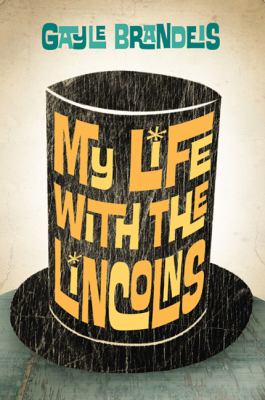
My Life with the Lincolns by Gayle Brandeis  

Mina Edelman thinks that her family—her parents and the three girls—are the Lincolns reincarnated. Her dad, whose initials are ABE, has gotten involved in the Civil Rights Movement during the summer of 1966. Part of Mina’s job is to make sure that when the riots ensue and folks start throwing bottles and rocks at the marchers that she keeps her family safe. She is truly afraid that they will meet fates similar to the Lincolns, including murder of her father, and death through illnesses of the children. (Three of Abraham Lincoln’s four sons died young. His wife, Mary, was reported to have gone mad, though there’s debate about it .)

I decided to read this book over the Martin Luther King, Jr. holiday as it takes place in and around Chicago and much of the focus is on King, his speeches, and the Civil Rights Movement. And while there’s a lot here that gives the reader a window into that movement as well as background on the every day life of Abraham Lincoln and his family (and their furniture 🙂 ), much of it is pure fun because we see it all through the eyes of twelve-year-old Mina, a lovable oddball who wears a Fedora and mixes it up with the neighbor boy.

Though deeply concerned about equal rights, Mina’s dad, Albert, is often goofy and clueless about relating to others, including the African Americans with whom he marches. Objecting to the Vietnam War, he tells the wife of a neighbor turned soldier that he hopes her husband doesn’t come home in a body bag. This sets up conflict between the kids in the families. At one point, the neighbor boy, Hollister, shoots Mina with an arrow.

Albert also appears to be playing with fire as he develops a crush on Clara, the African American woman whose husband he pretends to be when they visit real estate offices, checking to see if they will be shown available houses in all-white neighborhoods. (It’s 1966—you can guess the answer.) Albert lies to his wife about his involvement in the movement.

Loosely, this can be considered a historical novel as it includes many period details—excerpts from Dr. King’s speeches, the kids playing “Viet Cong,” even a reminder of several nursing students murdered in their apartment. There is also much about the life of Abraham and Mary Lincoln that I didn’t know and found interesting. She was impoverished after his death, having spent fabulous sums that she didn’t have. Later, her surviving son had her committed to an asylum for the mentally ill. Abraham Lincoln’s coffin was opened at every train stop on its way to burial (20 days), so folks could gaze at his body.

But this is also a book about a girl growing up. She worries and wonders about the changes her body is going through, about her teen sister’s love interests. We see Dr. King through her eyes.

The author, Gayle Brandeis, will be visiting Colony High as part of the student writers’ conference on March 28. For those of you who plan to attend, I hope you’ll read this book beforehand. You can check it out from either of the school libraries. I think it leads to some good questions for the author: the period details, both the 1960s and the 1860s are outside the author’s experience. (She wasn’t born for the latter, and I don’t think she was for the former either. She certainly couldn’t have been twelve yet!) How did she come up with them? How did she use her own experiences to tap Mina’s feelings about growing up? You were twelve not so long ago. How could you tap your experiences for creative writing?

Posted in Family Problems, Fiction, Hi-Low/Quick Read, Historical Fiction/Historical Element, Human Rights Issues, Young Adult Literature | Tagged , , , , , , | Leave a comment

What books do when no one is watching

This is a YouTube video, so if you’re checking this at school, it’s censored (blank below).

Posted in Uncategorized | Leave a comment

For Read 180 and English Learner students

This slideshow requires JavaScript.

High Interest Series

Check for these books in our new library section: 372.41

 Choices series:

The Choices series is for teens who are emerging readers. They are not complete stories. They set up situations that require teens to make a choice. The choice is one that teens might have had to make in the past or will make in the future.

The books are about 50 pages long. They work best for teens who are learning English. If you can already read at the 4th grade level or above, you might find Choices too easy. It may bore you. If you are learning to read English, you might like the Choices series. You might enjoy thinking about what you would do in the same situation.

Sample title:

Friend or Foe?

Two friends are running for class president. A third friend (Jazz) tells one of them (Cory) that he will vote for Cory. But Jazz would make a better class president. Should he keep his promise or should he run for class president?

 Orca Soundings series

The books in Orca Soundings vary a lot. They cover a lot of situations. They are written for teens who read below grade level. Most of the books have a 2.5-6 grade level of reading, but they have a lot of action. The pace is really quick. The topic are sometimes for mature readers—teenage sexuality, underage drinking, bullying. These are not books for students in grades 2-6.

I found the Orca Soundings books that I read to be interesting. I wanted to know how things would turn out. They are the same number of pages as the shorter books in the Bluford series. (I discuss the Bluford series next—see below.) Still, Orca Soundings books are a little shorter than Bluford books. The print is bigger.

Since the books aren’t connected as they are in most series, I’ve got three sample titles to give you an idea:

Comeback

Ria is rich, pretty, popular, and has a great boyfriend. Her problem is that her parents are getting a divorce. She blames her mother because her mother wanted the divorce. Ria enjoys her father’s positive attitude about life. She enjoys how he is always doing something fun.

I liked this book because I wasn’t able to guess what would happen. When Ria’s father won’t take her on a plane trip, I thought Ria would find out that her father was having an affair—and that she had misjudged her mother. But Ria’s father is very bad in another way, one right out of today’s headlines. He’s bad in a way that affects a lot more people than just his family.

Charmed

Charmed is for the very mature student.

Izzy is embarrassed of her mom’s boyfriend, Rob the Slob. He’s a racist. In fact, he’s a jerk in a lot of ways. The man of Izzy’s dreams is Cody Dillon. Cody’s a good-looking high school dropout and he’s popular with some girls. But Izzy thinks the “bada#$” boys are the best ones. And even with Rob the Slob as proof that she’s wrong, Izzy won’t listen to anyone about Cody.

When Izzy’s mom chooses Rob the Slob over Izzy, Izzy thinks Cody Dillon is her ticket out of the mess of her life. Bad choice.

Chill

Although Chill has a disability, he doesn’t let it affect him. He’s a great artist and he works on his strengths. He stood up to bullies when he was a kid in elementary school, so by high school, people respect him. But then a new teacher comes to town. And he truly is a bully, not just to Chill, but also to all of the students in his class. He seems to want to break their spirits. But he acts like a completely different person around other teachers, so the staff has no clue.

Through his talent in painting, Chill is able to stand up to Mr. Sfinkter. (Yes, ha, ha. Great name.) His story is also the story of friendship and how to learn to forgive friends when they let you down.

The Bluford Series

The books in the Bluford series are connected. They all take place at Bluford High, and some of the same characters appear in various books. Some are sequels, but the series isn’t one continuous story. If you want to know which books are sequels, check the link here or look under “Readers’ Advisory” on Colony Library Lady. It has a list of all the books and a quick blurb about each one, which tells you which are sequels.

The Bluford books are a little longer—150-180 pages—so they are able to more fully develop the characters. You feel like you get to know some of them. They have very real high school problems. They have a subplot, or second story line so the world of Bluford High seems real, with multiple problems. If you read one, you may get hooked. (And that’s a good thing.)

Sample title:

Pretty Ugly

Jamee Wills feels like she can never live up to her parents’ expectations because her older sister, Darcy, is the smart one. Darcy studies hard and plans to get a scholarship to college next year when she is a senior.

Jamee loves cheerleading because she’s a talented athlete, good at jumps, dance steps and tumbling. But of she doesn’t keep up her grades, she’s going to fail math—and then it won’t matter if she makes the cheer squad. But in order to go to practice, she lies to her parents about staying after school to get help from her math teacher.

In cheer practice, it becomes obvious which girls are the school’s queen bees. Particularly awful is Vanessa Pierce. Vanessa makes fun of Angel, a shy girl who is trying out. She goes on to bully Angel. When Jamee stands up for Angel—and for what is right—she also becomes the target of Vanessa’s attacks. With all the girls afraid to stand up to Vanessa (or they will be next), the attacks become worse and include cyber-bullying.

I particularly liked Pretty Ugly because it shows how hard being an outsider in high school can be.

Posted in Controversial Issue/Debate, Family Problems, Fiction, Hi-Low/Quick Read, Mature Readers, Read 180, Young Adult Literature | Tagged , , , , , , , , | Leave a comment

“Crossed”

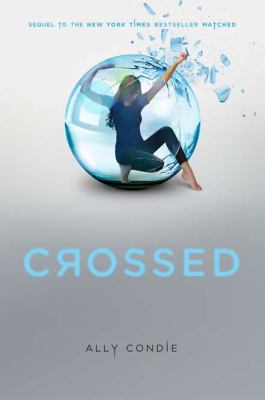
Crossed by Ally Condie (second book in the Matched series)

“I think of all the things he can do—write, carve, paint—and suddenly, watching him stand in the dark at the edge of the empty settlement, something powerful washes over me. There is no place for someone like him in the Society, I think, for someone who can create. He can do so many things of incomparable value, things no one else can do, and the Society doesn’t care about that at all.

Cassia has gotten her parents permission to seek Ky.They, after all, understand love. Her chance to make her way to the Outer Provinces, where she hopes to find Ky after he’s been arrested by the Society’s Officials, comes just as she is going to be transferred from a labor camp to her final work destination.

But Ky isn’t in the Outer Provinces. He’s being used as a decoy to draw fire from the Enemy, a position that the Society promises will only last six month. And then he will no longer be an Aberration but be admitted to normalcy and back into the Society. The thing is that no decoy has ever lasted six months. They are all killed under enemy fire. So Ky, too, needs to figure out how to escape and seek Cassia.

With both of our protagonists on the run, we readers enter a world far from the Society of the first book in this series (Matched, reviewed here). The center of this trilogy takes us through the Carvings and the Outer Provinces, full both with the stark beauty of nature and danger. Ally Condie, the author, said that she based the wilderness beyond the Society on her Southern Utah environment, and if you’ve ever been to any of Utah’s National Parks, you’ll perfectly picture the setting—caves, canyons, tight passages through sandstone.

A cast of new characters—Eli, Indie, Vick, Hunter—helps draw us into this primitive world. We still have the red, green, and blue pills of the Society’s calming, dying, forgetting, and surviving. But Ky and Cassie are both wondering about the larger questions that being on the run evokes: Is staying in the Society and having a chance at a second life worth it? If someone breaks free and takes her chances with death, will she also have the chance to play a part in the choices that affect her life? How finally, do we sort information and decide?

Crossed is best read after Matched. It’s a nice set up for the final showdown that we expect in the third book. I highly recommend this series to fans of The Hunger Games who are wondering what they can read now. As one student told me yesterday, she liked the dystopian future of The Hunger Games, but it’s one of her favorite books because of the romance. The same can be said of the Matched series. Cassia’s match, Xander, the third member of the love triangle, figures into Crossed.

Just a little side note: Crossed has a lot of good one-liners, quotable quotes. Here’s one that has me thinking about what will happen in the final book: “Because in the end you can’t always choose what to keep. You can only choose how you let it go.”

Posted in Adventure Stories, Fiction, Human Rights Issues, Literary Read Alike, Romance, Sci-Fi/Futuristic, Young Adult Literature | Tagged , , | Leave a comment

Bullying: “The Body of Christopher Creed” and “Following Christopher Creed”

The Body of Christopher Creed and Following Christopher Creed by Carol Plum-Ucci

This slideshow requires JavaScript.

When Christopher Creed disappears from Steepleton, the rumors fly. He spent his life being bullied, and his disappearance seems the obvious outcome for a high-school misfit. With only a cryptic email to the school principal to provide clues, the town is awash in rumors. Did Chris run away? Did he commit suicide? Was he murdered?

Torey Adams is a super popular guy. He has an A-list girlfriend, he’s a football player. He’s also mentioned in Christopher’s goodbye email. And thereby becomes a suspect in Christopher’s disappearance. Wishing to set the record straight, Torey becomes involved in his own investigation of Chris’s disappearance. He finds out that some of the best people to depend on in Steepleton are others who are also misfits—Christopher’s neighbor, Ali, who has an (undeserved) reputation as the school slut and her boyfriend, Bo, who is a ‘boon,’ a guy from the boondocks, considered angry white trash.

To help in his search, Torey sets up a website about Christopher’s story. He, Ali, and Bo begin to suspect foul play by Christopher’s own mother, who seems to be mentally unstable. They get involved in breaking and entering Chris’s home in hopes of finding a diary. Torey has a frightening session with a psychic, and he feels that Chris’s body is in the old Indian graveyard behind his house.

I read this novel when it came out about 10 years ago and loved it. It was the first book about bullying that I’d read with a realistic characterization of the bullied boy. Christopher is weird. He is irritating. He says and does entirely inappropriate things.  But does that mean it’s OK to berate him, use him as a punching bag? Of course not, but the kids in Steepleton do, and then when he goes missing, they all point the finger at someone else. They are mean, mean, mean—and unwilling to take responsibility for their behavior. Having a few of them learn to do so makes the book a great read. Add to that the suspense with entering the Creed home, the psychic, the graveyard in storming weather. Totally compelling.

What reminded me of this book after more than a decade (read in those pre-blogging days) is that a sequel came out recently, Following Christopher Creed. I had to read it to find out what happened to all the characters, especially Ali, Bo, and Torey.

Well, you know I’m afraid that if I say something is wonderful just to get you to read it, you won’t trust me again if I’m overstating the case. So, the truth: I was disappointed in the sequel, mostly because the pace of the book is really off. It drags quite a bit because it’s repetitive. I think the repetition is the author’s effort to have everything make sense for the reader who never read The Body of Christopher Creed. But it doesn’t work. If you don’t read the first book, you won’t get a good sense of the three characters I mentioned—Ali, Bo, and Torey.

In Following Christopher Creed, a college newspaper reporter, Mike Mavic, comes to Steepleton to write a story about the whole Christopher Creed disappearance. He was bullied himself—in fact, he is almost blinded in a bullying incident and has a service dog to guide him.  He’s always been interested in Torey Adams’s website about Creed and follows it for the five years since Creed disappeared.

Mike arrives in town just after reading about the discovery of a body, a possible murder victim, that he read about on the Creed website. He interviews locals and finds the town still much affected by the Creed disappearance, but no one has gotten any nicer. If anything, the teens are the same bullying crowd, seeking weakness in others, with the hope of hurting them.

Mike connects with Christopher’s younger brother, Justin, who has big problems of his own. He’s bipolar and has recently become an addict as he tries to self medicate. In his manic states, he believes that he can use the power of ‘quantum thought’ to draw Christopher back to him. With his wild unpredictability, the vicious town teens, the strange occurrences in the lightning field (where lightning seems to come up out of the ground instead of from the sky), the decomposing body in that field—well, there is a lot to pull the reader through the story.

If you’re like me and want to find out about all those favorites characters from the first book, I do recommend that you read Following Christopher Creed—just speed-read and skip through the repetition. The end is quite a shocker.

Posted in Family Problems, Fiction, Horror/Mystery/Suspense, Over 375 pages, Supernatural, Young Adult Literature | Tagged | Leave a comment

Tough Teen Topics: An Occasional Series Post 1–Violence

This slideshow requires JavaScript.

What about mature teens who are asking for books that delve deeply into the difficult subjects they are grappling with? Do we sanitize reading too much for your age group? You are, after all, sprinting on the heels of adulthood.

The problem for those of us adults responsible for teaching you is that you have such a wide range of maturity. A freshman is usually very different from a senior. Some books that take on difficult subjects are welcome—a relief, really—to students who’ve had a tough go and need to have their experience validated. Those same books may upset certain parents who feel that reading about the seedier side of life encourages the reader to participate in it when s/he wouldn’t have otherwise. I’m not that sort of parent myself—my kids have always read widely, on every sort of subject—but I respect that most parents are trying to do the best they can for their kids in a world that’s hard to figure out.

Ultimately, I believe both you and your parents can make the right reading choices for you if you have a pretty good idea what books are about. So, I want to write periodically on books that cover difficult topics including violence and teenage sexuality. I want to show you books that deal explicitly with the subjects, but that have value—that help you do that mature grappling with the difficult world. And if you feel that the content of the book is too explicit, then the review will have helped you make your choice to find something more appropriate.

My first go at this is to reflect on books with violence. And I do intend to look at teen books that address violence, but while thinking about the subject, I couldn’t forget that—while rather a wimp myself—some of the absolutely best contemporary books I’ve read were breathtakingly violent.

All of those great, yet violent, books were by Cormac McCarthy, a man widely regarded as one of the country’s best living authors. I asked some English teachers whether they thought their students could read McCarthy and get something valuable from him or whether those students would just see the novels as endless rounds of murder and mayhem. Based on their answers—they believe teens can benefit from the books as the violence in them is not of the gratuitous sort found in current movies—I am going to start my series with them.

In discussing the use of violence in literature and teen reading, we need a common definition of “gratuitous.” If it the definition means that the violence is ‘unnecessary to tell the story’ rather than meaning ‘a very heavy dose,’ then McCarthy’s violence is not gratuitous. Nevertheless, it’s unrelenting. And his narrative often has a camera-eye quality in the sense that we learn what happens and are left to sort it out for ourselves. Sometimes the camera extends into people’s musing on life and fate (as it does with Sheriff Bell in No Country for Old Men), but even then, no moral judgment is made for you. You must figure it out on your own.

The question then, at your age, is: Can you read this kind of violence and be able to form your own judgments? If you haven’t had some good practice in critical thinking, then I really don’t think McCarthy’s books are for you. If you have had that practice, a second question to ask yourself is whether you enjoy the qualities of excellent storytelling, the mythic sweep of a great narrative, and some of the best imagery/pictures of landscapes that you will ever read? If so, give McCarty a try.

Blood Meridian: This book is an unflinchingly realistic portrayal of the some of the worst examples of lawlessness in the wild west of the nineteenth century. I grew up in a time when all westerns were of the John Wayne variety with strong, silent men forging a new America. For anyone who knows nothing other than that image, Blood Meridian is an excellent antidote.

The nineteenth century in America was a time of deep culture clash (but then, when isn’t that true?). Blood Meridian is historical fiction in that its subject is the Glanton Gang, scalp hunters who were paid by the Governor of Chihuahua, Mexico in 1849-50 to kill Comanche and Apache Indians. Those two tribes had raided Mexican towns, and Glanton received $200 per scalp, scalps being evidence that the Indians had been murdered. But, as the cliché goes, you don’t have to be a rocket scientist to imagine the possibilities. Considering that lots of folks in Mexico had black hair, when the Glanton Gang ran low on Apaches and Comanche to kill, they just started killing anyone they could get their hands on.

Gruesome? Absolutely. The Glanton Boys kill indiscriminately—men, women, children, old people. They pillage. They rape. One of the main characters, Judge Holden, is well educated, always curious, something of a botanist and purveyor of human nature. He is also pure evil, and the banality of his wickedness—the way is it just an ordinary part of his life—will highlight for the thoughtful reader the fact that the west was ‘won’ by groups of men who included demonic characters.

Critics compare Blood Meridian to many works of classic literature, some of which you’ve read in high school or will read in college—Joseph Conrad’s Heart of Darkness; Herman Melville’s Moby-Dick. There’s Huck Finn lighting out for the territory, but not in a way that Mark Twain’s satire makes you smile at our cultural foibles. It’s so straightforward and void of emotion that you may feel physically sick over man’s inhumanity to man. You might think of your sophomore literature, Lord of the Flies, because the gang is outside of the reach of the law for so long. Their instincts for hurting others take over just as the marooned boys’ did after the plane crash.

If you are seeking a book to read for a literary analysis paper, there’s much to go with here—conflicts include man v. man and man v. nature (the deserts of Mexico and the borderland between the US and Mexico are arid, brutal in their lack of food and water). Ultimately, for the mature reader with an iron stomach, Blood Meridian has value in helping him to be able to recognize the ‘heart of darkness’ within us.

No Country for Old Men is another story that takes place along the border between Mexico and Texas, but this one has a contemporary setting—and the lawlessness is also contemporary.

A man named Llewelyn Moss is out hunting and accidentally stumbles upon the carnage that has resulted from a drug deal gone bad. When he realizes that most of the dealers are dead in the cars and all the drugs are still there, he also knows that the drug money couldn’t be far off. Finding the (now dead) man who tried to get away with the suitcase with the millions, Llewelyn takes the case. Once he does so, the novel primarily follows three characters: Llewelyn Moss; Anton Chigurh, a true psychopath without any conscience or remorse, a hit man in pursuit of Moss; and Sheriff Bell, the lawman attempting to sort out the details and catch Chigurh. Bell’s sections of the novel are more monologues about both life in the past and the present and about the crime. He thinks of Chigurh as a sort of ghost because he is impossible to catch—but he’s real, and he’s out there.

In No Country for Old Men the universe is not a benevolent one, and if you think it’s just the bad guys who are killing off one another, or at least bad guys killing off folks whose greed gets them mixed up in the seedy side of life (like Moss), McCarthy wants to show you otherwise. The evil can be purely arbitrary—especially for Moss’s wife (Carla Jean), whose only connection to the madness, for which she pays dearly, is to have fallen in love with and married Moss.

Again, if you are looking for a novel to read for a literary analysis paper, there’s a lot here. You have the same man v. man and man v. nature as in Blood Meridian. You’ve also got the chance to discuss nihilism and morality.

More recently, McCarthy published The Road, and while it’s about a post-apocalyptic United States, surprisingly, I found more hope in it than in the two books above. I reviewed it earlier and you can read the review here.

OK, if you are saying, “Ms. Waddle, I am a mature person, and I know I need a dose of reality in my reading, but this is just way more than I can take at once,” then I recommend you start with McCarthy’s Border Trilogy, the first book of which is All the Pretty Horses. The title, while appropriate, is unfortunate in that teen guys will turn away from it, thinking it’s a sweet little book meant for girls. Ah—no.

I reviewed All the Pretty Horses here. If you are working on literary analysis or asking yourself the bigger questions, the novel makes you think: What’s in a national identity? What does it mean to be Mexican-America? Can someone be multicultural if he stems from European (Anglo) stock but has a Mexican nanny who teachers him Spanish, and later crosses the border to live in Mexico for a period of time?

If you want to read critical analysis of McCarthy’s books, there are some good articles on the library’s database. You can click on these links, but you may need to type in your Ontario City Library card number to view the articles. (They are in the Literature Resource Center database.)

Eaton, Mark A. “Dis(re)membered Bodies: Cormac McCarthy’s Border Fiction.” Modern Fiction Studies 49.1 (Spring 2003): 155-180. Rpt. in Contemporary Literary Criticism. Vol. 260.Detroit: Gale, 2009.Literature Resource Center. Web. 9 Dec. 2011.

http://go.galegroup.com/ps/i.do?id=GALE%7CH1100085017&v=2.1&u=onta59809&it=r&p=LitRC&sw=w

“Blood Meridian.” Contemporary Literary Criticism Select.Detroit: Gale, 2008. Literature Resource Center. Web. 9 Dec. 2011.

http://go.galegroup.com/ps/i.do?id=GALE%7CH1114060000&v=2.1&u=onta59809&it=r&p=LitRC&sw=w

Cooper, Lydia R. “‘He’s a psychopathic killer, but so what?’: Folklore and morality in Cormac McCarthy’s No Country for Old Men.” Papers on Language & Literature 45.1 (2009): 37+. Literature Resource Center. Web. 9 Dec. 2011.

http://go.galegroup.com/ps/i.do?id=GALE%7CA194974981&v=2.1&u=onta59809&it=r&p=LitRC&sw=w
Posted in Adventure Stories, Controversial Issue/Debate, Family Problems, Fiction, Historical Fiction/Historical Element, Mature Readers, Movie Tie-In, Multicultural, Romance, Sci-Fi/Futuristic | Tagged , , , , | Leave a comment

“The Art of Fielding”

The Art of Fielding by Chad Harbach

All right—this really is a book for mature readers, but it’s such wonderful storytelling on so many levels that I want to include a review of it. Add to that the fact that students often ask for good novels about sports, and other that a few short books written for struggling readers and a few more by Walter Dean Myers, I can’t think of any I’ve read that I genuinely like.

So if you want baseball action and you read at grade level or above; if you’re mature enough to read about how crazy and tangled relationships can get for both young adults in college and for older folks facing the end of midlife, you should try The Art of Fielding.

Mike Schwartz, catcher for the Westish College (Wisconsin) Harpooners is at a baseball tournament when he spots high school shortstop Henry Skrimshander. Henry is a natural, pure and simple: graceful, elegant, a joy to watch. Mike knows that Henry can help turn around the fate of the hapless Harpooners. And the Harpooners are Mike’s life blood.WestishCollegeis both his home and his family, as he is an orphan who has had a hard-scrabble life.

Once at Westish, Henry’s talent, before hidden from the public by his obscure beginnings, become evident to all. While the Harpooners succeed (with some extra help from a very good pitcher, Starblind), Mike knows that Henry can be a pro if he works hard enough. Mike is driven, with a singular intensity that borders on nutty, to help Henry make it to the show.

After 50 errorless games, Henry may soon tie the record (51) of a famous (and fictional) retired shortstop and author of a book (also The Art of Fielding) that Henry lives and dies by.

In that 51st game, Henry lets go of a wild throw that alters the course of the team and the lives of the characters: Henry’s; Mike’s; that of Henry’s roommate, Owen Dunne, a gay man (yes, it matters a lot in the novel) and lover of literature who reads in the dugout while awaiting his turn to bat; the school’s president, Guert Affenlight, lifelong playboy who suddenly, inexplicably finds that he has a crush on Owen; and Affenlight’s daughter, Pella, who ran away from her prestigious high school and married a much older man who had a speaking engagement there.

This novel works on so many levels. You can like it as a great baseball story. You can enjoy the considerable talent of the storyteller/author and the fact that this is just flat-out a good read. And if you love the classics, you get a super-bonus round: you’ll soon realize that the Harpooners are something like the crew of the Pequod, that Mike Schwartz is a more loveable Ahab, and that there are many connections to Moby-Dick. (There are lots of hints to lead you to this, not least of which is the college’s oft-mentioned statue of Melville and Affenlight’s publications on Melville.) Incidentally, if you really love reading, you’ll also see hints of John Irving’s A Prayer for Owen Meany in that wild throw of the baseball.

I recommend this book to all adults. To students, some frank talk: the reason this book is for mature readers is that there is some sexual description as pairs and then love triangles form. (These do appear very realistic in the college scene.) Beyond that, there is the issue of a much older man falling for a college student. While the student is an adult, and a relationship between the two is not illegal, it’s still unethical on the part of the college president. I did find it odd that a 60ish-year-old man who’d led a straight life—quite the playboy, in fact—would fall for a young man. However, the relationship and its fallout work in the context of the novel. So—this isn’t a book that you’d ever read for a class, and it’s only for mature readers who understand that just because something is part of the story (and people who are usually pretty good are engaging in it) doesn’t mean that it is being presented as a model for you.

And if you like baseball—Wow.

Posted in Family Problems, Fiction, Literary Read Alike, Mature Readers, Sports | Tagged , , , , | Leave a comment

“Self Storage”

Self Storage by Gayle Brandeis 

This slideshow requires JavaScript.

How difficult is it for the ordinary you or me to do the right thing? Well, if we are middle class and living in the US, usually, it’s not too tough. We are supported by a great safety net and we often have the means to support those around us, as long as we band together and coordinate our efforts.

But small things can make big changes in our lives, and we might have to make decisions we never could have imagined. Self Storage is about those life-altering events, about how to say ‘yes’ to what’s good, even when you really aren’t sure where that ‘yes’ is going to lead you.

Flan Parker’s mom died when Flan was only seven, leaving behind an old copy of Walt Whitman’s Leaves of Grass. This book of poems is Flan’s most precious possession, and just about all she has left of her mother. As an adult, Flan, mother of two small children and wife to a graduate student working (or not—he’s addicted to soap operas) on his Ph.D., has created a small business venture to help support the family. She bids at auction on items left in self-storage lockers. When people don’t pay the rent on these self-storage spaces, the items are auctioned to the highest bidder. However, bidders can only look into the locker for a minute with a flashlight. They are a hopeful sort, imagining treasures in the boxes piled in those lockers. But they are also reaping from others’ misfortune.

Flan wins a box that she opens, finding inside only a beautifully-painted interior and a note that says ‘yes.’ She determines to find the owner of the box and to learn what the yes means. This combined with her love of Walt Whitman, helps Flan decide that she must seek the yes in her own life as well.

This is 2002, the year after the 9/11 attacks. Flan’s role as a seeker is tested when a neighbor, a native of Afghanistan, burqa-clad and something of a hermit, accidentally turns the Parker household upside down. Flan’s efforts to sort out post-9/11 life remind the reader of why civil rights traditionally granted in the US, such as free speech and due process, deeply matter.

Several things that may appeal both to students and teachers are: The novel takes place in Riverside and Mount Baldy and you’ll recognize lots of local character; Brandeis is a local author and reading her works is a great shot in the arm for other locals—it’s an invaluable YES to the belief that things that happen right here in the IE matter; Brandeis, a winner of the Bellwether Prize for Fiction (in support of a literature for social change), will be one of the speakers at our Writers’ Conference on March 28 (more information to follow), so if you’re an aspiring writer, you’ll have a chance to talk to her about the writing life in the IE; it’s a quick read for those who are interested in current politics but aren’t interested in long diatribes and taking a partisan beating. Lastly, if you’re looking for a book with a literary tie-in and enjoy Whitman, you’ll love the connections.

While Self Storage certainly has appeal for teens who are interested in social and political issues, it is an adult novel and much of the book deals with themes of married couples drifting apart and coming together—supporting one another, yet needing to seek self reliance and personal goals—and of the deep value of friendships. For these reasons, teen appeal depends very much on the individual (adult appeal, I think, is wide and general).

Since Brandeis will be coming to speak to our schools’ (CHS and COHS) aspiring writers (teen and adult alike), I will be reviewing her other books. Three that have a lot of teen appeal are The Book of Dead Birds (for which Brandeis won the Bellwether Prize), Delta Girls, and My Life with the Lincolns. A few years back, I reviewed The Book of Dead Birds and you can see that review here. My reason for reviewing Self Storage before the others is that I unexpectedly found myself in the hospital for a few days last week, and asked my husband to bring me something to read during my stay. He grabbed Self Storage from the pile of unread books on my nightstand. So—it’s fresh in my mind and now was the time to write about it. But check back because I’ll get to Delta Girls and My Life with the Lincolns very soon!

And mark March 28, 2012 on your calendar to come after school and participate in the mini writers’ conference. We’re hosting a poet and a non-fiction writer as well.

Posted in Controversial Issue/Debate, Family Problems, Fiction, Literary Read Alike | Tagged , , | Leave a comment

“Take Off”

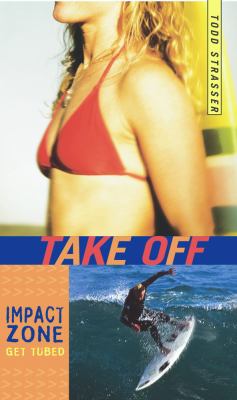
Take Off by Todd Strasser

Kai, having lived in Hawaii most of his life and now on the East coast in the city of Sun Haven, would like to surf Screamers. He’s arrived in Sun Haven with his conman father and his pretty stupid half-brother. He’s been living with them for a couple of years, since his mother died in a car accident in Kauai. His father, whom he calls The Alien Frog Beast, spends his life on the wrong side of the law, scamming people, and then moving on. When he takes Kai to Sun Haven, it’s Kai’s first look at the ocean since he left Hawaii.

Kai meets an older, alcoholic surfer who owns a rundown motel where surfers can stay cheap. Curtis becomes a mentor for Kai, allowing him to have a long board. Kai also meets Terry, a shaper, and she lets him shape a short board for himself while working in her shop.

Kai has to fight to get the opportunity to surf Screamers because it’s locals only there, and wealthy Lucas Frank and his crew guard the spot, using violence if necessary to keep others out. Kai proposes a surf contest to earn the right for him and his friends to surf Screamers.

Take Off is the first book in a surf series called Impact Zone. It’s a lot of fun because there’s tension, action and a love interest. For anyone who surfs, the added bonus is lots of surf action and surfing terms to describe it and to describe Kai’s emotions about being on the waves. It’s not very deep—Kai’s half-brother Sean and his dad, Pat, are one-dimensional, as are some of the minor characters. But it is fun, and if you like being on the ocean, I think you could get hooked into the series. It’s at COHS and available from the Ontario City Library.

I think this is my last water book for awhile. I’ve been looking for book with sports themes and action, and just read the best baseball book for adults. Maybe I’ll review that one. Adult book or not, if you care about baseball, you may need to read The Art of Fielding.

Posted in Adventure Stories, Family Problems, Fiction, Sports, Young Adult Literature | Tagged | Leave a comment