“Miss Peregrine’s Home for Peculiar Children”

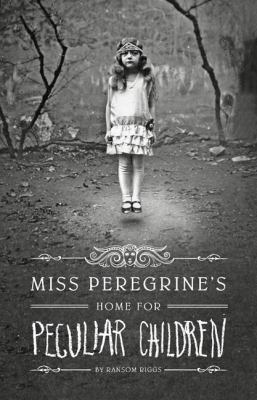
 Miss Peregrine’s Home for Peculiar Children by Ransom Riggs

The weird photographs placed throughout this book drew me in. They are all actual, unretouched photos from private collections.

The original premise is also promising. Jacob deeply loves his grandfather, Abe, who is a survivor of the Holocaust. Abe often tells weird stories about his life—that he has spent years on the run from monsters and flesh-eating demons. Jacob’s parents tell him that this is Abe’s way of describing his terrible past. For a while, Jacob believes all of the bizarre stories.

And then he doesn’t.

And then he must. Because he witnesses an equally bizarre tragedy and finds himself looking for clues to his grandfather’s past life. These clues lead Jacob to Miss Peregrine’s home for peculiar children.

The word ‘peculiar,’ is, of course, an understatement. Other words to describe the group are magical, eccentric, other-worldly, supernatural. They make flames in the cup of their hands, have a hive of bees living inside them, they float. The author draws readers into their special, hidden world.  When we find out why they must hide, we follow them through imminent danger. I wished that those dangers—the wights and the hollowghasts—had a better reason for being because it would have helped me delve into this mysterious world. But the novel is still creative and unusual.

And the ending screams “Sequel!”

Posted in Adventure Stories, Fable/Fairy Tale/Fantasy, Family Problems, Fiction, Supernatural, Young Adult Literature | Leave a comment

Gayle Brandeis, student writers, and Open Mic Night

This slideshow requires JavaScript.

I loved a couple of things that Gayle Brandeis, our guest author for the student writers’ conference on March 28,  had  to say about being a writer.

She spoke about her toddler son, and how motherhood–walking with a child who stops to explore the world–helps her to “slow down and see things in a new way.” She also mentioned one of the most important things a writer can do: “Read as much as you can–other writers’ words free you.” (I truly believe that whether you are a writer or not, writers’ words free you, teach you, give you examples of how to deal with life and all its drama–which is why I decided to be a teacher librarian, in the hope of bringing that fREADom to others.)

Seeing in a new way is the difference between a mediocre writer and a good one. In fact, writing itself will help you “explore the world with creativity and freshness.”

While I was thinking about writers and student opportunities for creativity, I opened my Sunday newspaper to find an article in the book review section about Figment, a “literary site for teens . . .launched in December 2010.” The managing editor, Jacob Lewis describes it as “‘a user-generated platform.'” Their slogan is ‘write yourself in.’ They are receiving the Innovator’s Award at the LA Times’ Book Prizes at this year’s Book Festival.

“‘Young writers want a place to experiment, to take a risk and get a response,'” observes [Dana] Goodyear [New Yorker staff writer], “to have that daring feeling of putting themselves out there.” Because of this, she adds, it’s key that Figment function as part of “their creative lives” — a telling choice of phrase that suggests the credit the site gives its users, the faith that they are serious about their work. This in itself is a radical concept, in a culture that tends to think of teenagers in terms of market share.

To read the entire article, go here. To go to Figment and try it out, go here.

As I think about creative opportunities for teens, I hope that those of you who find creative expression in writing will come out to our Open Mic Night at COHS on Thursday, April 12 (7:00-8:30 PM) or to the Ovitt Open Mic Night (downtown library–closer to Chaffey) on Wednesday, April 11 (5:00-6:30 PM) and read your best poetry.  We’ll have prizes and refreshments. Let’s honor the creative soul within!

Thanks to the students who came to the writers’ conference, with a special thanks to so many students from LOHS, who had a bit of a drive. (I wanted to post your pictures, but only have permission from one parent, so maybe next time!)

Posted in Uncategorized | Tagged , , | Leave a comment

“Cinder”

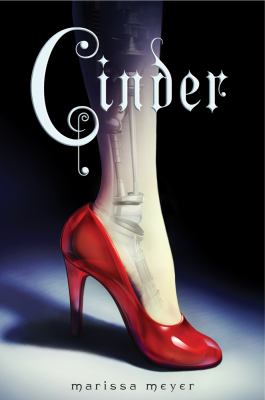
Cinder by Marissa Meyer 

Poor Cinder. Not only is she Cinderella on warp speed—she slaves away as a mechanic for her step-family in a future world that has been through four World Wars—she’s also a cyborg who started out as human, but, after a hover car accident, received lots of replacement parts including a mechanical hand and foot. She lives in a world where cyborgs have few rights and are regarded as less than human. This creates an interesting view of prejudices for the reader.

So, no. She isn’t going to be able to make the ball, even after she meets the handsome Prince Kai at her market stall in New Beijing of the Eastern Commonwealth, a part of a new world order in which alliances have prevented more war. Prince Kai, who has no idea that Cinder is a cyborg, is there because he needs help with his android, and Cinder is the best mechanic there is. He’s cute, and soon to be Emperor, but Cinder has more important things on her mind. Like escaping from her dreaded stepmother, Audrey, and her wicked stepsister Pearl. (Her other stepsister, Peony, is actually nice and Cinder loves her.) Besides, rumor is that Queen Levana, ruler of the Lunars (yes, they live on the moon and have special powers) will have the poor Kai as her husband or she will attack the earth with her superior army. Add to that the fact that there is a terrible plague—lutumois—running through the population and the Emperor (Kai’s dad) is dying from it himself, and it’s pretty incredible that Kai has the time to keep asking Cinder to the ball.

Why is this sci-fi futuristic population so interested in a formal ball? I can’t say. But I’m asking you to go with it because it makes for a wacky, creative sort of story. From the beginning I thought Cinder would be running away from the ball at the stroke of midnight and drop her mechanical foot. And I wanted to find out—how could she hop away on one foot fast enough to escape? Well, that isn’t exactly what happens. But Cinder does escape more than one place and leaves clues to her identity.

The author also drops (heavy, heavy, heavy) hints about Cinder’s true identity—of which she is entirely unaware. You’ll figure out who she is right away, and you’ll know how important she is to the future of Prince Kai, the Eastern Commonwealth, and the entire planet. So you’ll cheer her as she fights prejudice, evil backstabbers, and mindless androids.

This is the first of four books in the Lunar Chronicles series. Get ready for an all-out galactic war.

Note: It seems a new trend in reading is in re-imagined fairytales. I thought I’d try some for summer reading, but got an early start with Cinder. Another trend I see, that may just be local—at COHS and CHS—is in war books. So, I plan on some of those for the summer a well. Odd combo, huh?

Posted in Fable/Fairy Tale/Fantasy, Family Problems, Fiction, Literary Read Alike, Romance, Sci-Fi/Futuristic, Young Adult Literature | Tagged , | Leave a comment

Bluford Series: “No Way Out” and “The Test”


This slideshow requires JavaScript.

No Way Out by Peggy Kern

Harold is out of shape and self-conscious. When his grandma falls and breaks her legs, Harold knows he needs to help out, but he doesn’t know what he can do. The medical bills are mounting, and Harold thinks he can get a job, but the wage won’t begin to pay off the bills. And if the bills aren’t paid, Harold’s grandma will no long be considered able to care for him.

But when Londell, a neighborhood drug dealer, comes back from a year in prison, he keeps bullies from bothering Harold. And he has a job for him, too, at much better than minimum wage. Harold starts to feel that he respects Lonell, who reminds him than guys without parents have to stick together and do things other people wouldn’t think of.

The Test by Peggy Kern

It’s obvious from the book cover that ‘the test’ is a pregnancy test. But what you find as you read is that it’s also a test of life. Liselle becomes pregnant when she’s only sixteen, a student at Bluford High. Four years later, at twenty, she comes back to talk to some of the toughest girls in the school about her story.

Posted in Family Problems, Fiction, Read 180, Young Adult Literature | Tagged | Leave a comment

“The Future of Us”

 The Future of Us by Jay Asher and Carolyn Mackler

Guest review by Jenny Thomas, VVHS teacher and soon-to-be teacher librarian!

It’s 1996; and less than half of all American high school students have ever used the Internet.  Emma, a 16-year-old junior, receives her first computer–a gift from her father who has moved away with his new wife and baby. Emma’s neighbor and former best-friend Josh, brings over a CD-ROM with 100 free hours to AOL. Yes, using the Internet used to tie-up your phone line (almost no one had a cell phone), and it was limited!

The authors do a fantastic job of transporting their readers into 1996–a time in which your computer ran CD-ROMs (not apps), Friends was the hottest show on TV (but you couldn’t DVR it), and you listened to CDs on your Discman (no iPods). Facebook wouldn’t be created for another eight years. . . so how did it end up on Emma’s computer? Through an inexplicable link to 2011, Josh and Emma are able to see their lives on Facebook–15 years into the future. It’s amusing to watch them figure out Facebook (“Why would anyone say this stuff about themselves on the Internet? It’s crazy!”); they read wall posts, see who they are friends with, view their spouses, kids, and jobs, etc. Josh and Emma come to realize that their lives will take unexpected (and some unwelcome) twists and turns. When Emma starts changing the present in an attempt to improve her Facebook future, it changes the future of others, too.

Authors Jay Asher and Carolyn Mackler switch off writing chapters from the perspectives of Josh and Emma, respectively.  Reading The Future of Us was nostalgic for me, as I was 16 in 1996 and vividly remember the world as the authors describe it–much different from our world in 2012.  The Future of Us is light, funny, entertaining, and relatable. I can definitely see this book being made into a movie (the movie rights have already been sold).

Professional reviews of this book have ranged from mixed to positive, which I agree with. While I don’t think the book lived up to its brilliant plot description, I definitely enjoyed reading about our world viewed from the perspective of high school students in the past. We all want to know how our own story turns out, but Emma and Josh’s story reminds us that any of the thousands of small decisions that we make every day could change our future.

Ms. Waddle’s note: I know how much we all loved Jay Asher’s Thirteen Reasons Why, so I have a ‘save the date’ for you. Jay Asher will be at the Ontario City Library, Ovitt Branch (downtown on C and Lemon Streets) as one of the guest authors for the Teen Book Fest on Saturday, May 5–along with four other great YA authors. More info will follow, but put it on your calendar now! Check out The Future of Us now, and you’ll be able to ask Asher question about both books.

Posted in Environmental Issues, Fable/Fairy Tale/Fantasy, Fiction, Sci-Fi/Futuristic, Young Adult Literature | Tagged | 1 Comment

“Incarceron”

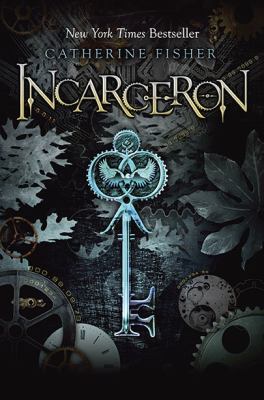
Incarceron by Catherine Fisher

Incarceron is a vast prison—a varied landscape, created as an experiment in forever removing dangerous criminals from society, but generously placing them in an alternate world that meets all of their needs. Outside of Incarceron, no one knows what happens there. It is considered a sort of paradise. But over a few centuries, resources have become scare, and the inmates fight for basic necessities.

Incarceron can think. It watches its inmates and reacts to their movements. It’s a weird being that is aware of itself, but can never see outside of itself. It cannot meet its own desires, and comes to delight in making sure that no one ever escapes its walls, and that no one is ever let in from the outside. It creates new life by recycling what it has, although, unfortunately, the details of how this happens are glossed over.

As we meet Finn, a member of a band of rogue criminals (the Comitatus), he is risking his life to gain bounty. However, he’s not a typical criminal, but has a searing conscience. He is sure he’s from the Outside, and he has memories of another world which others around him believe are visions. He is marked as special, a starseer. He is seen as the one person who will be able to escape Incarceron, and when he comes in possession of a crystal key (no one has ever seen a key since there is no getting out of the prison), this belief becomes an adventure for Finn and his band of friends.

Meanwhile, on the Outside, Claudia, daughter of the powerful warden of Incarceron, is betrothed to the prince. She was originally betrothed to the true prince, a boy she favored, but he died under mysterious circumstances. The new prince, son of the queen, is neither bright nor kind. (And, yes, you can see just where all this is going.)

Incarceron has been embraced by professional reviewers, and they suggest that fans of Suzanne Collins (The Hunger Games trilogy) will like it. That may be true. However, I think Incarceron is much more of a fantasy book than science fiction. The protocol under which the Outsiders live mean that their world appears as a seventeenth century European kingdom. They have futuristic technology, but it’s invisible to them. The stories of the evil queen, of Claudia’s power hungry father who thinks nothing of her unhappiness in his bid for royalty, have a great appeal for fantasy readers.

I had a much tougher time with the book than the pros because the writing drove me a bit nuts. There were too many sentences with unnecessary words—something like “Hump,” he said disgruntledly. (That’s not a direct quote, but so much of the dialogue had that unnecessary sort of tagging.) There was also a lot of nondescriptive description like, ‘He muddied his beautiful boots.’ (How about alligator skin boots? Or lion hide boots? Then we’d know exactly what they are and it would also tell us something about the character of the person wearing them—a little bonus.)

Even though Incarceron was hard for me to get through, why reviewers like it is obvious. The world Fisher creates is deeply imaginative, a real accomplishment. The novel begins with fast action (and good writing, to give credit where credit is due). Had a different editor been on the job, I probably would have enjoyed it. And truth be told, I am not the target audience. Teen readers of fantasy are—and if you are among that group, I think this is one you’ll enjoy. With the bonus that there’s a sequel—Sapphique.

Both are in our library now.

Posted in Fable/Fairy Tale/Fantasy, Family Problems, Fiction, Over 375 pages, Romance, Young Adult Literature | Tagged | Leave a comment

“Delta Girls” and Wednesday’s student writers’ conference

Delta Girls by Gayle Brandeis

Novelist Gayle Brandeis and poet Bob Covington will be at COHS on Wednesday after school for our student writers’ conference. The conference is open to anyone between the ages of 13 and 18. We’ll start about 3:00ish (as we settle in). Each participant will receive a writing journal. We’ll have refreshments.

Now that’s I’ve gotten my Hunger Games fix with last week’s library events and the movie, I’m looking forward to my fiction and poetry fix at the conference. I’ve been looking back over Brandeis’s novel Delta Girls, which I read when it was published in 2010. It’s a lovely read for anyone who wants to absorb a good writer’s attention to atmosphere and detail, a writer’s ability to use lush language, sweet and ripe, like the pears of the novel.

I also think Delta Girls is a good choice in an adult novel for teens. Much of the action centers on teen love and lust, and shows very well, through Karen and Nathan, how early romances are affairs of hormones as much as they are affairs of the heart. I think teen readers will root for them—and against them—throughout the book, and will rail against the manipulation of their relationship by Karen’s mother Deena.

Karen and Nathan are ice skaters and together, they are national championship caliber. Deena is their choreographer and manager. There are several suggestions through the novel that she, too, is attracted to Nathan, which adds a wonderful ick factor to her overbearing (but not entirely unloving) way of mothering Karen.

Chapters about the lives and relationship of Karen and Nathan as they win their way toward a national championship are alternated with chapters on Izzy and her nine-year-old daughter, Quinn. Izzy is a migrant farm worker who picks fruit for a (hardscrabble) living. When mother and daughter come to the Sacramento River Delta to pick pears, they find a feeling of family and home. Even so, its clear that Izzy is running from something. When she spots a whale and her baby stranded in the Sacramento River, she identifies with their plight.

How Karen, Nathan, Izzy, and Quinn are connected may surprise the reader. Yet even if it doesn’t—I was sure I knew why all of their stories belonged together in a single novel—there is suspense in the wait to find out how they with all come together, how they will all come to terms with one another and make meaning out of losses and out of love.

Bob Covington came to COHS a few years ago to run a poetry workshop as part of our National Poetry Month celebration in April. He was wonderful, and every student in the workshop—as well as a few teachers (myself included), completed a poem that day under Bob’s direction. As high-stakes STAR testing has become the focus of April, we’ve decided not to have any of our regular poetry month events. Wednesday will be your only chance to celebrate poetry with us or to work with Bob, so I hope you come on over and get your creativity flowing!

Hope to see you there!

Posted in Family Problems, Fiction, Mature Readers, Romance | Tagged , , , , , | Leave a comment

Link to ‘what the Hunger Games movie missed.’

Article on what the Hunger Games movie missed. Still, it was really good!

http://popwatch.ew.com/2012/03/24/the-hunger-games-book-movie/

I had fun at our Hunger Games event last week.  A fun way to celebrate the books before the movie. Thanks to those who came! Thanks to the PE Department for the use of their targets! Thanks to Ms. Furchner for her art skills in painting the cornucopia! Thanks to the public library for the ‘cross bows’ and the buttons! A special thanks to Mrs. Thomas, who is doing field work for her teacher librarian credential. She came up with great PowerPoint displays and all those tough trivia questions on both Catching Fire and Mockingjay.


Posted in Uncategorized | Leave a comment

Hunger Games at COHS in The Daily Bulletin

See the article here:

Colony High Students are ‘Hungry’ for Reading

Although much of the information is wrong–the book is super popular here at COHS and the city library is not working with me on the Hunger Games Event at Chaffey (nor is the date for that event correct–it’s this Friday, March 16–so if you have Chaffey friends, let them know)–the accompanying pictures are fun.


Posted in Sci-Fi/Futuristic | Tagged | Leave a comment

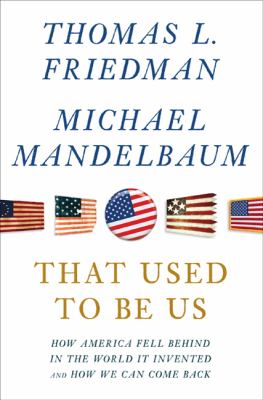
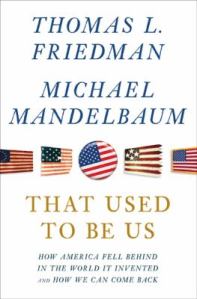
“That Used to Be Us: Part II: The Education Challenge”

Part II: The Education Challenge

Teachers who are overwhelmed should try to make time to read, at the very least, this section of the book.

The global market and the IT revolution discussed in Part I means big changes for education. In the global marketplace, we’re familiar with low wage, low skill workers. What we need to contend with now is low wage, high skill workers. America’s past success was “based on real innovation, real education, real research, real industries, real markets, and real growth—but the playing field was also tilted in our direction. Now we have to try to sustain all those good things without all those structural advantages.” (This is the idea behind The World is Flat, by the way.) If you don’t believe this, read this book for lots of flat world examples—examples, in fact, of how much has changed since The World is Flat was published. Even top level researchers and Ph.D.s can work for a US company from their home countries halfway across the world.

The IT revolution means that our students are going to have to be very diverse thinkers. The authors suggest that they will have to combine “the skills of MIT, MTV, and Madison Avenue.” Certainly, they will have to have a solid base of knowledge in several areas and will need to be creative thinkers and imaginers as well. (Note: one of the best books I’ve read which shows that those coming into adulthood are entering a world of work that is utterly different from that experienced by their parents is A Whole New Mind by Daniel Pink. It was recommended to me by a colleague at COHS. I reviewed it here. It warns that what parents and teachers are telling kids about the world of work (“Be an accountant! A lawyer! A computer programmer!”) is probably wrong.

The IT revolution also means that ‘people skills’ are also going to matter more than ever. With technology available to everyone, the ‘human touch’ is what will set people apart.

To show that traditional, low skill or manufacturing jobs will not return, Friedman and Mandelbaum site examples, showing that after recessions, workers laid off are not all rehired because firms restructure their operations. More and more, the labor market will reward those with college degrees, a trend called ‘employment polarization.’ The IT revolution makes well-educated people more productive in a global market; it also makes less-educated people “less employable.”

There are four types of jobs in today’s labor market:

Creative creators: people doing “nonroutine work in a . . .nonroutine way.”

Routine creators: people doing nonroutine work in a routine way

Creative servers: nonroutine low-skilled workers doing work in an inspired way

Routine servers: people who do routine serving work in a routine way

No matter what their skill level or educational background, workers who do things in a routine way are in trouble. Employers say that they are looking for ‘presence’ in their employees (engaged and paying attention). The authors point to their interviews with major employers/industry leaders as proof. Even the lowliest job will require a critical thinker, but critical thinking will be only the most basic skill. Employees must be able to innovate as well as collaborate well with others—others who may be located far away. Lots of work will migrate to a wiki format: “up-to-date, self-correcting, adaptable in real time.” New jobs like ‘chief innovation officer’ are on the way. (Again, I recommend Daniel Pink for more on this idea.)

Despite the ability to move jobs overseas, America will need to keep some manufacturing in the country or risk losing touch with a source of innovation, “working directly with a product and figuring out how to improve it.” In this discussion, the authors coin ‘Carlson’s Law’: “Innovation that happens from the top down tends to be orderly but dumb. Innovation that happens from the bottom up tends to be chaotic but smart.”

The authors move into a discussion of how the country should treat education. They quote Michelle Rhee (former chancellor Washington, D.C. school system, controversial in educational circles): “We treat education as a social issue. And I’ll tell you what happens with social issues: When the budget crunch comes, they get swept under the rug, they get pushed aside. We have to start treating education as an economic issue.”

I think this is the point in the book where the educator’s heart starts palpitating. Basically, this discussion can be summed up in the authors’ insistence that “maintaining the American dream will require learning, working, producing, relearning, and innovating twice as hard, twice as fast, twice as often, and twice as much.”

The argument shifts to whether our students really are competitive in a worldwide workplace. The authors say they aren’t, that our top students and schools are not as good as those in other countries, and that poverty is not the issue. They point to a study entitled “The Myths and Realities about International Comparisons” as evidence. (I’ve read of studies that show that poverty is the real issue, and that our top students do quite well on a world platform. I will provide some links in the next installment of this review along with links on the direction education is moving. However, I will note now that even within this argument, the authors do a few twists. They say that studies from other countries that do well are not from a small part of the population, and then go on later to mention that China’s scores are derived entirely from Shanghai. Can’t be both, boys.)

Another educational area that needs work is our system of vocational training as some future jobs will require a high-level vocational education.

Folks both inside and outside of education must be willing to sacrifice in order for education to have what it needs: “better teachers and principals; parents who are more involved in and demanding of their children’s education; politicians who push to raise educational standards . . .; neighbors who are ready to invest in schools even though their children do not attend them; business leaders committed to raising educational standards in their communities; and . . .students who come to school prepared to learn, not to text.”

A part of this argument that will interest all teachers is that the authors assert that in the US, we don’t do much to develop or reward excellent teaching. We should, and to this end, the authors recommend 50% of teacher and principal evaluation be based on student growth. They give examples of helping teachers improve by using newer technology—say videoing the top teachers in the state, tagging their lessons by specific standards and then allowing others to see how great teachers meet those standards.

Communities need to celebrate teachers and back their efforts—and not just with gift cards from the PTA, but with performance bonuses through which the top fliers collect some serious cash. The community should recognize that good schools are foundations for good neighborhoods.

Parenting is discussed here, and the controversial Amy Chua (author of Battle Hymn of the Tiger Mother, a book she says is about Chinese-style parenting) is quoted. I found her statements at odds with what the authors had said earlier in the book about the needs for creativity and imagining. (Chua never allowed her kids to have play dates, go to a sleepover, play computer games, choose an extracurricular activity—the list goes on. Not quoted here, but in the book is Chua’s admission that she shamed and insulted her kids publicly in her quest to make them the envy of other parents in the neighborhood. Some readers look at the book as more of a cautionary tale about to what ends a parent will go to twist a child into the mold s/he desires. However, her kids did end up as models, excelling in everything that she allowed them to try.) At any rate, the authors eventually make the point that results, rather than effort, pay off.

Although this is mentioned in the section on parenting, it warmed my librarian’s heart: Kids need books to succeed. Having more books in the home is as great an advantage to a child as having university-educated parents. (What That Used to Be Us doesn’t mention is that research also shows that a well-stocked, well-staffed school library can make up the difference for kids that don’t have books at home. OK, off my soap box.)

In concluding this discussion, the authors mention that getting an education should be about more than getting a job and that we want kids to become good citizens. They finish by giving a little slap to the movie Race to Nowhere.

The next discussion on educating kids revisits earlier themes in the book, reinforcing the idea that people must be able to communicate well in order to collaborate, and if they can’t collaborate, they will be less creative. Successful creators are, first, self-confident. (While I believe collaboration is very important, I want to play the devil’s advocate here on one aspect of collaboration. A recent study suggests that brainstorming in groups can be a waste of time and that the ideas generated won’t be as good as the best ideas that the best people will have alone. It suggests that to work well together, people must be grouped with others of similar abilities. This wasn’t in an educational setting, but if it is true, it’s a vote for tracking in education.)

Interestingly enough, in this section on creativity, Steve Jobs and Tony Wagner are quoted and the theme is that the problem with schools is that they don’t “respect play, passion, and purpose—and [isolate] those who won’t conform.” We need to teach the kind of risk-taking that develops self-confidence (God forbid we use the term self-esteem, with all its current negative connotations.) The reason these activities and qualities aren’t valued is that they can’t be tested. While I agree with the authors, I find this section at odds with the earlier hailing of ‘tiger mothering’ and Amy Chua. Even in That Used to Be Us, which is overwhelmingly a cogent argument, here, the authors have the same mixed messages for educators that we’ve been getting for years.

The whole of Part II ends with a section called “I Kill Jobs” and indicates that the only people who can’t be eliminated (in the job market—not murdered!) are the creative ones.

Yes—this is long, but so is Part II. It is also the most vital section of the book for educators. In my next post on That Used to Be Us, rather than looking at Part III, I will put up some links and titles that may be of interest as we grapple with the future of public education and what our jobs will look like in a few years. Then I’ll get to Part III.

Happy teaching! 🙂
Posted in Controversial Issue/Debate, Non-fiction | Tagged , , , , | Leave a comment