It’s Time for Horror!

This slideshow requires JavaScript.

We’ve got some new books for October reading, and they look great! If the title is hyperlinked, click on it for my review.

iDrakula by Bekka Black

An updated version of Dracula told through a series of text messages, instant messages, e-mails, and Web browser images. Eighteen-year-old Jonathan Harker comes down with a rare blood disorder after meeting mysterious Count in Romania. His girlfriend Mina and pre-med student Abraham Van Helsing investigate the source of the disease, learning that the Count is a vampire. (quick read)

Drain You by M. Beth Bloom

Even after Quinn Lacey learns that the coast of Southern California is crawling with vampires, she still tries to keep her job at the video store, convince her parents that she is eating well, and rescue her best friend from a fate worse than death.

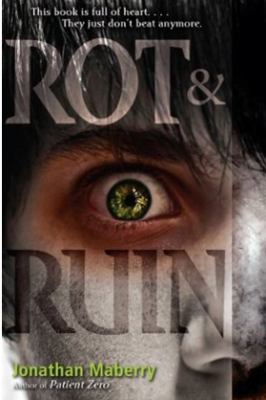
Rot & Ruin by Jonathan Maberry

In a post-apocalyptic world where fences and border patrols guard the few people left from the zombies that have overtaken civilization, fifteen-year-old Benny Imura is finally convinced that he must follow in his older brother’s footsteps and become a bounty hunter.

I Heart You, You Haunt Me by Lisa Schroeder

“Ava can’t see or touch him, unless she’s dreaming. She can’t hear his voice, except for the faint whispers in her mind. Most would think she’s crazy, but she knows he’s here. Jackson. The boy Ava thought she’d spend the rest of her life with. He’s back from the dead, as proof that love truly knows no bounds. (A novel in verse–short, easy, good for students working on reading and language skills as well as anyone who wants a book about love and letting go.)

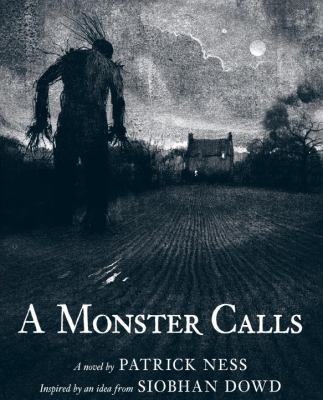
A Monster Calls by Patrick Ness and Siobhan Dowd

Thirteen-year-old Conor awakens one night to find a monster outside his bedroom window, but not the one from the recurring nightmare that began when his mother became ill–an ancient, wild creature that wants him to face truth and loss. (a quick read, truly wonderful)

The Haunting of Hill House by Shirley Jackson

A classic by a master of horror, this novel was recently reisssued. Jackson is the author of the short story “The Lottery.” OK–here are the publisher’s notes on the novel:

First published in 1959, Shirley Jackson’s The Haunting of Hill House has been hailed as a perfect work of unnerving terror. It is the story of four seekers who arrive at a notoriously unfriendly pile called Hill House: Dr. Montague, an occult scholar looking for solid evidence of a “haunting”; Theodora, his lighthearted assistant; Eleanor, a friendless, fragile young woman well acquainted with poltergeists; and Luke, the future heir of Hill House. At first, their stay seems destined to be merely a spooky encounter with inexplicable phenomena. But Hill House is gathering its powers-and soon it will choose one of them to make its own.
Posted in Classic Fiction, Family Problems, Fiction, Hi-Low/Quick Read, Horror/Mystery/Suspense, Supernatural, Young Adult Literature | Tagged , | Leave a comment

“A Monster Calls”

A Monster Calls by Patrick Ness (inspired by an idea from Siobhan Dowd)

Ever since his mom was diagnosed with breast cancer and began treatments, Conor has been haunted by nightmares. Just after midnight, at 12:07 AM, a monster enters his world through a desolate landscape and makes him live and relive the most terrible things that could happen to him. Even worse, a guy at school has detected Conor’s new haunted look and has decided to pick on the victim, to add an extra measure of horror.

So when a new monster shows up one night, Conor is surprised, and demands to know who he is.

“I have had as many names as there are years to time itself!” The monster comes as an eternal green man, but can take many forms. Conor sees him as a living, walking tree. Which, in fact, Conor doesn’t think is very scary, and he says so. The monster assures him that he’ll be plenty scared before their visits are over. They will live through four stories—and “stories are the wildest thing of all. . . .Stories chase and bite and hunt.”

Well, this monster is very scary, and that’s because he is someone whom Conor has called, yet Conor doesn’t know it. The eternal green man is going to force some truths from Conor, who, along with being bullied at school, has become nearly friendless and invisible since his mom has been sick—as if those who pity him can make the tragic aspects of life go away by ignoring him.

As Conor lives through his nightmares and the stories where there is no good guy, stories that prove that “many things that are true feel like a cheat,” the reader, too, becomes frightened for him—and hooked on the book.

A Monster Calls is a quick novel, full of haunting black and white illustrations. I love a book like this—where the writing is so wonderful that the author says all that needs to be said and nothing more. Ness doesn’t waste a word (or your valuable time). He sits the reader in the emotional roller coaster, but doesn’t snap on the safety belt. A great pick for October. Or anytime.

Posted in Family Problems, Fiction, Hi-Low/Quick Read, Horror/Mystery/Suspense, Supernatural, Young Adult Literature | Tagged | Leave a comment

Adult Books for Teens: “Drift: The Unmooring of American Military Power”

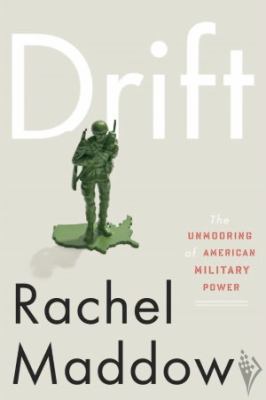
Drift: The Unmooring of American Military Power by Rachel Maddow

I have several teacher friends and family members who like to make fun of me for being a looney liberal. To avoid the teasing, I’ thought I’d read Drift but not review it as it is, after all, a book intended for an adult audience. But now that I have read it, I feel it’s a book that will engage teens, particularly those who have an interest in politics, in military careers (or even short-term military stints), or who have a concern with economics, the future of the country, government decisions and oversight, or human rights. So, actually—any teen who is engaged, who wants to make a difference in the world, should read this book.

Before she discusses how the United States has drifted into continual war (I’m not using the word ‘continuous,’ and there is a difference), Maddow quotes James Madison’s “Political Observations,” April 20, 1795:

Of all the enemies to public liberty, war is, perhaps, the most to be dreaded, because it comprises and develops the germ of every other. War is the parent of armies; from these proceed debts and taxes; and armies, and debts, and taxes are the known instruments for bringing the many under the domination of the few. In war, too, the discretionary power of the Executive is extended . . .

Next Maddow shows just how drifting to war since Vietnam has realized all of Madison’s fears.

Maddow begins with President Johnson and Vietnam and moves forward chronologically. She hits hard on the Iran-Contra Affair of the Reagan administration as a seismic shift in the way wars are conducted—without the approval of Congress, (and sometimes in secret, illegally). She focuses on the U.S. military actions in Bosnia under the Clinton administration as the time when privateers began to outnumber our armed forces  in military actions all over the globe. She then shows that under the George W. Bush and Obama administrations, “America’s spy service [the CIA] . . .[is] a new, out-of-uniform (and 100 percent deniable) branch of the military” engaged in drone warfare.

Post-Iran-Contra, more and more power to start and continue wars has accrued to the president. Part of the blame is to be laid at the feet of average Americans—us. We’ve been engaged in two of the country’s longest wars, simultaneously, and very few people care because only one percent of our population is out there doing the fighting, risking their lives. (If you are interested in what happens to those who are on the front lines and how our country is asking so much more than it ever has before from so few, check out the book War by Sebastian Junger.)

I think the most surprising part of Drift was the effect of privatizing noncombat jobs that support the troops. Since private industry is always touted as being more efficient than the government, it seems to make sense that the folks who house and feed the troops, the folks who repair the military equipment, should come from private industry. But Maddow shows that this plan has had horrific effects, the least of which is that it has been more inefficient and very expensive, with consistent and huge cost overruns. In Bosnia, DynCorp employees would commit fraud in billing the government. But they also engaged in sex trafficking—buying underage girls as sex slaves. If they were caught, they would simply be removed back to the States. The human rights violation is incredible. And this sort of thing puts our military personnel in harm’s way, as it causes people in other countries to hate Americans. (Think about it—how would people here feel about folks from another country who came over and then kidnapped and raped girls? What if that was all you knew about the people from that foreign country? Would you be happy that they were here?) That one percent of our countrymen and women who are volunteering for military service deserve better than to be sabotaged by lazy, morally vacuous privateers.

While there are certainly many places in Drift where you can almost hear Maddow’s signature delivery of a zinger, she has done her research and is able to back up what she says. Her endnotes are annotated, and for the true lover of politics, she gives many ideas for follow up.

To my friends who think that Rachel Maddow is an over-the-top foaming liberal, allow me to point out that in the process of doing that research mentioned above, she included several conservative thinkers who back her points. (OK, some backed her points earlier in their careers, like Newt Gingrich, and then changed their minds when the political winds shifted.) In the text, she provides evidence and opinions from both sides of the aisle. This concise work is a job well done.

Posted in Controversial Issue/Debate, Historical Fiction/Historical Element, Human Rights Issues, Non-fiction | Tagged , , , , , , , , , , , , , , | Leave a comment

“Rin Tin Tin”

Many people love dogs, and in the last several years, they’ve realized that they could share that love through books. It’s hard to count the number of books about dogs that have made the bestsellers’ list since Marley and Me was published.

Like a lot of other folks, I’m crazy about dogs (my own dogs in particular), and so I read about them as well take them for walks. But Rin Tin Tin is the first dog book I’ve read that includes a fascinating look at our culture over nearly a hundred years while discussing the life of a dog and his progeny.

A man named Lee Duncan found the original Rin Tin Tin, who was a newborn pup, on a battlefield in France during World War I. The German dog kennel that housed the war dogs had been bombed out, but a female and her litter had–against all odds–survived. Duncan took the dogs back to his American comrades and gave them away, except a male and female pup—Rin Tin Tin and Nanette—whom he named after good-luck dolls.

Somehow, Duncan managed to bring the dogs home to Southern California. Nanette didn’t live long. However, Rinty, as he was affectionate known, was very athletic. He won an agility contest by being able to jump twelve feet in the air. His special talents made Duncan think that Rinty could be in the movies—which were silent at that time, so a dog might act as well as a man, given the right script. Hollywood in the early days was more accessible to ordinary folks with dreams of fame, and Duncan was able to place his dog with Warner Brothers.

What happened then sounds like something from a fantasy script. Rinty was so popular that his movies literally saved Warner Bros. from bankruptcy. For the first Academy Awards ever, Rin Tin Tin was voted as best actor—but wasn’t allowed the award as this might have taken from the seriousness of the honor. All of America loved this hero dog.

Rin Tin Tin had generations of offspring who later starred in other movies as well as the popular TV show The Adventures of Rin Tin Tin. Learning about the journey of the dog and his brand teaches us fascinating facts about the early years of moviemaking, the early years of television programming, and much more.

I enjoyed so many of the facts in this book. I didn’t know that dogs were used in WW I to increase the survival rate of wounded soldiers. They were trained to ‘sniff out’ the living wounded who, after a battle, would lie among many thousands of dead. The dogs could quickly identify the living and this aided soldiers in providing faster medical care.

In WW II, the United States was caught short without a military dog core (as it had been in WW I), so average citizens donated their pets to be trained and shipped to Europe. Lee Duncan and Rin Tin Tin III traveled promoting Dogs for Defense. The military was actually able to return some of these dogs to families after the war was over.

When television first became affordable and folks started having TVs in their homes, dog shows were popular family fare. This book discusses the differences between The Adventures of Rin Tin Tin and Lassie (a famous collie with a show of her own), as well as how these differences reflect a changing culture in the U.S., one that moved from hero worship to being centered on children and their activities. It also shows how smart producers were able to cash in on products connected to programming—books and toys—plastic models of the dogs and much more. These marketing schemes have continued to be successful with all forms of media even today. (Did you have a Dora the Explorer lunch box? A shirt with Twilight characters printed on it?)

Finally, Rin Tin Tin highlights the people today who are keeping the dog’s legacy alive. They are passionate about who owns the rights to the Rin Tin Tin brand and have engaged in many lawsuits to claim that right.

Lee Duncan had been an orphan as a child. He never seemed to make deep connections with people, even his wife and daughter. And yet, a dog, this Rin Tin Tin, gave him a purpose in life as well as–though at times, tenuous–financial reward. What the man and the dog made, how they changed the lives of so many Americans, and even of people in other parts of the world, is a stirring story. Even readers who are not wild about dogs will be fascinated by the look at American culture. But for those readers who love dogs—well, you’re going to love this book, too.

Posted in Adventure Stories, Biography/Memoir, Historical Fiction/Historical Element, Non-fiction | Tagged , , , , | 1 Comment

“Rot & Ruin”

     Rot & Ruin by Jonathan Maberry

Benny Imura thinks his older half-brother, Tom, is a coward. After all, on First Night, the night when zombies began to reanimate—about 6 billion of them, actually—Tom, who was a young man, grabbed baby Benny from their mother’s arms and ran to safety. Benny often wonders why Tom didn’t help to save their mother or return to find her.

Of course, Benny has a lot more to think about. It’s been fourteen years since First Night, and now that Benny is fifteen, he needs to find a job or have his rations cut in half. Since he’s a bit lazy and more than a bit picky, he narrows his options until working with Tom is the only one left.

Working with Tom is no slacker job. Tom is a bounty hunter who kills zombies. How the coward Tom could do such a job is more than Benny can imagine until he tags along as an apprentice, venturing into the Rot & Ruin, or what was formerly the United States. There Benny learns of Tom’s true nature. While other bounty hunters create cruel games pitting zombies against lost children, Tom makes Benny understand that the ‘zoms’ were once people, and that families still care about how they are ‘quieted.’

Unlike any other zombie apocalypse book I’ve read, Rot & Ruin has interesting questions about ethics—right and wrong. Characters who are motivated to do good must also preserve their own lives. And those that are motivated to do bad—well, in the Rot and Ruin, they have lots of opportunities.

There’s plenty of zombie hunting and cutting down the living dead here. Action-packed, full of adventure in a post-apocalyptic world, Rot & Ruin still leads the reader to ask some big questions about life, death, respect, and the true meaning of courage.

Best zombie book I’ve read. Enjoy!

Posted in Adventure Stories, Family Problems, Fiction, Horror/Mystery/Suspense, Over 375 pages, Supernatural, Young Adult Literature | Tagged , , | Leave a comment

“Breath”

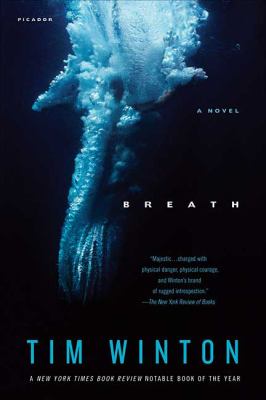
Breath by Tim Winton 

Which risks are worth it? How do you challenge yourself in a way that makes you grow as an individual? That can make you feel alive and so adrenaline-fueled that every day you’re ready and waiting for a new adventure? How do you keep from stepping over that invisible line where you are challenging death itself?

Bruce, nicknamed Pikelet as a teen, is a paramedic as an adult. As the novel opens, he has arrived on the scene of what appears to be a teen suicide, a hanging. But he knows better.

When they meet Sando, friends Pikelet and Looney don’t know that he is a big wave surfer, well-known in some places and sometimes appearing in surf magazines. They are Australian boys who have recently discovered the sport. They’d always enjoyed the water and holding their breath at the bottom of the river. But the ocean is something different. They love it and will do whatever it takes to have the chance to ride waves. They take up odd jobs in order to buy equipment. Looney’s father is neglectful and abusive, so he can go out anytime without much trouble. But Pikelet must lie to his older, concerned folks in order to get away and challenge the waves since his father fears the ocean for reasons he keeps secret.

Sando decides to mentor the boys in surfing bigger and more dangerous waves. They are flattered by his attention, and learn that they have to ignore the snide comments Sando’s wife, Eva, makes about them and their relationship to Sando. She understands that they are there, at least in part, to feed his ego.

Eva has a limp. Yet why she limps and why she is so angry is a secret—and uncovering it is dangerous for Pikelet. As she opens herself up to him, he finds himself trapped by her adult yearnings. While he intuits how inappropriate she is in taking him into her confidence, Pikelet is also smitten with her.

Loonie is aptly named. He will try anything and for him, death-defying challenges are a way to show that he is better than Pikelet, more of a man. But Pikelet has a better sense of self-preservation. He loves a challenge, but knows when his chances of survival aren’t so good.

This slender book is so beautifully written, such a wonder. I was hungrily reading it, hoping to recommend it to all teens. As I got to the final pages, and read about Eva and her way of recreating danger and the adrenaline-stoked high of the fear that accompanies it, I knew that Breath is for mature teens only. Yet it deals so well with the questions of an ordinary life, of facing challenges, and even of maintaining breath, I couldn’t help but hope that others will have the chance to enjoy it.

Posted in Adventure Stories, Family Problems, Fiction, Mature Readers, Sports, Young Adult Literature | Tagged , , | Leave a comment

Living Dead Girl

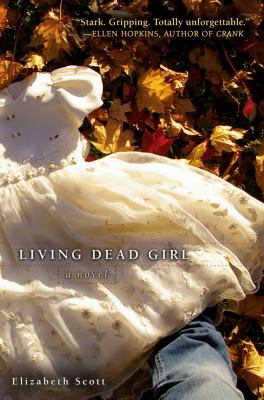
Living Dead Girl by Elizabeth Scott 

Deeply disturbing, Living Dead Girl was a novel I couldn’t put down. It’s a quick read—under two hours, but the impact lasts (and maybe the bad dreams do, too).

‘Alice’ is a girl who was abducted at age ten while on a class field trip to an aquarium. She is now fifteen, still living with her abductor, and looking back over events of their five years together. Although there is no explicit description, Alice is clearly sexually abused on a regular basis. Her abductor, Ray, likes little girls, and attempts to keep her very young looking through waxing and limited food intake as well as drugs that hold off puberty.

However, Alice is growing and Ray is tired of her. He tells Alice he wants her help inducting a new little girl into his warped world, where the child will be beaten into mind control (brain washing) and forced to obey Ray’s every command, just as Alice was. Alice hopes that having another girl will give her a break from the constant abuse. But she then realizes that Ray intends to kill her and dispose of her body once the new girl is captured.

From what I’ve read of real abductions, such as that of Elizabeth Smart, the details of this novel ring true. One of the most difficult parts of the book is how no one in ‘Alice’s’ world recognizes that she is being held hostage. They believe that Ray is her father and home teaching her although he goes to work and locks her in the house. She is unkempt, even dirty. She is too young to have all that waxing without parental permission, but the salon owner never asks for it and doesn’t wonder why she is there.

The thought that we don’t really see things that happen around us (as is true in the last book I reviewed, The Rules of Survival) is as disturbing as the horrific situation of these kids. Maybe reading these novels will help us to be more aware.

Posted in Fiction, Hi-Low/Quick Read, Human Rights Issues, Mature Readers, Read 180, Young Adult Literature | Tagged , | Leave a comment

New Biography and Memoir

This slideshow requires JavaScript.

Stolen Innocence by Elissa Wall

In September 2007, a packed courtroom in St. George, Utah, sat hushed as Elissa Wall, the star witness against polygamous sect leader Warren Jeffs, gave captivating testimony of how Jeffs forced her to marry her first cousin at age fourteen. This harrowing and vivid account proved to be the most compelling evidence against Jeffs, showing the harsh realities of this closed community and the lengths to which Jeffs went in order to control the women in it. Now, in this courageous memoir, Elissa Wall tells the incredible and inspirational story of her time in the Fundamentalist Church of Latter Day Saints (FLDS), detailing how she emerged from its confines to help bring one of America’s most notirious criminals to justice.

Breaking through the Spiral Ceiling by Laura L. Mays Hoopes

In Breaking Through the Spiral Ceiling, Hoopes traces her development as a woman biologist, how she fell in love with DNA but encountered discouraging signals from men in science, how she married and balanced both family and career, and why she’s glad not to be a Harvard professor.

It Calls You Back by Luis J. Rodriguez (author of Always Running)

The follow-up to Always Running,  It Calls You Back, is the story of Rodriguez starting over, at age eighteen, after leaving gang life. It Calls You Back opens with Rodriguez’s final stint in jail as a teenager and follows his struggle to kick heroin, renounce his former life, and search for meaningful work. He describes  his challenges as a father and his difficulty leaving his rages and addictions completely behind.

Lone Survivor by Marcus Luttrell

The leader, and only survivor, of a team of U.S. Navy SEALs sent to northern Afghanistan to capture a well-known al Qaeda leader chronicles the events of the battle that killed his teammates and offers insight into the training of this elite group of warriors.

Bossypants by Tina Fey

From her youthful days as a vicious nerd to her tour of duty on Saturday Night Live; from her passionately halfhearted pursuit of physical beauty to her life as a mother eating things off the floor; from her one-sided college romance to her nearly fatal honeymoon, comedian Tina Fey reveals all, and proves that you’re no one until someone calls you bossy.

American Sniper: The Autobiography of the Most Lethal Sniper in U.S. Military History by Chris Kyle

The astonishing autobiography of SEAL Chief Chris Kyle, whose record 255 confirmed kills make him the most deadly sniper in U.S. military history.

Posted in Biography/Memoir, Non-fiction, Over 375 pages | Leave a comment

“The Rules of Survival”

The Rules of Survival by Nancy Werlin   

Philosophers tell us that we have the right to work for our own survival.

What are the rules about helping others survive? Are we required to do so? Are others required to help us if we are minors and unable to help ourselves?

What if you never knew, at any time, what your mother would do next? Beat you? Drive into oncoming traffic to get you to say how much you loved her? Lock you in a house and leave for several days?

What if you had a mother so crazy that she would accuse an innocent person of abusing her kids?

The Rules of Survival is dedicated to kids who are going through just such trauma. It’s told as a letter from older brother Matthew to his little sister Emmy. Callie and Matthew—sister and brother—are several years older than their younger sister Emmy (who has a different father), but they have a common goal—to protect Emmy from their mentally ill, volatile mother.

When Matthew and Callie are at a grocery store one day, they witness a man about to beat his son. Someone named Murdoch steps in and prevents in. After this, Matt dreams of finding Murdoch and becoming friends with him. But his efforts lead to Murdoch dating his mother.

Aunt Bobbie knows that her sister is a bad mom, but doesn’t know what to do. Matt and Callie’s dad, Ben, thinks things can’t be that bad. And now the kids are pinning their hopes on Murdoch. Can he make the difference in their lives? And if he doesn’t, what will Matt’s desperation lead him to do to keep Emmy safe?

Though this is a quick page-turner, the looming question of when we should get involved to help others will make you evaluate your own life and resonate for a long time.

Posted in Family Problems, Fiction, Hi-Low/Quick Read, Human Rights Issues, Read 180, Young Adult Literature | Tagged , | Leave a comment

New Fiction

This slideshow requires JavaScript.

The List by Siobhan Vivian

Every year at Mount Washington High School somebody posts a list of the prettiest and ugliest girls from each grade–this is the story of eight girls, freshman to senior, and how they are affected by the list.

The Best Night of Your (Pathetic) Life by Tara Altebrando

Mary, Patrick, Winter, and Dez are determined to win the unofficial Senior Week Scavenger Hunt, but throughout the afternoon and evening Mary encounters the demons she and her friends have faced as high school “also-rans,” and ponders what her college and future will bring. (Bullying connections)

37 Things I Love (in No Particular Order) by Kekla Magoon (quick read)

Fifteen-year-old Ellis recalls her favorite things as her mother’s desire to turn off the machines that have kept Ellis’s father alive for two years fill the last four days of her sophomore year with major changes in herself and her relationships.
 
Girl, Stolen by April Henry (quick read)

When an impulsive carjacking turns into a kidnapping, Griffin, a high school dropout, finds himself more in sympathy with his wealthy, blind victim, sixteen-year-old Cheyenne, than with his greedy father.

Posted in Family Problems, Fiction, Young Adult Literature | Tagged , , , | Leave a comment