Adult Books for Teens: Nonfiction from Malcolm Gladwell

Adult Books for Teens: “Blink” and “Outliers” 

This slideshow requires JavaScript.

Malcolm Gladwell, the author of both Blink and Outliers, always has a fun way of looking at research and what it tells him about real life. His books are generally bestsellers, and teachers often mention these two titles when they say they’d like to see their students reading current (and interesting) nonfiction.

Blink is a book that analyzes the way people make snap decisions. Are snap decisions ever right—after all, what logical reason does one have for liking or disliking someone s/he just met? What about choosing a political candidate? We make snap decisions all the time because we don’t always have the time to research the subject, or we don’t care enough about it to research it, or we really don’t have access to any valuable information.

Surprisingly, according to Gladwell’s evidence (some research, many anecdotes), people who can quickly eliminate useless information and make snap decisions can do a good job most of the time. Most of us have experienced this on a personal level—you don’t like someone who you think is trying to use you, who isn’t a real friend, but you decide not to make a snap judgment—and live to regret it. Gladwell shows that these decisions aren’t always based on prejudice, but can be rapidly processed out of past experience. Examples include an art dealer who is able to glance at a work of art and declare it a fake. Interesting outcomes include why speed dating might even work.

Gladwell takes what we call intuition and shows that it is grounded in knowledge. The many cases and examples he gives are what make the book fascinating. Of course, people do make very bad snap decisions, sometimes tragic ones, as when emergency-room patients are misdiagnosed or the police shoot an innocent man.  Gladwell shows that we can all make better instant decisions by training our minds to focus on what’s relevant—which means that more information isn’t always better.

Outliers is about those people who are absolutely fantastic at what they do. It discusses how the guys in The Beatles became so famous and so creative (talent, yes, but also practice, practice, practice); how boys become the world’s greatest hockey players (they were born in the right month); how and why geniuses either have better academic performance or don’t; why business people are hugely successful or not (culture and unique skills); and how just about any other type of ‘outlier’ you can think of becomes an outlier.

Gladwell concludes what many folks have figured out—that circumstances such as culture and support can make the difference between success and failure. We’ve often read about superstars who were in the right place at the right time. Gladwell shows that this is also true of other successful people, such as Bill Gates, whose junior high school had one of the most powerful computers in the world, and the students had ample opportunity to use it.

Still, Gladwell’s 10,000 hour rule—that to become an outlier, you will need about 10,000 hours of practicing what you do—is a hopeful idea for everyone. If you want to be a rock star, yes, you need talent. But go practice, go play in small venues for 10,000 hours. You could find yourself at the top of the musical world—if circumstances are right and the planets align. Same for scholarship—you want to succeed in school? Study a lot. Most of the best of the best in every discipline work at it for a long, long time. And if the planets don’t align and you don’t become an outlier? Well, you may find that just having a passion for the discipline or subject is reward enough.

Other Gladwell books are entertaining and informative as well. Several teachers also mention enjoying The Tipping Point. I really enjoyed Gladwell’s book of essays What the Dog Saw. I read that Gladwell made a name for himself in pioneering “the book that illuminates secret patterns behind everyday phenomena” (Publisher’s Weekly). It’s fun to see how Gladwell views things and discovers patterns.

Posted in Non-fiction | Tagged , , , , , | 2 Comments

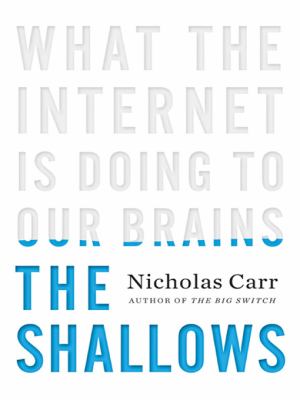
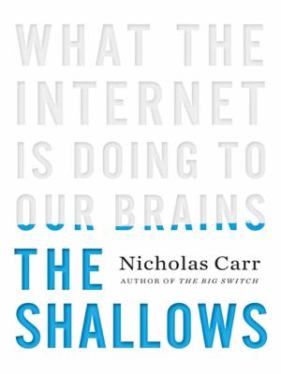
Adult Books for Adults and Teens: The Shallows: What the Internet is Doing to Our Brains

The Shallows: What the Internet is Doing to Our Brains by Nicholas Carr  
–“Intensive multitakers are ‘suckers for irrelevancy,’ commented Clifford Nass, the Stanford professor who led the research. ‘Everything distracts them.’” The Shallows, p. 142

People have long felt that creative ideas come to us when we have time to think, optimally in a quiet, natural environment. In The Shallows, Nicholas Carr explores this idea by digging into the research. He looks at what it means to be constantly hyperlinked to information that is extraneous to the task at hand; what it means to be constantly inundated with tweets, with dings that display incoming emails and chat messages; and how multitasking is different from concentrated thought not only in work outcome but in its effect on the human brain and its growth.

Although the title of this book is apt, I still find it unfortunate because it seems to scream “angry Luddite who can’t accept modern technology!” And this isn’t the case at all. Carr obviously uses computers and the Internet. And he details some of the positive things that Internet availability has done for people in their daily lives—it may help older people keep their minds sharp; gamers have improved visual fields as well as increased speed in shifting visual focus. He also discusses positive changes that using the Internet can make to the human brain, the plasticity of which is astonishing.

And yet. The question. Are we losing something important in human culture, perhaps even the most vital aspects of being human like having compassion and empathy?

Carr begins with the boons that the Internet has given us and specifically discusses Google as a search engine. We can find lots of information about anything at any time and we don’t have to remember it. We will be able to retrieve it again and again. The problem, though, is that the brain grows and changes in response to the way information is accessed. Using the Internet dulls our capacity for concentration and contemplation. “Whether I’m online or not, my mind now expects to take in information the way the Net distributes it: in a swiftly moving stream of particles. Once I was a scuba diver in the sea of words. Now I zip along the surface like a guy on a Jet Ski.” Well-educated folks admit in these pages that they can no longer read extensive works and are irritated by having to stop and read text rather than click on hyperlinked words.

The Internet certainly isn’t the first technology to change the way the brain develops. Carr has interesting discussions of clocks and maps, of the printing press, and how these things created both gain and loss for users. However, a distinction of what is now called “deep reading” is that readers become more attentive, able to “concentrate intently over a long period of time, to ‘lose oneself’ in the pages of a book.” Doing this isn’t the natural state of the brain. (If a cave man could have gotten lost in a book, he also could have been eaten by a Saber-tooth tiger. He needed his brain, his awareness, to be constantly jumping around.) But the great advantage of being able to read deeply is that the brain expands and sets off other intellectual paths in the reader—who will be able to make his own associations, draw his own inferences and analogies, and foster his own ideas. In other words, deep reading is deep thinking.

There is plenty of research to back Carr’s claims. Many studies are discussed in the text; in addition there are 30 pages of endnotes and a few pages of suggested further reading. As I hear some people claim that reading fiction is no longer a very important task, I was particularly interested in a study that showed “’readers mentally simulate each new situation encountered in a narrative. Details about actions and sensations are captured from the text and integrated with personal knowledge from past experiences.” Further studies discussed in The Shallows indicate that the new knowledge isn’t just intellectual. It’s also emotional, giving rise to compassion and empathy as character traits. (OK, if you are a life-long deep reader, you know this intrinsically—but research and evidence are quite handy in discussing it.)

Carr argues that deep reading becomes difficult when the platform changes from a print book to a screen—say in a Kindle, Nook, or iPad. This surprised me, as I often read books on those platforms. The problem is that people click out of the books to see the comments of others readers, etc. (I get so involved in good books that I don’t do that, so maybe I’m going to be OK 😉 ) The studies on this phenomenon make me worry about textbooks, which will all be online soon. I’ve been welcoming the new form of textbooks because they have such cool extras—videos showing a lab experiment or links to art museums, etc. But if students are clicking on the links and videos embedded in the book, they’ll have the same problem that they’ll have on a webpage—the inability to immerse themselves in the deep reading that generates deep thinking. (And then people will say the schools are failing and teachers are getting lazier and lazier. When we don’t understand the cause, it’s always safe to blame the teacher!)

A related problem is how authors will start tailoring their books—the words they use—to get hits on search engines. They’ll be seeking visitors (as opposed to readers?), who in turn will be seeking ‘groupiness’ rather than enlightenment.

Carr moves beyond the deep thinking argument to studies on memory. Put quite simply, readers of hypertext don’t remember very much of what they read. I wonder, again, what this means for our students, who are young enough to have done almost all reading with hypertext. When teachers complain that students don’t remember as well as they used to, it may be more than crankiness that drives that perception. It may be true. Even the way the eye moves on an Internet screen (an F pattern—they don’t actually read the text) is different than reading and is not practice. We can keep making scapegoats of teachers, if it makes us feel better. But it may be that in fifty years, remembering and deep thinking will be specialized activities, perhaps done only by chosen people. Sort of like the YA novel The Giver that is so popular with students, with a twist. Everyone else will be buried in tons of information that is of immediate interest to them, whether it matters or not.

Carr finally takes on artificial intelligence and our incorrect assumption that it is modeled on human intelligence. The brain does not work like a computer; it’s not a simple data storage and retrieval system. Some of the research here—begun after studies on the brains of boxers (who had taken concussive blows to the head) and on post-seizure epileptics—is some of the most interesting stuff in the book because it proves that interruptions of short–term memories keep them from taking hold in long-term memory and that the two types of memory require different biological processes. Long-term memory is responsive to learning; it’s not a discreet data-bit hotel, but keeps processing, in numerous ways, the information it receives. We don’t need to free up space in our brains by storing information on the Internet because the brain doesn’t run out of space. In fact, the opposite appears to be true. Building up as store of memories sharpens the brain and makes it easier for us to learn new ideas and skills. It increases intelligence.

And how does the brain make the choice to convert working memory into long-term memory? Yup. Attentiveness. On the other hand, multitasking trains the brain for distractedness. With multitasking, neural pathways that process information quickly will grow in abundance, but pathways that create something new with that information won’t. And this doesn’t stop when you leave the computer because this is the new structure of your brain. We are giving up a lot in order to “mechanize the messy processes of intellectual exploration and even social attachment.”

Are we sacrificing the ability to read and to think deeply? The research says yes. Will it matter when everyone’s mind works like a computer works, when we use the Internet as a substitute for personal memory, when–following the path of artificial intelligence, we will, ironically, imitate the computer’s ‘brain,’ which was meant to imitate human intelligence? Carr thinks so.

Although The Shallows doesn’t take an alarmist tone, I found it pretty scary. As Carr cleverly put it, “The brighter the software, the dimmer the user.” And if it wasn’t bad enough, I read the epilogue, which is about using artificial intelligence to grade essays. I agree with Carr that software cannot “discern those rare students who break from the conventions of writing not because they’re incompetent but because they have a special spark of brilliance.” I suppose brilliant students will get lousy scores and stop showing their brilliance.

Is there any hope? “A series of psychological studies over the past twenty years has revealed that after spending time in a quiet rural setting, close to nature, people exhibit greater attentiveness, stronger memory, and generally improved cognition.”

So—check out this book. Then, go do a Thoreau, and make your way to the woods.
Posted in Controversial Issue/Debate, Non-fiction | Tagged , , , , , , , , | 1 Comment

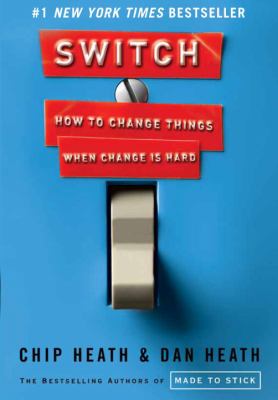
Adult Books for Adults: “Switch”

    Switch: How to Change Things When Change is Hard

by Chip and Dan Heath

This title was recommended to me by a colleague as a good book for thinking about changes in education. It may be very interesting to adults; though teens might benefit from the ideas, it’s probably not one you’d get into. So—I’m writing this in case teachers are looking for guidance in effecting change in schools.

The authors argue that the old saw “nobody likes change” just isn’t true and the evidence is that people willingly and happily make enormous changes in their lives like getting married and having kids. They also make smaller change like buying cool new stuff (e.g., iPads).

So why do people resist some change, even if it is good for them or their students or their clients? It’s because they have two systems of motivation: the rational mind and the emotional mind. For anyone who’s ever been on a diet, this truth is so self-evident that it’s hard to believe someone wrote a book about it. Except.

Except that the Heaths discuss how to get the rational and emotional minds on the same path. Often the way to do so is not the way we’ve been trying. The book is broken down into sub-chapters named ‘shrink the change,’ ‘tweak the environment,’ and ‘rally the herd.’ Examples abound. People sometimes resist change because they don’t understand what sort of change is being asked of them—they need better directions. (Not ‘eat healthier,’ but rather ‘drink nonfat milk.’) 

Many of the methods for effecting change could prove useful for school employees—teachers and administrators. In ‘Find the Bright Spots,’ an example of a disruptive student is detailed. His life outside of school is pretty rotten, so his counselor uses solutions-focused therapy and targets the one teacher whom Bobby thinks is OK. He uses what that teacher does in suggestions for other teachers. (Some of the suggestions are counterintuitive or would make teachers feel that they were coddling a bad kid.) Bobby’s major infractions of the school rules decreased by 80%.

There’s an interesting discussion of SMART (Specific, Measurable, Actionable, Relevant, and Timely) Goals, something teachers are asked to create. The authors state that “SMART Goals are better for steady-state situations than for change situations, because the assumptions underlying them are that the goals are worthwhile.” An aspect of the SMART Goal discussion that makes this section very worthwhile is the ‘destination postcards’—“pictures of a future that hard work can make possible.” Without destination postcards, an uninspired team that is resistant (openly or secretly) to the vision will rationalize not cooperating. So—people have to have an emotional buy-in (not just a rational one, apparently) to the destination (that could be quickly jotted on a postcard). They also have to be given a script of steps to the destination. (‘Eat healthy food’ is not a script. ‘Drink nonfat milk’ is.)

Each section of the book has a ‘clinic’ at the end showing what the switch is, what’s holding it back, and how to make the switch possible. Ultimately, it shows how a supportive family, community, or workplace makes a difference.

Switch is useful for personal goals as well as workplace goals. It’s short—a quick read—but if you’re pressed for time and want to think about changes in education, check it out from the library and peruse Chapters 4, 8 and 10.

Posted in Non-fiction | Tagged , , | Leave a comment

Banned Books: The Top Ten of the Last Year

This slideshow requires JavaScript.

I want to say goodbye to Banned Books Week with the most recent list of books that are challenged in schools and communities. Here are the top ten of 2011. I’ve read many and think they are pretty good books. A few are for younger kids, so not ones we’d collect for high school libraries. However, the age-appropriate books are in the library for you to check out.

I found one surprise on the list. Although To Kill a Mockingbird has been challenged consistently since its publication in 1960, it’s not always in the top ten. So, Frosh, enjoy reading one of the most banned or challenged books ever with your English teacher!

  1. ttyl; ttfn; l8r, g8r (series), by Lauren Myracle

    Reasons: offensive language; religious viewpoint; sexually explicit; unsuited to age group

  2. The Color of Earth (series), by Kim Dong Hwa

    Reasons: nudity; sex education; sexually explicit; unsuited to age group

  3. The Hunger Games trilogy, by Suzanne Collins

    Reasons: anti-ethnic; anti-family; insensitivity; offensive language; occult/satanic; violence

  4. My Mom’s Having A Baby! A Kid’s Month-by-Month Guide to Pregnancy, by Dori Hillestad Butler

    Reasons: nudity; sex education; sexually explicit; unsuited to age group

  5. The Absolutely True Diary of a Part-Time Indian, by Sherman Alexie

    Reasons: offensive language; racism; religious viewpoint; sexually explicit; unsuited to age group

  6. Alice (series), by Phyllis Reynolds Naylor

    Reasons: nudity; offensive language; religious viewpoint

  7. Brave New World, by Aldous Huxley

    Reasons: insensitivity; nudity; racism; religious viewpoint; sexually explicit

  8. What My Mother Doesn’t Know, by Sonya Sones

    Reasons: nudity; offensive language; sexually explicit

  9. Gossip Girl (series), by Cecily Von Ziegesar

    Reasons: drugs; offensive language; sexually explicit

  10. To Kill a Mockingbird, by Harper Lee

    Reasons: offensive language; racism

Posted in "Banned Book", Classic Fiction, Controversial Issue/Debate, Family Problems, Human Rights Issues, Mature Readers, Multicultural, Romance, Sci-Fi/Futuristic, Young Adult Literature | Tagged , | 1 Comment

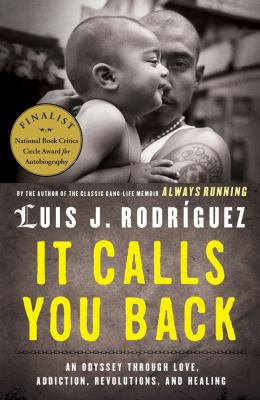
Adult Books for Teens; “It Calls You Back”

   It Calls You Back by Luis J. Rodriguez

Many students know about Luis J. Rodriguez’s memoir Always Running: La Vida Loca: Gang Days in LA. We have multiple copies in the library as it has remained popular. From my conversations with students who’ve read the book, I know that the gang action is what appeals to them, and this is unfortunate as the purpose of the book is to show how Rodriguez gets sucked into that life and how he works to get out of it.

Still, I understand why students would miss this in Always Running. However, Rodriguez’s new memoir, It Calls You Back has a much clearer look at his life, at his struggles to come to terms with his past, at the reasons why his youth and gang activities haunt him as he works to be both responsible and creative. It is far more honest about his part in things going wrong. This time there is no sense of the politically correct ‘mistakes were made,’ but instead, Rodriguez painstakingly details not only the many hurdles placed in his way, but also his own errors. He talks about the terrible consequences of his actions.

Rodriguez begins his story with a police beating and a trip to jail because he had tried to stand up for a woman who was being beaten by police. In prison, fellow gang members tell him that he shouldn’t get involved in other people’s business. But Rodriguez is maturing and knows that the time has come for him to make a difference in the world. He tells them that he wants out of the gang life. He’s surprised when they agree to release him, and tell him this is his chance to turn things around not only for himself, but for others.

As Rodriguez admits, his heart is always controlling his behavior. He marries much too young and quickly has two children. (Ironically, when his own daughter decides to set up a household and have a baby as a teen, Rodriguez tells her just what a teacher had told him and his girlfriend—this is a bad idea, it will create obstacles to your life’s dreams and goals, etc. It didn’t work with Rodriguez, and it didn’t work with his daughter. The heart wants what the heart wants . . . . Happily, daughter Andrea is later able to get back on track with her life and graduates from college.)

Rodriguez speaks honestly about his rage, his post-traumatic stress remaining from his earlier gang life. Although he later has other children with his third wife, children who seem to thrive, it is his relationship with his first son, Ramiro, that much of the book details. Ramiro ended up gangbanging just like his father had. And no amount of Rodriguez telling him to learn from his father’s experience could change that. Ramiro was imprisoned for attempted murder over a road rage incident in which he tried to kill the other driver.

Rodriguez does more than just talk to his son about starting a new life. He participates in a dizzying number of community organizations. He is one of the principal organizers, and attends events in many countries. He is a writer and sometimes a news reporter. Having seen things from both sides, he understands the causes of crime. Nevertheless, he is frustrated in his attempts to bring this out, to have articles published.

Through much of his life, Rodriguez is poor. Although he’d had a job at Bethlehem Steel with decent wages and insurance benefits, he was stifled by the grueling work and the deep, institutionalized prejudice he encountered there. He makes a courageous decision to quit doing industrial work and put his energy into creative endeavors. Unfortunately, this is a sure way of staying impoverished, as many a creative soul will tell you. And, truly unfortunate is that impoverished parents have a much more difficult time keeping their kids in an environment where they can thrive. Rodriguez puts a lot of effort into changing his neighborhoods, but it is a monumental task, especially with little outside support.

Rodriguez is also a poet, and although there are some clunky descriptions and passages in It Calls You Back (especially, for some strange reason, on his relationships with women), the reader will find the poetry as well. I enjoyed this memoir, the work of a mature man taking an honest look back at his life. I recommend it to all high school students, but especially hope that those who’ve read Always Running will read this to get the rest of the story.

Posted in Biography/Memoir, Controversial Issue/Debate, Family Problems, Mature Readers, Non-fiction | Tagged , , , , , | Leave a comment

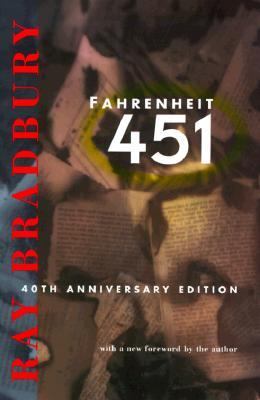
Adult Books for Teens: “Fahrenheit 451”

 Fahrenheit 451 by Ray Bradbury 

Wall-sized televisions that simulate interaction and communication with the person existing within the confines of the ‘living’ room don’t seem much like science fiction anymore, but when Ray Bradbury wrote Fahrenheit 451 in the late 1940s, he anticipated much that has since come to pass. And although the technology—ear buds with wireless communication capabilities, robotic creatures with homing devices—make this fascinating science fiction, the reason this novel has remained popular and very much worth reading is that it both warns of then contemporary threats to liberty and anticipates a future when communication is just a constant stream of shallow information, without any real meaning. The onslaught makes it impossible to think deeply.

The novel is titled after the temperature at which pages of a book will burn. In interviews, Bradbury says that he asked around about what that temperature was and got an answer from the LA Fire Department, and hoped that it was right.

Montag is a fireman, but in Bradbury’s vision of the future, firemen don’t put out fires; they create them. In fact, it is against the law to read books, and so anyone caught having books in the home has his or her house burnt down by the fire department and is then carted off to prison.

As the novel opens, Montag meets a teenage girl, his neighbor, who enjoys life, asks many questions, is intuitive about him and reads. She fascinates him. Montag is also fascinated by the fact that some people will risk their homes in order to read. When he goes to start a fire at a home of a woman who refuses to leave, who decides that she will die in the fire with her books, Montague can’t put it out of his mind. He does what must tempt any fireman—he steals a book. And then his life really explodes. Because in reading, he finds a connection to others, to their thoughts and hopes. Books are living documents of human struggle.

I realized recently that it was already time for celebrating ‘banned books,’ and that I had been too busy to do much about it. So, I thought it would be fun to have another look at Fahrenheit 451. I think the novel is paced differently than some novels written today. There is a lot of action and a lot of danger; but the climax comes earlier and the resolution is a bit longer. I found this interesting—that the resolution was given so much weight, that it really did matter as much as the action.

And yes, Fahrenheit 451 is a living document of human struggle, a book that has stood the test of time and will engage the reader with its poetic language and its fast action. The more sinister elements of the totalitarian society are still, unfortunately, fresh warnings.

Posted in "Banned Book", Classic Fiction, Controversial Issue/Debate, Family Problems, Fiction, Human Rights Issues, Sci-Fi/Futuristic | Tagged , , , | Leave a comment

Quick Picks–they’re easy to read and you can’t put them down

This slideshow requires JavaScript.

The book summaries are from the publishers–book flaps, etc.

Just Another Hero by Sharon Draper (third in series–The battle of Jericho and November Blues)

As Kofi, Arielle, Dana, November, and Jericho face personal challenges during their last year of high school, a misunderstood student brings a gun to class and demands to be taken seriously.

Living Dead Girl by Elizabeth Scott

“Once upon a time, I was a little girl who disappeared. Once upon a time, my name was not Alice. Once upon a time, I didn’t know how lucky I was. When Alice was ten, Ray took her away from her family, her friends: her life. She learned to give up all power, to endure all pain. She waited for the nightmare to be over. Now Alice is fifteen and Ray still has her, but he speaks more and more of her death. He does not know it is what she longs for. She does not know he has something more terrifying than death in mind for her. This is Alice’s story. It is one you have never heard, and one you will never, ever forget”–Book flap.

Beaten by Suzanne Weyn (one in the Surviving South Side series)

Keah Robinson, cheerleader co-captain at Southside High, and Ty Hendricks, star running back, appear to be the perfect couple, but when they have their first fight, Ty screams at Keah. Then, after losing a game, Ty goes ballistic and hits Keah repeatedly, and Ty is arrested for assault. Even after this, Keah secretly meets up with Ty. She wonders what’s worse–flinching everytime her boyfriend gets angry or being alone.

Knifepoint by Alex Van Tol (an Orca Soundings book)

Jill is enduring a brutal summer job on a mountain ranch, guiding wannabe-cowboys on trail rides. On a solo ride with a handsome stranger she ends up in a fight for her life with no one to help her.

Summer Ball by Mike Lupica

Thirteen-year-old Danny must prove himself all over again for a disapproving coach and against new rivals at a summer basketball camp.

Posted in Family Problems, Fiction, Hi-Low/Quick Read, Read 180, Young Adult Literature | Tagged , , | Leave a comment

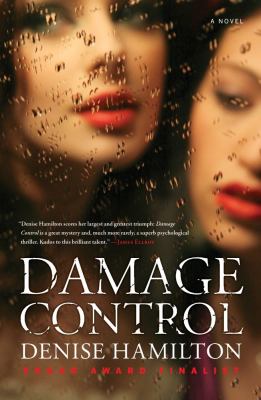
Adult Books for Teens: “Damage Control”

Damage Control by Denise Hamilton

Addicted to Adderall in an effort to keep her edge over the competition, Maggie Silver works at the public relations firm The Blair Company. The Blair Company, based in Los Angeles, has all the A-list clients—movie stars, sports figures, anyone rich and famous who needs to tweak the story a bit when it comes out in the news that they’ve been involved in an incident. Though the novel begins with Maggie representing a baseball player who has been accused of rape (in an alternate version of the Kobe Bryant incident), Maggie soon finds herself working to polish the name of a California Senator, Henry Paxton. Senator’s Paxton’s young aide has been murdered—strangled—and the Paxtons want damage control.

The problem for Maggie is that, years before, as teens, she and Senator Paxton’s daughter had been best friends. But their friendship dissolved one night at a wild party where Anabelle Paxton was raped. Still, Maggie needs the job—she has a mortgage to pay and a sick mom to take care of.

Now that Maggie is reconnecting with the family, she wonders if they are really the good people she believed them to be all those years ago. At least Luke, Anabelle’s brother, is as handsome and sexy as ever.

Some students who have been assigned the reading of a mystery this October have told me they’d like to try an adult book. This is a fun one to start with if you’re looking for a mystery with many plot twists and turns. The PR angle is a bit different than the usual PI, but Maggie finds herself in as much danger as any investigator. The book also has an interesting side thread running through it. The author wrote a regular perfume column for the Los Angels Times. Her knowledge of rare perfumes and exotic scents adds a lot of fun to the book. This is a good one for beginning mystery readers—you may got hooked on the genre!

Posted in Family Problems, Fiction, Horror/Mystery/Suspense | Tagged , , | Leave a comment

More new biography and memoir

This slideshow requires JavaScript.

So–I’m defining biography and memoir a little loosely here, but I think teachers would love to have you read any of these books. And you’ll find empathy, outrage, inspiration and courage through your reading.

Enjoy!

We All Fall Down by Nic Sheff

Sheff writes candidly about stints at in-patient rehab facilities, devastating relapses, and hard-won realizations about what it means to be a young person living with addiction.

Steve Jobs by Water Issacson

Based on more than forty interviews with Jobs conducted over two years, as well as interviews with more than a hundred family members, friends, adversaries, competitors, and colleagues, the author has written a riveting story of the roller-coaster life and searingly intense personality of a creative entrepreneur whose passion for perfection and ferocious drive revolutionized six industries: personal computers, animated movies, music, phones, tablet computing, and digital publishing. At a time when America is seeking ways to sustain its innovative edge, and when societies around the world are trying to build digital-age economies, Jobs stands as the ultimate icon of inventiveness and applied imagination. He knew that the best way to create value in the twenty-first century was to connect creativity with technology. He built a company where leaps of the imagination were combined with remarkable feats of engineering. Although Jobs cooperated with this book, he asked for no control over what was written nor even the right to read it before it was published. He put nothing off-limits. He encouraged the people he knew to speak honestly. And Jobs speaks candidly, sometimes brutally so, about the people he worked with and competed against. His friends, foes, and colleagues provide an unvarnished view of the passions, perfectionism, obsessions, artistry, devilry, and compulsion for control that shaped his approach to business and the innovative products that resulted. Driven by demons, Jobs could drive those around him to fury and despair. But his personality and products were interrelated, just as Apple’s hardware and software tended to be, as if part of an integrated system. His tale is instructive and cautionary, filled with lessons about innovation, character, leadership, and values. — From publisher.

Start Something that Matters by Blake Mycoskie

Known as the founder of TOMS Shoes and as a contestant on The Amazing Race, Mycoskie uses his experience with TOMS, as well as interviews with leaders of non-profits and corporations, to convey valuable lessons about entrepreneurship, transparency of leadership, and living by one’s values.

The Immortal Life of Henrietta Lacks by Rebecca Skloot

Her name was Henrietta Lacks, but scientists know her as HeLa. She was a poor Southern tobacco farmer, yet her cells–taken without her knowledge–became one of the most important tools in medicine. The first “immortal” human cells grown in culture, they are still alive today, though she has been dead for more than sixty years. HeLa cells were vital for developing the polio vaccine; uncovered secrets of cancer and viruses; helped lead to in vitro fertilization, cloning, and gene mapping; and have been bought and sold by the billions. Yet Henrietta Lacks is buried in an unmarked grave. Her family did not learn of her “immortality” until more than twenty years after her death, when scientists began using her husband and children in research without informed consent. The story of the Lacks family is inextricably connected to the dark history of experimentation on African Americans, the birth of bioethics, and the legal battles over whether we control the stuff we are made of–From publisher description.

Warriors Don’t Cry by Melba Pattillo Beals

Using news accounts and the diary she kept as a teenager, Beals relives the harrowing year when she was selected as one of the first nine students to integrate Central High School in Little Rock, Arkansas, in 1957.

Mountains Beyond Mountains by Tracy Kidder

The Zookeeper’s Wife by Diane Ackerman

The true story of how the keepers of the Warsaw Zoo saved hundreds of people from Nazi hands. When Germany invaded Poland, Stuka bombers devastated Warsaw–and the city’s zoo along with it. With most of their animals dead, zookeepers Jan and Antonina Żabiński began smuggling Jews into empty cages. Another dozen “guests” hid inside the Żabińskis’ villa, emerging after dark for dinner, socializing, and, during rare moments of calm, piano concerts. Jan, active in the Polish resistance, kept ammunition buried in the elephant enclosure and stashed explosives in the animal hospital. Meanwhile, Antonina kept her unusual household afloat, caring for both its human and its animal inhabitants–otters, a badger, hyena pups, lynxes–and keeping alive an atmosphere of play and innocence even as Europe crumbled around her.–From publisher description.

Rin Tin Tin by Susan Orlean

Allegedly found in the ruins of a bombed-out dog kennel in France during World War I, then brought to Los Angeles by Lee Duncan, the soldier who found and trained him, by 1927 Rin Tin Tin had become Hollywood’s number one box-office star. Susan Orlean’s book–about the dog and the legend–is a poignant exploration of the enduring bond between humans and animals. It is also a richly textured history of twentieth-century entertainment and entrepreneurship. It spans ninety years and explores everything from the shift in status of dogs from working farmhands to beloved family members, from the birth of obedience training to the evolution of dog breeding, from the rise of Hollywood to the past and present of dogs in war.–From publisher description.
Posted in Biography/Memoir, Controversial Issue/Debate, Faith-Based/Religious Element, Family Problems, Human Rights Issues, Over 375 pages | Tagged , , , , , | Leave a comment

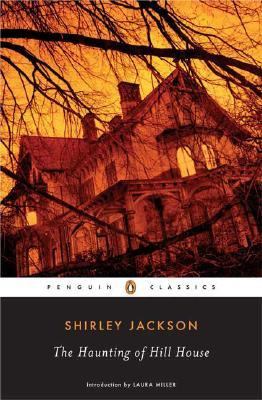
“The Haunting of Hill House”

The Haunting of Hill House by Shirley Jackson

Some of you have said you’re tired of teen horror that focuses a bit too much on romance. You want something creepier, but you’re not sure if you have the time to read the nearly 1,000 page Stephen Kings.

I have a book for you.

The Haunting of Hill House is creepy in the best sense. Jackson is known as a master of horror and plot twists. If you’ve read her short story “The Lottery,” you’ll have an idea of what she can do with the unexpected, the shock factor.

Here, four young adults are selected by Dr. Montague, an occult scholar who wants his research taken seriously, to spend a few weeks in Hill House. The house is reported to be haunted, and no one who has rented it has ever stayed more than a few days. Nonetheless, they always give rational reasons for leaving, as if they think people will find them crazy if they admit to the haunting.

Of the four young people, Eleanor, grabs the attention of the reader immediately. She had to care for her ailing, unappreciative mother until her mother died. She is bound to her sister and her sister’s family and must share a car with them. Eleanor, who has been selected to stay at Hill House because she had a documented event with poltergeists in her childhood, feels that the trip will be a chance to break free of the patronizing behavior of her sister and her sister’s husband. When they refuse to allow her to take the car, Eleanor takes it early in the morning before anyone else has awoken. The reader wants her to escape, and cheers her through her trip toward the house.

Once she arrives, she befriends the others. It looks like she is finally going to get what she desires from life. But Hill House isn’t haunted in the traditional sense of having ghosts. It is a personality of its own—and it wants Eleanor. Though all the others see the evidence of this, they pull away from Eleanor, accusing her of creating some of the frightening and bizarre episodes.

And for someone as fragile as Eleanor, dealing with the house alone is more than a challenge.

The Haunting of Hill House is pretty short—a few hundred pages—and Jackson doesn’t waste your time with extraneous detail. What starts as a very ordinary trip and an opportunity to find friends ends in spine chilling creeps.

Posted in Classic Fiction, Family Problems, Fiction, Horror/Mystery/Suspense, Supernatural | Tagged , , | 1 Comment