2014 California Young Reader Medal Nominees

This slideshow requires JavaScript.

What’s cool about the California Young Reader Medal is that the books are selected by young readers. So, teens select the winner of the young adult category. In order to vote, you have to read all three of the nominated books, of course.  Sometimes adults worry that teens won’t select books that are well written. But the truth is that some of my favorite YA books have been Californian Young Reader Medal winners. In fact, one of my absolute, all-time favorite YA books–Staying Fat for Sarah Byrnes was a winner years ago.  So, we shouldn’t worry. Teens make great choices in books!

Of the three nominees for 2014, I’ve read (and reviewed) Divergent. I do love both Jennifer Donnelly, the author of Revolution,  and Wendelin Van Draanen, the author of The Running Dream, so this year’s award will make for some great reading.


The Running Dream by Wendelin Van Draanen

When a school bus accident leaves sixteen-year-old Jessica an amputee, she returns to school with a prosthetic limb and her track team finds a wonderful way to help rekindle her dream of running again.

Revolution by Jennifer Donnelly

An angry, grieving seventeen-year-old musician facing expulsion from her prestigious Brooklyn private school travels to Paris to complete a school assignment and uncovers a diary written during the French revolution by a young actress attempting to help a tortured, imprisoned little boy–Louis Charles, the lost king of France.

Divergent by Veronica Roth

In a future Chicago, sixteen-year-old Beatrice Prior must choose among five predetermined factions to define her identity for the rest of her life, a decision made more difficult when she discovers that she is an anomaly who does not fit into any one group, and that the society she lives in is not perfect after all.

Posted in Family Problems, Fiction, Historical Fiction/Historical Element, Mature Readers, Over 375 pages, Romance, Sci-Fi/Futuristic, Young Adult Literature | Tagged , , , , , , , , | Leave a comment

Movie Tie-In: “Beautiful Creatures”

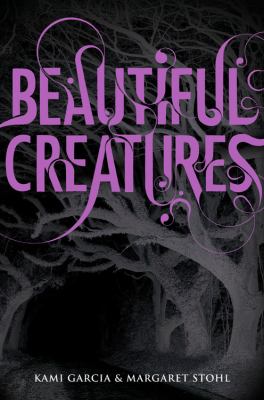
beautiful creatures   Ethan’s family has lived in Gatlin, South Carolina, “the epicenter of the middle of nowhere,” for generations. The town is full of history and superstition, as Ethan believes can only happen in the South. The neighbors are obsessed with the Civil War, which they call (like many Southerners) “The War of Northern Aggression.” His dreams of a mysterious girl become reality when he begins his sophomore year at Stonewall Jackson High and sees Lena for the first time. And this new girl is special—not only is she a break from the extraordinary boredom of the town (finally!), but she has extraordinary powers.

Lena’s big problem seems to be that she is old man Ravenwood’s niece. As the relative of a shut in who makes ‘Boo Radley look like a social butterfly,’ she is prejudged as a social nobody. She plays the haunting song of Ethan’s dreams “Sixteen Moons.” She also comes to school in a hearse. But much worse is in store for Lena than being shunned by the cheer squad. She’s a Caster (think ‘witch’) and has no control over whether, on her sixteenth birthday—coming soon—she will be changed to dark or light, good or evil. If she goes dark, she won’t retain any compassion or love for others (that, of course, includes Ethan). It’s what happened to Lena’s cousin, Riley, a year earlier. And Riley is one scary witch.

Ethan is energetic, funny, and escapes the boredom of his town life through books. If he were a girl, you’d call him sassy. I related to him immediately. It’s fun that he narrates the book because Gothic romance almost always has a female narrator.

I’m pretty late in realizing that Beautiful Creatures was becoming a movie. I ran out and got a few more copies for each of my schools, and then read it as quickly as possible. I usually have complaints about Gothic/fantasy books because they repeat themselves so often, but not so in Beautiful Creatures. It’s a long book, but we regularly get new information and the story moves along. It’s true that a few big scenes are pretty straight steals from Stephen King’s Carrie (another big dance gone wrong!) and the “Harper Valley PTA” song, but I enjoyed the writing, the characters, and the setting. When people act out of character, there is a reason, revealed in the book’s climax. The fact that it’s multigenerational—information about Casters and Seers comes from aunts, uncles, grandparents—adds to the fun of the mystery and gives us more people to worry about when the spells and supernatural evil starts flying.

Posted in Family Problems, Fiction, Horror/Mystery/Suspense, Movie Tie-In, Over 375 pages, Romance, Supernatural, Young Adult Literature | Tagged , , , , , | 1 Comment

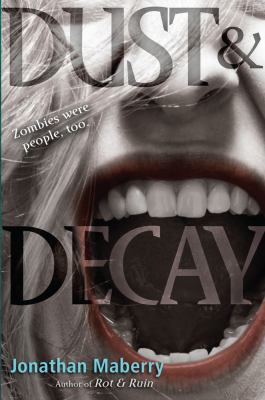
Zoms: “Dust & Decay”

dust & decay   Dust & Decay by Jonathan Maberry

So, I know this isn’t a real review because it’s a labor of love and I’m a bit overwhelmed (or not feeling the love—or something) BUT—

Still the best zombie apocalypse ever!

Before reading Dust & Decay, you should read the first title in the series, Rot & Ruin, because you don’t want to miss any of the action.

I don’t always read full series, even when I really like the first book, because my goal is to get students started on something they like and hope they will continue. I have to move along to other titles. But sometimes, I just have to keep going. That’s the case with Benny Imura.

We readers thought we got rid of Charlie Pinkeye, the Motor City Hammer and Gameland at the end of book one. But Gameland is back and this time takes center stage, with its gladiator-style contests of teens pitted against zoms—while folks who are otherwise considered pillars of the community lay their bets.

Something I was afraid was going to happen did happen. Heartbreaking.

Yup, book two has the same thoughtfulness about life and alliances, good and evil, and (some crazy) religious hypocrisy.

Oh, yeah. And epic zombie action. That’s right, even the surf dudes are getting involved. What next? On to book three, Flesh & Bone.

Posted in Adventure Stories, Family Problems, Fiction, Horror/Mystery/Suspense, Over 375 pages, Supernatural, Young Adult Literature | Tagged , , , | Leave a comment

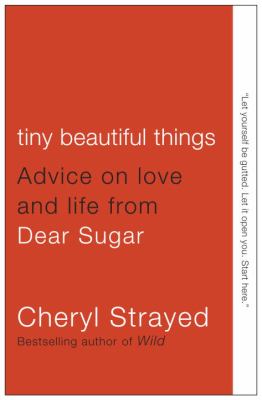
Advice in “Tiny Beautiful Things”

Tiny Beautiful Things: Advice on Love and Life from Dear Sugar by Cheryl Strayed   tiny beautiful

I’m not a fan of advice columns and I loathe self-help books, so I was surprised when someone I trust recommended this book. And wow! What a sparkling collection of wisdom Tiny Beautiful Things is.

Author Cheryl Strayed wrote the columns anonymously for The Rumpus (online). She later published Wild, a nonfiction memoir on her solo trek of 1,100 miles on the Pacific Crest Trail. That book was selected by Oprah for her book club. Tiny Beautiful Things also became a best seller. So things are looking mighty good for Strayed. But her journey to success has been a convoluted one, filled with grief and betrayals. And what she learned, she shares in her Dear Sugar column.

Strayed is always compassionate and maybe that’s what sets her apart. People who write to her know that she is going to set them straight, but she’s also going to call them sweet names (like sweet pea) and make a lot of sense. She deals with betrayals of all sorts, the death of parents and children, miscarriage, rape, infidelity, financial troubles, jealousy and the sense that personal success will never come—all of life’s big problems. The letter in which she reflects on her one-time job as youth advocate at a middle school is worth the price of the book. Unfortunately, some of our students will recognize their own stories in the stories of the teens Strayed worked with—how they are living through a hell that no one, especially someone so young, should have to experience.

There are other teen problems discussed. (A fun answer to a teen is in “Hell is other people’s boyfriends.”) But anyone of any age can relate to all of the problems and Strayed’s sage responses. She often tells a story from her own life that seems totally unrelated—she’s a great storyteller—and then comes around to the connection to give the reader an ‘ah-ha’ moment.

Here Strayed is talking about people in their twenties, but I think it makes sense for teens, too: “Because you’re in your twenties, you’re becoming who you’re going to be and so you might as well not be an a*****. . . . You’re generally less humble in that decade than you’ll ever be and this lack of humility is oddly mixed with insecurity and uncertainty and fear. You will learn a lot about yourself if you stretch in the direction of goodness, of bigness, of kindness, of forgiveness, of emotional bravery. Be a warrior for love.”

Read this for the excellent storytelling and you’ll come away with something that sticks.

Caveat: The folks who write letters to Dear Sugar often use very colorful language and Strayed uses it right back. The problems they discuss are often of a very mature nature (but, unfortunately, they are things that happen to high school kids, too).

Posted in Family Problems, Mature Readers, Non-fiction | Tagged , | Leave a comment

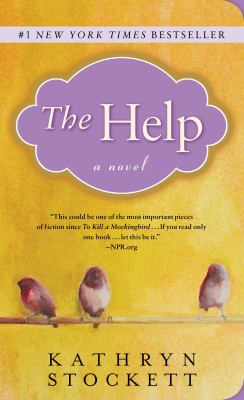
Movie Tie-In: The Help

Movie Tie-Ins: The Help by Kathryn Stockett   help

As I mentioned earlier, I read Worth Dying For because I wanted to try a Jack Reacher novel. If you read my post, you know I didn’t like it very much. As I was thinking the other day about good books for movie tie-ins, I was reminded of The Help by Kathryn Stockett. Since the movie was so popular—and award winning—you might have already seen it. This is a book that makes an easy transition to the screen. Whether you’ve seen the film or not, you’ll enjoy the read. If a teacher asks you to write a compare/contrast of a book made into a movie, The Help is a good choice.

Skeeter, Aibileen, and Minny are the protagonists who alternately tell their stories. It’s 1962 and the three women live in Jackson, Mississippi. Skeeter has just graduated from college (Ol’ Miss) and comes home to her parents’ farm. Her close friends quit college and got married. They have one or more children. But Skeeter’s a bit frustrated as a ‘new’ adult who is being told what to do by her mother. She wants to be a serious writer, and, as many people come to feel at this age, she is realizing that her values aren’t the same as those of her longtime friends.

Skeeter can see how her friends treat their help—the Black women who take care of their children, clean their houses and cook their meals. (Since the white women in this novel don’t work outside the home, and seem to do absolutely nothing in the home, I wasn’t surprised that they filled their lives with gossip and backstabbing. If life doesn’t have any drama, people are sure to create some!) Aibileen and Minny are the help. Aibileen is great with kids—she’s raised seventeen of them. She is slyly boosting the self-confidence of Mae Mobley, whose mother, Elizabeth (a friend of Skeeter’s), is pretty lousy with kids. Unfortunately, Aibileen’s own son died a few years earlier, and she is grieving. Minnie appears to be the opposite of Aibileen—she tells it like it is and has been fired more than once over her comments. She has five children of her own and a husband who is a drinker and wife abuser. She’s known as the best cook around.

The three women embark on a book project. They recruit other maids to tell their stories—to shed light on what it is like to work in white women’s homes and to care for children who will later treat them as inferiors. All the while, Skeeter is wondering what happened to Constantine, the Black woman who raised her, but disappeared just before Skeeter came home from college.

I’ve seen professional reviews of this book that say it will prick consciences. I don’t agree with that. I think that it’s a book that feels safe because the treatment of the maids is now considered heinous, and readers can be smug when comparing themselves to Hilly, Skeeter’s truly awful (and possibly one-dimensional) friend.

Still, outside of a few details that I couldn’t come to terms with—the issue of toilets on Hilly’s lawn was one (Skeeter wouldn’t have jeopardized those Black men’s very lives with such a stunt, and they would have been too afraid to participate anyway)—The Help is an achievement. We care deeply about the characters, we worry about the setbacks in each of their lives, and we are filled with anxiety over the suspense. In short, we are immersed in Jackson, Mississippi, 1962. We’re stunned by what is considered normal, by the way people treat one another. And glad for changes since then.

Posted in Controversial Issue/Debate, Family Problems, Fiction, Historical Fiction/Historical Element, Human Rights Issues, Movie Tie-In, Multicultural, Over 375 pages | Tagged , , , , , , | Leave a comment

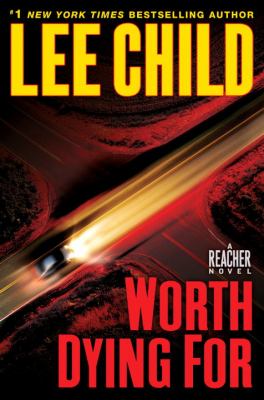
Movie Tie-In: Jack Reacher

Knowing that the Jack Reacher movie was coming out, I decided to try one of the novels—Worth Dying For—just to see if it was worth dying forsomething our students would like.
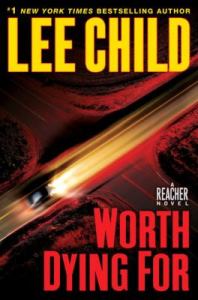
I’d never read a Jack Reacher book before and was a bit surprised that he is 6’5” and Tom Cruise is playing the part. Having only read the one book, I don’t know why Reacher, former cop and war veteran, is a one-man vigilante, bound to seek justice for the little guy (and gal). Whatever the reason, he is certainly good at it. I guess this was sort of Die Hard in a book.

In Worth Dying For, Reacher finds himself in a very small town in Nebraska where the Duncan family plays a local, minor mafia. When Reacher sees that Eleanor Duncan, the wife of one of these bad guys, has an unstoppable bloody nose, he realizes that her husband, Seth, beats her. So he finds Seth and breaks his nose just to give him an idea of what it feels like.

But more trouble is afoot—the Duncans are not only abusive, they are criminals who force the local farmers to use their trucking company to transport their crops. And they seem to have been involved in the disappearance of an eight-year-old neighbor girl 25 years earlier. But why? And where did Seth Duncan, the adopted son of one of the three Duncan brothers, come from? No one is allowed to question them. The Duncans employ former Nebraska Cornhusker football players as henchmen. (I have a feeling that Cornhusker alumni don’t like this book much.) Everyone in the town is so afraid of the Duncan family that they have formed a phone tree to always let one another know what the Duncans are doing.

When Reacher starts snooping around, the Duncans need to have him taken out. As he is too much for the former football players, they seek help from their criminal contacts all the way from Las Vegas. Everyone gets in on the plan to kill Reacher because they all depend on illegal shipments by the Duncan family trucking business. What these shipments are is one of the mysteries for the reader to figure out.

I can understand why some readers would like Jack Reacher novels. Honest. But I hated this one, so it’ll be my last Jack Reacher novel. He gets out of trouble way too easily for me. I wish the author would have allowed him to have a few big fails—the kind that make readers worry about the protagonist and become invested in him.

The other thing about me is that I can only take so many descriptions of how to break noses—and even fewer on how to pop them back into place. Only so many descriptions of kicking and blowing things up—at least ones that include exact measurements of the sizes of all equipment and all body parts involved. How many centimeters between the bridge of the nose and the center of the forehead? I really don’t care.

I also don’t like it when the writing tends toward this sort of thing: ‘A car was coming down the road. It was red, but you couldn’t tell in the dark. It looked blue or gray or black—something not light, like white or yellow. Reacher knew that the car could turn left away from him. He knew that it could turn right toward him.’ (No—not a direct quote, just close.) Honestly, as much action as there is in this book, as much repetitive and gratuitous violence, it was surprising how it just seemed to drag on and on because of the monotony of the descriptions (including all those measurements.) I thought it would never end, but I stuck with it because I had invested so much time in it. By the time I finally finished, the movie had already been out for several weeks.

The end of this book, the disappearance mystery, the revelation of illegal product that the Duncans are transporting—that was very good. And the description of victims is the most understated, best writing in the entire novel. It worked beautifully, and made me wish the rest of the book had been written that way. Good as that ending was, it just took me too long to get there to want to try another book in the series. But, my taste in this matter is probably in the minority. High school guys may like the Jack Reacher books in the same way that they like violent action films. If so, there are many titles in the series available at our local public library.
Posted in Adventure Stories, Family Problems, Fiction, Horror/Mystery/Suspense, Mature Readers, Movie Tie-In, Over 375 pages | Tagged , , | Leave a comment

“Wave Warrior”

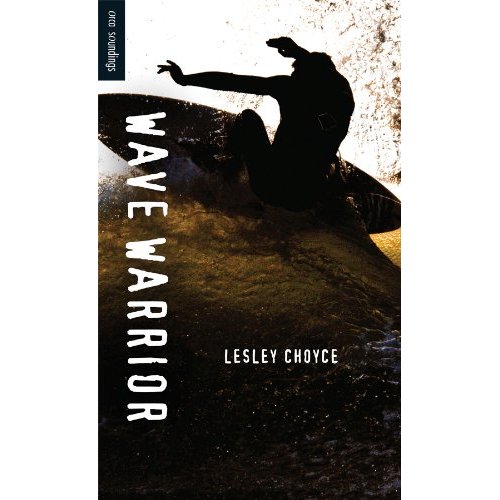
wave warrior     Wave Warrior by Lesley Choyce

Another Orca Soundings adventure for teens working on their reading skills.

Ben Currie lives in Lawrencetown Beach, Nova Scotia. (For those of us Southern Californians with little knowledge of geography—think far to the east, far to the north, mostly surrounded by the Atlantic Ocean, in Canada—but not far from the state of Maine. As for the ocean there, think cold, cold, cold!) Ben’s always been curious about surfing, but he’s a lousy swimmer. Plus, he’d been warned away from the sea by his fisherman grandfather, who understood its dangers and its killer waves. Ben misses his grandfather, who died last spring.

As much as he loves his grandfather, you know from the book’s title that Ben isn’t going to be able to stay away from the water. When he tries to surf—renting a shortboard with a V tail ( a ‘fish’), the reader knows he’s in trouble—he wants to imitate the truly experienced surfers on his first day out. So it isn’t just the freezing cold water that gets to him—it’s his naïveté that that nearly kills him as he struggles to paddle, takes off from the wrong spots, has a great chance to be mowed down by other surfers, gargles saltwater, and face-plants into the bottom of waves.

Bloodied, bruised, and broken, Ben probably would have given up if he hadn’t met an old dog named Mickey D, and then the dog’s owner, Ray. Ray is a veteran surfer from Santa Barbara, California, who has driven all the way to Nova Scotia in an old, junker van. Ray is willing to teach the ‘gremlin’ Ben. “‘Fight your inner demons.’ . . . ‘Be  a warrior. Don’t ever let the suckers get to you.’”

The surf action at Lawrencetown Beach is hyper competitive and violent as guys like Gorbie and Genghis would as soon cause someone to drown or ram him with their surfboards than share waves. Yet Ben finds one more friend in Tara, who is a beautiful and graceful surfer, but knows how to stay cool. Ben will need to learn to survive, deal with loss and death, choose whether or not be a hero—all while learning to sense the rhythms of the ocean and respect its power.

Posted in Adventure Stories, Fiction, Hi-Low/Quick Read, Read 180, Sports, Young Adult Literature | Tagged , , , , , | Leave a comment

“Riley Park”

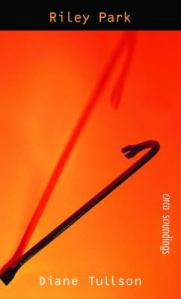
Riley Park by Diane Tullson  riley park

Here’s another super-quick Orca Soundings novel that I liked:

Corbin and his best friend Darius are both attracted to the same girl, Rubee, who works at the local Safeway grocery store as a checker. But after Rubee appears to have broken up with her boyfriend, Corbin hesitates to ask Rubee out. So Darius does, making Corbin jealous and angry. Still, they are friends and Corbin loves the way Darius is a risk-taker. He gets Corbin to go along with jumping off a high cliff into the local river. It’s times like this when Corbin feels most alive.

After the jump is over, the two guys argue about Rubee, who has come to the outdoor party near the river to see Darius. Later, when the crowd is gone and just Darius and Corbin are left, they are savagely attacked by three guys with a tire iron. In the hospital before Corbin passes out, he hears Darius’s heart monitor become quiet and flat line. He awakes to brain damage and the question of who attacked the two friends—and why?

This story is an interesting look at what is worth fighting for and what has to be let go.

Posted in Fiction, Hi-Low/Quick Read, Horror/Mystery/Suspense, Read 180, Young Adult Literature | Tagged , , , , | Leave a comment

“Exit Point” and “Yellow Line”

This slideshow requires JavaScript.

I’ve just read a couple of novels from the Orca Soundings series–a series that I think of as high quality/quick reading. Pick up one of these for a fast page-turner.

Exit Point by Laura Langston

Logan can’t believe he’s dead. And what really shocks him is being told by a tattooed guardian and his (also dead) grandma that he has just taken the easy way out of life—that he chose to leave at the second possible exit because he didn’t want to work hard enough to get to the fifth exit, when he was supposed to die, in his seventies.

Logan’s grandma has a challenge for him. Before crossing over and permanently leaving the living, he needs to be able to manifest himself in a way that will help his little sister, Amy, to stay safe from “that rat bastard.” At first, Logan thinks the rat must be another nine-year-old who is bullying Amy. But as he realizes that it is an uncle who preys on Amy, Logan must figure out how he can make his parents believe him—especially when the uncle is well-respected, and Logan is someone they can’t even see.

Yellow Line by Sylvia Olsen

Small town prejudice between whites and Indians/First Nations people runs so deep in Vincent’s home town that things seem about the same in the twenty-first century as they did one hundred years earlier. It’s like there’s a dividing line—that yellow line that runs down the center of the road and lets you know which side to stay on. Indians on one side of town, whites on the other. Indians on one side of the street, whites on the other. Indians in one section of the school bus, whites in the other.

Until, Vincent notices, his childhood best friend and now very hot next-door neighbor, Sherry, takes an interest in an Indian guy named Steve. Steve is the biggest, strongest guy in the school. He’s popular, too. And Vincent is both jealous of the relationship and sad that he is losing his old best friend.

Still, Vincent isn’t exactly the school loser. He is a basketball hero—he’s only a junior, but he’s all-county and the best player at his school. But when conflict breaks out between Indian and white students, Vincent loses some of his confidence as some Indian girls continually make fun of him and his hairy, skinny white legs. One girl, Raedawn, tells him not to pay attention. Vincent is drawn to her, but his parents and friends, with their prejudice against Indians, would never understand.

With the whole school, and even the whole town, watching these relationships and doing everything they can to prevent them, it appears that there is no way out except through violence.

Posted in Family Problems, Fiction, Hi-Low/Quick Read, Read 180, Romance, Supernatural, Young Adult Literature | Tagged , , , , , , | 1 Comment

“How They Croaked”

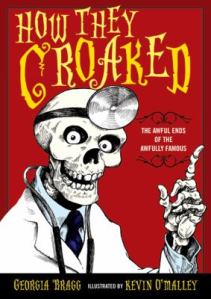
how they croaked     How They Croaked: The Awful Ends of the Awfully Famous by Georgia Bragg; illustrated by Kevin O’Malley

This wacky book is alternatelty gross and funny. It is always fascinating.

Bragg looks at the terrible suffering involved in the deaths of nineteen famous people in history, starting with King Tut of Egypt (a Pharoah about 3,000 years ago) and ending with Albert Einstein (a Nobel Prize-winning scientist who developed the Theory of Relativity). What amazed me is how often in history the cure for an illness was really the cause of the death. Poor President Garfield was shot in an assassination attempt. The bullet didn’t touch any vitals organs, and he probably would have lived, but the doctors killed him (slowly and painfully over 80 days) by searching for the bullet with dirty fingers (causing infection) and drilling holes to find it. In fact, a number of these famous folks had dirty doctors and unsanitary conditions to thank for their excruciating deaths. Or, as in the case of George Washington, they just kept emptying their bodies of blood until the sick man was too weak to live.

How They Croaked also takes on the weird: it seems that the body of King Henry VIII of England was so toxic that it blew up in its coffin and leaked out. Other bodies suffered the removal of various parts as souveniers for survivors. Edgar Allen Poe might have died of rabies. In each case, Bragg discusses the evidence that points to the real cause of death, which wasn’t understood until recently. It’s amazing how long  it took people to understand the effects of lead poisoning and what caused it. Deaths by lead poisoning, as described in the cases of Galileo and Beethoven, are horrific.

Much is made of the personalities of these famous folks. Charles Dickens seems to have suffered from bipolar disorder and was simply vicious to his family; Charles Darwin was so afraid of interacting with other people that he couldn’t attend his parents’ funerals.

This is a strange book, both creepy and entertaining. What’s great about it is that in a short read, you can learn a lot about  famous people and why they were important, about medical knowledge (or, really, the lack of it) in different eras, and about cultural beliefs surrounding dead. You’ll come away with some truly interesting information.

Posted in Family Problems, Hi-Low/Quick Read, Historical Fiction/Historical Element, Non-fiction, Young Adult Literature | Tagged , , , , , , , , , , , , | Leave a comment