Adult Books for Teens: “The Silver Linings Playbook”

The Silver Linings Playbook by Matthew Quick  silver linings

Pat Peoples seems like the sweetest man on earth, but for some reason he’s coming home from a mental institution to live with his parents—in his mid-thirties—and he completely loses it when he hears Kenny G music.

Pat thinks he has been away for a few months. Actually it’s been four years. He thinks that he is experiencing “apart time” from his wife, and that if he can control his temper (‘it’s more important to be kind than to be right’), and stay on his rigorous exercise program and lose weight, he will win her back. Because, after all, his life is like a movie created by God. It will have the silver lining of a reunion with Nikki.

In trying to understand Nikki, Pat is reading all of the books that she teachers to her high school English classes. He’s surprised at how negative and depressing they are. As a former English teacher, I laughed at Pat’s comments on books like The Catcher in the Rye and The Adventures of Huckleberry Finn. They don’t have the kind of silver linings Pat expects form life, the kind that ought to be examples for kids.

At home, the silver lining also remains hidden. Things are not going as Pat planned despite hours of daily weightlifting, regular visits with a psychiatrist, and all that reading, Nikki isn’t back on the scene. But another woman, who at first seems like a nymphomaniac but is grieving in her own dysfunctional way, is following him on his long runs. Meanwhile, the mood of the Peoples household, and particularly Pat’s father, swings with the fortunes of the Philadelphia Eagles football team. Pat’s dad is emotionally distant and unforgiving.

So where’s the silver lining? It’s not the one Pat was looking for, but it’s there. And I loved going on the journey with Pat to find it. Good, heartwarming stuff that embraces dysfunctional people of all kinds.

High school housekeeping: I’m always hoping that high school students will read adult books because they often (though certainly not always) juggle more issues, have more challenging vocabulary and less certain endings—like real life. I think Silver Linings Playbook is a good choice for moving into adult fiction. It’s just slightly longer than the typical YA fiction, but shorter than much adult fiction. It’s funny. You’ll like the main character, the story, and the pace. You’ll like that you can compare it to the movie. In addition, Matthew Quick writes YA fiction as well—and we have his stuff in our library. He was a high school teacher at one time, and has a good sense of what entertains and informs you. As mentioned above, The Silver Linings Playbook has a humorous vein about the books read in high school English classes. I really think it would be fun to have a ‘Silver Linings Playbook’ class and read this novel first, then read all the novels mentioned in it—and compare students’ reactions to the book to Pat’s reactions.
Posted in Family Problems, Fiction, Movie Tie-In, Romance, Sports | Tagged , , , , , , | Leave a comment

Bullying Books: “Reason to Breathe”

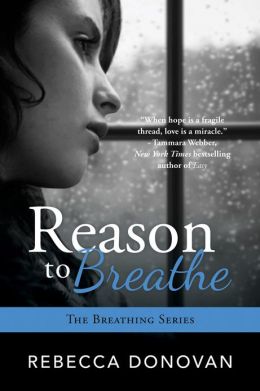
 reason to breathe    Reason to Breathe, by Rebecca Donovan

I was talking to another teacher at Chaffey High, Mrs. Vanderbeck (who used to work at Colony as well), about the bullying books I was reading this year. She told me about one she thought was great, so I asked her to write a guest blog post and share the book with you. Here it is!

I just finished a book, Reason to Breathe, by Rebecca Donovan.  It’s about bullying and physical abuse, but from the adults that are supposed to look out for you.  Emily, “Emma” has worked really hard to create a facade of indifference to all the students around her.  She is counting the days to her “liberation”. The day when she graduates from high school and is able to go to college. 

Emma is a straight A student, editor of the school newspaper, is a star soccer and basketball player, all the while hiding a terrible secret.  Her best friend, Sara, knows that things are not perfect at Emma’s home, but she doesn’t know the lengths Emma has gone to protect her little cousins.  In spite of her best efforts, she falls in love with Evan Matthews, a new student to her school, who won’t take “No” for an answer. The book is graphic, sad, and yet allows the reader to feel Emma’s annoyance, curiosity, interest and finally the love she thought was not meant for her, at least not in her current situation. I really enjoyed it. It’s a fast read. I am going to put it out for my students so they might read it during SSR. –Mrs. Vanderbeck

High school housekeeping: I looked and I have one copy at Chaffey, none at Colony. So I’m adding it to my ‘purchase ASAP’ list. I also see that it is the first book in a series, so if you also enjoy it, I’ll get the sequels. –Ms. W.

Posted in Family Problems, Fiction, Mature Readers, Sports, Young Adult Literature | Tagged , , , , , , , , , | Leave a comment

Common Core and Nonfiction: Adult Books for Teens: “Stiff”

Stiff: The Curious Lives of Human Cadavers by Mary Roach   stiff

“The way I see it, being dead is not terribly far off from being on a cruise ship. Most of your time is spent lying on your back.”—The opening sentence of Stiff

If Mary Roach weren’t so funny and—well, curious—some of the strange subject matter she chooses for her books might seem like fodder for a sick voyeur. But she is funny—and probably one of the most inquisitive people alive. Her desire to know about things becomes the reader’s desire to know. This is especially true in Stiff. I don’t think I am as spooked by dead bodies as some are, but before I read Stiff, I can’t say I ever thought of them as interesting. Now I do. And I’ve had the chance to think about my own body and its fate once I die.

Dead bodies—cadavers—are very useful to us. Scientists and researchers have always needed them. Through study of  the dead, people have learned that blood circulates and that the heart is the pump that keeps it moving, that the brain is the center of thought. Bodies donated to body farms, where corpses are left out to decay under various conditions, help investigators understand rates of decomposition, which is useful in murder investigations. Bodies or their parts can be used in understanding how land mines injure people. Doctors use “beating-heart’ cadavers in organ transplants. Did you know that corpses were used to test the guillotine?

In the history of the world, humans in several cultures have attributed magical or medical powers to dead bodies or dead body parts, and countless graves have been robbed to provide those parts. (OK, lots of graves were robbed for science as well, and there are some wild tales about that in this book.)

To me, one of the most interesting things that cadavers are used for is in test crashes and weapons testing. Yes, there are those ‘dummies’ for car crashes, but they can’t quite replicate what happens to people. (According to Roach, for every cadaver used to test and develop airbags, 147 lives are saved.) And then, we need to know what happens in airplane accidents, too. Bodies can be used in simulated air crashes. The information learned has helped investigators in deciding if a plane accident was truly an accident due to mechanical failure or the work of terrorists. Bodies can also be used to test bullet-proof vests and other equipment meant to save lives.

Despite her great sense of humor, Roach treats cadavers with respect, including all of the ones she meets in researching this book. Others who work with dead bodies—folks in medical school (you’ll be happy to know that your surgeon practices on dead bodies before s/he tries out new skills on you), researchers, morticians—all appear to have the same respect. Even the people who crash bodies to learn about car and plane accidents have a protocol of respectfulness that both surprised and comforted me.

Although we hate to think about it, we all die. Stiff addresses the (philosophical) problem of what we should do with our dead bodies. This goes far beyond the choices of burial or cremation. There are many opportunities in scientific research. And for those who want to be buried, there are new considerations of having a ‘green’ burial, one that is ecologically sound. Sort of like composting. The same is true of deciding in favor of ‘water reduction’ (or, less euphemistically, ‘tissue digestion’) instead of cremation, another sterile and less-polluting choice.

Crazy as it seems, our dead bodies can be as useful to humankind as anything we do while living. Finding out just how useful is the wild ride that is Stiff.

High school housekeeping: Stiff is an engaging introduction to how research works in real life. I think it’s the kind of book the framers of the Common Core are hoping you’ll read. Putting aside their naïve disdain for fiction, they are right about the need to also read this sort of nonfiction—it will open a new window on reality and may pique your interest in science. All in a book that you can’t put down.

Posted in Environmental Issues, Non-fiction | Tagged , , , , , | 5 Comments

Bullying Books: “Some Girls Are”

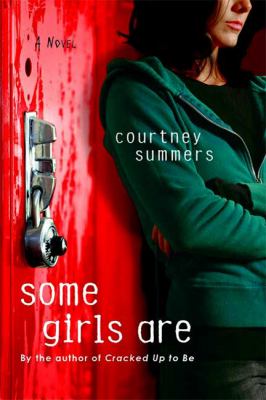
Some Girls Are by Courtney Summers   some girls

Regina has bullied other girls all through high school. She’s popular. She’s Anna’s best friend. And Anna is the queen bee of the Hallowell High, calling all the shots, deciding who’s in and who’s out. What separates Anna from the typical queen bee is her sheer pleasure in hurting other people. She wants other students to be afraid of her.  She wants to see them suffer the humiliations she doles out. But she also doesn’t want to get her hands soiled. So she lets others do the dirty work, with the reward that they can continue to be her friend. Regina has done a lot to stay Anna’s best friend, and for three years, she thinks it’s been worth it. But all that changes one night at Josh’s party when everyone except Regina is drunk.

Regina is the designated driver, a role she hates because she’s so bored watching everyone making fools of themselves. But when she tries to rouse the drunken Anna from the den floor to take her home, Anna can’t be moved. Instead, Anna’s wasted boyfriend, Donnie, tries to rape Regina.

And here Regina makes her big mistake. She runs to Kara’s house. Kara who had been too sick to go to the party. Kara, whom Regina has always disrespected. The Kara that Regina was always putting in her place. So although Kara promises to help—and tells Regina she should stay quiet about the whole thing so that she doesn’t awaken Anna’s anger—she does just the opposite.

When Regina gets to school on Monday, she finds out about the rumors. There is nothing for her to do. Anna has frozen her out of the popular group, ruined her reputation and replaced her with Kara. Having the word ‘whore’ written on her locker is just the beginning of a series of more and more vicious ‘pranks’ that turn violent. The whole school is invited to an “IH8RA” website.

There’s no one that Regina can turn to, as she has alienated and hurt so many people by doing Anna’s bidding. She’s treated other people almost as badly as she is being treated now. That makes it hard to sympathize with her. What has she done to Liz to make her have a breakdown?

Yet one of the people Regina hurt is willing to give her another chance. That’s Michael, a loner who spends a lot of time writing in a journal. How does Regina endanger him just by hanging out with him?

“Do something.” Regina always thinks to herself. She wants to fix things. She wants to learn not to care what the popular group thinks. But her solutions often backfire because Anna is so good at being so bad. And because Regina doesn’t trust any adult enough to confine in them, it looks like she’s not going to be able to save Michael any more than she can save herself.

High school housekeeping: It’s my goal to read many ‘bullying books’ this year. Although all the titles I read over the summer are good, they seem to appeal to a specific audience or have a supernatural element to them. Some Girls Are is the first that deals with real problems and allows them to have the worst possible outcomes.  It has broad appeal—I think this is the one that everybody will be telling friends to read. I hope that none of you have ever had to deal with anyone as vicious as Anna or Kara, but I bet a lot of readers will recognize their type. Mean girls to the nth degree.

Posted in Family Problems, Fiction, Mature Readers, Uncategorized, Young Adult Literature | Tagged , , , , | Leave a comment

“This is What Happy Looks Like”

this is what
_

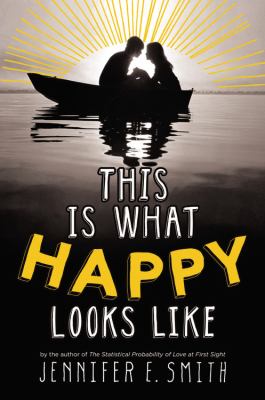
This is What Happy Looks Like by Jennifer E. Smith


I’ve already said that I needed to walk away from the bullying books for a couple of weeks. With school starting, I wanted to read something upbeat. I don’t think I could have made a better choice than This is What Happy Looks Like.


Ellie lives in a small town in Maine. One day she gets an email from a stranger asking her to walk Wilbur. As a dog lover herself, she responds and lets the sender know about the mistake. Well, Wilbur is not a dog, but a pig—yes, just like in Charlotte’s web.


What Ellie doesn’t know is that the sender is Graham Larkin, a teen movie star and countrywide heartthrob. Because the two are strangers, they joke about the pig and then realize that they like the conversation. They write back and forth for months. Graham has been having a hard time making deep connections with others due to his fame. Even his parents act strange now that he has hit the big time. So, as he continues to write to Ellie, Graham decides to remain anonymous. When the venue for his next film falls through, Graham gets the director to shoot the movie in Ellie’s hometown.


What fun for Ellie, right? To find out that the guy she has a long-distance crush on is actually a star? But, there’s the catch. Ellie and her mother have a family secret. They need to stay out of the limelight because any interest would draw attention to her U.S. senator father—who, as a married man, had an affair with Ellie’s mom years before. Ellie hasn’t even told her best friend about this, and she hasn’t seen her father in years. Now it looks like he’ll be a candidate for president.


Smith does a great job showing the spark—the chemistry—between Graham and Ellie. We get why they enjoy one another so much. And they are both fully-drawn characters, people we feel we know. We like their intimate conversations, we like the way they treat one another. We’re rooting for them.


And even if things can’t work out like they do in the movies—well, this is what happy looks like. Enjoy.

High school housekeeping: Don’t let the length of this book scare you. Many of the pages just have the text of short emails.


Posted in Family Problems, Fiction, Over 375 pages, Romance, Young Adult Literature | Tagged , , , | Leave a comment

Adult Books for Teens: “The Signal”

       The Signal by Ron signalCarlson

I needed a little break from reading those ‘bullying books’ and wanted to read an adult book. So I decided to go for The Signal because I knew Ron Carlson to be an excellent short story writer, and I figured this slim novel would be just as good.

The Signal is great reading, and I think teens who may have tired of YA formula romances will like this novel a lot. Adults should love it. It’s such good writing. While reading, I kept thinking this is what Hemingway would have written if he’s had a better understanding of women, been less of an ego. Carlson is something like Cormac McCarthy minus a lot of the violence. (But not minus all of the violence.) There’s just all this beauty in the world at the same time that danger is approaching and a relationship is going to pieces. To pull all three of those elements together and not waste words is quite an achievement.

Mack and Vonnie are taking their tenth annual backpacking and fishing trip in the Wind River Mountains in Wyoming. They’d been married, but have recently divorced. This is to be their last trip together although Mack is hoping somehow to make a connection with Vonnie. But he’s messed up so badly recently. His mistakes began with the good intention of saving the ranch that had been in his family for generations. This made me think of how adults always told me, when I was young, that the road to hell is paved with good intentions. It was a common aphorism.

In The Signal, Mack has landed in a sort of hell on earth, never mind an afterlife. He has worked for shady characters, not questioning the drug deals that he must’ve known his employer was setting up. He’s been involved with a broken woman, hurting both her and Vonnie. Finally, he started working for a man his father knew, someone making a lot of money in what seems to be unofficial government operations.

When things continue to go badly for Mack, he, in a drunken rage, attacked the car of Vonnie’s new boyfriend, and ended up in jail.

Now, on his trip in the Wind River Mountains, he hopes to make a lot of money by finding something for that unofficial government operator—something that crashed landed and needs to be recovered. He’s bit off more than he can chew. And considering the enemies he’s made over the last several years, there’s more at stake in this trip to the wilderness than he understands.

High school housekeeping: The Signal is a short and powerful adult novel. It’s full of danger, the opening of old wounds in a complicated relationship, and life in the outdoors. It shows the world from a guy’s point of view, one who has really messed up, but one with whom we sympathize. I’d recommend it to anyone, but if you are a guy who doesn’t read a lot and is ready (or being compelled by a teacher) to read a novel, this would be a good choice. You’ll care about Mack and the people around him. Your teacher will be impressed by your good taste in literature.  🙂

Posted in Adventure Stories, Family Problems, Fiction, Romance | Tagged , , , , , , , , | 2 Comments

Common Core and Nonfiction: Adult Books for Teens: “The Irregulars”

irregulars

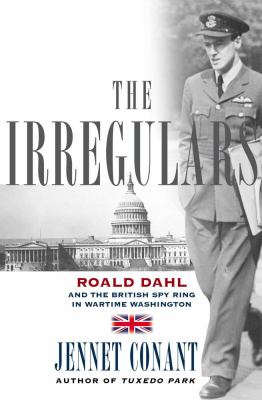
The Irregulars: Roald Dahl and the British Spy Ring by Jennet Conant

Most of us know Roald Dahl through his weirdly fun children’s stories. Even if you haven’t read those stories, you’ve probably seen some of the movies made from Dahl’s work—James and the Giant Peach, Matilda, The Witches, Willy Wonka (from Charlie and the Chocolate Factory). But Dahl’s entire life was wildly interesting, and his stint as a British spy in the United States during World War II is as engaging a story as anything he wrote for children.

The British Security Coordination had a secret mission to get the United States involved in World War II. The Irregulars, as these British spies in America were known, were named after characters in Sherlock Holmes’ mysteries.

This might seem odd now, but at the time (1939-40), there were many Americans who were isolationists and didn’t believe that the war was a U.S. problem. Unfortunately, there were also some famous anti-Semitic people (the popular aviation hero Charles Lindberg among them) who were Nazi sympathizers. A Canadian spymaster named William Stephenson (nicknamed Intrepid) was tasked with making Americans believe that the war was a danger to them. He and the Irregulars were to create sympathy for the British, and with that sympathy, generate funds for the fight in Europe.

So what to do? Well, it might surprise those of us without connections to power, but a lot of the work was achieved on the ‘cocktail circuit,’ that is, at parties in the homes of the very rich and very powerful. The Irregulars would spread lies through influential people. These men had to be suave enough to be invited to such parties. Dahl was not only very good looking. He was also a war hero—a pilot in the Royal Air Force whose military career ended with a crash—and a great storyteller (a very useful skill at a dinner table full of strangers). He was not the only interesting man on the job. Handsome Ian Fleming, creator of the fictional spy James Bond—007—was among the group. Needless to say, he loved tools that contained secret weapons, such as a pen that ejected gas. Other Irregulars were willing to try out spy tools such as truth serum. (That was an experiment gone wrong—one of the many entertaining parts of the book.)

The Irregulars passed more than gossip. To get then President Roosevelt to push for loans (and the Lend-Lease Act) for the British, the BSC created a map of South America and made U.S. officials believe it was a Nazi product. It showed how Nazi Germany planned to split up South America, including the (then U.S. controlled) Panama Canal. In fact, they’d do just about anything, including sleeping with married women and passing on false information.

Most of what they did worked. Reading about allies who were secretly (well, sort of) working to alter the course of the U.S. policies is surprising fun. A lot of U.S. citizens might have resented this ‘spying’ if they had known about it. J. Edgar Hoover wasn’t too thrilled. But from our current perspective, it’s amusing stuff, and knowing the how and why of the BSC will help you learn about truly important events from World War II.

High school housekeeping: If your history teacher asks you to read nonfiction, particularly about WW II, this is a great choice. It’s a little longer than some choices at nearly 400 pages.  But you’ll see how a well-researched document can be highly entertaining. You’ll learn about the BSC, but you find information on so much more as well. And Dahl and his friend are so much larger than life—not always in a good way—that you’ll find them quite human and fallible while deeply admiring their talents and their place in history. You’ll encounter several famous people, get some interesting background on Franklin and Eleanor Roosevelt, and learn other facts of Dahl’s biography—his success in writing, helped along by a very rich American mentor, and his life with actress Patricia Neal. Not bad for a single book.

Posted in Adventure Stories, Biography/Memoir, Historical Fiction/Historical Element, Non-fiction, Over 375 pages | Tagged , , , , , , , , , | Leave a comment

Bullying Books: “The Astonishing Adventures of Fanboy and Goth Girl”

Fanboy

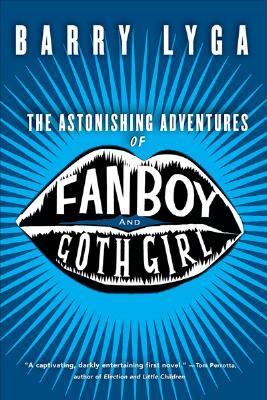
The Astonishing Adventures of Fanboy and Goth Girl by Barry Lyga

Fanboy puts up with the bullying he receives throughout his sophomore year of high school by hanging on to a few things he regards as good: his friend Cal—a popular jock, but also secretly a comic book fanatic; his late-night writing and illustrating of an original comic book which he hopes to have published; the knowledge that he’s the smartest kid in his school and can leave all his tormentors behind in two years; and a bullet he carries every day, one he uses as a sort of worry stone.

It seems that Fanboy will just continue his miserable existence with his pregnant and self-involved mom and his stepfather, whom he calls the ‘step-fascist.’ To ease his suffering, he keeps a list of all the people who have done him wrong and sometime fantasizes about school shootings in which they are hurt. But one day he receives an email from Kyra—Goth Girl—questioning why he puts up with the school bullying. She has images of him being repeatedly slugged in PE class while the teachers all stand in a corner and talk. Suddenly, Fanboy has a second friend, one he can claim in public.

But Kyra is one messed-up girl. She lies out of habit and has dark secrets. She is volatile and often irrational, getting into arguments with Fanboy that result in wildly inappropriate behaviors, cutting him off, and then reappearing in his life without explanation. Yet she understands Fanboy’s creative drive and his insights about the hollow experience of his education. She both helps and hinders Fanboy.

What Fanboy learns about coping and about standing up for himself against his tormentors makes The Astonishing Adventures of Fanboy and Goth Girl a worthwhile read. That said, I do worry that if you aren’t a comic book fan yourself, or at least someone who has seen several superhero movies (and there are so many that are popular right now), you might get lost in the discussion of comics and comic book creators. If you happen to be a comic book fan, I think you’ll love this novel and the richness of Fanboy’s obsession with his artistic pursuit. Goth Girl remains an enigma to the end. The novel doesn’t have the tidy closing that most YA novels do, and that might be a problem for some readers. But if you think about friendships and romances in real teen lives, you’ll find that Fanboy and Goth Girl is often spot on.

Posted in Family Problems, Fiction, Romance, Young Adult Literature | Tagged , , , , | Leave a comment

Adult Books for Teens: Biography: “The Los Angeles Diaries”

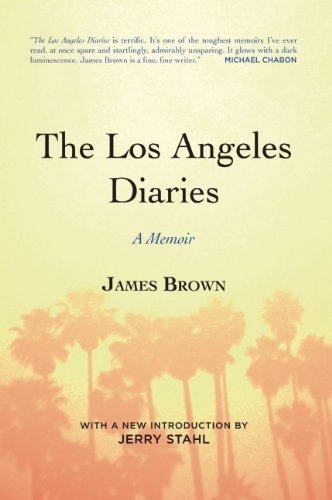
los angeles diaries  The Los Angeles Diaries: A Memoir by James Brown

James Brown begins with that phenomenon of nature that all of us here in the Inland Empire know: the Santa Ana winds. We’ve seen the uprooted trees and downed powerlines in front of our schools, the smashed fences in our backyards. And we know about and fear the fires, and that less natural phenomenon, the arsonist.

And so Brown begins by speaking directly to our experience, and continues to do so. Though heartrending, many of the details of his biography are not so uncommon. There are the crazy lives he and his siblings lived with their unbalanced mother, his drug abuse at an early age, his alcoholism and the way it wrecked his marriage. That he not only survived all of this, but later moved on to have a creative life would be reason enough for me to recommend the book to you.  Well, that and the fact that Brown doesn’t waste any time blaming others for his addiction and missteps.

Fortunately, there is so much more here, packed into a tightly narrated work, in what feels like a group of loosely-woven short stories, organized not by chronology but through emotional connections.  For example, the thoughts on the Santa Anas lead to the story of Brown’s mother leaving him in the car while she runs out to set an apartment building on fire, an act which costs a life.

The book itself is littered with (well-deserved) praise from many famous people, but the comment by Janet Fitch is the one that struck me as closest to my experience with The Los Angeles Diaries: “Oddly inspirational, the tale of the last man standing.” In part, Fitch is referring to the fact that both Brown’s sister and brother committed suicide. This is certainly a story of survival—and of survivor’s guilt. That it is so well written is the bonus that makes me want to hand it to you when you when come in to the library for a biography.

Since I am dealing with high school and with assignments, I want to add the housekeeping details that only pertain to our particular situation: The Los Angeles Diaries is exactly 200 pages long—that is, the exact number of pages that many teachers use as a minimum requirement. This, I know, will thrill some of you. Since each chapter reads like a stand-alone story, I don’t think you’ll have any problems stopping and starting; you won’t get lost, and each new day’s reading will be a sort of fresh tale. Oh—and you are going to love the story about how the alcohol-addled Brown, in hopes of making up with his wife, buys her a pot-bellied pig.

Posted in Biography/Memoir, Family Problems, Non-fiction | Tagged , , , , , , , , , | 1 Comment

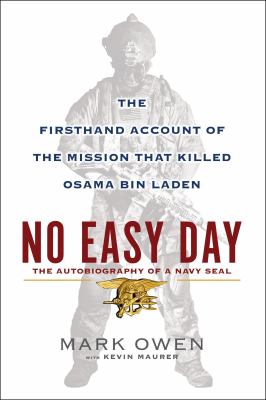
Adult Books for Teens: Biography: “No Easy Day”

no easy day

No Easy Day: The Autobiography of a Navy SEAL

by Mark Owen with Kevin Maurer

The Firsthand Account of the Mission that Killed Osama Bin Laden

As you read the sub-sub title above, you know why this book has been a bestseller, available even at Costco, where everyone can pick it at deep discount. Who doesn’t want to know what really happened in the raid on Osama Bin Laden’s compound?


Mark Owen—a pseudonym, meant to protect the mission, although Owen’s real name is very easy to find online—was there. And he gives the reader all the thrilling, frightening details of the night Bin Laden was killed and its aftermath. You can follow the story by studying the accompanying illustrations of the compound showing who was in which building and where one of the helicopters crashed at the outset of the mission. It’s heart-smacking stuff.


But before Owen gets to that story, he details the long history of his life as a Navy SEAL—of becoming a member of SEAL Team Six, of the many missions he participated in, including the rescue of Richard Phillips, captain of the Maersk Alabama, which was captured by Somali pirates in 2009. Most of his service is the grind you’d expect it to be, with details on all the equipment special service members use, on how they store and pack it, on the patterns of their training, and how they develop friendships among their members.


I’d like to say that all of that description is breathtaking stuff because—well, who doesn’t want to have nothing but praise for a hero? But the truth is that I think those many chapters before the Bin Laden raid will have the most appeal to teens thinking about service to the country—whether in special forces or not.


I think it’s OK to tell the truth and say that much of this is pedestrian stuff. I probably should have read it in a few sitting, but I kept walking away from it, starting (and finishing) another book, then coming back. I made the mistake of not looking through the photos of military equipment, such as guns and helicopters, that are in the middle of the book until I read to the middle. I suggest you look at these and read the descriptions before starting the book.


I ended up liking No Easy Day as a whole because the truth is that being a hero isn’t something that happens overnight. The fact that Owen went through years of training, some of it grueling (some of it boring), and also had to be in the right place at the right time before he could participate in the mission are important things to know. If you think you can just walk into military service and do this sort of thing, then you must read this book for a reality check. Lots of preparation for big events (and I’m thinking in any walk of life, not just military) is about being willing to slog through the training and practice.


Owen is grateful for the service of many elite forces—the SEALs and others who work with them, such as EOD specialists. He is donating much of the proceeds from the sale of this book to organizations that help these folks, such as the All in All the Time Foundation. And he gives us ideas of how we can support our troops—ideas that beat the heck out of throwing a yellow ribbon magnet on the back of the car and calling it a day.


Posted in Adventure Stories, Biography/Memoir, Historical Fiction/Historical Element, Non-fiction | Tagged , , , , , , , | Leave a comment