Horror! “Unnatural Creatures: Stories Selected by Neil Gaiman”

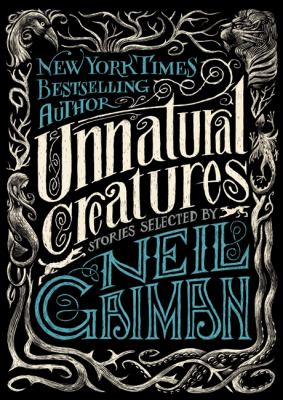
Unnatural Creatures: Stories Selected by Neil Gaiman     unnatural creatures

Lots of teens know who Neil Gaiman is. They’ve read some of his books or seen movies made from those books–Coraline, The Graveyard Book, Neverwhere. And Gaiman’s written several frightening adult books too, if you’re ready to try one of those.

If you are looking for something in-between–say something scary but that lends itself to reading in the 15-minutes of SSR time–why not try Unnatural Creatures? These are sixteen stories selected (not written) by Neil Gaiman for young adults (that’s you). They all have the creep factor, and the lot of them will take you through October’s SSR sessions and right into Halloween.

Posted in Uncategorized | Tagged , , , , , , | Leave a comment

Adult Books for Teens: Common Core: “The Devil in the White City”

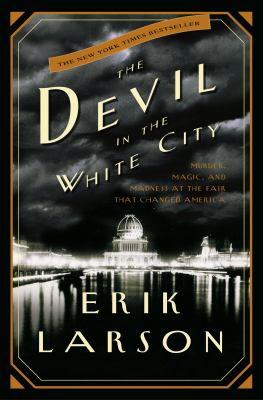
The Devil in the White City by Erik Larson   devil in white

The World’s Columbian Exposition took place in Chicago in 1893 and was commonly known as the Chicago’s World Fair. It was a beautiful triumph of architectural genius, of hard work inside a too-short time table, and a period of glory for Chicago, which stood in the shadow of the more cultured and refined New York City. In a period of economic recession and joblessness, Chicago was able to pay back all the investors in the project and made a profit to boot. All of these things were no small feat. With the city’s reputation at stake, Chicago created the “White City,” the court of honor of the fair, where all of the white neo-classical buildings surrounded a wooded island on a lagoon. The effect of its beauty was stunning.

Of the millions of people who came to the fair, most had ever seen anything so glorious. In addition, they learned about new products (Shredded Wheat was introduced here). They had a blast on the Midway, which featured the gigantic engineering marvel the Ferris Wheel, the first of its kind. It could hold 2000 passengers at a time. It was invented in answer to a challenge to out-do the Eiffel Tower, the centerpiece of the last World’s Fair, which took place in Paris.

When the city and its architects had worked so hard to succeed, and had done so in such a grand way, what could sully the country’s memory of that period and that place?

A man named Herman Mudgett, who went by the name of Henry H. Holmes. Well most of the time. He has some other aliases when he was wooing women that he would later kill.

Dr. Holmes was a psychopath and a serial killer. His victims were primarily women, young and naïve, who had come to the big city to experience the fair and to find work. Because of the fair, there was work—construction, of course, but also jobs in the new hotels that sprang up to accommodate all the tourists.  Holmes built one of those hotels. But it was a strange place. Some of the rooms were at the end of hallways to nowhere and had no windows. A room off of Holmes’ office was air-tight, lined with iron and had an opening for a gas jet. Many young women disappeared from this hotel, never to be heard from again.

No one knows how many people Holmes killed, but it appears that it was at least 25. (Some estimate 200 people, although the author, Larson, tells us that is probably too high a number.) This was just a few years after Jack the Ripper, who killed far fewer people, terrified London. Why do we know so little of Holmes’ murder streak in comparison? Primarily because he was so good at getting away with it, the police never suspected him until years after the fair had closed.

Holmes was very charismatic. He had stunning blue eyes. He entranced women, and they fell in love with him. He married them, or pretended to—he was ‘married’ to more than one woman at a time. After he had a woman fully under his control, he murdered her. Control over others, according to Larson, appeared to be his motivation. The reader may be astonished by how naïve some of the young women were—how they trusted him even as he used aliases and asked them to turn over their assets to him. But, as I’ve mentioned in earlier reviews, whatever charisma is, it goes a long way in hypnotizing people into foolish behavior. Usually, this only costs them some money and some pride. Unfortunately, in the case of Holmes, it cost many people their lives.

Holmes not only killed young women. He murdered his business partner to get a life insurance payment. And then, inexplicably, he murdered three of that man’s children while he was acting as their guardian. He was only caught because the insurance company decided to investigate the death of the business partner.

This is a fascinating book that juxtaposes the two tales of a single city. I recommend it to anyone.

High school housekeeping: This is another book that I believe is the sort that the framers of the Common Core are hoping you’ll read. The story is great. Of course, the strangeness of the serial murders is intriguing. But the planning and building of the World’s Columbian Exposition is also crazy-good stuff. The genius of the main architects (Burnham and Root), the landscape architect’s vision, and the engineers’ marvels are pitted again a slowly working planning commission and nature—which refused to cooperate, bringing devastating storms. Yet with all the odds stacked against having the project completed on time, the White City opened to high praise.

In addition, you’ll learn a lot about history just by seeing what goes on at the fair. I mentioned that Shredded Wheat was introduced there, as was the Ferris Wheel. It was also the first time alternating current had been used in electric lighting. In an epilogue to the book, Larson reminds us of other significant happenings: Walt Disney’s father helped to build the White City, Frank Baum the author of the Wizard of Oz may have modeled the Emerald City after it. Frank Lloyd Wright, the famous architect, picked up ideas. The Lincoln Memorial is made in imitation of the fair’s buildings.

There is a map of the World’s Columbian Exposition as well as a few photographs that will give you a taste of the period and the place. Larson discusses his research, which could be both interesting and helpful to you as a young beginning researcher, readying yourself for college.

Posted in Historical Fiction/Historical Element, Non-fiction, Over 375 pages | Tagged , , , , , , , , , , , | 5 Comments

Bullying Books: “I Swear”

I Swear by Lane Davis    I swear

Leslie Gatlin commits suicide in the prologue to I Swear, fulfilling the wishes of a group of girl bullies, who had been urging her to kill herself.

Why did these girls do this? Much as in Some Girls Are, the girls are following the instructions of the school’s queen bee, Macie Merrick. Macie has two faces. She is the class president. She is the daughter of a Washington State senator. Like him, she is extremely good looking, and has a silver tongue, knowing just what to say to please the people around her. She has charisma and can charm the socks off her classmates. And like her father, Macie is a practiced liar, one who objectifies others while using them to reach personal goals.

But why pick on Leslie Gatlin, a move that could smirch Macie’s own reputation?

Leslie has got the eye of Jake, the guy that Macie wants. But Jake is on to her tricks and wants nothing to do with her. Macie wants revenge. If she can’t have Jake, then no one can.

The book opens with the girl group—Macie, Jillian, Beth, Krista, and Katherine—sending an email to Leslie entitled “Top Ten Things to Remember in Your Suicide Note.”  (#4 Tell everyone how sorry you are that you won’t be at prom this year, so someone else will have to be “worst dressed.”) When Leslie actually does kill herself, all of the girls want to scramble away from their part in bullying her. No one accepts any responsibility. Macie is even using her father’s political power and his staff to protect herself. In a horrific ploy, she announces—in front of TV cameras—that she is starting a teen suicide prevention club at her school.

With Leslie’s parents pressing charges and all of the girls making depositions under oath, Macie tries to see which ones she can throw under the bus. The girls and a few guys like Jake, work back through their memories of how this whole thing started until the book winds up where it started—the night of the “Top Ten” email and Leslie’s suicide.

This is a powerful book about a very real kind of bullying—both online and in person, at school. The organization—each chapter is from the point of view of one of the characters—works well except for the little set-ups to get the characters thinking. (Too many trips to the video store and Starbucks for me, but that may not bug most people.)

High school housekeeping: I recommend this book for anyone. The rotten and narcissistic characters are very realistic as are those more sympathetic. Again, we can see that people who combine their efforts at being mean can do a lot more damage together than they can individually. In this way, the book is not only like Some Girls Are, but also like Thirteen Reasons Why. Fans of Thirteen Reasons who are looking for something similar have just found it.

Posted in Controversial Issue/Debate, Family Problems, Fiction, Young Adult Literature | Tagged , , , , | Leave a comment

Colony Library Lady has moved!

If you arrived here by searching for Colony Library Lady, you are in the right place!

The Colony Library Lady and Chaffey Library Lady sites are now combined here at School Library Lady. After September 22, 2013, the link for Colony Library Lady will no longer bring you here, so please change your bookmark to School Library Lady. Please have updates emailed to you by giving your email address in the “Follow blog by email’ link to the right. Or sign up for an RSS feed. Either way, you won’t miss any of the good books we have waiting for you!

Thanks for your support!

Happy reading!

Posted in Uncategorized | Leave a comment

Historical Fiction: “Code Name Verity”

Code Name Verity by Elizabeth Wein  code name verity

This is a must-read for teens. And for adults. It’s no more only a ‘teen book’ than The Book Thief is a ‘teen book.’ Never mind how the publisher describes it. Read it.

Since Code Name Verity deals with espionage, it is hard to give you too much summary—this is one book that will be ruined by that. So—I want you to trust me. There’s everything to love here. Oh—trust the Printz Award Committee as well—it’s a Printz Award Honor book.

The basics: A couple of young women become great friends in World War II. They are British—but don’t call the Scottish girl English or you’re in big trouble. One is a pilot, who normally taxis planes for the male pilots, who use them in battle. The other is a telegraph operator. But both are required to serve both secretly and dangerously as the war effort becomes a struggle and Nazi Germany may well overcome all of Europe. Britain is Europe’s final hope.

In a flight over Nazi-occupied France, the fighter plane that the young women are in crashes. The survivor is held captive by the Nazis and tortured for information.  She is required to write information down, but she includes a narrative of how she and her friend arrived at the moment of the crash.

This book is about true bravery—courage in the face of incredible adversity, and not just of the two main characters, but of all sorts of ordinary British servicemen and citizens as well as ordinary French folk who aid the French Resistance. And even a few double-agent Nazis.

Sometimes we say there is a breathtaking moment in a book or a movie, and we don’t mean it literally. In Code Name Verity, think of literally sucking in your breath at the shock and being unable to let it out.

Code Name Verity deals with individual acts, courage, and moral ambiguity.

High school housekeeping: I recommend this book for all readers. You’ll learn something about WWII in Europe and the roles of both women and men. The afterword by the author, where she tells us about how she did her research, and how she decided which scenes would be credible and which scenes would have to be left out,  is great stuff. You can use this as a fictional springboard to do your own research on many issues from WW II—the Royal Air Force, the French Resistance, women in WW II, fighter pilots, Britain during the war, etc.

A little note on the use of the word ‘fag’ in the novel: As you are American teens, you may wonder at the word ‘fag’ used throughout the book—how people are trading them, giving them as gifts, etc. No worries—in Britain (and I believe this is still true) ‘fag’ is a common term for cigarette. In fact, there’s a history behind that use and the derogatory use of the word for a gay man. You could research it. Very sad.

Posted in Adventure Stories, Fiction, Historical Fiction/Historical Element, Horror/Mystery/Suspense, Human Rights Issues, Young Adult Literature | Tagged , , , , , , , , , , , | Leave a comment

COHS teacher discussion: “The Global Achievement Gap”

global achievement

This is a guest entry by COHS teacher Nathalie Bellitti

The Global Achievement Gap: Why Even Our Best Schools Don’t Teach the New Survival Skills Our Children Need—

and What We Can Do About It (2008) by Tony Wagner

CHAPTER 5

Motivating Today’s Students

– And Tomorrow’s Workers 

            The author starts the chapter by stating that both business leaders and educators agree on one thing: they worry “about the decline of work ethic among young Americans.”   Teachers do not know anymore how to motivate students to do basic things such as completing their required work and memorizing their lessons. They do not feel that students care about the quality of their work, if they do their work at all.  The lack of respect for authority is one of the chief complaints as well.  Employers have also noticed a increase in job hopping mainly due to attendance issues and a lack of work ethic.

            However, some educator and well as business leaders have identified some key elements that may have been misread, such as “They don’t have less of a work ethic. They have a different work ethic”.  Many people believe that students and young workers are just motivated in a way that is unique to their generation, and that we need to understand them in order to educate them efficiently and to prepare them to become productive in their future workplace.

            So, what does it mean to grow up digital?  The internet has radically changed the way that this new generation, the way that electricity changed people’s daily life at the beginning of the 19th century. The author goes on to give staggering numbers of how much time teenagers and college students spend on the internet every week.  From all of this, some new patterns are already emerging quite clearly:

·         Young people are good at multi-tasking and are constantly connected: they actually call it “continuous partial attention”, and only doing one task at a time is extremely boring to them!!  Sites like MySpace and Facebook have become “the ultimate mall where teens can meet and chat”.

·         Instant Gratification and the Speed of Light: young people want the answers right away and they want to know if it is right or wrong.

Based on all of the above, some new learning styles are emerging at school and at work, and they must be taken into consideration: “the use of the Internet and other digital technology has transformed both what young people learn today and how they learn.”

1.      Learning Through Multimedia and Connection to Others: the Net generation prefers to do research online, and to have access to a wide variety of media in the classroom as well to keep them engaged

2.      Learning as Discovery: young people constantly discover new things as they research on the internet and need to become “their own librarian”

3.      Learning by Creating: the internet is not for researching anymore, it encourages creating from blogs to photo album to uploading videos…..

4.      Cautions:  there are some important concerns that we need to take into account, such as:

          multi-tasking comes at a cost: a stressful life-style where it is more difficult to reflect, make decisions or even think creatively

          we rely so much on cell phones and text messaging that we forget to interact directly with other people

          “this generation has been entertained to death” and avoids all type of learning that is not considered “fun”

          there are some things that cannot be discovered, such as time tables and things that you need to memorize

          how do you recognize art and differentiate between what people spontaneously put on the web vs. a proven work of art?

          Researchers do not agree on what long-term consequences may be, but all of them agree that the internet is changing people’s lives and behavior

The author believes that “they have to be interactive producers, not isolated consumers”, and that key idea needs to transfer at school and at work.  There is too much of a gap between what students really like to do after school and what they are forced to do in the classroom: “if you tap into the kids’ interests, they are motivated.” The author also acknowledges the importance of the relationship between teenagers and their teachers as well as their parents. He stresses how students expect and need support and trust from both, instead of the pressure of just getting good grades.  Some of the recurring themes are that young adults crave having sense of dignity associated with their work, and that the more responsibility you give them, the more they will produce. These were exemplified by young adults working for either Google (management level) or Toyota (factory level).

Finally, the author goes over the difference between Overachiever and Unengaged students by showing a real-life example of each one.  Through these stories, he shows how important for teachers to understand what each group’s needs are and to address them differently.  This is a much more important process than worrying about how to improve test scores!  Adult mentoring is also key to motivating students and working young adults. Michael Jung also concludes that there are only three reasons why people work: Push (need, threat or risk), Transfer of Habits (habits based on social norms and habits), and Pull (interest, desire and passion).  Previous generations were motivated by Push and Transfer of Habits, but it is not enough any more for the Net Generation.  This generation is motivated by Pull, and if they can find it in school and the workplace, they can be very productive.

Posted in Non-fiction | Tagged , , , , , , , , , | Leave a comment

COHS teacher discussion: “The Global Achievement Gap” Chapter 4

global achievement

The Global Achievement Gap by Tony Wagner, Chapter 4

Reinventing the Education Profession

 The Trouble with Educators

 Teacher Preparation: Teacher preparation programs are terrible because the required classes are irrelevant to teaching, and students don’t get useful feedback on their lessons or performance. Education school faculties don’t understand the current challenges in schools.

Administrative Preparation: Future administrators are not taught how to be change leaders or even how to effectively supervise teachers. Programs appear to be a random collection of courses.

“What one has to do to become certified as a teacher or administrator is nearly identical to what students have to do for a high school diploma—take a disjointed collection of courses of uneven quality and the pass tests that rarely measure the skills that matter most.”

Teaching Practice: No one in schools has the time to help new teachers. Evaluation of teaching is poorly constructed with periodic 10-minute visits and later discussions about what was observed. Evaluation forms–checklists (‘satisfactory’ or ‘needs improvement’)–don’t help teachers improve or even know what they should be working on. Lousy preparation causes ‘teacher dropout,’ often within five years. The national cost of this dropout is seven billion dollars annually.

Administrative Practice: Too much time is consumed in day-to-day management, leaving no time or energy for working on what is happening in the classroom.

Wagner finds that his own teaching and administration was trial and error. He did a lot well, but he didn’t understand why it went well and couldn’t articulate what he was doing right.

Through personal experience and working with teachers, Wagner has found that:

·         Districts must limit their priorities and think about their “theory of action”—think systemically and use questions such as ‘What is the real problem you’re trying to solve, and how do you know it’s the most important problem you should be working on?’ They need to ask questions about strategy and accountability.

·         Sometimes superintendents have their personal ‘babies’ (projects) and everyone is afraid to tell them why there are issues/problems with it. Since schools and districts are run through ‘top-down’ management, these bad ideas become runaway trains.

·         In addition, though teachers will agree on the goal (improve student learning), they don’t agree on the methods, even judging lessons as effective or ineffective with no set criteria.

Wagner argues for a fix:

To make teacher and administrative preparation meaningful, teacher preparation should be more like business, law, or medical school with case studies, more mentoring, and hands-on experience. The Ed.D. degree should be replaced with the equivalent of an MBA for school administrators. (Some examples of current change in administration programs are given.)

An example of good performance-based assessment is found in the National Board for Professional Teaching Standards (NBPTS). A Pennsylvania State Department of Education study found that impact of NBCTs include:

·         Students score 7-15 percentage points higher on year-end tests and NBCTs are more effective with minority students; NBCTs’ students surpass students of non-NBCT in three-quarters of all comparisons and gains are equivalent to spending an extra month in school.

·         Math NBCTs helped 9th and 10th grade students achieve larger testing gains and were particularly beneficial to special-needs, African American and Hispanic students.

·         Students of NBCTs exhibited deep learning outcomes more frequently.

States should require teachers to update portfolios (NBCT-style) to keep their licenses.

Teachers should have regular critiques of their performance.

Worry over issues of teacher autonomy and tenure should be funneled into union negotiations for changes in working conditions, as well as better compensation, evaluation and promotion.

A study of 25 highest-performing school systems in the world (measured by the PISA tests) shows that three things matter:

·         Get the right people to become teachers

·         Develop them into effective instructors

·         Ensure that the system is able to deliver the best possible instruction for every child.

There should be an equivalent to NBCT for administrators.

The Trouble with Educational Culture

The culture of education must change as educators are profoundly isolated. Traditionally, people who choose to be educators like to hone their skills, work alone, and value security and continuity above change and challenge.

Authority and accountability is top-down and creates a culture of compliance (which some teachers give lip service to and then do whatever they want in their classrooms).

Bad teachers exist not because of tenure and unions (Wagner has experience with private schools without those) but because educators are extremely reluctant to criticize one another, and administrators have no idea how to evaluate teachers anyway.

Policymakers must be willing to fund a different and more expensive system of training and professional development for teachers. The example of Japanese teachers is given: half of the day is spent teaching, the other half working with colleagues on planning and perfecting lessons.

“Teachers and administrators, working alone all day every day, cannot possibly meet the new demands for improvement that are being thrust upon them with increasing urgency from all sides.”

“Isolation is the enemy of improvement” (Anthony Alvarado as quoted by Wagner).

“What we don’t know yet is whether American taxpayers and our government care enough about the future to pay educators a more professional wage and to provide them with the working conditions they need to succeed: smaller classes, teachers organized into teams with shared responsibility for groups of students, more effective coaching for continuous improvement, better and more frequent local assessments of students’ progress, and more time to work and learn with colleagues.”

How then do we improve instruction?

·         First, make the classroom walls transparent. “I truly believe that viewing and discussing videos of teaching and supervision is the single most effective strategy for improving instruction for all schools.”

·         Second, have a clear definition of rigor.

·         Next, let go of “the outdated, compliance-based ‘command-and-control’ mindset that still seems to characterize many of our public education bureaucracies.”

·         Reinvent the culture with the new three R’s

o   Rigor: it focuses on a thinking curriculum (student thinking rather than the right answer responses)

o   Relevance

o   Relationships

Posted in Non-fiction | Tagged , , , , , , , , | Leave a comment

Adult Books for Teens: Common Core: “Creation”

creation    Creation: How Science is Reinventing Life Itself by Adam Rutherford

Here’s a book title that I was surprised to find is not hyperbole. Science really is creating new life forms. Rutherford doesn’t mean cloning life forms we know. He means altering the structure and components of DNA and coming up with odd hybrids of life—such as a goat that excretes spider web silk in its milk.

The sorts of stories Rutherford tells are the ones that science fiction has often warned against, the monsters that come from the imagination of our Frankensteins. So, should we be afraid?

Rutherford, a geneticist, a writer and editor of the prestigious science journal Nature, and a presenter of programs for the BBC in the United Kingdom, is not particularly worried about the gains scientists have made in creating life. He regards this as “a golden age in biology.” This book, in part, takes the time to reassure the reader that all will be well. To do so, Rutherford even contends that the world’s best-known bogeymen (think Monsanto, for example) are not empowered to wreak havoc on our planet’s future.

Rutherford makes a good case for synthetic biology and synthetic genetics, but before he does, he reviews what is known about life and its origins. We take the tour of the history of life starting with the big bang and Higgs Boson (and the current experiment with the Large Hadron Collider to re-create that big bang), tour the development of the cell (and how mitochondria within cells point to a common origin of all life forms), and move through the structure of DNA, again, with a discussion of the evidence of a common origin for all life forms.

In addition, what it means to be alive is defined—well, sort of. A handy definition is “Life is a process that stops your molecules from simply decaying into more stable forms.” But I do like the longer version explaining Schrodinger’s argument; “Living systems are the continual maintenance of energy imbalance. In essence, life is the maintenance of disequilibrium, and energy as life uses it is derived from this inequity. . . . The entropy of the universe is bound only to increase, thereby ultimately creating a more balanced but less ordered existence.” Sounds almost philosophical, doesn’t it?

Rutherford tells the reader that “synthetic biology means different things to different people,” but explores it by looking at the world as a toolbox full of tools provided by evolution that are then available for creating new life-forms. One of the ways of creating these new life-forms is by altering DNA. DNA is shown to be a “data storage device” and scientists can now alter the available data.

Interesting  discussions of examples of synthetic biology include “Synthia,” a single synthetic cell created in 2010, and “Freckles” the goat, with her golden orb-weaver spider genetic code, which causes her milk to have spider silk in it. Of course, Rutherford discusses the value of these things—spider webs have important properties (they are very elastic and strong) that may be very useful in many applications.

There are reasons for man to explore changes in both plant and animal life. They have to do with feeding a hungry world as less and less land is arable in a more extreme global climate, and with medical advances that will save lives. But whether you agree with Rutherford that these changes are harbingers of a golden age or whether you want everything to go back to organic, it is important to know what is happening in our world. And Creation is a good place to start finding out.

High school housekeeping: I read this book partly because I am a curious creature and want to know about synthetic biology, but partly because I think it is exactly the kind of book that the designers of the Common Core are hoping you’ll read—an ‘informational text’ if you will, one that has facts that could prove very useful to you.

Creation is very interesting and very informative. Rutherford’s writing is clear and he often uses analogies to language and to music to make points about science easier to understand. All of this is very helpful. So, would the average high school student pick this book up and read it, bringing delight to the lives of those Common Core Dr. Frankensteins?

Well—this is a book that many high school students would be fascinated by, especially those interested in becoming researchers or doctors. But it’s not easy, despite Rutherford’s lucid style. Students who have done well in biology class will have a much easier time with the discussion of the roles and components of DNA and RNA. Though not everyone is going to follow Rutherford’s argument for synthetic biology, those who can and do will be happily enriched.

Posted in Controversial Issue/Debate, Environmental Issues, Non-fiction | Tagged , , , , , , , | Leave a comment

Adult Books for Teens: Biography: “Full of Heart”

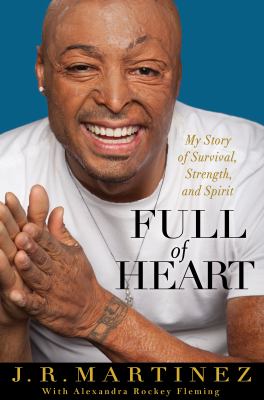
Full of Heart by J. R. Martinez with Alexandra Rockey Fleming    full of heart

You may know J. R. Martinez due to his fairly recent celebrity. In 2003, he was a nineteen-year-old soldier in Iraq. Only in the country for a month, and not yet battle-experienced, he was driving a Humvee when he hit a roadside bomb.

Martinez remembers this event in slow motion, saw his hands burning and then his face. When his fellow soldiers tried to pull him from the vehicle, his skin came away in their hands.

Martinez was a very good looking guy. He says that he was always afraid of Freddy Krueger in the Nightmare on Elm Street movies. When he first saw his burned face, he felt like Freddy. How would he ever get his life back?

The journey to getting his life back is the story of Full of Heart.

Martinez’s roots were not the kind that immediately lead to success. His mother was an illegal immigrant, who scraped together the money to come to the U.S. from El Salvador in hope of providing for her children, one of whom had no bones in her feet and, thus, couldn’t walk. Though Maria works like a dog, she makes some bad choices in men and finds herself with another child—J. R.—and a single parent. She does, however, makes some good choices in friends, and a few are a great help to her. They assist her in attaining legal status; eventually, she becomes a U. S. citizen.

In Hope, Arkansas (yes, the home of Bill Clinton), J. R. (Rene) dreams of being a football star. He carries that dream to Dalton, Georgia, where football is king. He’s not very big, but he’s determined and makes the high school team more because of his positive mindset than his talent. He works hard and improves on the field, but allows his grades to slide, ending his plan for a college scholarship. After this, Martinez decides that the army is for him.

Martinez is a prankster, full of good humor. But one of the things he learns in the army is “when you break the rules, you will be caught.” He spends a lot of time being ‘smoked’—doing endless push-ups and other drills. Once in Iraq, Martinez reflects on the strangeness of the country—how different it is than anything he’s ever experienced. But he is not there long before he is injured and shipped out for treatment.

Once Martinez begins his rehabilitation, he is reborn—this is a new life for him and he will succeed or fail based on his will and hard work. That he succeeds—in a larger-than-life way, wildly, improbably—is the crux if this story. His interviews with 60 Minutes and Oprah, his work on the soap opera All My Children and his eventual win on Dancing with the Stars are all sort of fantastical. But Martinez still regards his most important work as being a spokesman for the Brooke Army Medical Center in San Antonio where he recovered from his injuries.

High school housekeeping: Martinez’s story is as much a coming-of-age tale as the story of overcoming an injury. He’s young, a bit immature, and directionless when he is injured. He grows up very fast. This biography is pretty short—about 240 (physically small) pages. The writing is very accessible, and most high school students should have no problems reading it. I think most will be inspired as well.

Posted in Biography/Memoir, Family Problems, Non-fiction | Tagged , , , , , , , | Leave a comment

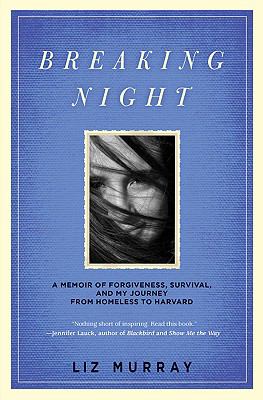
Adult Books for Teens: Biography: “Breaking Night”

breaking night     Breaking Night by Liz Murray

 Being the child of drug addicts makes for a life both frightening and weird. There’s no stability, the strangers in house can be anyone, including child sexual predators. And the parents themselves are pretty much checked out even while they’re checked in.

 Liz Murray tells her story of growing up this way. Her father was a drug dealer. He was making a lot of money selling prescription painkillers, but was caught. After that, he had no real means of supporting his family. And he was a drug addict himself, mainlining cocaine. During the day, he would roam the streets, looking through others’ garbage and collecting thrown-out objects that he considered useful gifts for his wife and two daughters.

 Meanwhile, Murray’s mother had been using drugs since adolescence. She was addicted to cocaine. She was mentally ill—schizophrenic—and it seems that she used drugs as a way of self-medicating. She is truly disabled, incapable of having a job. She receives welfare checks monthly, but with the cost of her and her partner’s (Liz’s dad) drug habits, the money is always gone in a week. Eventually, her habit causes her to contract AIDS.

 Murray discusses the love she has for her parents despite their serious failing. They also appear to love her and her sister, who vies with Liz for their parents’ affection and who plays mean tricks on her as a way of getting attention. At any rate, the child Liz often has to take care of her parents, and their roles are reversed. Her sister seems to be above the fray. She is capable of studying and going to school while the world is falling apart around her. Liz can’t manage that attitude.

 When Liz’s mom and sister leave the father, Liz stays behind. The apartment is crumbling and filthy. Eventually Liz finds herself part of the ‘system,’ living in a home for girls. She hates it and hits the streets, depending on a few friends and her new boyfriend, Carlos, to keep her safe. But Carlos is a hustler and Liz eventually realizes this. She is tired of asking her friends if she can spend the night and use the shower. She decides to go back to school. At seventeen, she has exactly one high school credit.

 Fortunately, Liz has the opportunity to enroll in a school for students whose lives have been rough. She has that second chance and takes full advantage of it. With the help of some excellent teachers, she gets a scholarship from the New York Times and heads for Harvard.

 High school housekeeping: I think most teens are really going to like this story. The ones who are fortunate will have the sense of their lucky breaks. (“But for the grace of God, there go I” as we used to say.) For those less fortunate, Murray’s tale offers hope and genuine evidence of a teen being able to turn things around. I did wonder why Murray preferred to live on the street or in cheap hotels (right next to a murder scene in one), rather than stay in the home for girls. She lacked privacy there, but there was food, shelter, and clothing. And, well, it wasn’t a murder scene. I wish Murray had given more information about her choice. But other than that, this is truly inspirational stuff.

Murray’s situation and the outcome made me reflect on the importance of teacher-mentors in teens lives. Here’s a little unasked for advice to teens: many good and excellent teachers care deeply about their students, but they can’t all mentor every student (like 160 per teacher?). They’ll connect deeply with a few. If you don’t connect with a particular teacher, it doesn’t mean that s/he is a bad person. But it does mean you need to reach out to another good teacher for help. Having a mentor can make all the difference in a life, as Murray shows us.

Posted in Biography/Memoir, Family Problems, Human Rights Issues, Non-fiction | Tagged , , , , , , , , | Leave a comment