New series for struggling readers: Urban Underground and Cutting Edge

This slideshow requires JavaScript.

I’m looking forward to talking to our READ 180 classes this week about some of the series we’ve added for teens who are improving their skills. here are a few that I like, with a review of a book from each series.

Urban Underground Series

If You Really Loved Me by Anne Schraff

Destini Fletcher hates everything about school at Harriett Tubman High except the opportunity it offers for meeting guys. Destini, a junior, has never had a boyfriend. She thinks of herself as plain and of her clothes as boring. She worries about being too fat although she’s in the slim range (size 6).

Destini’s mom doesn’t want her thinking about boyfriends. She wants her to do well in school and become ready for college.

When Tyron notices her, Destini falls for him fast. Although her teachers have been telling her she’s smart and should apply herself in school, it is only after she finds some happiness in a new relationship that she does apply herself and study. She is more cheerful and starts to help around the house. At the same time, a girl from school, Alonee, gets Destini to go to an overnight camp out to help underprivileged kids. Destini enjoys being a ‘big sister’ to one of the girls.

But problems arise. Tyron thinks that helping the kids is stupid—that those kids are just juvenile delinquents. He also makes fun of some nice people at school and seems to follow all the directions of his friend Marco, who has money, but is a jerk.

So Destini is confused about who Tyron really is. But when Tyron starts showing signs of jealousy and rage, she has the more serious concern for her safety. Is Tyron an abuser of women like his father?

Cutting Edge Series

The Only Brother by Caias Ward

The last time Andrew saw William was at Andrew‘s birthday party where loudmouth William criticized him so much that Andrew left. But that was nothing new. William was always on Andrew‘s case. And now he was lying in the hospital, brain dead. Andrew is full of rage.

So why not lash out and hurt everyone else? Online, publically. Or by smashing a fist into the wall. Maybe dance on your brother’s grave? How about hitting the parents who have neglected you in order to care for your sick brother? Maybe even neglect all friendships and end up a loner?

Why didn’t Andrew’s parents value his artistic talents, when they managed to honor everything that William did? William suffered nerve damage at birth from a forceps delivery.  Were the obstacles he overcame so much more important than what Andrew is trying to do?

How would that make you feel if you were Andrew?

Andrew may have to accept that his artistic values clash with what his parents deem as success, which is much more traditional.

But the worst thing for Andrew is that there will never be an opportunity to repair the relationship with his brother or find closure.

Or will there? When you don‘t believe in ghosts, how can your brother speak to you from beyond the grave?
Posted in Hi-Low/Quick Read, Read 180, Uncategorized, Young Adult Literature | Tagged , , , , , , , , , | Leave a comment

Adult Nonfiction: Common Core: “Quiet: The Power of Introverts in a World That Can’t Stop Talking”

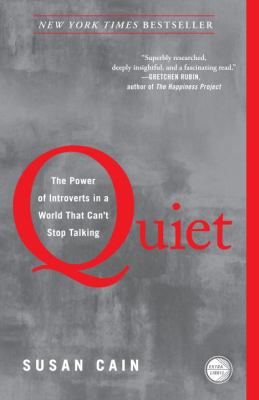
quiet Quiet: The Power of Introverts in a World That Can’t Stop Talking by Susan Cain

You know you’re going to enjoy this book when you read the ‘Manifesto for Introverts’ that follows the cover page. It includes ten points. My favorite is the first:

  1. There’s a word for “people who are in their heads too much”: THINKERS.

A few others:

  1. Solitude is a catalyst for innovation.
  2. One genuine new relationship is worth a fistful of business cards.
  3. “Quiet Leadership” is not an oxymoron.
  4. Love is essential; gregariousness is optional.

While Quiet makes a very solid case for allowing introverts to be just that, it is also directed at extroverts. It shows them how to get along with their loved ones and employees who are quiet or shy, and even how to best use their own skills in relationships and in the workplace.

Although the “Extrovert Ideal” hasn’t always been a necessity—Cain shows just how and when it became so–our culture now demands that all people be extroverts. This begins early when children who don’t want to be on sports teams are seen as broken, at least in their social skills. It continues through to adulthood, with schools playing their part to make sure that everyone is an extrovert—to succeed, to be chosen by that desirable university, students have to belong to just about everything. Cain makes the case that this is a big mistake. She gives examples of many famous introverts (my two favorite are Rosa Parks and Steve Wozniak of Apple Computers). She details all of the things that introverts bring to the table, thoughtfulness and empathy being two of the most important.

As introversion is defined in Quiet, you might find yourself thinking, “Yes, that’s me,” although you hadn’t thought so previously. This is because the stereotype is of a shy person who can’t manage social interaction. Yet while extroverts are glad-handing everyone at the party, true introverts interact in small groups and with cherished friends on a much deeper level. They can have great social skills. Though they prefer good books and solidary walks to those crazy parties, they are capable of presenting to large groups and taking up important causes if they are passionate about the goal behind the action.

Doubtless, introverts are undervalued in our culture. And that means that we ignore or refuse to tap into the strengths of about a third of the population. Cain makes a case for backing away from the Extrovert Ideal and allowing quiet folks to tap into their creativity and strengths in a way that will benefit us all.

High school housekeeping: If people have tried hard enough to convince you that the only way to be normal is to be an extrovert—and if you always feel weird trying—I hope you’ll give Quiet a read. It’s nice not only to be validated for the person you are, but to understand how important introverts are to deep friendships, to deep thought and creativity, and to larger systems like the workplace. This is a thoughtful book and not overlong. When the end notes that detail the research are omitted, it’s only about 275 pages.

Posted in Non-fiction | Tagged , , , , , , , , , , , , , | Leave a comment

Common Core: Adult Nonfiction: “Deep Down Dark”

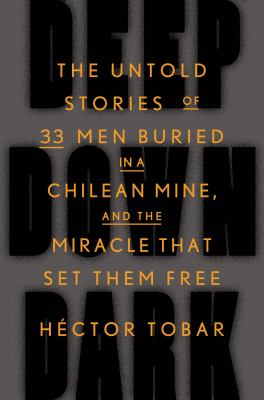
Deep Down Dark by Hector Tobar   deep down dark

Although you are very young, you may remember the collapse of the San Jose Mine in Chile back in August 2010. This was such a huge news story. Thirty-three men were trapped in the mine and the whole world was watching the rescue effort. It appeared that they must have died as weeks passed. And then, miraculously, after 17 days, all thirty-three were found to be alive. They had to stay underground for sixty-nine days, receiving food, messages, and necessities through a portal drilled for the purpose.

Engineers from all over the world ended up being heroes in this rescue operation. The mine was old and the owners had not kept up with safety standards. Rescuers kept drilling into the wrong places based on outdated maps of underground roads. Imagine being one of the miners, hearing the drilling, knowing that someone is looking for you, but being unable to do anything to help yourself, to be entirely impotent while the food ran out.

And it didn’t take long for the food to run out. The first aid and emergency kits were also dated and insufficient. But the thirty-three men made a pact to share equally. They knew it could be a long time before they were rescued, They knew that there was a good chance they would all die because the boulder that blocked the entrance to the mine was more like the Empire State Building than a rock.

And so the story of the miners and their underground survival is told. They ate only a few hundred calories a day, basically in cookies. And when those began to run out, they ate only every other day. They were starving, but had a source of water.

Any of us could imagine the tensions such a situation would produce, but until Deep Down Dark the story of the miners’ experience underground was largely a secret as they had made a second pact: to tell their story together and to reap any benefits—movie deals and the like—as a group.

So Deep Down Dark is not just the story of the collapse of the mine and the rescue effort. It is a portrait of each of the individual miners and of how they interacted as well as a glimpse into their families, many of whom camped out for months outside the mine, awaiting their rescue.

Some of the thirty-three men stand out in the reader’s mind. There is Mario Sepulveda, the man with the ‘heart of a dog,’ whose wife said, “’I knew that Mario wasn’t going to let himself die. . . . [He] is the type of person who will eat someone to survive if it comes to that.’”  There’s Yonni Barrios who has both a wife and a mistress waiting for him, and whose personal life becomes fodder for tabloid news. Dario Segovia is remembered through the actions of his older sister, Maria Segovia, who raised him and takes charge of the families’ camp. Victor Segovia keeps a diary and takes note of the noises coming from the guts of the men whose bodies are trying to digest food that isn’t there. Jose Henriquez is known as the ‘pastor,’ and daily leads the group in prayer. Edison Pena, aka Rambo, is battling depression and mental illness. And finally there is Alex Vega, whose family wrote a song about how he would survive and be returned from the bowels of the earth.

When the men know that rescuers are finally coming, their tension doesn’t ease. They argue. A fist fight breaks out for the first time. They talk a lot about how they will be rich and famous once they get out. They imagine what they will do with their money. And once they really are out, life isn’t so easy. They are hailed as heroes, but they are ordinary men and unused to the limelight. Though they are physically and emotionally exhausted, they are hustled from one place to the next in various parts of the world.  Famous people want to be seen with them. And this is often all too much.

For the reader, the rescue of the thirty-three seems nothing less than miraculous.  Yet all of their suffering is very real in its physical and emotional toll. The spiritual moments are eclipsed by the real-world pressures. And this adventure is fascinating for the reader, who, though she knows the outcome of the rescue efforts, still holds her breath for the psychic safety of the miners.

High school housekeeping: A good high school reader will be deeply engaged by Deep Down Dark. While it covers a lot of ground, it’s not overly long—about 300 pages. You may regret that there are no maps or photos to help you visualize where in the mine the men are located or how the engineers drilled through the earth and found them. I recommend pairing this book with the very short, very easy to read Trapped by Marc Aronson. Trapped doesn’t tell the story of individual miners. What it does is show you all of the pathways into the mine—the places that were supposed to be escape routes and how far they were from the actual existing tunnels. It also includes photos of the pod used to remove the men, one at a time. It discusses how the engineers found these living needles in the underground haystack.

I’m a fan of Hector Tobar’s, partly because as a journalist for the LA Times, he was kind to school librarians, taking up their cause when their ranks were being decimated during the financial meltdown of 2008 and beyond. I haven’t reviewed any of his fiction for high school students. I should rethink that—I bet you’d like his most recent novel Barbarian Nurseries.

Posted in Family Problems, Historical Fiction/Historical Element, Human Rights Issues, Multicultural, Non-fiction | Tagged , , , , , , , , , , | Leave a comment

“Hyperbole and a Half”

hyperbole and a half

Hyperbole and a Half:  Unfortunate Situations, Flawed Coping Mechanisms, Mayhem, and Other Things that Happened

 by Allie Brosh

This fun and sometimes poignant book of wacky comics and weird life lessons is taken from the author’s blog. I’d never seen the blog, but had the good fortune to read a review of the book. Once I’d read the book itself, I knew it would appeal to my students. Brosh is creative. And strangely fun. Her depiction of herself is something of a cross between a fish (wide mouth, large eyes and hair that appears to be a fin) and an insect (check out those thread-thin arms.)

Brosh tells stories of her childhood, one of the funniest of which is the first in the book—how she wrote a letter to her future self and buried in to be dug up at a later date. She covers being lost in the woods and also figuring out how to consume an entire birthday cake before anyone can stop her. Her adult antics include rescuing a dog that is beyond stupid and then getting another dog (the Helper Dog) to show the first dog how to behave. If you’ve ever had a dumb dog, you will be amused.

Brosh also tackles a few serious topics including emotional depression that appears without a known cause. She frankly discusses how she would like to see herself as a better person than she really is, something all of us are probably guilty of. Her honesty is refreshing as are her comic sensibilities.

High school housekeeping: I gave my first book talk on Hyperbole and a Half this week. The student who checked out the book said, “Oh, this book is so much like me.” Exactly as I’d thought! If you want to check out the blog, it’s here.

Posted in Biography/Memoir, Graphic Novel | Tagged , , , , , , , , , , , | Leave a comment

Reason to Breathe

Reason to Breathe by Rebecca Donovan

Emma—Emily—Thomas is good at hiding despite the fact that she’s very involved in school. She’s a straight ‘A’ student and the editor of the school newspaper as well as a track and basketball star. Yet she continually has the sort of accidents that baffle her teachers and coaches. How could such a gifted athlete fall on the ice, burn her arm, be covered in bruises from tripping and running into things?

What Emma is hiding at school only her best friend, Sara, knows. After her father dies when Emma is twelve, her mother become an alcoholic and is incapable of caring for her. Emma goes to live with her father’s brother, George, and his wife, Carol in Weslyn, Connecticut, a town of affluent, often self-centered people.

Carol resents Emma’s presence in the household. She preys upon Emma when no one else is looking. Emma understands that if she tells anyone about the abuse she suffers at Carol’s hands, Carol and George’s two younger children could be taken away from them and placed into foster care. And Emma would never want to do that to the cousins she loves. So she remains silent through all the torment, becoming the perfect victim. Her only hope is to get into a good university as far away as possible and use the Social Security death benefit from her father to pay for school.

Sara has been sworn to secrecy about Emma’s abuse and pain. But she’s having a harder and harder time sticking to that promise. Once the charming Evan Mathews, new guy in school, enters Emma and Sara’s lives, all three begin to question the plan for Emma. Because when Evan walks into the room, love steps in with him. And now that Emma is finally truly loved, she starts to understand what she deserves as a human being.

High school housekeeping: OK, yes, I’ll admit right away that those little irritants I often complain of grabbed my attention in Reason to Breathe. (Need an extra adverb anyone?) And I did find it odd that everyone in the entire school was more interested in Emma’s love life than they were in their own, watching her every public move and endlessly analyzing her motives. (Yes, we all want to be the big rock-star fish in our little pond, but we have to concede that our peers have their own lives to live—and their own hormones to deal with.)

I’m a tough critic. However, on the whole, Reason to Breathe very much moved me. A few times, to tears. Emma’s Aunt Carol is a wonderful portrayal of the narcissist next door, the kind of person who picks a victim and then blames all of her life’s problems on that victim. The blaming—and the physical abuse and mental abuse that accompany it—are irrational. And because they are irrational, the victim never knows when the next hit is coming. No matter how hard Emma works not to make waves, no matter how good she is, she will be punished.

Now that I’ve read it, I am certain that Reason to Breathe can have wider appeal at my library, and that I need to purchase more than the three copies I have and add it to book talks before the movie (or movies) come out. Because teens are just like adults in this respect—they want to read the book before they see the movie so that they can tell everyone how much better the book is!

Posted in Controversial Issue/Debate, Family Problems, Fiction, Human Rights Issues, Over 375 pages, Romance, Sports, Young Adult Literature | Tagged , , , , , , , , , , , , , , , | Leave a comment

The Ontario Teen Book Fest is in March!


March 21, 2015

9 AM-5 PM

Colony High.

Posted in Adventure Stories, Biography/Memoir, Controversial Issue/Debate, Faith-Based/Religious Element, Family Problems, Fiction, Multicultural, Non-fiction, Young Adult Literature | Tagged , , , , , , , , , | Leave a comment

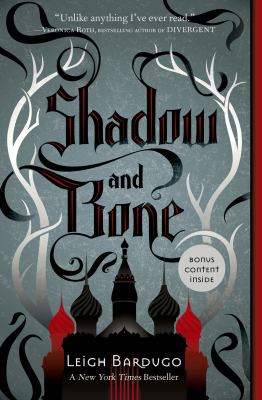
“Shadow and Bone”

shadow and bone  Shadow and Bone by Leigh Bardugo

Alina is an unlikely heroine. A lonely orphan whose only friend is fellow orphan Mal, she is raised without love or concern for her welfare. Both are recruited into the Ravka army as teens—Alina as a cartographer’s (mapmaker’s) assistant, and Mal as a tracker. Alina is a worrier and a ruminator more than an action-adventure hero. On her way to a frightening mission into the Shadow Fold, a magic and evil place, Alina is deeply fearful. The Shadow Fold, with its Valkyrie, is a great place to be killed. And Mal certainly would have been if Alina hadn’t suddenly manifested the power to summon light.

Alina’s power, hitherto unknown, is great. She is taken to live among the magical Grisha and tutored by the Darkling, a powerful and mysteriously charismatic man who is tasked with destroying the Shadow Fold. Her power, in his hands, may save the world. Yet Alina is adrift in the world of the Grisha with its court sycophants, its backstabbers and petty jealousies. She wants nothing more than to see Mal again. Although she writes to him regularly, he doesn’t answer. Perhaps the injuries he sustained in the Shadow Fold battle killed him after all. Perhaps he is just on a new mission. Her own behavior in Mal’s absence bewilders Alina. She had felt that she’d loved him, but always knew him to be a player and kept her heart’s secret. Now, she is drawn to the Darkling and the mission to save Ravka from the Shadow Fold.

High school housekeeping: I’m pretty sure that Shadow and Bone is a popular trilogy with teens, but I want to praise it because I think it deserves more readers in my own library and among my students. It has everything that a fantasy reader craves—a sense of mythology (Russian, in this case), magic, monstrous creatures, an epic fight between good and evil, fast action, creepy as well as mystical atmosphere, a love triangle, and a question of trust. Something I enjoyed was the handling of the question of good vs. evil: does good have any physical power over evil or is it just a spiritual power? That’s a question I believe most of us ask early in life. The first time I read a book with an answer that absorbed me was many years ago when I encountered Ray Bradbury’s Something Wicked This Way Comes. It’s quite unlike Shadow and Bone in its storytelling, and yet this novel brought it to mind, connecting Bardugo to one of my favorite tellers of tale.

Anyone who enjoys fantasy, myth, or epic battles of good and evil will love this novel. And it has a bonus–it’s not overwritten (and thus overlong) as so many fantasy novels are.


Posted in Adventure Stories, Fable/Fairy Tale/Fantasy, Fiction, Romance, Supernatural, Young Adult Literature | Tagged , , , , , , , , , , , | 1 Comment

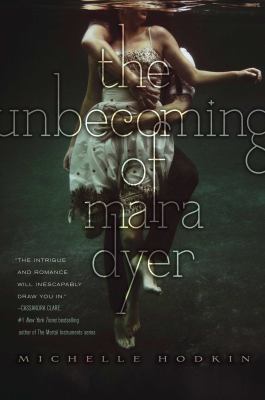
“The Unbecoming of Mara Dyer”

The Unbecoming of Mara Dyer by Michelle Hodkin  mara dyer

Awaking from a coma, Mara remembers nothing of the accident that landed her in the hospital and killed her best friend, her boyfriend and her boyfriend’s sister. They had all entered the children’s ward of a derelict psychiatric asylum on a dare.

Mara has never been one for frightening adventures. Why did she go into a building she knew to be unsafe? People, including her kind and worried parents, tell her that her memories will come back as she heals. But as Mara dreams and hallucinates, she can’t separate reality from her visions. Her mother, a psychiatrist, feels that Mara needs additional help in the form of medication and hospitalization, but agrees to give her a fresh start by moving from Rhode Island to Florida.

Florida doesn’t seem like the answer, as the wealthy and privileged brats who populate Mara’s new school do not take to her. Except for Noah, the hunky boy with the English accent who acts like he knows Mara from the moment he sets eyes on her. Dream-come-true Noah may not be what he appears, and Mara tries to keep her distance as rumors about his ‘use them and lose them’ history with girlfriends grows.

Why then does Mara’s caring and decent brother believe in Noah? Mara, too, has a deep sense of a soulful Noah that others haven’t seen. And the more she connects with him, the more she remembers about the night of the accident. And nothing about it—or about events that follow her and destroy her enemies—help to assuage Mara’s guilt. She feels like a murderer. Maybe with good reason.

High school housekeeping: I’m late coming to this novel. It’s intrigued me ever since I ordered it for my high school library. Both the title and the cover design are so appealing that I figured it would check out regularly without my help. I was right. But some of my favorite readers have recommended it to me, and I so I finally had a go with it over the holidays.

Author Michelle Hodkin owes a debt of gratitude to both the genius cover designer and the title creator; they situate the novel as something wholly original. While this doesn’t turn out to be the case—you’ll find lots of the usual tropes of YA fantasy fiction (and to be honest, you’ll like that—they are fun, and they are why you are reading this book)—there are some original and quirky twists. Though some professional reviewers found the inclusion of a murder trial to be a bridge too far, I really enjoyed the switch and subplot. I wish that subplot had concluded more neatly, but this is a “Book One.’ Not a single plotline is concluded, and the reader has to jump into the second book to see what will happen to the emotionally and mentally-challenged Mara—and anyone who gets in her way.

If you are a fan of YA fantasy/supernatural fiction, don’t miss this one.

Posted in Fable/Fairy Tale/Fantasy, Family Problems, Fiction, Horror/Mystery/Suspense, Over 375 pages, Romance, Supernatural, Young Adult Literature | Tagged , , , , , , , | Leave a comment

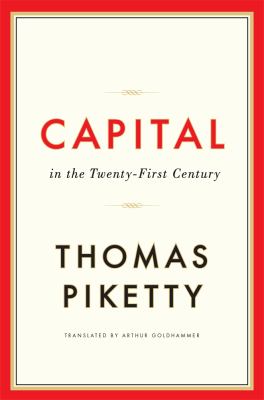
Adult Books for Teens: Common Core: “Capital in the Twenty-First Century”

Capital in the Twenty-First Century by Thomas Piketty  

How can a very small percentage of the population stockpile capital ? Why dcapitaloes the distribution of wealth in the twenty-first century seem to be so much less equable than in the twentieth century? What are your chances of becoming wealthy? Is there some way to predict what economies for the remainder of the century will look like?

Piketty’s purpose in Capital in the Twenty-First Century is to answer these questions—to use mountains of data that have previously been unavailable or misinterpreted to show the reader how the world economic situation came to be. To arrive at his answers, he has studied records going all the way back to the French Revolution and the earliest recording of estate taxes. He describes and analyzes many political, social and economic philosophies. He looks at twenty countries and their histories of wealth as well as the wealth of their citizens.

Piketty isn’t a doomsayer, and he doesn’t insist that the course of the world can’t be changed. But he does use a great deal of evidence to argue that the increasing economic equity among citizens of western countries during the twentieth century was caused by the two global wars—that we shouldn’t see economic parity as a natural result of an ever more civilized society.

Capital more naturally accumulates for those that already have a tidy sum of it. For those who have more than a tidy sum, it accumulates exponentially. This isn’t because the rich are evilly plotting to suck the life out of the average Joe. But it isn’t because they are particularly worthy or smart either. It just is the nature of capital. This makes the divide between haves and have-nots wider and wider with time. As evidence, records of inheritances and capital gained from labor are reviewed. Today, when CEO’s can made many hundreds of times the salaries of the average worker at their corporations, their labor capital works as well as any other vast sum.

Piketty’s bottom line is that the return on capital exceeds the rate of economic growth—“r > g” (and that we are asking too much to have consistent economic growth rates much above 1%). This causes inequality and can very well lead to political unrest as democratic ideals and standards fall away. So, while all is not lost, it may be if we don’t do anything about it.

Capital in the Twenty-First Century is a clarion call to look at the accumulation of capital realistically and to work to alter economic trends before we lose the gains we have made in democratic (political) systems. His solutions would not be easy to effect, requiring as they would global cooperation.( Progressive taxes on wealth in select countries would mean that capital would move to others.) But as he presents it, the stakes are so high, the world must be willing to try.

High school housekeeping: This is a good choice for a high school economics student. It’s detailed and serious, but it’s a layman’s book, written so that the average person (with little to no background in economics) can understand it. I think it’s the sort of nonfiction that the framers of the Common Core standards would like to see in high school courses. As it utilizes so much historical data—and even looks at descriptions of capital and incomes from eighteenth and nineteenth century novels—a student can cull some interesting historical facts in her reading. Any reader will certainly understand the enormity of the problem of rising economic inequity.

Posted in Historical Fiction/Historical Element, Non-fiction, Over 375 pages | Tagged , , , , , , , , , | 1 Comment

Adult Books for Teens: “Yes Please!”


yes pleaseYes Please!
by Amy Poehler

If you think that arriving at stardom just consists of lucky breaks—or tossing your screenplay onto the lap of a sleeping star during air travel—then you need the reality check of Amy Poehler’s Yes Please! Her mid-life biography recounts the long years of work she endured—at all odd hours—to get to where she is today. Poehler has been a regular on Saturday Night Live, a host of various award shows and the star of the sit com Parks and Recreation. But before that she was a waitress and an office assistant. She lived in crummy apartments in major urban areas such as Chicago and New York where she learned about comedy at the ImprovOlympic (Chicago) and with the Upright Citizens Brigade (New York).

Something I love about stories of the ‘hard times’—and Poehler’s is no exception—it that a lot of what a person endures for his or her craft engenders great creativity. And, despite those crappy apartments and weird hours, those creative years often bind you to the best friends you’ll have in your life. Poehler’s recounting of her friendship with Tina Fey is only one of such stories. She has many, and she credits numerous people who have helped her on her path to success. The stories of Seth Meyers (SNL) and fellow cast members of Parks and Recreation are both funny and touching.

A good biography always generalizes experience outward to the reader. Most likely, the reader is not on the road to stardom. Poehler connects to her reader with experiences that level the emotional field. She is entirely sincere in her confession that most of her interesting friends are not famous, and that many famous people she knows aren’t very interesting as friends. Her reflections on divorce are funny and yet true. And what’s great is that they aren’t a rant against her ex-husband, something that would get tiresome. Poehler’s advice on learning to apologize is something everyone should read. Really—even if you aren’t going to read her book, check it out from the library and read the apology chapter. It captures how difficult it is—and how necessary—to properly apologize. And a proper apology does not include excuses or wording like, “If I offended anyone, I’m sorry that they got offended.”

The one irritating piece of the book is Poehler’s long whine (or maybe it just feels longer than it is) on how hard it is to write a book—and this takes place at the very beginning, in the prologue. It has too much of the ‘poor me’ thing going. I know many writers who toil equally as hard and for a much longer period without a mega-bucks book deal, without any guarantee that they will ever have an audience. It’s a shame that the book begins this way because it makes the reader wonder if she should keep going. And she should keep going as there is so much worthwhile coming. Actually, a reader could skip the ‘a book is so hard to write’ whine altogether without missing anything.

I listened to the audio version of Yes Please! because there are some fun guests narrating—Poehler’s parents, Kathleen Turner, Seth Meyers, Carol Burnett, even Patrick Steward reading some haiku. If you can, get a hold of the audio and have a listen.

High school housekeeping: Some of you know Poehler and her work. I think you’ll enjoy her biography. It does have some colorful language, but no more than the average YA book. It’s a good choice for any assignment of the ‘American Dream today.’ It’s a good personal choice for anyone interested in a public life. And it’s a good choice for anyone who wonders how she’ll manage her creative spirit while engaging in real life—so, I guess that’s just about everyone. The inevitable student question: Is Yes Please! As good as Tina Fey’s Bossypants? Skip the opening whine mentioned above, and yes, it is.

Posted in Biography/Memoir, Non-fiction | Tagged , , , , , , , , , , , , , , | Leave a comment