“Scars”

Scars by Cheryl Rainfield  scars

It’s clear from the cover of Scars that the novel is about a girl who cus herself. It isn’t the first book I’ve read about cutting, but what pulled me into this one was the story of why Kendra is cutting and how she understands that she is in danger from the outside as well as from within.

Kendra knows that she has been sexually molested over a period of years, but she has erased from her memory the face of the man who had continually raped her as a child. As she speaks to her therapist in the opening chapter, a little note that has been placed in her backpack confirms Kendra’s suspicions. Her rapist is now following her, leaving threats that if she remembers him and tells anyone, he will kill her.

This is a quick-paced, heart pounding setup. As the reader becomes involved in Kendra’s story, she realizes that there are many possible suspects–Kendra’s art mentor and her mom’s BFF, Sandy; Kendra’s math teacher, who is also a friend of the family; and others. Though Kendra would like to confide in those who ask her what is bothering her, she never knows if that very man is the one who raped her. And she knows that telling is dangerous. So–she’s stuck. Ironically, she feels that while cutting is hurting her, it is also helping her to get through this terrible period of her life. So that, too, remains a secret.

Finally there is someone Kendra can talk to, Meghan has her own set of serious problems with her alcoholic and physically abusive mom. She sleeps with guys to numb herself. Both girls can see how their behavior is hurting themselves, even if it does comfort them in some weird way. The best release that Kendra has is her dark, disturbing art, which her mother criticizes as unsellable.

The chase is on–can Kendra stop her cutting? Will her rapist catch her and follow through on murder? If she figures out who he is, how will she protect herself from him?

High school housekeeping: Scars is a quick read, one that will have wide appeal for teens,and that includes reluctant readers. The tension that drives Kendra to cut and the scenes of the cutting itself are very realistically portrayed. What is deeply unrealistic is the melodramatic, over-the-top ending. It put me off, but to be honest, I think a lot of teens will really like it–so thumbs up on this one. Have fun with the fear.
The book includes a very nice, pretty thorough resource guide for help with cutting, ritual abuse, and rape recovery.
Posted in Family Problems, Fiction, Hi-Low/Quick Read, Horror/Mystery/Suspense, Read 180, Young Adult Literature | Tagged , , , , , , | Leave a comment

Nonfiction: “Big Magic”

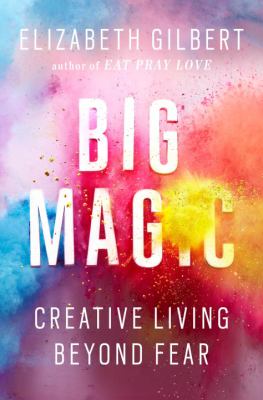
Big Magic by Elizabeth Gilbert big magic

The wonderful thing about reading a book of nonfiction written by Elizabeth Gilbert is that you feel like you are sitting in a room with her, conversing about your heart’s desires. This was true of her wildly successful Eat, Pray, Love, but I’ve also felt the same thing with Committed and her latest book, Big Magic.

Gilbert is good at telling us the things we know–at least deep down–the things we’d rather not recognize. But as we read and confess to ourselves that she is right (that we are right if we’d only listen to ourselves), we also get a good dose of the positive part of this reality. Creativity is more important than passion, and if you don’t attend to your creative self, you are pretty much wrecking your life. At the same time, Gilbert warns the reader not to quit her day job. She makes a good point that creativity shouldn’t have to pay the bills for you–you need to pay the bills so that you can continue to freely practice the thing you love without worrying about where your next meal is coming from. If you put that kind of pressure on your creativity, it may desert you.

In discussing creative ideas as ‘big magic,’ Gilbert insists that ideas are, if not living beings, at least animate. They roam the universe looking for a body to inhabit, someone who will bring them to life. Sometimes, if the chosen person doesn’t get this done quickly enough, the idea will flee, looking for a better person to get the job done. She has a wild story about this happening in her own life. She had a great idea for a novel, but because of unforeseen circumstances, she couldn’t get it done. As I read this, I thought, ‘Oh, I know where that idea went!’ because I had read a very similar novel. And then, a few paragraphs later, Gilbert mentions that very novel and explains how the idea left her and inhabited the other novelist–in a kiss between them. This sounds crazy, but when you see how closely related the two novels are, you have to ask yourself: what’s a better explanation? And you have none. So–big magic.

Apparently, Gilbert has been tweeting some wonderfully inspirational quotes from Big Magic. My favorite inspirational passage is too long to be tweeted. An important idea of the book is that you can never be fearless (unless you are a sociopath), but that you have to be driven by your creativity rather than your fear. Gilbert uses the metaphor of a road trip–you, creativity and fear are all together for the ride. Fear can yammer away, but it has to sit in the back seat while you and creativity are making the decisions. In no case is fear allowed to drive.

If you haven’t have the pleasure of sitting down for this conversation with Gilbert, do it now.
High school housekeeping: Although I thoroughly enjoyed Gilbert’s previous two works of nonfiction, I wasn’t sure about the appeal for teens. I did review Eat, Pray, Love because it addresses choosing the right life for oneself. I didn’t review Committed because I didn’t think teens were at a place in their lives to get what she’s talking about. But in Big Magic, Gilbert is addressing something vital for teens, something that matters right now. Choosing not to allow fear to be the driving force in one’s life is essential not just to the moments of happiness, but to a general sense of contentment. The earlier someone understands and acts on this, the better the life that s/he will lead. So you, too, should read the book now.

Posted in Non-fiction | Tagged , , , , , | 1 Comment

Nonfiction: “The Half has Never been Told”

The Half has Never been Told: Slavery and the Making of American Capitalism

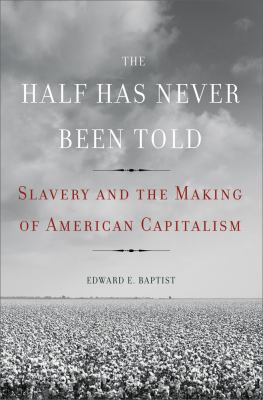
by Edward E. Baptist    half has never

I was fascinated by Baptist’s argument that an important foundation of American capitalism, and an essential element in the economic success of the country, was slavery. Every modern American understands that slavery is evil (although not perhaps how evil, as Baptist points out). But many contemporary students of economics believe that slavery in the Southern United States was the foundation of a system that was not only destined to fail, but to do so soon. They submit that it is even possible to think that the Civil War was unnecessary because slavery was about to dissolve. As an economic system it was outdated and pre-industrial. The mechanized North was doing quite well without it. Why sacrifice so many lives in war to fight a system that was on the verge of crashing?

Baptist turns this argument on its head. In a well-researched book filled with moving stories of individual slaves, he convincingly argues that America has its slaves to thank for the success of its economy. If the North was doing well with its textile mills, this was only because of the increasingly large crop of Southern cotton that was yearly harvested. Should anyone believe that slaves who picked cotton couldn’t be made to work faster and meet ever growing demand, Baptist gives the proof of how slave productivity increased four hundred percent over eighty years–through torture.  So there were innovations in the system, but they were all innovations of violence–in the types, levels, and frequency of use. Enslaved African Americans were the most efficient producers of cotton in the world, driving other countries out of the market. Whenever it became more profitable to grow cotton in another state (“Alabama fever”), slaves were torn from home and family to start over on new, distant plantations. Southern credit schemes made it possible for white people with little land or money to work the system and become slave owners and cotton producers. Slavery had a deep influence on politics and elections. All this added up to lower real prices of cotton, which helped American workers (non-slaves) and consumers of cotton clothing.

Baptist’s proofs are compelling. He uses many primary sources including plantation records and news articles. The most wrenching are the slave narratives about the lives of those who picked cotton. (The Depression era Works Progress Administration interviewed many former slaves and Baptist uses these records.) He ventures into related topics, arguing that a Haitian-style rebellion couldn’t have worked in the U.S. He details the effect of outlawing Black preachers and literacy for slaves. He discusses ‘fancy maids,’ pretty slave women who were forced into sexual slavery. He details the rise of the abolition movement in the thirty years before the Civil War. His narrative is all the more moving as he labels the chapters to coincide with human body parts–to break down the slave into useful pieces the way that slave owners saw them. As a reader, I found the most compelling of these discussions was on the use of the word ‘hand’ to represent a whole person, and how enslavers used ‘right-handed’–or complete–power to control other human beings.

High school housekeeping: The Half has Never Been Told is such a compelling book, equally for its argument, its basis in research, and for exploring the human side of a tragic part of American history. I wish all our students would read it. Yet, it’s not an easy book. It’s long (almost 500 pages, but the last 75 are research notes and the index, so 425 pages of reading). If you have any interest in American history or in economics, please take on this book. And don’t fret over the beginning–it’s  a few pages of very dry overview and not at all like the tone of the remainder of the book, which will pull you forward with its tales of injustice and greed. It will also make you consider learning more about some of the topics that are mentioned–Andrew Jackson, banks of the period, the removal of American Indians.

When I think of this book and another vast work that I recently tackled (Capital in the Twenty-First Century), I realize that a significant part of what made America great in the form of a dominant world power with fabulous economic success was that the country had vast natural resources to fuel it; its land was gotten for free or nearly so as it was stolen from American Indians; and a large part of its workforce was enslaved, providing free labor. With free resources, free land, and free labor, it’s not such a mystery why America became the world power it has become. We should at least acknowledge this and show a debt of gratitude for those on whose backs this country rose.

Posted in Historical Fiction/Historical Element, Human Rights Issues, Multicultural, Non-fiction, Over 375 pages | Tagged , , , , , , , | 1 Comment

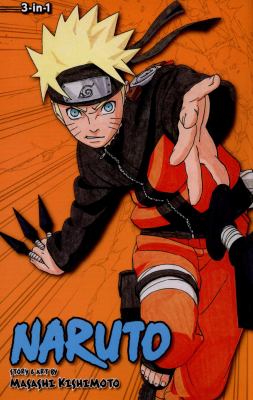
New copies of Naruto!


naruto

We bought all new copies of the Naruto graphic novel series through volume 30. Come check them out!

Posted in Graphic Novel, Hi-Low/Quick Read, Uncategorized | Tagged , , , , | Leave a comment

Ranger’s Apprentice series–all here now!

This slideshow requires JavaScript.

We have had some guys asking for fantasy fiction with male protagonists/heroes. You want to read something great beyond The Lord of the Rings.

Come checkout The Ranger’s Apprentice. We’ve filled out the series, and finally have them all. I read the first 9 but had to stop to read other things. (So many books, so little time.)  In the past I reviewed a few if you want to get an idea of what they are like:

The Siege of Macindaw

The Sorcerer of the North

Posted in Adventure Stories, Fable/Fairy Tale/Fantasy, Fiction, Supernatural, Young Adult Literature | Tagged , , , , , , , , , , , | Leave a comment

You Loved “Au Revoir Crazy European Chick”

This slideshow requires JavaScript.

We have the sequel–Perry’s Killer Playlist. And if you’ve read that, we have a new book by the same author–Con Academy.

Enjoy!

Posted in Adventure Stories, Family Problems, Fiction, Mature Readers, Romance | Tagged , , , , , , , | Leave a comment

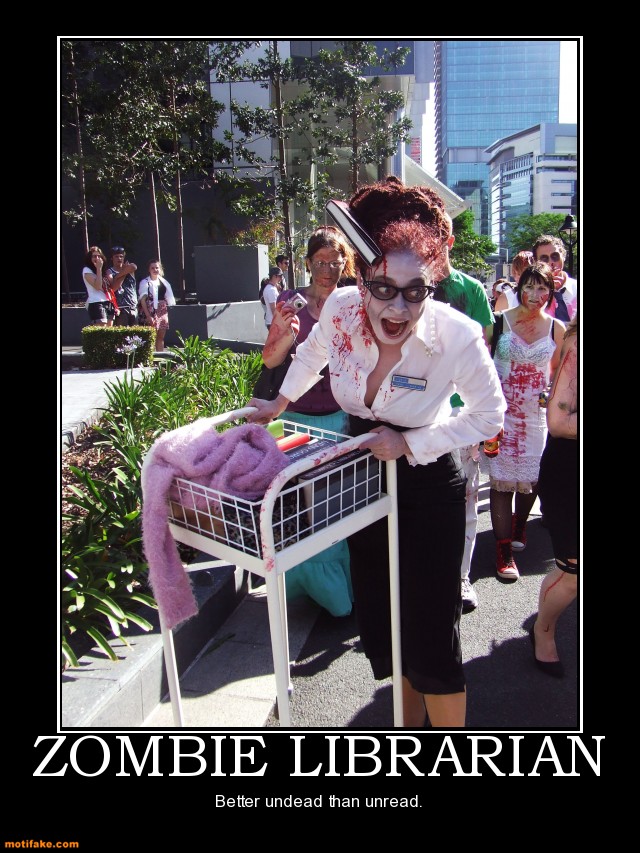
Zombie Librarian

Thanks to MotiFake for the image!

We have all sorts of scary books for you here at the library!

zombie librarian

Posted in Uncategorized | Tagged , | Leave a comment

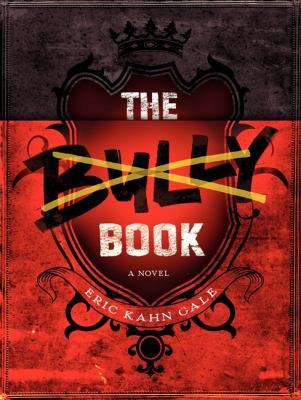
Reluctant Readers: “The Bully Book”

The Bully Book by Eric Kahn Gale  bully book

Up until 6th grade, Eric has always been a sort of regular kid. He has a crush on his best girl/friend, Melody. Since fourth grade when they connected over a class project, Eric has been hanging out with Donovan, an overweight guy with braces.

But something strange happens on the first day of grade six. Donovan comes into the class looking like a new person. He’s lost about 25 pounds, has no braces and his hair is cut short. And, he pretends not to know Eric.

Instead, Donovan is hanging with Jason Crazinski and Adrian Noble, who have suddenly decided to bully Eric and to get the rest of the class to do so as well. With their teacher always absent on Mondays, they make up vocabulary sentences with Eric’s name in them–all derogatory–and the whole class joins in. The sub doesn’t notice.

Things get crude and gross with incidents in the boys’ restroom at the urinal. And worse.

What happened over the summer that led to this change? The bullies got ahold of “The Bully Book,” a secret document that has been passed down through the years, a manual for selecting a “Grunt” and then ruining his life.

Grunts don’t fight back; they are easy targets. And while Eric never tells any adults what is happening to him, he does try to figure out what the Bully Book is, who has it, and how he can stop being the Grunt.
High school housekeeping: I wanted to a read a suspenseful book for students who are working on their reading skills. The Bully Book is a good choice. The chapters alternate between text from the Bully Book and passages from Eric’s journal. The Bully Book explains how and why the bullies torment the Grunt. And then the  reader sees specifically how the plans from the Bully Book affect Eric. He becomes a loner, someone who is mentally, emotionally, and physically abused. The Bully Book book has a 620 Lexile level, so it’s about 5th-grade reading level. But the topic of selecting a classmate for everyone to pick on and seeing how that person falls apart is one that resonates with older readers. I’d recommend The Bully Book to students who are working on their reading skills.

Posted in Fiction, Hi-Low/Quick Read | Tagged , , , , , | Leave a comment

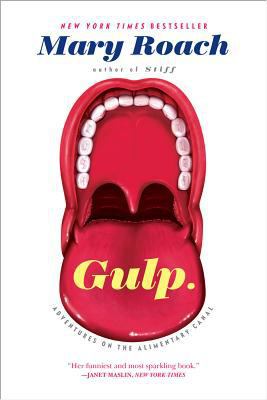
Nonfiction: “Gulp: Adventures on the Alimentary Canal”

gulp  Gulp by Mary Roach

Mary Roach has come up with another fun look at science, this time focusing on the anatomy and physiology of human digestion. Here she answers the questions you’ve always wanted to ask:

  • Can snakes taste?
  • Can your stomach digest itself (and why doesn’t it do that)?
  • Why do humans (or at least Americans) throw away the most nutritious parts of the animal (brains, intestines, etc.)?
  • Why are we so squeamish about what goes in our mouths?
  • Why are we horrified by saliva once it’s out of the mouth? (For example, you wouldn’t spit in your soup and then eat it, but you will put the soup into your spitty mouth and swallow it.)
  • Could Jonah really have survived in the belly of the whale?
  • Can you eat so much that you blow up?

There are lots of fun facts about animals’ eating habits:

  • At one time, cat food was evaluated by human tasters (this didn’t take off).
  • Dry pet food came about because canned food was needed for war rations.
  • Dogs like the smell of decomposing flesh if it isn’t too old.
  • Cats and dogs really like just a few favors–we just think they like to eat like us, so pet food makers are trying to please us (vegetarian kibble for true carnivores is an example).
  • Animals with no taste receptors, such as whales, swallow a lot of junk (cups, toothpaste tubes, etc.)

And fun facts about people:

  • With soldiers consuming about a pound of meat a day during WW II, meat at home had to be rationed–so the government tried to get Americans to eat organs and reproductive parts (very nutritious).
  • For the adults–you shouldn’t equate complexity with quality when you pick a beer. (A professional alcohol taster says that after hard work, the person who wants a refreshing beer should go for a  Bud, not an IPA.)
  • In microwavable food, the sauce makes the favor which disappears from the chicken
  • You should eat slowly if you’re trying to lose weight–but not too slowly or you’ll be in big trouble.
  • At one time, doctors used saliva for cures for syphilis and more. ( You can read about its effectiveness.)

On the opposite end of the alimentary canal, Roach can make even topics that disgust us pretty interesting. There’s a lot about poop here, and intriguing facts about the rectum.

  • How do those prisoners manage to smuggle drugs and cellphones into lock-up without pooping them out? Inquiring minds want to know and Roach gives us the answers.
  • Did you know that red meat will make your farts and poop stink more than other foods? (Unless those other foods are unrefrigerated and decomposing.)
  • The future of fecal bacteria transplants–there may be a very cheap way to get rid of intestinal disorders.
  • The terrible way Elvis Presley really died had more to do with constipation than a drug overdose.

More than junk food and not a load of crap, Gulp has the science and the history that will delight you beyond a mere gut reaction and keep you reading to the end.

Posted in Humor, Non-fiction | Tagged , , , , , , , , , | 1 Comment

Nonfiction: “Spook: Science Tackles the Afterlife”

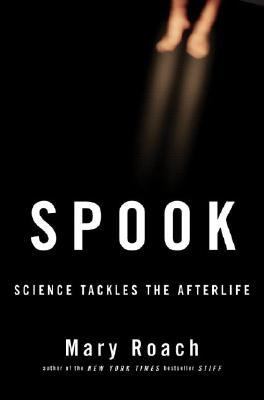
Spook by Mary Roach spook

I’m gathering some scary stories for a fall display, and thought I’d add Spook–which is not a scary book at all, but rather an entertaining work of nonfiction that takes a look at life after death.

Mary Roach, the author of Spook, wants to know if we can scientifically prove or disprove the existence of life after death. She wants to know if there really is a human soul. She begins her investigation (or at least her narrative about it) in India. Roach accompanies an investigator who is hoping to verify the reincarnation of a man, born into a child who lives not far from where the man had lived his life. This journey is pretty disappointing, and what she learns supports Roach’s initial feelings–she’s a skeptic.

In fact, proving or disproving the existence of the human soul has frustrated great philosophers, theologians, and scientists all. So the reader shouldn’t expect great revelation here. But what makes the book a worthwhile read is learning about some of the crazy history–and present day shenanigans–of folks who claim to be in touch with the dead.

How hardily many people accepted mediums a century ago is surprising. Folks believed in the presence of the dead during seances when tables levitated and trumpets played by themselves. Weirder still is how ‘ectoplasm’ would often appear around the medium during a seance. How did this filmy tissue of phantomness–that looks a lot like cheesecloth–get in the room? (OK, the answer is creepier than actually dealing with the dead. Can you say orifice?)

As always, Roach has fun in her investigations. She goes to medium school (really just a weekend workshop) and tries to learn the craft along with a cohort of believers.

Roach also turns to science, past and present. At one time, a serious surgeon studied whether the soul had left the body by weighing patients at death and seeing if there was a change.

Today, there are a few serious scientific institutes that study the paranormal. They use computers, infrasound and electromagnetic waves to try to locate the souls among us. They investigate those out-of-body experiences that people have during surgery when their hearts stop.

High school housekeeping: Spook roams all over the place, but in a good way. California teens will remember the Donner party from their youthful studies of California history, and will be engaged by the author’s efforts to reach the spirits of those departed cannibals. Mary Roach has written several books about her investigations into questions that have always puzzled her. She’s always funny while she’s informative. Her footnotes, which can really stray from the subject at hand, are sometimes the most fun of all. A book that goes over well in book talks is Stiff: The Curious Lives of Human Cadavers. It, too, is an interesting read for fall as our thoughts turn to the dead (and the undead).

Posted in Controversial Issue/Debate, Humor, Non-fiction | Tagged , , , , , , , , , , , , , , , | 2 Comments