“The Women”

The Women by T. C. Boyle

Yes, this is an odd book to include in a blog of book reviews for high school students. But when the CHS seniors were looking for works of (loosely historical) fiction to read before being required to develop a research question based on something in the novel, two students asked me if I had any suggestions for books about architects. And, unfortunately, I didn’t.

Considering that I could be asked this question again, I decided to read The Women by T. C. Boyle.  The women of the title are the wives and mistresses of Frank Lloyd Wright, a genius who crafts plenty of drama as well as original designs. Boyle gives the reader an egomaniacal Wright, one whose vision was preeminent. He considered other people to exist in order to service it. Thus he secured loans that he had no intention of repaying. He rarely paid his staff’s salary, and yet he always had a cook and handymen about.

The story’s narrator, Sato, is a Japanese youth and one of Frank Lloyd Wright’s interns—budding young architects who paid Wright for the privilege of working for him, but who were required to do household jobs and run errands. Sato arrives at Taliesin (Wright’s home in Wisconsin) after Wright is married to his third wife. The narrative alternates between Sato’s own experience as an unpaid intern and his knowledge—and imaginings, as he couldn’t know what passed between characters years before he arrived on the scene—of Wright’s history with his wives and mistresses. The narrative moves backward in time from the third wife to the first. This is a great choice because it leaves for a climax the great tragedy of Wright’s life—the ax murder of his mistress, her children and four others, and the burning of Taliesin.

Wright designed Taliesin for Mamah Cheney. For her, he left his first wife, Kitty, and their six children. Mamah was the wife of a neighbor and an advocate of free love who also left her children to live with Wright. It is about her experience and tragedy that the final section of the novel revolves.

Starting at the end of the series of Wright women, the reader meets Olga, another Wright mistress who will later become his third wife. Her presence is the goad for Wright’s second wife, Miriam, to come to life. She is described in the publisher’s blurb as a passionate southern belle, but she is also portrayed as an opium-addicted mad woman with an ego to match Wright’s, bent on revenge against the new mistress. Her behavior is ironic (to say nothing of hypocritical) as before marrying Wright, Miriam had been his mistress while he was still married to Kitty. She will engages the newspapers in her fight to tell her side of the sordid story. And Wright was quite the celebrity, so the public gobbles up his personal drama in the same way it now seeks news about movie stars.

Though the true beauty of this novel is Boyle’s astonishing ability to create the intimate emotions and conversations of his characters with perfect-pitch dialogue and brilliant imagery, there is talk throughout of Wright’s architecture—his projects are named and his ‘natural style’ is discussed.

So, if you are looking for a novel with a discussion of architecture to start your senior project, you will be absolutely engrossed in the outrageous lives and terrible tragedies detailed in The Women. And even if there is never another student who asks me for a book about an architect, I’m so thankful that those two students did—because without their requests, I would never have picked up this wonderful novel.

Posted in Fiction, Historical Fiction/Historical Element, Over 375 pages | Leave a comment

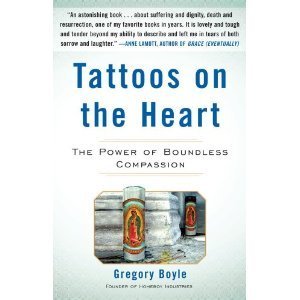
“Tattoos on the Heart”

Tattoos on the Heart: The Power of Boundless Compassion by Fr. Gregory Boyle

Another book for ‘Character Month’

Father Gregory Boyle is the LA priest who founded Homeboy Industries and Homegirl Café.

Their motto: Nothing stops a bullet like a job.

Father Boyle—“G-dog” as he is known by his homies—acts in a way that is very much centered in his faith (Catholicism) as a Christian, but is also so unusual that his story makes a startling read. And here’s why: he believes that every individual has equal value in society. And unlike most of us, he doesn’t just say it. He truly believes it. For Father Greg, there are no throw-away people. He never stops caring—and so the subtitle of this book—The Power of Boundless Compassion—is apt. When I say that his compassion is amazing, I know that the word ‘amazing’ is so overused that you may not understand what I mean. But I think it is the right word—I’m filled with wonder at the life of this man.

Father Greg’s stories of gang bangers leaves us to wonder—Am I really a good person or have I just been sheltered from the things that would make me bad? When you read what many of the ‘homies’ in this book have gone through, you’ll wonder how they ever made it out to a normal, productive life. And you will wonder at the life of ‘G-dog’—who, in the twenty-five or so years that he has been working with LA gang members, has helped so many out of the gang life only to bury them later, when they are shot in drive-bys or targeted. Father Greg has buried almost 200 gang or former gang members. And yet, he keeps the faith.

Father Greg tells the reader that centering one’s life on love will get a person through the worst. Gangsters often tell him that they don’t want people to ‘mistake their kindness for weakness.’ But as Boyle shows, “sooner or later, we all discover that kindness is the only strength there is.”

Even with boundless love, a person needs a real sense of humor to find joy in this life, and Father Greg has it. Many of his anecdotes about dealing with young men and women are really funny. My favorite is when he writes about gangsters reading aloud and replacing words they don’t know with words they do. Thus in Bible passages referring to the ‘Gentiles,’ they use the word ‘genitals.’ Father Greg says this really livens up the public readings!

Yes, you will laugh—and you’ll cry, quite a bit. But do read this book. It will remind you that saints have a beginning as real human beings.

Posted in Biography/Memoir, Controversial Issue/Debate, Faith-Based/Religious Element, Non-fiction | 3 Comments

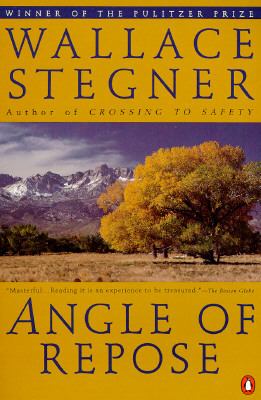
“Angle of Repose”


This is California Writers’ Month–and to celebrate, we read books by California authors.  I’m very excited because, as part of the celebration, on Thursday night, I’ll be reading aloud a few pages from the new book Tattoos on the Heart by Father Gregory Boyle at the Borders Bookstore in Montclair. (My review of that book is coming soon!)

I also found out that Borders wants to print an essay I wrote two years ago for California Writers’ Month on the novel Angle of Repose by Wallace Stegner. I guess I’ll find out tomorrow night if they are going to make a poster copy or just have copies available to encourage customers to buy the book. At any rate, this reminded me of what a great novel Angle of Repose is. Though I’d love it if students read the novel, this review is for adults, the primary audience for the book.

. . .

My local library had added an adult reading program to its menu of summer kids’ programs. Always supportive, I had shown up ready to list the many books I was reading. Just before I started to fill in the participation form with Sedaris’ “When You are Engulfed in Flames,” the librarian mentioned that the staff had chosen to give the adult program a theme. The children’s program was about ‘bugs’ and the teen program was about ‘metamorphosis.’ Adult program participants would read books connected to California in some way.

Still wanting to be supportive, I figured I’d jot down the titles of the John Steinbeck novels I’d read. “When you finish the first book, you get a free DVD rental,” the library lady quipped, handing me the coupon. Now I was in a quandary. I hadn’t read the Steinbeck books over the summer—not even in the last several years in fact—and I wasn’t one to accept a reward for something I hadn’t done.

“Let me see what I can come up with,” I told her, but dreaded adding a book to my already long summer reading list just to follow the program rules. There were so many good books at home already!

A few days later, in one of the loveliest moments of serendipity in my life, a friend handed me a birthday gift. Not just any friend, but one whose core sympathies so deeply parallel my own that I not only trust her judgment and taste; I skip her advice at my own peril. “Read this book,” she said. “You have to read this book.”

And I did read Angle of Repose by Wallace Stegner. Despite the fact that Stegner won the Pulitzer Prize for the novel, I had never heard of it. It was an old book by now—published in 1971—but reissued as a Penguin Classic. Stegner published many fine books and won the National Book Award as well as three O. Henry prizes for short fiction and the Robert Kirsch Award from the Los Angeles Times for lifetime literary achievement. Nonetheless, Angle of Repose is considered his finest work.

It seems to me that the book’s jacket blurb does little to interest the reader in buying the title. A man looks into his grandmother’s past in California. So what? It is the very personal past of the grandmother—her desperate efforts to follow her husband through his California scheming and his moves through unpopulated areas as he works to develop irrigation systems and other infrastructure that the state isn’t quite ready for—that hooks the reader. Through letters to her friends ‘back East,’ the grandmother, Susan Burling, makes apologies for her husband, laments being removed from culture and society, longs for good books and her family.

Susan’s story is framed by the narrator’s own life. Lyman Ward is an old man himself with a degenerative bone disease that has left him crippled and wheelchair bound. His wife of many years left him while he was hospitalized and his adult children think he is going senile because he wishes to be alone in the Grass Valley home of his grandparents to sort through his grandmother’s letters and to write his grandparents’ history.

The narrator’s grandmother is based on Mary Hallock Foote, a nineteenth-century writer and illustrator. Stegner received permission from Foote’s descendants to publish some of her letters in his book (although the family later accused him of plagiarism). The passion of these unaltered letters give the book an insight into the crucible of a married woman’s life that would otherwise have been missing. It is moving to see how deeply this nineteenth-century marriage with all its problems parallels twenty-first century relationships and the issues that plague them. That Susan’s creative life and spirit continually support the family with income from her work—while her husband’s work fails–is ironic considering that the life she and her husband are living is hardly the kind that one would expect to nurture her creativity. And yet Susan is able to capture local color throughout California and in Mexico—sending her work to her publishing friends in the east, who know there is a market for the exotic tales and illustrations.

One of the men who is an employee and trusted friend of Susan’s husband has the misfortune to fall in love with her. Considering the turmoil of her marriage to a taciturn engineer, it would seem natural that Susan return his affection. And yet these are decent people with high moral principles. Veering from them—or even thinking of veering from them—can only lead to tragedy. And it does. As the narrator Lyman Ward explores this, he considers the role of forgiveness in his own marriage.

The editors of the Modern Library have chosen Angle of Repose as one of the ‘one hundred best books of the twentieth century.’ Trust them. Trust me—a fellow bibliophile. Read this book. You have to read this book.

Posted in Family Problems, Fiction, Over 375 pages | Tagged | Leave a comment

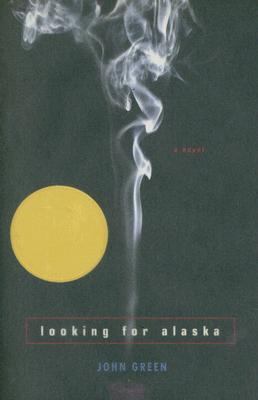
“Looking for Alaska”

Update—Had to add this sweet video and John Green’s thoughts on the novel.

Looking for Alaska by John Green

Since I loved Will Grayson so much, I had to read Looking for Alaska, also by John Green. Like Will Grayson, it’s alternately very funny and very sad; it’s always very edgy. (Yes, it’s on the list of banned/challenged books. Yes, it’s for mature readers, not twelve-year-olds.) The subject matter is different from Will Grayson—and yet still very relevant.

Miles Halter is pretty much a nerd. When he decides to go away to a private boarding school, leaving Florida for Alabama, his mother insists on throwing him a party to which only two people, mere acquaintances, come. And Miles’ goal becomes immediately obvious—he wants to get away and live life more deeply. He wants to explore ‘the great perhaps’ an idea he got from reading the last words of Francois Rabelais. (In fact, Miles loves reading biographies to discover famous last words. And he knows a lot of good quotes of dying men and women. That in itself is really fun to read about.)

As soon as he arrives at Culver Creek Boarding School, Miles begins to understand and live ‘the great perhaps’ because he has met the right people/pranksters: his roommate Chip (‘the Colonel’) and Alaska Young, the beautiful girl with whom he is immediately infatuated. The Colonel nicknames Miles ‘Pudge,’ ironically because he is so skinny.

Alaska is sometimes cheery and manic and at other times moody and brooding. She is a feminist who tutors her friends in pre-calc and who can’t resist a good prank. Away from home, the ‘Pudge-Colonel-Alaska’ trio experiments with many off-limits adult habits. Alaska tells Miles that while other teens smoke because they enjoy it, she does it because it will kill her. Clearly, she is troubled, but for much of the novel, no one knows why. What causes Alaska to be self-destructive?

The novel has two sections—chapters titled ‘before’ and ‘after.’ Miles finds that Alaska is also a seeker but she has used Simon Bolivar’s last words to frame her quest: “How will I ever get out of this labyrinth?” And this, too, is what Miles truly wants to know and must learn.

Posted in "Banned Book", Controversial Issue/Debate, Fiction, Young Adult Literature | 1 Comment

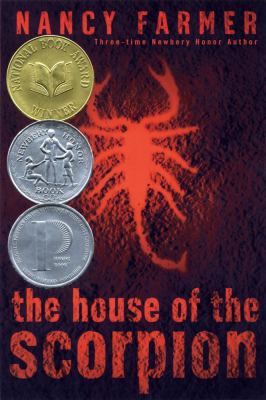
“The House of the Scorpion”

The House of the Scorpion by Nancy Farmer    

I was looking for a ‘guy’ book to read and found a book for everyone. A future gone very wrong, suspense, greed, the corruption of absolute power, questions about science (genetics) and its limits, deep, multi-dimensional characters. No wonder it’s won so many awards.

The House of the Scorpion opens with a scientist using 100-year-old cells to create clones for the now nearly 140 year old El Patron. El Patron is the all-powerful dictator of the country Opium, which lies between the United States and Atzlan (the former Mexico). As the name suggests the country of Opium was created by El Patron, the drug lord, to dispense opium-based drug products to Europe and the Far East. He was able to do this by making a deal with both Atzlan and the U.S. No drugs will be sold in the Americas and any person trying to cross the border of one country to get to another will not be allowed to pass. (At this point in the future as many people are crossing from the U.S. into Atzlan (formerly Mexico) as are going the other way. A simple way out of the illegal immigration problem. But what happens to those people who try to cross is one of the many horrors of the story.

It takes the main character, Matt, awhile to realize that he is a clone of El Patron. (His foot is marked ‘Property of . . .’.) Although he is favored by El Patron, the rest of the extended family living on the estate hate Matt and consider him subhuman. They alternate between tormenting him and treating him like a pet. Fortunately, Matt has two allies on the estate—Celia, who has raised him, and Tam Lin, Patron’s Scottish bodyguard. In his own age group, he has Maria, who is the daughter of a powerful senator, and who visits the estate.

Matt is both smart and naïve. He loves El Patron for giving him life and for treating him as a favorite while others shun him. But why has El Patron created a clone? And what can Matt do about it?

Posted in Controversial Issue/Debate, Family Problems, Fiction, Human Rights Issues, Over 375 pages, Sci-Fi/Futuristic, Young Adult Literature | Leave a comment

“Liar”

Liar by Justine Larbalestier  

Micah is the ‘after-school’ girlfriend of Zach Rubin—who has a ‘real’ girlfriend at school. No one else knows about their relationship. Both are excellent runners, although, again, no one knows this about Micah. She hides the truth about herself and lies all the time.

When new at school, Micah pretended to be a boy, then a hermaphrodite. She seems to have family members that don’t exist. She says her dad is an arms dealer. And wait until you hear about the purposes of her bedroom furnishings. As she is caught in one too many lies, no one believes anything she says anymore. So when Zach is found dead—apparently brutally murdered and mutilated—the police start to question her. Micah says she’s going to tell us the truth—the ‘before’ and the ‘after’ the murder.

But Micah can’t stop lying. And you never know what to believe. Just as you think you have the story straight, there’s a new twist and it all falls apart. You’ll end not knowing if you’ve unraveled the lies, not knowing if there is a supernatural element at work in the murder—just not knowing anything. But you’ll race through the suspense, desperate to get inside Micah’s head.

Fast, fun, full of surprises. One of my best summer YA reads.

Posted in Family Problems, Fiction, Hi-Low/Quick Read, Horror/Mystery/Suspense, Multicultural, Young Adult Literature | 2 Comments

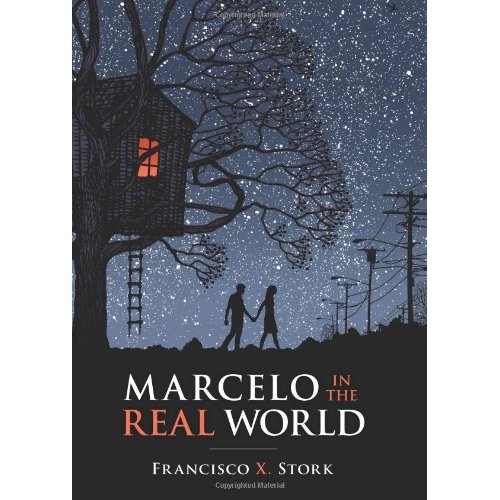
“Marcelo in the Real World”

Marcelo in the Real World by Francisco Stork

Marcelo has Asperger’s Syndrome, and says that he fails to understand others’ emotions and expressions. He admits that he may not be able to feel the same thing that others describe as love. He is intrigued by religion—maybe it’s more accurate to say that he is obsessed with God—and visits with a female rabbi, although he isn’t Jewish. He hears something in his head which he describes as music for lack of a better word. He likes his world to be very ordered and needs private space. He sleeps in a tree house, refers to himself in the third person, and goes to Patterson, a special school, where he has a job caring for ponies.

Marcelo’s first crisis in the novel begins when his father, Arturo, tells him that he doesn’t want Marcelo to go to Patterson for his senior high school year. He’d prefer it if Marcelo went to the regular high school. However, he gives Marcelo an out—if he will work all summer in the law firm (in a way that is satisfactory to Arturo) where his father is a partner, Arturo will allow him to choose where to spend his senior year. Arturo, feels that Marcelo must learn something about ‘the real world.’

The irony is that while Arturo expects that Marcelo will have to deal with real things like bus schedules and getting around town, his simple job in the mail room actually brings him in contact with elements of the real world that Arturo never thought about. The son of another law firm partner, Wendell, is in college and also working in the firm during the summer. He is narcissistic and feels entitled to everything he can get. When the mailroom supervisor, Jasmine, is not interested in him, he attempts to employ Marcelo in cornering her for a sexual encounter. Marcelo, who believes that Wendell is his friend, doesn’t understand such subterfuge. He simply asks Wendell if he loves Jasmine.

Over the course of the summer, Marcelo begins to understand the deceptions that are at the heart of everything Wendell asks of him. Wendell threatens to expose Arturo if Marcelo doesn’t cooperate. When Marcelo finds a picture of a girl whose face is horribly scarred from a defective windshield–manufactured by a client of the law firm’s—he must make some serous moral choices. And Jasmine is there to help him.

This novel has multiple layers of meaning when showing us ‘the real world.’ It is on every ‘best book’ list there is. Including mine. A great read. Try it.

Posted in Family Problems, Fiction, Young Adult Literature | Tagged | Leave a comment

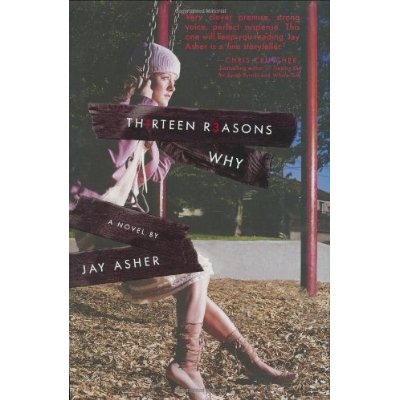
“Thirteen Reasons Why”

Thirteen Reasons Why by Jay Asher

I read this novel not long ago and have been thinking of it over the past several days—since it was reported in the news that a gay teen had killed himself after his roommate posted a sexually explicit video of him on YouTube.

This is the story of a teen suicide, though the girl who kills herself isn’t gay. However, her private life is the gossip of her schoolmates and she is bullied by some. She has a bad reputation that she didn’t earn. Before killing herself, she wants to set the record straight and so makes audiotapes of the ‘thirteen reasons why’ she is going to kill herself—and these thirteen reasons involve her classmates and a teacher.

The story opens with Clay Jenson coming home from school to find a package on this porch. It’s addressed to him but has no return address. When he opens it, he finds seven audiotapes that have been recorded by Hannah Baker—a girl he’d had feelings for, but who had committed suicide two weeks earlier. Each side of a tape gives details about one of the reasons Hannah decided to take her life. She says that the tapes are only going to the people who are on them—and if someone doesn’t send them on to the next person, there is a second set of tapes that will be released to the whole school, blowing everyone’s cover.

Clay is riveted as he listens to Hannah’s story—he cared for her and wants to know what he could possibly have done that he should be included in the tapes.

The thing that grabbed me, as the reader, was Hannah’s description of the ‘snowball’ effect—it seems that none of the things that happened to her would have caused a girl to commit suicide. Yet altogether, I could see the pattern of behaviors that was making her so desperate. I could also understand how some of the students who caused much of the problem wouldn’t have understood their part in her suicide—not in isolation.

This is a cautionary tale that is a perfect read during October, which is ‘Bullying Prevention Month.’ It reminds us of advice from Plato that is thousands of years old—because we all fail in this regard and need to be reminded—“Be kind, for everyone you meet is fighting a hard battle.”

Posted in Controversial Issue/Debate, Fiction, Movie Tie-In, Young Adult Literature | Tagged , | 1 Comment

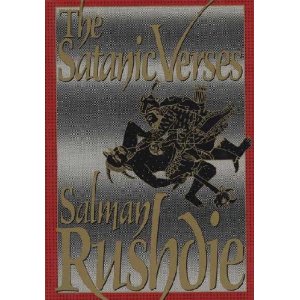
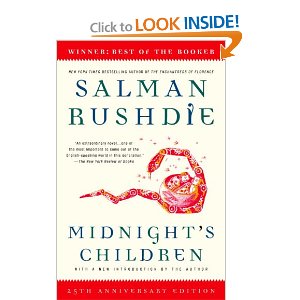
“The Satanic Verses” and “Midnight’s Children”

Salman Rushdie—Midnight’s Children and The Satanic Verses

The publication of The Satanic Verses brought on a fatwa (Islamic judicial decree) from the Iranian religious ruler Ayatollah Khomeini that Rushdie as well as anyone involved in the publication of the book be killed. This death threat was based on the perception that The Satanic Verses mocked the prophet Mohammed.

Rushdie had to go into hiding for many years. Though his book was published worldwide, a few of its publishers and translators were killed for it. As the consequences of its publication and its banning were so great, I decided this had to be my banned book for the fall. But as it is long, I decided to start early. I was so enthralled with the book that I then read another by the same author—Midnight’s Children. So—this brought me past the ‘banned books week’ deadline and into a new month.

I’m not sure that Rushdie’s books will appeal to many students. This isn’t because they aren’t good—they’re great—wonderful, imaginative, vast works that cover important history, human frailty, that combine a sense of real events with magic. In short, these are two of the best books I’ve ever read. So before I comment on them individually, let me say this: if you try them while in high school and they don’t appeal to you—too long or too confusing or you don’t care about the British in India—try them later in life. There are books that I hated in high school which became favorites of mine once I had lived a bit and was able to grasp their meaning. (Moby-Dick by Herman Melville comes to mind.) Rushdie’s books are too good to miss entirely. And there will come a point when all this magical storytelling, all the reality cast in absurdity, will mean a great deal to you.

All right—for the fearless among you, the college-bound, serious readers:

Midnight’s Children is the story of Saleem Sinai, a pickle-factory worker, born at the stroke of midnight on August 15, 1947, at the very moment India became independent of Great Britain. His life is a mirror to the life of India—he is himself, but he represents the country as well. He is telling his story to an uneducated woman named Padma (Saleem refers to her as his ‘dung goddess,’ because of her name) at the same time that he writes it each evening. Padma comments on the parts she likes and on when she thinks the story is getting off track.

In order to tell his story, Saleem starts with his grandfather and how he met his grandmother (a funny, sweet story, although their marriage turns out to be a trial). He also discusses his parents’ marriage, but the real center of the story is Saleem himself and of his incredible destiny, as he is a mirror to the newly born India.

When Saleem is born, the attendant switches him with the real baby—also born on the stroke of midnight—of the parents who raise him. Saleem is actually the child of a poor woman and Wee Willie Winkie, an itinerate singer, who becomes an alcoholic when his wife dies in childbirth (Saleem’s actual mother, but he doesn’t know this for many years). Meanwhile, the nurse who switched the babies, Mary Pereira, becomes Saleem’s nanny. Saleem is an odd-looking kid, with a huge nose, and people are always making fun of him.

The other child born at midnight is Shiva. He becomes the nemesis of Saleem and the two will do combat—both physical and mental—for the rest of their lives. In fact, Saleem discovers that he has great powers—he can get into the minds of others and he starts to communicate telepathically with all the other children in the country who were born in the hour between midnight and one AM on August 15, 1947. (Thus, the title of the book Midnight’s Children.) In this way, he finds out that all of them have some sort of great power. The most important of these children will be Parvati-the-witch, who has the power to make things disappear, and Shiva, the natural son of Ahmed and Amina Sinai who has knees powerful enough to kill a man. (Yes, this is one of the wacky, funny-but-not things in the book.)

Shiva and Saleem work their destinies, often against each other. Throughout the book, parents raise fortunes and lose them; they fall in love with the wrong people; Saleem himself is tormented by his love for his sister (who, he argues, is not really his sister because he was switched at birth). Wars spring up intermittently; significant characters suffer and are killed. And through it all, there’s magic and coincidence. It’s a wild ride to get to the 1960s when Saleem is raising Shiva’s child (love that irony) with the boy’s mother, Parvati-the-witch, and finally descends to pickle-factory worker with a great nose for sniffing out flavor.

NOTE: Since this book does deal with a number of factual, historically significant events, it would be great for the Chaffey High senior project if you’d like to give it a try.

The Satanic Verses is a brilliant book about the relationship between Great Britain and India; racial prejudice and politics; cultural misunderstanding; an exploration of reality and a questioning of truth. Thematically, it seems to be about most everything important in the world. It takes places in the 1980s and moves between London and Bombay.

I was hooked from the moment that Gibreel Farishta and Saladin Chamcha, both Indians with British ties, fall miles through the air from an exploded plane, land in the English Channel, and live. Immediately, we know we’re in a world of magic, so when we find out that Gibreel has tried not to sleep for 110 days while terrorists have control of the plane, we believe it.

Gibreel’s problem is that when he sleeps, he dreams about the prophet Mohammed and of his many wives. In these dreams, people close to Mohammed question the veracity of his visions. Pretty much everything that Gibreel dreams or imagines is heretical to Islam.

Yet once the pair is rescued by an old English woman, Saladin starts to take on the features of a devil or satyr—he grows horns and hoofs and coarse hair everywhere. His appearance causes him to be brutalized by the police and hated in general. He can’t understand why this is happening to him. He is very British in thought and manner and can’t conceive of himself as an animal. He appears to be much worse off than Gibreel—at least for awhile.

Gibreel comes to believe that he is an archangel (Azraeel) and is destined to destroy cities. Later, when Gibreel, who is an Indian movie star, tries to come back to reality, he will try to make movies about his dreams and visions. He is treated for insanity.

Again, the two main characters’ lives are interconnected and they are often at odds with one another, even in epic battle. One of the great things about the book is that with all the bizarre incidences in the lives of these men, we often fall into that ‘suspension of disbelief’ necessary to enjoy fairy tales and tales of magic. Is Gibreel an angel after all, and is Saladin a devil because he is betraying his Indian roots and culture? What are their responsibilities in the race riots and how will they treat one another in crisis after they have each sought revenge on one another?

What of the four Ayeshas in the book—the empress that Gibreel destroys in a dream? The prophet who eat butterflies? Mahound’s (Mohammed’s) beautiful wife? The prostitute?

And what of the pilgrims who walk hundreds of miles to the Arabian Sea? Are they really drowned or are they taken up to paradise? Why does Saladin’s lover, a married woman who took her children and leaped to her death when Saladin rejected her, keep coming back in visions to taunt Saladin and give him advice? Is the battle between Gibreel and Saladin really a battle between good and evil? (It doesn’t seem that easy. . . )

If you’re a fan of the fantastical story, give The Satanic Verses a try. And if you need to interpret a novel as well as find out what the professional critics say—as you do for Colony High’s senior project—you couldn’t pick a better piece of fiction.

Posted in "Banned Book", Controversial Issue/Debate, Fiction, Over 375 pages | Leave a comment

“Will Grayson, Will Grayson”

Will Grayson, Will Grayson by John Green and David Levithan 

How many times have you texted the message ‘LOL’ or ‘ROFLMAO’ when you are doing neither one? In fact, when was the last time you really laughed out loud—uncontrollably, in bursts—so that the people around you looked to see what in the world you were doing?

While I was reading Will Grayson, Will Grayson in various waiting rooms over the past few weeks, this happened to me more times than I could count. I loved/enjoyed this edgy book for mature teen readers.

Though there are two characters named Will Grayson (who meet coincidentally), the glue that holds together all the lives of the important people in the book is Tiny Cooper, “not the world’s gayest person and  . . . not the world’s largest person, but  . . . the world’s largest person who is really, really gay, and also the world’s gayest person who is really, really large.” Tiny is on the football team (offensive lineman), but he’s also a creative playwright who is working to stage his own drama at school—or make that his own life’s drama as the story is about him.

The first Will Grayson has been best friends with Tiny since they were in fifth grade. He likes to keep a bit of distance between himself and others and avoids getting hurt. He follows whatever path life leads him in, doing what his parents plan for him without giving it any thought. Yet Tiny, who falls in and out of love on a near daily basis, sets Will up with a girl who is perfect for him—much to the consternation and confusion of Will. Jane helps Will with some important insights.

The second Will Grayson is deeply—clinically—depressed. He is gay, but is not OK with it. He hasn’t come out to anyone and chats online with another boy who is mutually infatuated with him although the two have never met. Will 2’s father left his mother and seeing the result of her messy, lonely life, he finds her pathetic rather than an object of pity or sympathy. His language is foul and all the type in the book that indicts his voice is lower case, showing how truly desperate he is, even though he is taking anti-depressants to stabilize his mood. (“god bless the mood equalizers. and all moods shall be created equal. i am the f—civil rights movement of moods.”) His only friend, Maura, lives in her own dark world, writing depressing poetry.

When Will 2 experiences one of the most stunning betrayals a person could imagine, he is thrown into the lives of Will 1 and Tiny. Along with the wonderful, honest and sensitive Jane, they are a great cast of characters. And of course, they are all cast in the high school musical that is Tiny’s life, all seen through Tiny’s lens.

So even though this group goes through hell, as Winston Churchill advises people to do, they keep going to get to the other side, figuring out who they are and why they matter. Honestly, I think you’ll love this book (unless discussions of sexuality and profanity offend you). And if you want to read more by the same author (John Green), Mrs. Dietzman at Chaffey High very highly recommends Looking for Alaska—it’s available both at Chaffey and Colony Highs.

Posted in Controversial Issue/Debate, Family Problems, Fiction, Young Adult Literature | Leave a comment