Thanks to our donors who contributed to the Ontario Teen Read Project!

Dear Kathryn, Nancy, Meghann Ord, Amanda Vance, Katina Vlastos, Steven Llanusa, Margarita Munoz, Elizabeth Frost, Kathy Gibba, Emily G., Rincey Abraham and Alana Cataldo, 
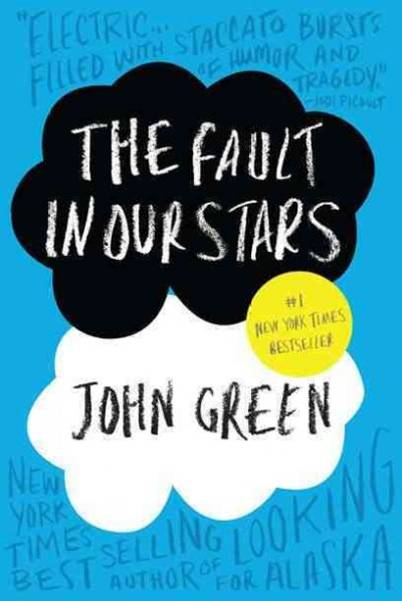
A million thanks for your support of the Teen Read Project!  You’ve funded the purchase of twenty-four copies of the book The Fault in Our Stars by John Green, to be divided between two schools. That’s a great start to our collection of copies for teens to check out.
Some books can be life changing. The Fault in Our Stars is one of them. Through it, students will identify with compassionate characters who survive tragedy. In addition, the book can be a focal point for students to express creativity in classes such as graphic arts, and to engage in analysis through our book clubs.

Thanks for joining our efforts!

With gratitude,
Ms. W

Posted in Adventure Stories, Family Problems, Fiction, Romance, Young Adult Literature | Tagged , | Leave a comment

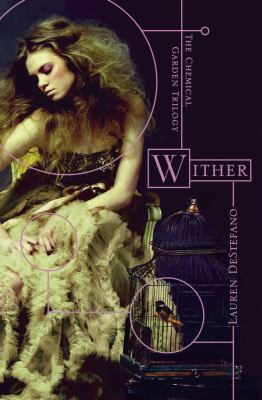
“Wither: The Chemical Garden Trilogy”

Wither by Lauren DeStefano  

Genetic tinkering has created a population that is super-long lived and healthy. That is for one generation. But as subsequent generations are born, this same genetic mutation causes them to die very young, with tuberculosis-type symptoms such as coughing up blood. Young women all die at age twenty and young men at age twenty-five.

This state of affairs leads to a dystopian world where girls are kidnapped off the streets and forced into polygamous marriages to wealthy young men. Though vigilant, at sixteen, Rhine is stolen from the life she knows with her twin brother, and forced to marry Linden Ashby along with two other sister wives as Linden’s first wife, the love of his life, lies dying in another room. Though life with Linden is easy compared to her previous existence, Rhine wants to escape back to her brother, Rowan. As she sets about devising a plan, she becomes more entangled—and in love—with her servant, Gabriel.

Although Wither qualifies as science fiction, I think it has more appeal to the fantasy or romance fan. No plausible explanations are given for the fact that people’s genetic makeup is suddenly killing them off at an exact age. There has been a war, which is supposed to have broken up all the continents except North America. How? Chemicals in the air are toxic. There are all kinds of dystopian features that simply have no explanation. This new world is not very carefully structured.

That said, there’s much for the romance/fantasy fan to enjoy here as characterization and relationships are its stronger features. Rhine’s sympathy for her husband Linden, who is naïve (too much so for me to credit) and has no knowledge of the evil designs of his father, the Housemaster Vaughn; her empathy for her sister wives, and her concern for the dying first wife, Rose; her fear of her father-in-law, Vaughn, who is something of a mad scientist; and her ability to pretend to be happy while plotting a way back to her old life.

Some of the details of the relationship between Linden and Rhine are pretty implausible. Although she is the favorite of the three new wives, and Linden claims to love her, she manages for many months to have no sexual relationship with him just by saying things like ‘let’s take a walk.’ Still, he doesn’t suspect that she isn’t in love with him. I suspect this is because the reader will want Rhine to find her true love, and it appears that Gabriel is that guy.

What I would have loved in this story isn’t addressed. Rhine’s life with her brother was very rough. Each night, one of them had to stay awake guarding the house from the many predators and orphans who sought food and shelter. Once, Rowan killed a burglar, who may have intended to capture Rhine and sell her. As girls are often grabbed off the street, Rhine’s every moment must be on high alert. Yet, once she is a virtual prisoner in Housemaster Vaughn’s palace, she always thinks back on her ‘freedom.’ When Rhine, as the favorite of Linden’s wives, gets to go out with him to parties, her older sister wife always tells her, “Say hello to freedom for me.” But none of them were really free before. It seemed more like the issue was whether she would die standing—fighting for freedom that she didn’t ever have—or live (in luxury) on her knees. Her desire isn’t to get back to freedom, but to reenter a battlefield. Yet that isn’t discussed at all. And I so would have liked Rhine’s take on that.

Wither is the first in The Chemical Garden Trilogy.

Posted in Fiction, Human Rights Issues, Romance, Sci-Fi/Futuristic, Young Adult Literature | Tagged | 1 Comment

“The Prisoner of Cell 25” Michael Vey series

The Prisoner of Cell 25 (first in the Michael Vey series

Three of the scariest guys in school jump Michael as he is hoping to get home without them noticing, and this isn’t the first time they’ve gone after him. This scene early in the novel reminded me of recent political news in the Presidential race. In the book, Michael is threatened, humiliated, terrified. The bullying scenes in The Prisoner of Cell 25 are so real that I couldn’t help but go over the news story again, seeing it in the same light as I saw the fictional scene. It’s not possible to humiliate and terrify someone, to make him cry and beg you to stop—and then be unable to remember it years later.

But unlike real life, where a rich or well-connected bully often gets away with his crimes, Michael Vey has powers unknown to his tormentors. When his emotions run high, he can throw an electrical charge that can literally blow someone away. And he does. His tormentors find themselves in the bushes, screaming in pain.

Michael’s mom has been helping him to hide this power all his life. He already has problems enough fitting in—he has Tourette’s Syndrome, and if it weren’t for the science nerd Ostin, he wouldn’t have any friends. That changes quickly as one of the most popular girls in the school, Taylor, sees what happens when Michael uses his powers against the bullies. And she lets him in on a secret: she has weird powers, too. She can ‘reboot’ people’s minds, stopping their trains of thought and making them forget what they were doing.

As Ostin works with Michael and Taylor to discover how they got their powers, the group realizes that each of them is in trouble. The scientists at Elgen are searching out all the victims of a medical experiment gone wrong back in the hospital where Taylor and Michael were born, a day apart.

Although this novel is obviously science fiction, the character of Dr. Hatch is a perfectly portrayed psychopath—he thinks of people as objects and can be very charming as he lies and manipulates others in an effort to get his way. Another character, Michelle, is a well-characterized sadist. Seeing the better characters fight to do right in the face of torture and deprivation makes for a fast-paced thriller.

Despite the plot line, this book doesn’t have graphic or gratuitous violence. Much is left to the imagination or describes the mental state of the sufferer. In fact, my main criticism of the novel is that the shopping scene in the middle went on too long. I knew why it was there, but I didn’t need to be smacked over the head with it. I wanted to get back to the adventure.

I recommend this book to anyone looking for adventure and action. I’m always looking for books that will appeal to guys who don’t usually read and need a place to start. If that’s you, start here.


Posted in Adventure Stories, Fiction, Sci-Fi/Futuristic, Young Adult Literature | Tagged | Leave a comment

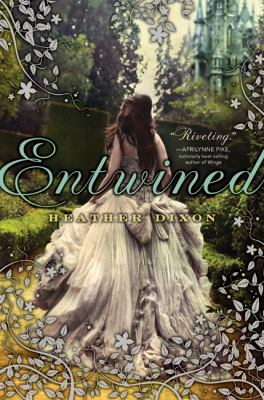
‘Entwined”

  Entwined by Heather Dixon

I just finished Entwined, and I think it could be a favorite summer read for fantasy fiction lovers. (If you don’t like fantasy, you may not make it through the first half although the second half has lots of action and excitement.)

Entwined is a creative riff on the fairy tale of the Twelve Dancing Princesses or The Worn-Out Dancing Shoes. In that tale, the king couldn’t figure out where the girls went to dance all night, but they always wore out their shoes by morning. He challenges young men of the kingdom to figure it out. If they do, they may marry a princess. If not, they are killed. In Entwined, the stakes aren’t quite so high—the era, though not stated specifically, is more modern, and marriage contracts a bit more enlightened. Since the family’s horses are named after famous authors like Dickens and Thackeray, we can at least suppose that the period is post-Industrial Revolution.

The twelve sisters of Entwined are certainly princesses, but they are both poor (taxes in the realm haven’t been raised in a century) and grieving. As the novel opens, their beloved mother dies after giving birth to her twelfth daughter, Lily, on Christmas Eve. Though in mourning for a year, the girls are desperate to dance. Their mother was a wonderful dancer, and they think she wouldn’t have wanted them to stop enjoying life. Happily—or so they believe—they find a secret passage in their magic castle which leads them to the Keeper. In his fantastical ballroom, the girls dance to an unearthly orchestra.

But the Keeper has evil plans for the girls, especially for Azalea, the eldest of sisters, all named for flowers, and in alphabetical order at that. (Bramble, Clover, Delphinium, etc.—the king really likes order). Here the fantasy combines with an almost horror element, and the dances and the outcome of the girls’ relationship with the Keeper is truly creepy. It’s fascinating reading.

Still, this is one for the honest-to-goodness fantasy fans. There are many descriptions of the girls’ clothing and their sewing habits. The author never fails to remind the reader that a certain character has a chocolaty smooth voice or that another has a honey-sweet voice—it’s repeated every time they speak as is the mention that the girls’ dresses rustle, billow, etc. whenever they move. Though I am learning, as I am reading more fantasy novels now, that this is standard in that genre, someone looking for a fast-paced book may not read long enough to get to the more horrific elements. But if you love magic, innocent romance, gentle humor, and a strong bond among sister, absolutely put Entwined on your reading list.

Special note: If you love to dance, if you love the history of dances, or if you are required to read a piece of fiction and then research some ‘real’ element from it, and hope to find a book that discusses specific forms of dance and dances, I highly recommend this novel.

Posted in Fable/Fairy Tale/Fantasy, Family Problems, Fiction, Over 375 pages, Romance, Supernatural, Young Adult Literature | Tagged , , , , | Leave a comment

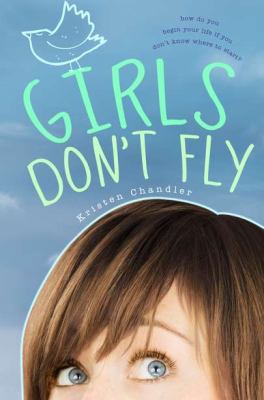
“Girls Don’t Fly”

Girls Don’t Fly by Kristen Chandler 

Family matters, but Myra’s—an older, pregnant sister, four younger rambunctious brothers, and a pair of overworked parents—is so needy that she appears to be on track for martyr of the year. The problem with that is that Myra isn’t taking care of herself or her own dreams while she goes to school, works at a lousy job, baby-sits all four brothers, makes dinners, and watches over her depressed sister who is ill with pregnancy complications. If anyone has ever known that she’s stuck, Myra is that girl.

Adding to Myra’s misery is that her Prince Charming boyfriend, Erik, has dumped her for another girl. She feels hopeless until her biology teacher announces a competition through which two students will win grants to go to the Galapagos Islands to study for two months. The problem is that the winners must each provide one thousand dollars of their own money toward the trip. Myra is determined to earn the money and take the Saturday classes to prepare to write her proposal. But Erik, who is also competing for the prize, thinks that Myra isn’t smart enough to compete. His parents are affluent, and he doesn’t have to worry about the money to apply. He happily sabotages Myra at any chance he gets.

Myra becomes interested in the flightless cormorant (a bird known only to the Galapagos). She sees herself as a sort of flightless bird, someone unable to escape her small Utah community to learn about the larger world. But her Saturday teacher, graduate student Pete Tree, is helping her understand just how remarkable she is. Myra begins to transform her study of birds and the Galapagos into fairytale format (complete with pirates and a scullery maid) for her younger brothers’ bedtime stories.

Anyone interested in the environment or in the life sciences will love this quick novel, but—remarkably—the reader doesn’t have to know anything about the Galapagos or have background in science to enjoy this book. The information is so perfectly woven into the story that just becomes part of Myra’s life and never comes off as didactic, as if the author’s trying to make this into a science lesson. It appeals to anyone who has to sacrifice for family and yet still yearns for dreams of his or her own. It also does a great job of looking at romantic relationships, the pain and heartache of break ups, the aching desire to get back together, and the need to move beyond the pain to recognize the more important center of a person’s life—his or her own creative and intellectual potential.

Girls Don’t Fly is a quick read with wide appeal. I recommend it to all teens.

Posted in Environmental Issues, Family Problems, Fiction, Young Adult Literature | Tagged , , | 2 Comments

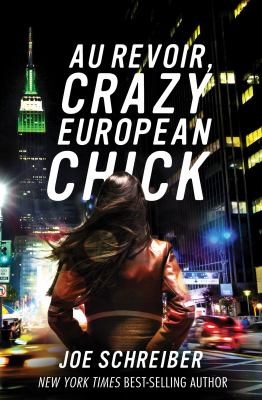
“Au Revoir, Crazy European Chick”

Au Revoir, Crazy European Chick by Joe Schreiber

As if it’s not bad enough that Lithuanian foreign exchange student Gobi isn’t the kind of girl Perry imaged sharing his senior year with, he is commanded by his parents to take her to the prom on the same night that his band, Inchworm, has the chance to play for an agent. When Gobi comes out of her room in a traditional Lithuanian costume and headscarf, the reader is sympathetic and amused.

But Gobija isn’t who she appears to be. She’s been staying with the family undercover. She’s an international, highly trained assassin, bent on revenge. This is one prom night Perry will never forget. This is crazier than having a date with Stephen King’s Carrie.

After stealing Perry’s dad’s Jaguar, and kidnapping Perry, Gobi demands to be taken to New York where she engineers captures and killings; scenes are exploding with machine guns and helicopters. Everything you can imagine would happen on a night out with an assassin ensues. This is violent, but it’s fantastical, the good guys v. bad guys over-the-top stuff of Hollywood that wouldn’t be logical or possible in life. Gobi is a sort of female (crazy European chick) Bruce Willis. You know she’s going to be the ‘good guy,’ but you have to wait to find out why she’s on this mission and how it involves Perry.

Of course, our protagonist has to grow, and Perry changes a lot on this night out. He has always been under the thumb of his high-power lawyer dad, and Gobi thinks it’s time he manned up. Perry’s dad wants him to attend Columbia University (very prestigious) and Perry is on the waiting list. Schreiber cleverly structures this novel by beginning each chapter with an essay question from an application to a prestigious university. Then the wild action in the chapter—each chapter an event from the night in New York—answers that question in an unexpected way.

Just wild, crazy, outlandish adventure for mature readers. To guys who have a hard time finding a book they want to read—read this.

Posted in Adventure Stories, Family Problems, Fiction, Horror/Mystery/Suspense, Mature Readers, Young Adult Literature | Tagged | Leave a comment

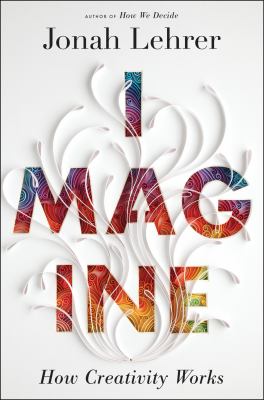
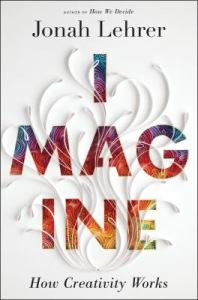
“Imagine: How Creativity Works”

Imagine: How Creativity Works by Jonah Lehrer

“When we obsess over tests, when we teach the way we’re teaching now, we send the wrong message to our students. . . . We’re basically telling them that creativity is a bad idea.”

“We’re a vocational school, but the vocation we care about is creativity.”

Kyle Wedberg, CEO of The New Orleans Center for Creative Arts (NOCCA)


Actually, those quotes are from very near the end of Imagine and the book isn’t centered on education, but I thought I’d start with it because any work about creativity can help teachers and students have a better idea of what can and should happen in school.

I’ve reviewed several books in the last couple of years about how the brain works and about what creativity is, or about what our country should do to get back on track to success—which is another way of wondering how we, as a society, can be creative. Most of those books have been in-depth studies, particularly Daniel Kahneman’s Thinking Fast and Slow, which covers just about everything concerning thinking. Happily, Imagine will not scare off folks who have little time. It’s a jam-packed quick read—it’s short and even the pages are physically smaller than those of other books on the subject. It’s more entertaining than intimidating, and I think that’s why it’s a bestseller just now.

Imagine’s introduction discusses the invention of the Swiffer for cleaning floors and gives us the grinding process that leads to the mind shift that had to take place before inventors could stop thinking of the traditional mop and embrace such a simple idea. It proposes to show that creativity is not separate from other kinds of thinking but rather includes a variety of thought processes. Lehrer promises to show us this by following the creative journeys of Bob Dylan, poets, a bartender, an autistic surfer, Pixar, Yo-Yo Ma and corporate innovators. And he does. He also has some pretty interesting insights on Shakespeare and sixteenth-century London.

What we learn about the stories of creative individuals is that we need to honor the process and understand that just about everyone wants to quit many times before s/he has that moment of inspiration. Moments of inspiration come to ‘primed’ minds. So let’s all accept that both our students and we make a lot of mistakes, that we will often be stumped, and that we will have lots of false starts.

What finally makes for the breakthroughs—in individuals and in corporations—is a sudden connection made between and among things that, on the surface, appear to be unrelated. (As far back as philosopher David Hume, invention is recognized as an act of recombination.) This is why we have to do lots of different kinds of things, be around lots of different kinds of people and have the time to stop working and pursue “speculative new ideas.” That’s right: if we don’t daydream, we probably aren’t going to come up with anything very new. The success of companies that encourage speculation—about 15% of the workday seems to be an ideal amount of time—include IBM, Google, and Pixar. In addition—and I know this is a really hard one for us teachers—a little ADHD can help the creative process. Being distracted sometimes pulls the focus away from the wrong answer and opens the way for the right one.

So how do creative people make all this work? Well, their daydreaming is sort of disciplined in the sense that they can awaken themselves from it when they realize they have a good idea. If they are surrounded by lots of different people who are also creating, that helps. Thus, creative corporations have central spaces, which force chance meetings among employees from different departments. And thus we have Shakespeare—who flourished in London because of all that was going on there during his life, the most important things being access to literature (from which to ‘steal’ his ideas) and the central role of the theater in the lives of the populace.

Lehrer also gives the reader some of the science behind the connectivity in the brain as well as the ‘working memory’ (like RAM in a computer) that is responsible for creative sparks. He makes it easy to understand and includes illustrations. He distinguishes between divergent and convergent thinking, and shows how starting with the former and being able to continue with the later are marks of creative genius. He cites studies that show that creative folks are often ‘melancholy’ (depressed), but that too much sadness will interfere with having insights.

Some of Lehrer’s suggestions for grouping people to the best effect would be useful in the classroom. What he calls ‘Q’—for a density of connection—gives teachers insights into how to group collaborative work, how long to keep a group together and how often to throw someone new into the mix. Oh, yeah—and brainstorming doesn’t work. I’ve read this before in a short article citing Science Magazine. But Imagine has a more detailed explanation of why. People need criticism when ideas are bad—“a candid discussion of mistakes.” We don’t want to avoid a bit of combative grouping because disagreements refine work as long as it isn’t demoralizing. (Lennon and McCarthy of The Beatles are given as an example.) And last, personal contact generates creativity much better than online contact does. The research on this is important as we all move toward online classes and blended learning. Using technology is great, but it won’t be a panacea for educating our youth.

Lehrer makes some general suggestions for society, such as encouraging (educated, particularly in the sciences) immigrants to come to the U.S. He notes that we do things right with athletes, from childhood on—and that we should treat others with the same value we treat athletes, in the same way. If we did, we’d go a long way to nurturing creativity. (I know someone much closer to home that made a similar argument a few years ago and caught a lot of hell for it. 🙂 )

Everyone has the seeds of creativity. I recommend Imagine to everyone, students and teachers alike, because it will show you how to nourish those seeds into full blossom.
 

Posted in Non-fiction | Tagged , , | Leave a comment

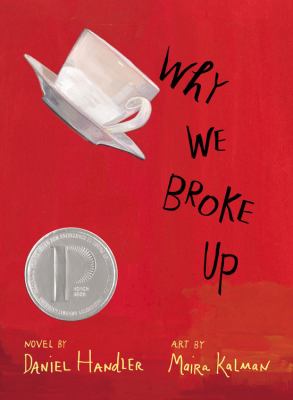
“Why We Broke Up”

Why We Broke Up by Daniel Handler; illustrated by Maira Kalman

Why We Broke Up is a ‘graphic novel’ of sorts. That is, it’s a novel and it has lots of graphics. But it’s not in a comic book style.

Minerva—Min—is writing her ex-boyfriend, Ed, a letter about why they broke up. She plans to include this letter in a box of items associated with memories of their time together—keys, tickets, photos, postcards, a coat—you name it. Each item is drawn on a full color page of the book. And then there is the story behind the item. And each item has significance in that it is emblematic of why the break up took place.

Min and Ed weren’t like every couple. They didn’t seem to belong together. Ed is the co-captain of the basketball team, is very popular, likes social events at school, parties a lot, has had a lot of girlfriends and a lot more experience than Min. Min, on the other hand, is considered ‘arty.’ She’s ‘different.’ She wants to be a film director and sees events in her life as they relate to good movies. She takes Ed to see classic films. She plans an eighty-ninth birthday party for a golden-age film star. Actually, Min is very creative, has funny and good friends, and is often coming up with interesting things to do that no one else would think up

So what do Ed and Min have in common? Just each other. They are love-struck and immediately tell one another so. They have lots of plan for several months in advance. So they can’t see what all their friends can. They can’t see what Min’s mom and Ed’s sister see. That this relationship is doomed.

I liked Why We Broke Up because of the realistic portrayal of how a relationship in which two people have the worst sort of hots for each other will play out. This is done with empathy for the characters, especially Min. No reader will gloat over her broken heart. You will only remember that you were there once, too.

For students who were fans of A Series of Unfortunate Events when young, you may recognize the author, Daniel Handler. He is Lemony Snickett. I’m noting that this novel is for mature readers because of a single scene. If you’re a conservative reader and wonder whether a single scene will make you decide against reading it, go ahead and flip through the pictures in the novel. Two of them will be clues, and you will be able to make a valid decision. (I don’t want to give away the scene in this review—it’s an important, meaningful part of the book.)

Posted in Family Problems, Fiction, Graphic Novel, Mature Readers, Movie Tie-In, Romance, Young Adult Literature | Tagged , | Leave a comment

“Because of Romek: A Holocaust Survivor’s Memoir”

 Because of Romek: A Holocaust Survivor’s Memoir by David Faber (with Anna Vaisman)

Like My Brother’s Voice, Because of Romek chronicles the events in the life of a young Holocaust survivor, with particular details focused on the survivor’s brother who was killed. David Faber’s brother, Romek (a nickname), was tortured and murdered while David watched. Romek was a Polish soldier and a prisoner or war. He was released from Buchenwald as a POW, but had to go back to the Jewish ghetto in the city of Tarnow with his family. He participated in the Polish Underground, was caught, and tortured for information before he was murdered.

Unlike other stories of Holocaust survivors that I’ve read, more than half of Because of Romek deals with the horrific treatment of David and his family before David is shipped to a concentration camp. The senseless, brutal, and seemingly arbitrary murder of Jews in Tarnow is astonishing, as is David’s ability to live.

What the reader comes away with is just how arbitrary survival was for victims of the Holocaust. Having someone who is shot fall on top of you, her dead body providing a shield; having a gas chamber be too full for you to be pushed in; being given the job of feeding the camp’s dogs and sneaking some of the dog food in order to survive. The list is endless, and the remarkable thing is how often David’s luck turned toward life rather than death. Eventually, that luck ran out for most Holocaust victims.

Of course, luck is a relative term here. All of David’s family is killed except a sister who was in England at the time. Most of the time, David wondered if it wouldn’t have been better to have died as well. In reading Because of Romek, I was again questioning how so many people could become so sadistic all at once. It’s very difficult to understand that there were innumerable Germans who were poking out eyes, burning people alive, gassing them, starving them, having dogs tear them apart, beating them with rubber hoses, hanging them up as examples, gunning them down in droves. How do so many people go completely insane at one time?

A while back I bought a book for the library entitled Hitler’s Willing Executioners, about the German people. I’ve added it to my reading list in the hope of understanding the answer to my question.

Posted in Biography/Memoir, Human Rights Issues, Non-fiction | Tagged , , , , | 1 Comment

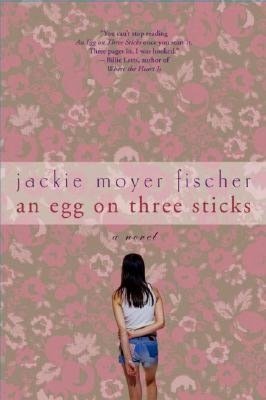
“An Egg on Three Sticks”

  An Egg on Three Sticks by Jackie Fischer

“I’m pretty sure Mom is having a nervous breakdown.

“Which I tried to look it up and it’s not in the dictionary but I think I know what it is. It’s when your mom has to lie down all the time and has raccoon circles around her eyes and when she walks her feet are as heavy as the whole world and her face isn’t her face anymore and when she looks at you she doesn’t see you and when you look into her eyes, you can’t find her.”

What was referred to as Abby’s mom’s ‘nervous breakdown’ in An Egg on Three Sticks is 1970s language for a suicidal depression.

Fischer’s novel is so beautifully written that the reader sees the truth is what Abby’s best friend, Poppy, whispers about the problem, as she overheard it from her own mother: Abby’s mom, Shirley, has a creative muse and she can’t live a stifling life. And without hammering the reader about what a stifling life is—in fact, without even mentioning it, you will see that Shirley might as well have had her source of oxygen cut off. She’s a 1970s stay-at-home mom. Her husband, a typing teacher, won’t change or remodel the house. The exterior paint is deeply faded and flaking. The family uses old stuff beyond the point that it’s worn out. Their clothes are worn out and faded as well. The kids are not allowed to have anything fashionable, anything current—no new music in the house, no popular books. When Abby’s dad gives her mom a Crock Pot as her big Christmas present, you know you’re turning the corner into a dark alley. And, of course, Abby’s dad doesn’t even understand why this is not a great present. His greatest happiness is routine.

To manage a routine and order, there are rules for everything—no TV during dinner ever, no yelling across the house to call someone to the room, no swearing, no rock or pop music, no being late home from school, no piercing the ears, no go-go boots, no mini skirts, no reading popular books like Jaws, no skipping piano practice ever, trash is incinerated every Saturday.

But still.

Lots of people live routine, dull lives with lots of rules. They aren’t suicidal. So how does Abby make sense of it? She can’t, and she rebels as her mom’s world becomes darker and darker. She wants her mom to snap out of it, punish her, take charge. But her mom can’t. And Abby can’t forgive her for it, for being so very ill.

An Egg on Three Sticks truly is a beautiful book although the subject is pretty dark. I might have missed reading it if I hadn’t been asked to participate on a ‘recommended reading’ committee for the California Department of Education. For any student who needs a work of fiction with historical elements that s/he will later research, this one has a lot of fun references to the early 1970s—the music, the hippies, the styles (mini skirts, boots, Levi jackets and more—actually a lot of the same styles are popular now). And some sad references, too—especially to the Vietnam War.

I highly recommend this one to mature high school readers.

Posted in Family Problems, Fiction, Historical Fiction/Historical Element, Mature Readers, Young Adult Literature | Tagged , , , | Leave a comment