Adult Books: “Reign of Error”

This slideshow requires JavaScript.

Reign of Error by Diane Ravitch

It’s one thing to say we are going to better educate American kids, bringing them all to the top of the pack. While any logical person might wonder how 100% of children can be driven into the top 10% or so, it is possible to argue that all kids can learn more than they are learning. But how to achieve this goal is hotly disputed. Ravitch, a life-long educator, has been in the thick of the battle for over thirty years. When she speaks, people should listen.

Ravitch’s basic argument in Reign of Error is that U. S. public schools are not broken beyond repair. While she freely acknowledges problems and disparities in the quality of schools, she carefully proves that many of the solutions currently being considered can’t work. Those of us in education—who may have years of anecdotal evidence that makes us inclined to agree with Ravitch—now have the data to back our claims when we discuss public education with friends and acquaintances. And while it would be nice to think of the unworkable solutions being proposed as just so much nonsense—as another trend that will pass—Ravitch shows the darker side of the movement to privatize public schools. There’s a lot of money to be made, and unethical people with no concern for children are as free to grab the cash as anyone else.

I think every educator should read Reign of Error with a highlighter in hand. And then add tabs to the pages for easy reference when someone corners you at the family holiday gathering and wonders aloud how someone as smart as you are can’t see why vouchers, charters schools, and the end of teacher tenure are the best things that could happen to public education. Here are some of the topics about which you’ll have research and data:

  •  Just because Bill Gates made a lot of money doesn’t mean that he and his wife should be driving American educational policy (yes—there is data on his record in doing so—and it’s not pretty).
  • No Child Left Behind—just how that worked for you
  • The Race to the Top—just how much worse that’s going to work for you
  • Why American schools can’t be Finnish schools (I’ve made the point in other reviews that many Americans would consider the Finnish way of life as living in a ‘Nanny State’—and friends, you can’t have it both ways.)
  • Major foundations, billionaires, and hedge fund managers often encourage the privatization of America schools because they want the profits (and the children be damned).
  • Which tests scores really—objectively—tell us about the state of public education (hint: NAEP—and the news is pretty good)
  • What international test scores really mean
  • Teacher tenure and whether it affects the quality of students’ education
  • Whether college graduation rates have declined
  • What’s up with Michelle Rhee anyway?
  • What is the real record on charter schools? How can they work better for all students?
  • How poverty affects learning (and why we have to stop pretending that it doesn’t)

There are skeptics who might think that Ravitch’s is just a partisan political argument. To them, I say, Just Read It. Ravitch is no fan of Obama’s educational policies, and does a good job of illuminating Arne Duncan’s history. So although Ravitch has liberal leaning, the fact that she worked in the Bush administration and is willing to (deeply and consistently) criticize a Democratic president shows that what she is truly impassioned about is kids and their futures.

I’d read Ravitch’s previous book on the subject, The Death and Life of the Great American School System (2010). It is still worth reading—it has an excellent summary of the history of public schools in America. (Ravitch is considered the best living historian of public education by many people in the know.) It also summarizes Ravitch’s stint in the George W. Bush administration and her initial belief in the value of No Child Left Behind. She details why she changed her mind and, just as in Reign of Error, she backs her opinions with facts and data, with research. That said, if you only have time for one of these book, read Reign of Error, which has a better play-by-play analysis of the privatization movement and how, while some people are either making a lot of money through it, or stand to make a lot of money, it just doesn’t serve kids—which, of course, should be the goal of public education and its employees.

High school housekeeping: I’m reviewing this book primarily because I want teachers to read it and share it (or at least its findings) with their friends, family, and detractors. With the advent of the Common Core and what I hope will be a new focus on research in high school, you may be interested in the book if you research any topic within the subject of public education—particularly the advantages and disadvantages of standardized testing, teacher tenure, and school evaluation. You could easily use the entire book, or if your research subject is more narrow, just a chapter or two.
Posted in Controversial Issue/Debate, Human Rights Issues, Non-fiction | Tagged , , , , , , , , , , | Leave a comment

The Fault in Our Stars–Movie Trailer

Can’t wait until this summer!

Posted in Fiction, Movie Tie-In, Romance, Young Adult Literature | Tagged , , , , , , , | Leave a comment

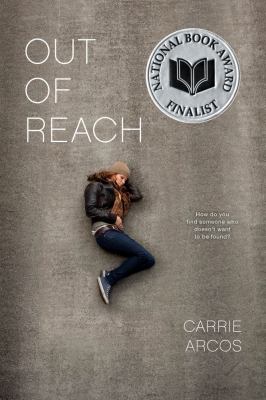
“Out of Reach”

Out of Reach by Carrie Arcos   out of reach

Rachel’s brother Micah is a meth addict. She’d like to think he is getting better—after his stint in rehab, especially.

But Micah never wanted to go to rehab, and he is back to using as soon as he gets home. Rachel’s parents had been unaware of his drug problems until Micah was totally out of control. And after rehab, they have no idea that he has relapsed. Should Rachel tell them what’s been going on?

Rachel thinks that telling on Micah would be disloyal. She decides that things will get better. But then Micah disappears, and there’s no sign that he’s coming back. Rachel feels responsible. When she receives an anonymous email telling her that Micah is in the Ocean Beach area of San Diego and is pretty bad off, Rachel decides to take action. She lies to her parents about where she is going. She gets Tyler, Micah’s long-time friend and fellow band member, to search with her. Together, the two enter the underworld of meth addiction and homelessness.

As Tyler and Rachel run into dead ends, they become closer to one another and share their own secrets. Rachel is getting over Keith, who had used and betrayed her. She’s falling for Tyler, but doesn’t know if he feels the same way about her or whether he is just being protective of his best friend’s younger sister.

High school housekeeping: The novel has many poignant moments. What Keith has done to Rachel is awful, but very realistic. And how Rachel’s family reacts to Micah’s addiction—‘walking on eggshells’—is also very realistic. Anyone who’ve had a drug addict or alcoholic in the family will relate to this. In a scene inside a Catholic church, Rachel also has some interesting reflections on life, death, rebirth and renewal. 

Posted in Adventure Stories, Family Problems, Fiction, Romance, Young Adult Literature | Tagged , , , , , , , , , , , | Leave a comment

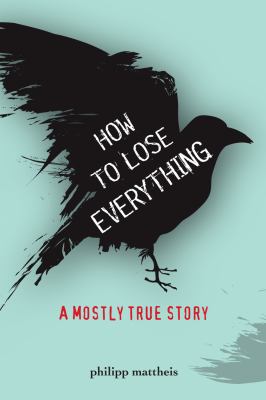
“How to Lose Everything”

how to loseHow to Lose Everything: A Mostly True Story by Philipp Mattheis

Sam, Eric, Schulz, and Jonathan are four friends living in a surburb of Munich, Germany. They mostly hang out at the skateboard park, a group of lost boys, adrift. Eric, who has been kicked out of school, and then out of his house, leads the pack.

One day the foursome decide to break into an abandoned house. Though the experience is pretty creepy, they keep returning—because each time they do, they find more money, hidden in many place all over the house. In short order, they are pretty rich for teens, and they drift around town spending the money—at first at McDonald’s, and later on less innocent pleasures.

The guys’ sudden wealth turns out to have some dark effects as they are pulled further into drugs, clubbing, mental illness, and betraying one another. It’s like the wish granted by the genie that turns out to ruin lives.

Mattheis actually had this experience in the 1990s. He decided to fictionalize it a bit, but on the whole, he tells his story, He includes an introductory note for American teens, explaining how teen guys could get alcohol so easily (the unaccompanied minor drink age in Germany at that time was 16 years, but even that wasn’t enforced). And, of course, he changes the names of his friends to protect their privacy.

High school housekeeping: How to Lose Everything is advertised as a story about the fall from innocence, but I think that’s not true. Before these guys find all this money, they are already smoking cigarettes and marijuana, drinking alcohol, hanging out with little or no plans. Eric’s goal is to become a drug dealer. They really are adrift. I think what makes the book worth reading is how we see these lost boys react to the money they find. Because they don’t have a stable foundation of ethical behavior, they speed down the path they are already on, making wrecks of their lives. Obviously, Mattheis pulled himself together (anyone who studies philosophy, which is a very tough go, is thinking long and hard about ethical behavior). I think his adult journey would be another interesting book.

I recommend this title for most teens. The reading level is about 5th grade (a Lexile of 670), but the themes are mature. Unlike many books in the 600-700 Lexile level, the print is the size of a regular adult book (e.g. smaller than children’s and YA literature), and the length is typical for YA literature, about 200 pages. So if you are working on your reading skills, How to Lose Everything is an engaging way to take a step up into something longer—a bridge to books with more depth.

Posted in Adventure Stories, Controversial Issue/Debate, Family Problems, Fiction, Hi-Low/Quick Read, Mature Readers, Young Adult Literature | Tagged , , , , , , , , , , , , | Leave a comment

Adult Books for Teens: “Jam”

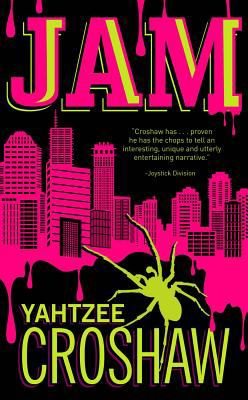
Jam by Yahtzee Croshaw   jam

“I woke up one morning to discover that the entire city had been covered in a three-foot layer of man-eating jam.”

Croshaw begins his send-up of the future apocalypse with a distinctive strawberry flavor. The man-eating jam that covers Brisbane, Australia immediately devours Travis’s one job-holding roommate who is heading off to the gym to work out. This leaves Travis, our slacker hero, with his surviving roommate, Tim. They find only two other survivors in the building—Don, who was home after working all night on his ‘build’ (he’s a game designer), and Angela, a wannabe journalist who works at Starbucks. The four are shocked when X and Y—a man and woman who appear to be on a secret mission with the US government—crash land a helicopter into Don’s apartment. They seem to working for an agency with the acronym HEPL.

Together (and separately) the group must brave aerial stunts and sail on a sea of strawberry jam to reach other survivors and begin colonies. The problem is that there are only two sorts of folks left. Slackers who weren’t on their way to work when the jam hit at the peak of rush hour traffic, and workaholics who were already at the Hibatsu building slaving away.

The twenty-something slackers have taken refuge in the mall where they set up an ironic kingdom, and, with all due irony, kill outsiders. Travis fears for his tarantula, who is weak with hunger. Tim wants to take over the kingdom. He is sure that this apocalypse will give him the chance to start a new world and is concerned with organizing crop production and the like.

Meanwhile, the more A-types at Hibatsu have already formed their own government by committee and are planning a corporate overthrow of other settlements in an effort to gather resources as they work toward a new society.

The juxtaposition of these two groups is funny—neither does very well now that the Internet is permanently down, and survival is more a matter of chance than anything. Don, who single-mindedly holds on to the notion that his hard drive with his build is the only thing that matters, has to deal with all the lunacy as he switches alliances in the effort to find a working computer and upload his build to the cloud.

High school housekeeping: Yahtzee Croshaw has something of a cult following online, where he posts weekly reviews of video games. If you are a gamer, you might enjoy his work. He is witty and his ability to parody—even skewer—something is evident in Jam. If you would enjoy a nice send up of all those ‘dystopian future’ novels you’ve been reading, or if you are just looking for something funny, try Jam. Very wacky.

Some folks enjoyed Croshaw’s Mogworld even more. I haven’t read that yet, but you might give it a try as well.

Posted in Fiction, Over 375 pages, Sci-Fi/Futuristic | Tagged , , , , , , | Leave a comment

YA Books into Movies

This slideshow requires JavaScript.

The most recent young adult fiction to go to the movies–

Vampire Academy: Blood Sisters will be out on February 14, 2014. Starring Zoey Deutch, Lucy Fry, and Danila Kozlovsky.

Divergent will be out March 21, 2014. Starring Shailene Woodley, Theo James and Kate Winslet.

Read the books before you go to the show!

Posted in Uncategorized | Leave a comment

Bullying Books/Romance: “Eleanor and Park”

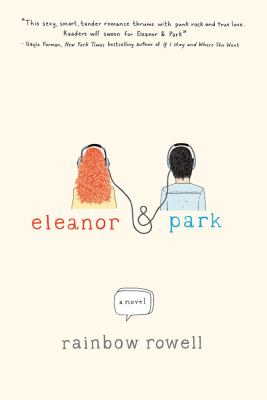
Eleanor and Park by Rainbow  Rowell  eleanor and park

Eleanor and Park is already popular with some of our readers of realistic teen fiction, but before Valentine’s Day rolls around, I’d like to introduce it to the rest of you who are looking for a good romance.

It’s 1986 and the new school year has begun. When Eleanor tries to find a seat on the school bus, she is shut out. People seem to hate her for her appearance—she’s heavy, has long, wild, curly red hair, and dresses weird. People will go on to call her “Big Red” and mercilessly bully her in PE class. But on that first day, Park, who also thinks of himself as different-looking because he is half white and half Korean, finally lets Eleanor sit next to him, although he is very rude to her as he does, using the f-word.

And so begins a lovely romance. No, you wouldn’t think so, but both Eleanor and Park are smart kids and can see pass the exterior shells. Park realizes that Eleanor likes the comics he reads on the bus in the morning, so he sets copies on her seat each day. He knows that she would like the same punk music he does, if she could afford to buy it. So he makes tapes for her. And they talk about everything they have in common, growing close.

What it takes Park much longer to realize is that Eleanor’s home life is a nightmare.

Eleanor’s dad is out of the picture. He just doesn’t have any interest in his many children. Eleanor’s beautiful but egoless and beaten-down mom has married Richie—an abusive, perverted, foul-mouthed jerk who won’t allow a door on the bathroom (for starters). They are poor, and Eleanor’s strange taste in clothes is partly due to the fact that there is no money to buy anything except ill-fitting thrift-shop attire. She, her brothers and sister all walk on thin ice daily, hiding from Richie and waiting for him to explode. Which he does with some frequency.

The thing about this novel that is so sweet—and so tough—is that Park and Eleanor know that their love has come very early in life. It’s not likely to last ‘forever.’ But what they share is worth having, even if they seem destined for unavoidable heartache.

High school housekeeping: One of my coworkers made the astute observation that there are two camps of teen readers when it comes to Eleanor and Park. Although this is a bestseller and super-popular book, we have had several teens bring it back and tell us they couldn’t get into it, didn’t like it. These are mostly girls who are looking for romance books. In talking to them, we generally find that they like formula romance—they liked Simone Elkeles’ and Susane Colasanti’s books. They want the forever part and sometimes more—teens who stay together forever while becoming brilliant artists or scientists. Oh, and rich, of course. If you are a romance reader, I want to encourage you to try Eleanor and Park (and The Fault in Our Stars, of course). Seeing examples of teens who treat one another well in difficult circumstances is a way becoming that kind of person—of finding an example of love that respects the individual with all his or her quirks. It’s also a way of facing reality and learning that, painful though it is, to have loved and have lost is often worth it. In fact, it may well enrich your life.

Posted in Family Problems, Fiction, Romance, Young Adult Literature | Tagged , , , , , , , , | Leave a comment

Adult Books for Teens: “American Gods”

american gods

American Gods by Neil Gaiman

It’s hard to be a god in America. People are busy making new things, and they forget their obligation to worship. Or they find it more interesting to worship new gods as tastes change and technology advances. So what’s an old god, brought to America by immigrants, to do?

Well, most just want to accept their fate, but Odin can see the bleakness of the future. He wants to rally all of the old gods—and they are myriad, coming from all over the world—to do battle. Because new gods are rising. There is Internet and there is Media, powerful players in the changing world—and so easy to worship.

Since the old gods have lost power, and are often nothing more than con men and petty thieves, they need to engage people in their battle for supremacy. And so begins our story.

Shadow Moon has found out that he is soon to be released from prison. He’s there for beating a fellow thief who cheated him out of his part of the thieves’ take. But with the help of his much-loved wife and his good behavior, he’s up for early release. Unfortunately, that release comes a few days earlier than expected because his wife has been killed in a car accident, and he needs to go home to attend her funeral.

On his trip home, Shadow’s journey is disrupted when he finds himself in the wrong airport and then on a wrong plane. He talks to Mr. Wednesday, who knows all about Shadow and offers him a job. Although Shadow is reluctant, he eventually accepts as he has no other options. He has, without knowing it, become a sort of bodyguard and accomplice to a god. As he works to secure the legacy of the traditional gods, Shadow becomes very loyal, despite the strange, magical and haunting thing his life has become. He must confront death, try to outwit various gods, and deal with his dead wife who keeps reappearing and hoping that Shadow will figure out how to bring her to life.

There is so much going on in this long novel. The idea is very creative, and the characters are deeply engaging. And yet when one of the characters was quoting the poet William Butler Yeats—“The center cannot hold”—I thought that was true of the novel—or that maybe it has no actual center. It just tries to incorporate too much, and Shadow moves from episode to episode without the connections always being made. I think it would have made better sense if it were pared down in scope.

Despite its flaws, I want to recommend American Gods to students interested in stories of gods and goddesses. I know many who loved the Percy Jackson books when they were younger and are seeking similar works for a more mature audience. There are many, many gods in the novel, from all over the world. You’ll be able to guess who some of them are as they parade in human form; however, most will be surprises, and you’ll learn new things about various mythologies.

Even more interesting than the gods are Shadow and his dead wife. They illuminate the complexities of flawed relationships, the inscrutability of love, and the strangeness of loyalty. Shadow is very smart, thoroughly likeable, and a deep thinker to boot. You’ll also like his wife more than you want to, considering her behavior—her presence is both a haunting and a protection. The trials that Shadow goes through in his journey to belief (or in his journey to decide what to believe) are interesting for the reader to contemplate. So despite the wandering narrative, you’ll find yourself thinking important thoughts about belief, life and death.

High school housekeeping: If you read my review of The Ocean at the End of the Lane, you’ll know that I think Gaiman is a brilliant writer. And even though brilliant people can’t be brilliant all the time, if you are a fan of myths, I think you’ll like this. It does have mature themes—for example, an ancient goddess of fertility might pop up in the modern world as a prostitute. So—forewarned. You might try the tenth anniversary edition of this book. I believe it was released with changes requested by Gaiman. Perhaps it has a narrative arc that wasn’t clear (or that I wasn’t smart enough to follow) in the first edition.

Posted in Adventure Stories, Fable/Fairy Tale/Fantasy, Faith-Based/Religious Element, Family Problems, Fiction, Over 375 pages | Tagged , , , , , , | Leave a comment

Common Core: Adult Books for Teens: “Naked Statistics”

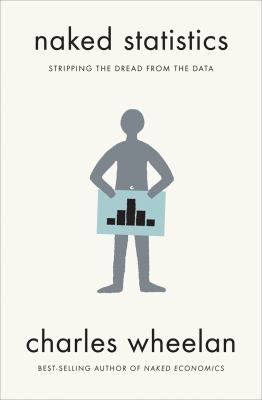
Naked Statistics: Stripping the Dread Out of Data by Charles Wheelan  naked stats

Ok, I’m not sure that most folks are quite ready to embrace the statement by Hal Varian, chief economist at Google, quoted on the book jacket. Varian says that the field of statistics is ‘sexy.’ But if isn’t quite that, it isn’t the dreadful bore that we think of it as. Wheelan, in Naked Statistics does a great job of making the field interesting; he does a good job of making it fun. Reading his book may open you to the possibility of a career that requires statistical analysis. And so—I think it is the sort of book that shapers of the Common Core are steering you toward.

Wheelan points out that though you do need to understand some advanced math to comprehend statistical analysis, these days working with statistics means using a computer program to run the numbers and do the analysis. What he makes the reader realize is that the saying about computer analysis—‘garbage in, garbage out’—always holds true. So one of the most important traits of a person working with statistics is thoughtfulness—what information belongs in the study? Another is integrity. You don’t tweak the results by using biased data. Decision-making problems like this are really quite creative. Tackling problems like this is the thing that makes people enjoy their jobs and want to come to work in the morning. Really. I’m not kidding.

Most adults can think of important situations when the wrong data seemed to have been used to make important decisions in organizations, corporations and educational institutions. Wheelan shows us how bias in statistical analysis leads to crummy results. Bias may be malicious—purposeful, with a hope of a specific outcome –or just a result of carelessness. One of the most interesting examples Wheelan gives—interesting because it affected all of us so deeply and most of us so negatively—is the “irresponsible use of statistics . . . for gauging risk on Wall Street prior to the 2008 financial crisis.”

I think you need to read the book to see how statistics can be fun—find out:

  • Why the makers of Shiltz Beer (a cheaper brand) felt safe in having a live televised taste test against Michelob (considered a better brand) during a Super Bowl halftime
  • How Netflix uses statistics to determine what movies you will like and then recommend them to you
  • Why you should not buy extended warranties on most products
  •  How political pollsters can take very small samples and correctly determine the outcome of major elections
  • Just what Lebron James has to do with the Central Limit Theorem
  •  How it is that a CEO in charge of a multimillion dollar corporation in less likely to be stressed out over his or her job than his/her secretary is stressed
  •  Why it’s important to remember not to kill anyone with your statistics (common regression mistakes—some of these ‘mistakes’ are made on purpose—and yes, that IS interesting reading!)

High school housekeeping: The author does a wonderful job showing how statistics can be fun and valuable (and conversely how they can be used for ethically indecent ends). And you can enjoy the book without ever having taken a statistics class. However, this is a book for students who have some math background and who are reading at grade level or above. Reading it may help you decide to take a few stats classes in college. It will help you understand why statistics are used in just about every important decision that an organization makes. You’ll understand why you might want to have a look at the data that goes into any statistical analysis that affects you. And it will help you see how truly creative brilliant researchers are—check out the chapter on program evaluation (Will going to Harvard change your life?)

Posted in Non-fiction | Tagged , , , , , , | Leave a comment

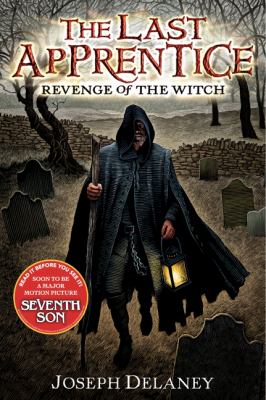
“Revenge of the Witch” (First in The Last Apprentice series)

Revenge of the Witch (First in The Last Apprentice series) by Joseph Delaney  revenge witch

Tom Ward is the seventh son of a seventh son—so he occupies something of a magical position in life.

Unfortunately, he needs to secure an apprenticeship, and, as the last of the sons in his family, there aren’t a lot of options let. But there is the Spook.

A Spook is someone who keep the countryside safe from evil spirits—ghosts, witches and boggarts among them. Tom learns that being a seventh son of a seventh son is a good qualification. And the fact that he’s left-handed helps, too.

Tom is immediately fooled during his first months of apprenticeship. When he is separated from the Spook for a few days, he decides to do a favor for Alice, a local girl who helped him out when bullies threatened him. However, unknown to Tom, Alice is the niece of a witch. She fools Tom into setting a very powerful witch free of the binding that the Spook has imprisoned her with. And when Mother Malkin breaks loose, everyone—Tom, his family and his little baby niece—are all in grave danger. Whose blood will the witch’s spirit feed on to gain her strength?

High school housekeeping: I was looking for a very specific book when I read Revenge of the Witch. I wanted something for students who are working on their reading skills, and I wanted the book to be scary but didn’t want a lot of graphic violence. The problem I knew I would have—have had—is that most books like that are not scary or interesting to high school students. Their appeal is to younger kids. But I think Revenge of the Witch meets all of my criteria, so I’m recommending it. Some frightening things happen to the characters. Some of the things they fear are left to our imagination. Others are described just enough so that we know the terror the victims have gone through. Delaney goes a good job with the spine-tinkling, hair-raising elements of horror. If you are working on your reading skills, I recommend this novel. (The Lexile level is 840, which can fall anywhere between the fifth and eighth grade reading levels.) And the good news is that it’s the first in a series. If you like it, keep going.

Posted in Family Problems, Fiction, Hi-Low/Quick Read, Horror/Mystery/Suspense, Read 180, Supernatural, Young Adult Literature | Tagged , , , , , , , , , | Leave a comment