Common Core: Nonfiction: “Little Princes”

Little Princes: One Man’s Promise to Bring Home the Lost Children of Nepal little princes by Conor Grennan
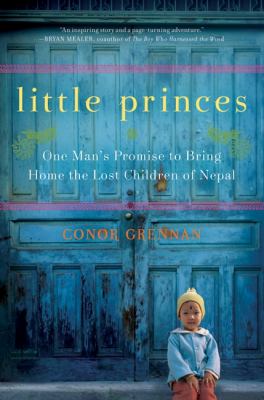
In 2004, Conor Grennan had no wife or children, and had saved some money. So he decided to take a year off work and travel around the world. This sounded hedonistic, he realized. To mitigate the appearance of self-indulgence, he began the trip with three months in Nepal, working in an orphanage. What a good person he would be! How highly his friends and family would think of him!

What Grennan didn’t expect was that he would become deeply moved by, and then deeply involved in, the lives of the children he was helping to care for. These kids were mostly boys. Because Nepal was embroiled in civil war, and because insurgents were grabbing up boys to make them unwilling soldiers, there was no telling what could happen to children. Insurgents planted bombs, went into schools and killed the teachers, and then took the kids. To avoid a terrible fate for their children, parents would give them up to child traffickers in the belief that they would have better lives—the people taking them would promise that they received an education and would be well cared for. The truth was grimmer. Although the parents often paid what was, for them, large sums of money to have the kids taken, the children wound up as house slaves or street beggars, half starved.

Those who were lucky landed in orphanages after being taken from the child traffickers. These orphanages were run by non-profit organizations which would care for the kids, educate them, and try to reunite them with their parents. ‘Little Princes’ is one of those orphanages, named after the fanciful novel by Antoine de Saint-Exupéry.

Grennan relates stories, both tender and funny, of his experience at Little Princes, where he enjoyed children’s antics for the first time. In fact, he was so moved by his experience that after his trip around the world, he came back to Little Princes for another 3-month volunteer stint. And when he learned that most of the children weren’t really orphans, he decided to go home and start a non-profit organization—Next Generation Nepal—with the goal of reuniting the lost children with their parents.

By 2006, Grennan and others from an organization with a similar mission set out on a dangerous journey in search of the parents of the ‘little princes.’ They were also seeking the families of other children Grennan had met and wanted to help. Nepal was never safe for travel outside of the typical tourists’ areas. (Nepal is in the Himalayas, with some of the tallest mountains on earth. Hikers come from all over the world to climb those mountains, so there is more tourism than you’d think.) Maoists were demonstrating in the street. Police were shooting protestors. A revolution had begun. Grennan and his colleagues hoped that a fragile cease-fire agreement would hold as they searched.

In addition to the adventure element of the story, there’s a sweet romance. Conor maintained an online relationship with a woman who was interested in his new non-profit. Over time, they came to know and respect one another and fell in love.

High school housekeeping: Little Princes is both inspiring and sweet—a happy ending kind of story. As you read, you’ll learn a bit about Nepal, one of the poorest countries in the world. You’ll get a sense of the difficulties of living in a war-torn country. All of this interspersed with the details of dangerous adventures and a quiet love story. There’s a lot to like. Pick this one just for pleasure, but also when a teacher assigns an inspirational book, a memoir (and if you fudge a bit, it’s great for a biography assignment as well although it doesn’t cover the author’s childhood). Very much recommended.

Posted in Adventure Stories, Biography/Memoir, Faith-Based/Religious Element, Human Rights Issues, Non-fiction | Tagged , , , , , , , , , , , , , , | Leave a comment

Adult Books for Teens: Common Core: “I am Malala”

I am Malala: The Girl Who Stood Up for Education and was Shot by the Taliban by Malala Yousafzai and Christina Lamb

I am Malala   Don’t miss this one.

Malaha Yousafzai is the girl who was shot in the head at point-blank range by a member of the Taliban as she was on her way home from school. Somehow she survived. Here, with the help of Christina Lamb, a veteran reporter with decades’ experiences in Pakistan and Afghanistan, Malala tells her story. Following in the footsteps of her father, her great desire has always been for girls’ rights to education.

Malala’s father is an educator. He struggled through poverty to obtain his own education, and he believes that it is an inalienable right for both boys and girls, an attitude that is very unusual for Pakistani men. As a young man, he opened his own school and included girls. Once the Taliban came into power in the beautiful Swat Valley where the Yousafzai family lived, all citizens had fewer and fewer rights, particularly girls. In an effort to keep the school open, high school classes were segregated by gender, girls began to cover their faces, no one wore a school uniform, and all girls hid their books under their clothes.

Malala shows how the lives of Pakistani people changed dramatically after 9/11/2001. She tells the reader that militancy became more mainstream. Malala comments that before the advent of the Taliban, she and her friends just did ordinary things like read the Twilight books. When the Taliban arrived, it was like vampires had come to life. People could be punished, even publicly flogged or hanged for simple things like singing, listening to music, dancing, wearing jewelry—and of course, going to school.

The ideas of the Taliban spread through radio, the one technology that was allowed. The Taliban had its own sort of ‘hater’ radio shows on Mullah FM. At the beginning, people liked this and agreed with the fundamentalists because they thought they could benefit from Taliban rule. The Khans had abused ordinary people and the Taliban might be a relief. If they had to obey Islamic law, at least they no longer had to put up with slow Pakistani courts and the required payment of bribes. Plus, they liked hearing about the sins of others, who were shamed on the air. People who followed strict fundamentalist rule were praised. ‘Ms. X stopped going to school and will go to heaven. I congratulate her.’ Malala describes this attitude as “religious romanticism,” in which ignorant leaders pretend to be great scholars. When the Taliban curtailed foreign aid, radio speakers announced that the polio vaccine was an American plot to make women infertile. While a free ‘education’ was offered to boys who otherwise wouldn’t have been able to go to school, this was more indoctrination than education. They learned that there were no dinosaurs, no man ever landed on the moon, and that science had no value.

I am Malala is much more than the biography of a single girl. Clearly, the Taliban and the frightening life under fundamentalist rule didn’t arrive from nowhere, and the book provides enough information on twentieth-century events that the reader can see this. The background on the British rule in India and the creation of Pakistan as a Muslim state, (separate from India), the Afghan war with the USSR, and more, show how the Middle East came to be what it is today, both politically and culturally. There is just so much packed into this ‘short-ish’ book, including a note on the Malala Fund.

I highly recommend that you read this book.

High school housekeeping: The discussion of the Pashtuns in Pakistan and Afghanistan and the history of ill will between Pakistan and India is a simple overview, and high school students will not only understand it, but will find it interesting (though tragic). Some of the illogical ideas of the Taliban will be clear to you. For example, young girls can go to school but only if they are taught by women. But since no women can go to school beyond the elementary level, how can they know enough to be teachers? How can women only be treated by female doctors? Where do these doctors come from?

Some of the stories in the book are hard to read, but necessary—for example, the flogging of a woman accused of leaving the house with a man not her husband.

The photos included in the book are evocative. You may be particularly emotional in viewing the image of the empty (bloody) bus where Malala and two of her schoolmates were shot.

Posted in Biography/Memoir, Non-fiction | Tagged , , , , , , , , , , , , | 2 Comments

Teen Book Fest Author: “Noggin”

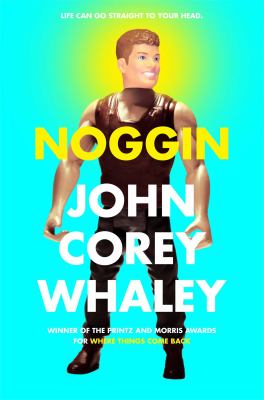
Noggin by John Corey Whaley     noggin

When Travis comes back to high school after a five-year absence, one of his classmates calls out “Noggin!” And the principal frowns and the geometry teacher makes the boy apologize. Because it’s rude to say such a thing to the boy whose head had been cryogenically frozen five years before when he was dying of cancer.

Yes, science has moved ahead, and Travis is back in his high school world, and still eating at the kids’ table at big family gatherings while his once younger cousins sit with the adults. He really didn’t think the freezing his head would work—that it could be transplanted to a new body. And if it ever did, he thought he would exist sometime in the far future where he’d have a starship. But what has happened is even weirder for him because he’s still sixteen, but all of his friends are now twenty-one. They grieved over his death and now they’ve moved on.

Travis’s new body is an improvement. It’s taller and better built than his old one—and it’s not sick. He had been so ill with cancer that he says now, “You know things are weird when you start appreciating your farts,” because every little thing his body did in the late stages of cancer had been painful.

Accepting how his old friends have moved on is tough for Travis. His best friend, Kyle, had come out to Travis just before Travis ‘died.’ But when Travis returns to life, Kyle is back in the closet. Travis confronts him about it, and they argue. Travis starts to realize that they are both living lives that they didn’t chose to live.

Worse than the trouble with Kyle is Travis’s longing for Cate. She had been his girlfriend. They had been in love. And now she is engaged to a guy who’s twenty-five. Travis can’t accept this—he and Cate had truly been in love. He feels that they can reignite their passion. That you, reader, see his delusion, that many of his efforts are hilarious, make all his struggles more poignant.

Luckily, Travis has one new friend, who may help him get through this.

High school housekeeping: This is another one that I recommend to all—it has both guy and girl appeal, the writing is fluid and the story compelling. Even moving from chapter to chapter is fun. The last words of one chapter become the next chapter heading. “No doubt in my mind” becomes the chapter “Doubt in My Mind.”

The author of Noggin, John Corey Whaley, will be at the Ontario City Library’s Teen Book Fest at Colony High on May 17. He’s also the author of Where Things Come Back. Come out and see him. For more info, call 909-395-2225.

Posted in Family Problems, Fiction, Young Adult Literature | Tagged , , , , , , , , , , | 1 Comment

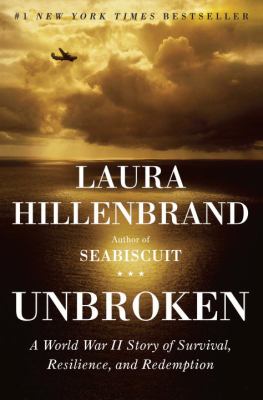
“Unbroken” to become a movie

unbroken

Good news for fans of Unbroken–and if you’ve read it, you are a fan. According to an article in the Sunday edition of the Los Angeles Times, Angelina Jolie is directing a movie based on the life of Louis Zamperini, the World War II veteran who is the subject of Unbroken. He survived 47 days in a life raft after his mechanically-unsound B-24 crashed in the Pacific Ocean, but only to be captured by the Japanese and tortured in prison camps for two years.

Zamperini’s story is amazing. And folks have hoped to make a movie of it for a long time, but there was just too much material. Now Jolie has decided not to include Zamperini’s life after his liberation from prison camp, giving the story focus.

Read the entire news story and learn about the producer, Matt Baer, who has had the project in mind for over a decade, and never gave up on its being produced. Lucky for us!

Angelina Jolie Breaks the Curse of Unbroken

Posted in Historical Fiction/Historical Element, Movie Tie-In, Non-fiction, Over 375 pages | Tagged , , , , , , , , | Leave a comment

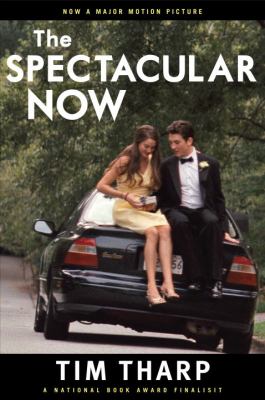
Realistic Romance/Guy Books: “The Spectacular Now”

The Spectacular Now by Tim Tharp  spectacular
“’Beauty’s all around me right here. It’s not in a textbook. It’s not in an equation.’” This is Sutter Keely’s mantra. He lives in the spectacular now. As he says, “’I was never very big on the future.’” He’s a witty good old boy who is always up for a good time. And he always has his 7-Up and whiskey to help the mood along.

Sutter is a very appealing guy on first glance. You have to love his spontaneity, his concern for others, his ability to grab hold of the moment. And yet somehow, his way of living in the moment isn’t the kind of thing that keeps friends. At least, not girlfriends. Cassidy, his big beautiful babe has to dump him because he can never get to a date on time and is too helpful where other girls are concerned. No matter that he’s helping a lost little boy when he’s supposed to take Cassidy to an appointment. Or that when she won’t let him in the house, he climbs up to the roof to get in her window.

Sutter’s theory about not being able to remember what girls say to him or what they ask of him is that he is so enamored of them (well, maybe he uses a bit more crass language), he can’t keep track of their words. He knows that most girls are intelligent and thoughtful—the opposite of airheads—and that he’s the one who can’t keep track of the conversation.

He’s entirely undependable.

And if he isn’t an alcoholic already, he’s certainly well on his way to becoming one.

So what happens when Sutter, too drunk to remember where he parked his car, is found passed out on someone’s lawn at 5 AM by Aimee, the prototypical nerd girl, while she is throwing her paper route?

Aimee is a good cause for Sutter to be involved in. She’s smart, but self-conscious and egoless. People, including her mom and her mom’s disgusting boyfriend, walk all over Aimee. Sutter thinks he is just the man to build up Aimee’s self-esteem, get her to stand up for herself, and find her a boyfriend. But as charming as he is, she’s sure to fall for him. Can she fix him? Or, in spite of all that he can do for her, is Sutter bad for Aimee?

High school housekeeping: The Spectacular Now has a lot of guy appeal, but girls will like it too. It’s not your typical teen love story, and it’s nice to have a break. It is a novel for mature readers because of its sexual frankness. I loved it for its realistic qualities—love stories end in many way and happily ever after can be many things. It’s nice to have an author of YA fiction who’s honest with teens. Plus, Tim Tharp is a very good writer—his work is the high quality that I (and other teachers) hope you’ll read regularly. Fortunately for you, Tharp is also entirely compelling. If you are a football fan—and lots of guys have been asking me for football books this year—Tharp also has Knights of the Hill Country. You might give it a try as well.


Posted in Family Problems, Fiction, Mature Readers, Movie Tie-In, Romance, Young Adult Literature | Tagged , , , , , , , , | Leave a comment

More sequels!

This slideshow requires JavaScript.

I know we’ve been working on these for a while–thankfully, they are now here!

Unsouled (book 3 of the Unwind series) by Neal Shusterman

Champion (book 3 of the Legend series) by Marie Lu

Fever (book 2 of the Chemical Garden trilogy) by Lauren DeStefano

Tidal (book 3 of the Watersong series) by Amanda Hocking

Battle of the Ampere (book 3 in the Michael Vey series) by Richard Paul Evans

Prey (book 2 of the Hunt series by Andrew Fukuda

Also now here but not pictured:

Middle Ground (sequel to Awaken) by Katie Kacvinsky

Dark Triumph (book 2 of His Fair Assassin) by Robin LaFevers

Rise (sequel to Rift) by Andrea Cremer

Everfound (book 3 of the Skinjacker trilogy)

Posted in Adventure Stories, Fable/Fairy Tale/Fantasy, Family Problems, Fiction, Horror/Mystery/Suspense, Romance, Sci-Fi/Futuristic, Young Adult Literature | Tagged , , , , , , , , , , , , , , , , , , , , | Leave a comment

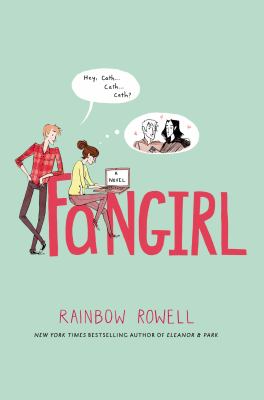
Realistic Romance: “Fangirl”

fangirlFangirl by Rainbow Rowell

Although Cath and Wren are identical twins who’ve always shared a love of Simon Snow Books (think Harry Potter) as well as a bedroom, when they go away to the University of Nebraska for college, Wren wants to be more independent. Not only does she have another roommate, she lives in another dormitory and begins to keep secrets from Cath, particularly about partying and finding a new boyfriend.

Cath is more anxious than Wren. Her new roomie, Reagan, doesn’t seem to like her. With Wren—the sister she has clung to through their mother’s abandonment and their father’s manic depressive episodes—moving on, Cath becomes more and more involved in her fantasy world. She writes fan fiction about the Simon Snow series and is creating a love story for the two main characters. She’s good and her following is in the thousands. She hopes to complete her own version of Simon’s travails (Carry On) before the final book comes out.

Reagan is a few years older than Cath, but she’s still in the dorm as a part of her scholarship. She seems to have several boyfriends, but one who is hanging out all the time—Levi—is particularly interesting to Cath. Because Cath has been accepted into an advanced fiction writing class, she also finds herself meeting with a handsome classmate to write a romance together. And whether or not Cath wants it, the real world is at her door, in both its ugliness and beauty, its heartache, worry, responsibility, and its romance.

High school housekeeping: This is the second of Rowell’s books that I’ve read, and like most of her readers, I’m still impressed. This is equally as good as Eleanor and Park because Rowell has once again done a great job of characterization and showing teens how they might deal with issues in the real world. So—again—I just want to point out a novel with some very good writing that makes very compelling reading. Anyone who has been too anxious in new situations will immediately identify with Cath, who is the point-of-view character. One of the really fun things about the writing is that there is the story of Cath and Wren, but there are also interludes with the Simon Snow books and Cath’s Carry On fan fiction. It seems to me that Cath’s version of the Simon Snow story is superior fiction to the actual excerpts of Simon Snow books. Since all three of the plotlines (and the writing itself) are actually Rowell’s brain children, she’s hinting that Cath’s must learn to tell her own story. As we all must do.

This one is a real treat.

Posted in Family Problems, Fiction, Over 375 pages, Romance, Young Adult Literature | Tagged , , , , , , , , , , , , , , | Leave a comment

Students’ book reviews after biography book talks

This slideshow requires JavaScript.

I was so excited to see some of the projects that came from our book talks on biography. The images are great and there were some very clever details (loved the barbed wire made from paper clips), but I was equally impressed with the narratives on what the books meant to the readers. Thanks Mrs. Martin’s class for sharing your work with me!

Posted in Uncategorized | Tagged , | Leave a comment

Hush, Hush fans!

This slideshow requires JavaScript.


It took a while, but we finally have the full set at COHS–and CHS students can also check them out through the city library system:

Hush, Hush

Crescendo

Silence

Finale

Come on it and check them out!

Posted in Fable/Fairy Tale/Fantasy, Fiction, Romance, Young Adult Literature | Tagged , , , , , | Leave a comment

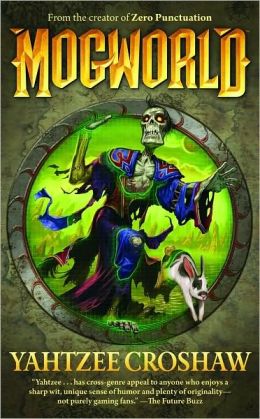
Adult Books for Teens: “Mogworld”

Mogworld by Yahtzee Croshaw     mogworld

For Jim, being dead has been kind of fun. After all, he’s gotten to go toward the light and has been sort of floating through his nonexistence quite nicely.

Not that he didn’t have to suffer a pretty awful death when his magic school was attacked by rival students. But he wasn’t a very good or hardworking student of magic anyway, and the defense of his school was bound to fail. What could he have done as a mage in adulthood?

Jim gets exactly the second chance he does not want when he is raised from the dead after sixty years of peace. He doesn’t know why he is raised from the dead except that an evil necromancer, Lord Dreadgrave, demands that Jim and other zombies follow him and become his minions. (Dreadgrave didn’t bank on them having free will—oops!)

Luckily, Meryl, Jim’s classmate, was also raised. She’s good at sewing body parts back together. After Jim’s many attempts to re-kill himself and get back to his happy place (there’s no tower too high for Jim to fling himself from), the far too cheery Meryl puts him back together. So, body coming to pieces, flesh loose, Jim must zombie-live. He rather enjoys his work in Dreadgrave’s castle dungeon, flinging living folks to their acid-bath deaths and decomposition by rat. But they, too, all come back to life. In fact, no one can ever die anymore and no new people are born.

Welcome to Mogworld, a place that gamers will quickly identify as a ‘multiplayer online game world’ (thus the title of the novel). Everyone has a quest to complete, and since death does not get them out of it, Jim seems to be continually caught up in someone’s plan. He must deal with the ‘values of convenience’ of Slippery Johnny, the morality-challenged priest (and fellow zombie) Thaddeus, the self-righteous religious leader Barry, the evil overlord Baron Civious, and the frightening domination of Mr. Wonderful and his silent dwarf companion, Bowg.

My favorite line: When Jim is asked if he wouldn’t want to be a hero, he answers, “I’d rather be a protagonist.” Not a bad way to live, even for the undead.

A Croshaw novel that I previously reviewed, Jam, is—very loosely speaking—a companion work. It, too, is hilarious.

High school housekeeping: Mogworld not only makes fun of video games. It is a great send-up of fantasy novels. Readers of Harry Potter books will get a kick out of the failed mages and their battles. But the thing is –you don’t need to be a fan of either video games or fantasy novels to enjoy Mogworld. (I am a fan of neither.) You’ll know enough about both through inescapable media. And this book is just so wildly funny. You might even read it just to hear Mr. Wonderful’s “little” sayings.

Sarcasm unleashed. You’ll be laughing so hard, you’ll snort in public.

In addition, if you are a gamer, you might really enjoy Croshaw’s weekly review of video games ‘Zero Punctuation’ on Escapist online magazine. He’s won an award for best gaming journalist and has designed video games. He’s just a highly entertaining guy—but caveat—his online discussions are for mature audiences (the language is stronger than in the books—not for your little brothers and sisters who like gaming). As my own son says, there are some unsettling metaphors.

Posted in Fiction, Over 375 pages, Sci-Fi/Futuristic, Supernatural | Tagged , , , , , , , , , , , | Leave a comment