Summer Classic Reread: “The Turn of the Screw”

Summer Classic Reread: The Turn of the Screw by Henry James  turn of screw
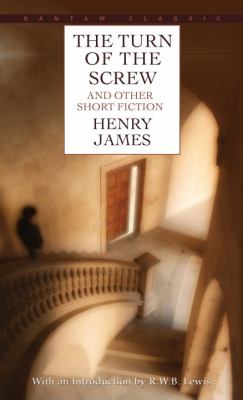
Why I wanted to reread it: I loved it long ago. I know that many teachers recommend it for students because it is a horror story, and they hope that will be the enticement to read a literary master, Henry James. I wanted to see if, after more than 100 years, it’s still scary and whether it truly has teen appeal.

The basics: The novella is framed by a tale of folks telling each other scary stories on Christmas night. (Apparently this is something people used to do as I have read about scary Christmas stories elsewhere.) One of the company says he has a frightening true story and will read it to the group when the manuscript describing it arrives. It comes; he reads.

A governess is hired by a strange man to watch over his niece and nephew, to whom he is the legal guardian but seems to have little interest in. He is in London. They are at a country estate called Bly. The thing is, this strange man also has lots of sex appeal, and it appears that the governess is smitten with him. When he tells her that he doesn’t want any communication from her about what is going on with the kids, she makes it her goal to follow his instructions.

At first things are very sweet. The governess is only watching the little girl, Flora. She also has found a friend in the housekeeper, Mrs. Grose. But one day the boy, Miles, is kicked out of school and sent home. No one knows why. Is this something that the governess should tell the uncle? Well, she doesn’t. She enjoys the company of both the children, who are so sweet that it seems unnatural.

And the governess decides that it is unnatural when she sees a male figure lurking about the house. Eventually, she describes the man to the housekeeper who pegs him for the dead groundskeeper, Peter Quint, who was a horrific man in life. Later, the governess also sees the former governess, Miss Jessel, and so believes that there are two ghosts haunting and possessing the children.

But are there really any ghosts? Are the children really possessed by these demonic creatures? This is the question that makes the story so disturbing. There’s evidence both to suggest that the kids are keeping the ghosts a secret, and also that this is just some wild mental illness of the governess (brought on by sexual repression, perhaps?), who, in her sickness, is making herself a heroine who will save the children and thus—somehow, in some weird way—earn the gratitude of the sexy uncle. Whatever is true, the outcome is tragic.

High school housekeeping: This novella is still very creepy to me—it has the suspense you want in a ghost story and the ambiguity that leaves it open to interpretation. You can argue with your friends and teachers about what really happens. So—I think it stands up to the teen test, but with one caveat. The language is tough—the vocabulary is pretty high level. If you are reading on grade level, you’ll follow the story pretty well, I think. If you are working on your reading skills, you might not know what’s happening.

Reading The Turn of the Screw is a great way to introduce yourself to Henry James. Most of his work makes for pretty difficult reading (trust me, I’ve read a lot of it). Not that this is a bad thing—it’s difficult, but far more rewarding than much of what you might choose to read. But, as I’ve said before, I’m a big believer in literature ladders, so to speak. We don’t start at the top, no matter how great the books up there are. But if you want to read one of the great writers of English (James was both American and British), The Turn of the Screw is a good place to start.
Posted in Classic Fiction, Fiction, Horror/Mystery/Suspense, Supernatural | Tagged , , , , , , , , | Leave a comment

Common Core: Nonfiction: “Death’s Acre”

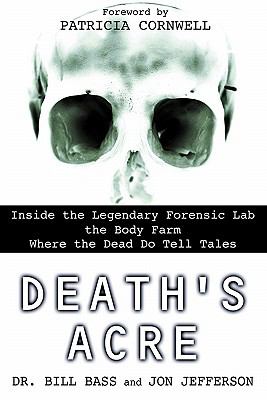
Death’s Acre: Inside the Legendary Forensic Lab the Body Farm Where the deaths acreDead Do Tell Tales by Dr. Bill Bass and Jon Jefferson

A number of students ask for forensic science books because their interest has been piqued by the many shows about forensic anthropologist solving murders from clues found on the victims’ bodies. And we have some appropriate titles in the library. But I’m happy to add Death’s Acre because it is an adult book and is more thorough than books we have that are written at a lower level. Dr. Bill Bass is the father (so to speak) of the Body Farm, that two acres in the Tennessee hills where donated bodies are left to the elements. And then studied for decomposition. This seemingly strange, even gruesome place has been vital to forensic anthropology. And thus to the capture and conviction of murderers.

While the title suggests that the book is going to be about the Body Farm (actually called University of Tennessee Anthropology Research Facility), it is much more a memoir of Dr. Bass’s life. Dr. Bass has been involved in some interesting murder cases, called to testify as a witness at various trials. He details some of these murder cases and trials, and his understanding of the decomposition process, a process that varies greatly depending on location, season, and other factors, underlines the importance of his studies. While Bass is a scientist, and can find more humor in some of the gruesome aspects of death than most of us could, he is also appropriately respectful of the dead. His goal in dealing with rotting flesh, saw or hacked bones, and maggots blossoming from corpses is to give murder victims their due—to have the otherwise hidden details of their murders come to life, to find justice for them.

Bass discusses the difference between the sympathy he has for victims and their families and the overwhelming grief of losing his own loved ones. He reflects on his life and his loss of faith in an afterlife based on his experiences.

Professional reviewers warn that Death’s Acre is not for those with weak stomachs—descriptions of bodies in various states of decomposition (and especially those on whom blowflies have descended and who then swarm with maggots) can be distressing. However, I never watch TV programs with murders and bodies because I have a hard time with the very real looking corpses. Yet, I had no problem with the book’s descriptions of various murder victims. Neither did the few black and white photos of bones and bodies particularly distress me. So if you are interested in this branch of science, I say go ahead and give Death’s Acre a try.

High school housekeeping: Again, this book is more detailed than those nonfiction choices from publishers of teen works, yet it is under 300 pages, a very manageable length. It’s a great introduction to the field of forensic science and a nice overview of the life of one of its best practitioners. If you are assigned a biography or memoir and you are interested in forensic science, you could easily convince your teacher that this is the book you should read. I was engrossed by the discussions of murder victims and by what made the prosecutors decide whether to proceed to trial. Unlike on television, not very many victims finds justice.

Posted in Biography/Memoir, Non-fiction | Tagged , , , , , , , , , , , , , , , , , | Leave a comment

Common Core: Nonfiction: “Brainstorm”

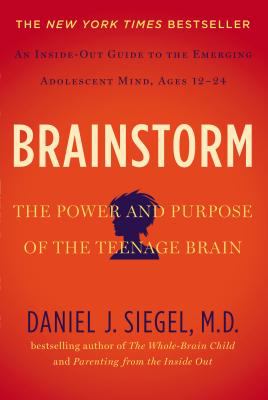
brainstorm    Brainstorm: The Power and Purpose of the Teenage Brain by Daniel J. Siegel, M.D.

There are four qualities of adolescence—the period between ages 12 and 24—that adults must try never to lose:

  • novelty seeking
  • social engagement
  • emotional intensity
  • creative exploration

To maintain these qualities helps a person to be a lifelong learner—one of those big goals that all educators hope their students achieve because it means they will have a full life.

Most adults think of adolescents as hormone-crazed drama kings and queens. But, of course, this isn’t fair. While the teen years are a time of emotional intensity and full of tears, they are also a time when playfulness and humor can emerge.

But still, adults understand one thing that adolescents might not: this period between age 12 and 24 is the most dangerous in life. At this age, the highest percentage of avoidable deaths occur. The brain isn’t finished forming and teens don’t fully grasp their risk-taking behaviors. They drink, do drugs and drive too fast; they kill themselves and others.

And yet somehow they can go from this to becoming adults who live on autopilot. As adults, they can find life too stressful, too difficult. They find it easier just to have a survival routine mode. They don’t make new friends or try new things. They are in a rut.

So how can we work on both these problems—to be careful enough in adolescence not to do real damage, but to keep the love of new experiences (novelty) as adults? Siegel gives the reader a lot of advice. He shows teens that although they are (and should be) more connected to peers at this age, they need to stay connected to adults to avoid dumb risk taking.

Brainstorm is actually about more than just the teenage brain. Anyone who wants to figure out why they do what they do, and who hopes to live a more fulfilling life, will enjoy the book. The bonus is that the conclusions are based on scientific research on the brain. So the reader will be comfortable in trying any of the several ‘mindsight tools’ that Siegel includes. And the book is organized so that the chapters can be read in any order that interests the reader—or s/he might concentrate on some of the chapters and skip others.

High school housekeeping:

This is a great book for any teen who’s worrying about handling her or his problems, about becoming an adult and losing the best of him or herself. It’s also great if your teacher gives you a nonfiction assignment. It’s the kind of book that the framers of the Common Core are hoping you’ll have the chance to read because it has facts about brain science (all put in layman’s terms) and yet it’s very interesting. If you are looking for a book that will help you practice mindfulness, the ‘mindsight’ exercises are a good start. At just over 300 pages, Brainstorm is also the shortest book I’ve read that does a good job of detailing how we can use brain science as the basis of working at creating our happiness or contentment. What better real-life application of learning can there be?

Posted in Non-fiction | Tagged , , , , , , , , , , | Leave a comment

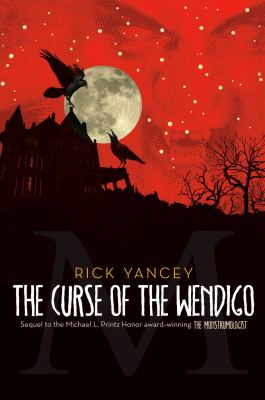
Horror: “The Curse of the Wendigo”

The Curse of the Wendigo by Rick Yancey  curse of wendigo

Book 2 in the Monstrumologist series

Because I am always looking for new series that I can recommend to teens, I don’t always get to read past the first book. But it’s summer, and I feel a little freer to pick my reading choices. The Monstrumologist had been a great read—the writing was good, the story engaging with lots of suspense. And book two, The Curse of the Wendigo was just as good.

In The Curse of the Wendigo, Will Henry is back as Dr. Warthrop’s assistant in studying, finding, and fighting monsters. It’s 1888 and the pair are in New York. They have the same funny conversations full of misunderstanding. What is different is the group of monstrumologists, all of whom seriously study monsters. They are not in agreement about Wendigos—monsters found in various cultures under various names. Dr. von Helrung (yes, you should be thinking of von Helsing), the country’s eminent monstrumologist, is a believer.

Wendigos are supernaturally tall man-creatures, and they are emaciated, always starving, always seeking people to devour. Their evil spirits are carried on the wind and can grasp an unwary person. In this novel, a wendigo is tormenting an Indian tribe in Winnipeg (Manitoba, Canada). A good friend of Dr. Warthrop’s goes out to investigate. The plot thickens as the reader learns that this best friend (John Chandler) had married Dr. Warthrop’s former fiancée and not all is resolved in this love triangle. As John Chandler has disappeared into the wilderness, Dr. Warthrop brings Will Henry with him to find his old friend.

That Dr. Warthrop does not believe in vampire-like creatures—including wendigos—will cause him to misjudge the actual danger to himself and those he cares about. But even to the end, whether the wendigo behavior of the possessed happens to be the product of a psychological breakdown or a true metamorphosis into a monster is unclear. What we do know is that the result is horrifying, and people are murdered in the most gruesome manner. Will Henry, at age twelve, young as he is, must learn that quick decisions can have horrifying consequences

High school housekeeping: The Curse of the Wendigo is YA horror at its best—great writing, truly gruesome murders without the addition of pointless and gratuitous violence, and the constant question of what is the best course of action for the protagonists. Although it’s a second book in a series, it can be read as a stand-alone. During October, we often have assignments to read horror and teens empty the shelves. If you are looking for horror, I recommend you start with the first book in the series. If the copies are all checked out and you can afford your own, it will be worth your while. But if your options are limited, go ahead and read this book two first. It’s a great main ingredient for a presentation to the class—and a great way to get hooked on reading.

Posted in Fiction, Horror/Mystery/Suspense, Supernatural, Young Adult Literature | Tagged , , , , , , | Leave a comment

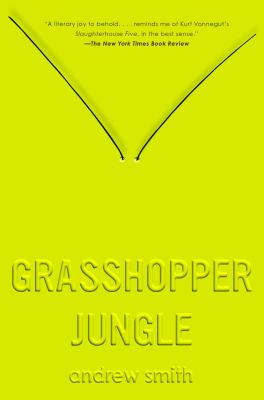
Guy books: “Grasshopper Jungle”

Grasshopper Jungle by Andrew Smith  grasshopper jungle

Austin Szerba loves history and so has decided to record the events at the end of the world, events that he has participated in along with his best friend Robby and his girlfriend Shann. While battling mutant preying mantis people (Unstoppable Soldiers), Austin is trying to figure how he can love both Robby, who is gay, and Shann. If all this sounds like serious business, it’s not. Austin is just a very horny guy who can’t stop fantasizing about threesomes. He’s just a small-town Iowa teen who goes to a private Lutheran school, chain smokes, and thinks about how confused he is.

How Austin gets into the mess of trying to save the world from mutant insects is pretty funny, primarily because it makes no more sense that the sci-fi B movies that Smith is playing with. In the 1960s, a mad scientist creates the mutants by experimenting with blood and semen. How these Unstoppable Soldiers can be stopped also makes no sense, but you could imagine just such a plot in a 1960s movie—or I could, and I saw several on Saturday TV in my childhood. Of course, by giving us a scientist who experiments without a purpose and without any concept of the outcome—and who then intends to profit from his mistakes—Smith has the opportunity to add a little social commentary to the mix of sexual intercourse (among mutants as well as humans), eating (human beings as well as food), and teen angst.

Caveat: Though much of it is very funny, this is a novel for mature teens—although the sex isn’t romantic (lots of copulating mutant insects, adult quickies, and a realistic rather than sweet first teen sexual experience), it’s a major theme in the book. F-bombs drop too frequently to dodge. If you’re not OK with profanity and frequently arising erections, this is not your novel.

High school housekeeping: Professional reviews of Grasshopper Jungle are all very positive because it’s different, it’s a send-up of old B sci-fi movies (that reviewers are probably old enough to remember), and it holds nothing back. I, too, assumed that all teens who weren’t offended by profanity and teen sex in a novel would love it. After handing it to some guys at my school, I’ve found that the teen reviews are evenly split between liking the novel and getting too sick of it to finish. Whether you’ll like Grasshopper Jungle depends on your love of sophomoric humor and jokes. It is riotously funny to begin with (again, assuming you are not offended by profanity and teen sex). The jokes about how teen boys are kind of like mutants insects because both only want two things—to f%$# and eat—come fast and thick. (OK, you think of a better way to say it.) If there’s no way in the world you could get tired of those jokes, you are in for a great read. Just like most of the Iowans in the novel, they’re unstoppable.

Posted in Family Problems, Fiction, Mature Readers, Sci-Fi/Futuristic, Young Adult Literature | Tagged , , , , , , , , | Leave a comment

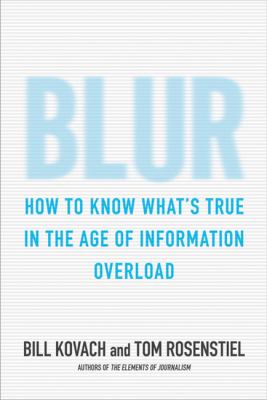
Adult Books for Teens: Common Core: “Blur”

blur    Blur: How to Know What’s True in the Age of Information Overload

by Bill Kovach and Tom Rosenstiel

“Some people observing the media landscape today have wondered whether truth even matters anymore. Perhaps, they speculate, in the new information age reality is simply a matter of belief, not anything objective or verified; now there is red truth and blue truth, red media and blue media. . . .[R]ather than trying to find out what is going on, they have already decided. Perhaps, in a sense, we have already moved from the age of information to the age of affirmation.”

If this is a scary thought for you, then I encourage you to read Blur, which is both clear and engaging. It offers the reader some tools for understanding ‘news’ today, for being able to dissect stories on blogs, social media, and news feeds, and pull out the kernels of truth.

The book opens with an interesting scenario—the nuclear crisis at Three Mile Island is happening today instead of in 1979. The reactor core of the Three Mile Island nuclear power plant in Pennsylvania overheated. How this would be reported today—minute by minute updates with contradictory information from radio talk shows, and completely different spins on different partisan channels (Government cover-up? Political wedge issue on the environment?)—shows you how very different your information world is than that of previous generations.

So that you understand what news used to look and sound like, Blur has a quick history of communication—speech, writing, print, telegraph, radio, TV, cable, and Internet. The authors show why you must be skeptical of many (most?) sources of information, and they outline six steps of ‘skeptical knowing.’ This effort to parse information reminds me of one of the important missions of teacher librarians—to teach you how to evaluate sources of information.

In addition to skeptical knowing, people must engage in verification because many news sources no longer do so. The authors describe this as ‘clerkism’—passing along what others have told them is true. Since news is now a 24/7 cycle, a lot more time is taken in arranging the information and a lot less in fact checking. The authors also point out that sometimes it takes a while to discover the whole truth, and media sources quit following the story before that happens. (If you’d like a great example of how a story can change over time, read the book Columbine by David Cullen.)

By calling our current state ‘the age of affirmation,’ the authors mean that many news sources only seek to affirm the prejudices that their audiences already have. They may present actual facts, but those facts are ‘cherry picked’—they leave out any truths that would cause their audiences to question their own beliefs. Kovach and Rosensthiel show you how you can determine if a news source is doing this cherry picking.

There is a lot of good information here as well for students who are thinking of careers in journalism. Though much has changed in the last thirty years, there are journalistic values that will always be important. By including snapshots of journalists famous for their brilliant work (e.g., David Burnham), the reader sees how truly valuable research-minded journalists are to society and why this role must continue in the information age. Here again, the authors are helpful, showing how this can be managed and what news sources now and in the future should look like.

High school housekeeping: This is a quick read of about 200 pages, and while it’s not particularly difficult, it’s very informative. High school students should absorb the text. The examples of journalists who have worked to find the truth are compelling. (Check out the story of the many brilliant exposes by Seymour Hersh. Just—wow.) As this book tells you how to dig for facts and truths—how to evaluate information—it’s great for any student. But as it also discusses what news sources should look like and how new journalists can help create sources of information that are reliable as well as ever-changing (on the web), Blur is a great book for journalism students. “The history of learning is the story of human ingenuity reacting to technology, and it occurs differently depending on how cultures respond.”

Posted in Non-fiction | Tagged , , , , , , , , , , , , | Leave a comment

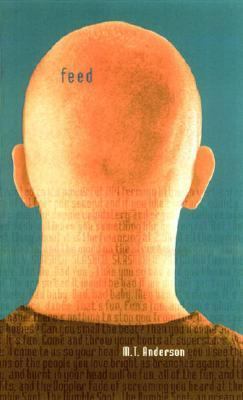
Have a Listen: “Feed”

Feed by M. T. Anderson   feed
“Everyone is supersmart now. You can look things up automatic, like science and history, like if you want to know which battles of the Civil War George Washington fought in and shit.”

I know you caught that.

The feed belongs to everyone and everyone belongs to the feed. It is wired right into people—biologically connected to their organs–so that they can get information 24/7 without the use of a computer or any other device. News, advertisements, music, reality, game and children’s shows, health information, even sex tips are on a continuous feed through the brain. What pops up and starts flowing through the brain depends on what the person is doing. And corporate sponsorship of the feed makes all of this information free (although having the feed installed has a price). People can chat one another privately in their thoughts, so many people no longer know how to write.

People are going through some strange health problems and no one knows why. They have lesions growing on their skin. Rather than become alarmed at them, teens turn them into a fashion statement, the coolest new trend.

As Feed opens, Titus is going to the moon with his friends to have some fun during their spring break, goof off in the ‘low-grav’ area of a lounge. There he sees the beautiful Violet. Both Violet and Titus, along with a few of Titus’s friends, are the victims of an attack by men who are trying to get people to resist the feed. They become very ill and are hospitalized until they can be reprogrammed correctly. Or at least until they think they are.

Violet knows more than many other kids because her father, a college professor, home schools her. For those going to public schools, some of their education comes from corporate feeds; the rest, due to budget cuts, comes from holographic teachers that just don’t quite have the connection to their students that real people would. But Violet’s knowledge gives her outsider status—other teens don’t even understand the words she uses to describe the world around her. So while she is trying to fit in, Titus’s friends see her as a pretentious freak. Her poverty also sets her apart—she lives on a street that really still is a street—available for ground transportation when everyone is using upcars. If only these were the worst consequences of her odd upbringing.

High school housekeeping: Although it was published more than a decade ago, Feed still lands on my list as of ‘best of dystopian fiction.’ It’s just so much better than many I‘ve read. Part of the reason I feel this way is that it takes place in the near future and all that occurs appears quite feasible. I also like the banter of the teens—the slang which seems perfectly natural. The use of ‘da, da, da’ when the conversation becomes inane reminds me of the old Peanuts (Charlie Brown) cartoons where the voices of adults are just so much background noise. More significantly though, is that the protagonist isn’t always wise and witty. His girlfriend (Violet) is not only smart and better educated than most kids, but she is someone who questions the world order, environmental degradation, and political news. She’s serious about important issues, and Titus just doesn’t get it. While you sympathize with him, you also want to slap him when he can’t react appropriately to tragedy as it unfolds. And tragedy does unfold.

Why I think this book is an even better experience if you can listen to it: Feed as an audiobook is great. There is a narrator for Titus, who tells the story. His teen inflection is spot-on. There is also an ensemble cast to work the feed—male and female—so each ad sounds exactly like it would on radio or TV. Ditto for the news reports. And when teens in the book are ‘chatting’ one another, their voices sound like they are talking in a cavernous space, which adds to the creep factor of the whole world of feed. I’ve never heard an audiobook that was done better. Of course, Feed is downloadable from various sources, but don’t forget that you can also get it from the public library, either as a download or in CD format.

Posted in Environmental Issues, Family Problems, Fiction, Human Rights Issues, Mature Readers, Sci-Fi/Futuristic, Young Adult Literature | Tagged , , , , , | Leave a comment

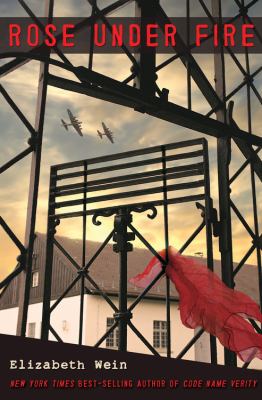
Historical Fiction: “Rose under Fire”

Rose under Fire by Elizabeth Wein   rose under fire
This is another great one by the author of Code Name Verity. It’s a companion piece to that book and begins in Great Britain, 1944, just about where Code Name Verity let off. While one of the characters reappears here, the protagonist, Rose Justice, is new. She’s a bit of a naïve, idealistic girl from America—small town Pennsylvania—who’s a pilot. And like Maddie from Code Name Verity, she wants to help out in the war effort by taxiing planes for war missions.

Rose is taking a Spitfire from France to England when she sees an unmanned V-1 flying bomb and decides to try to knock it out of the sky before it reaches its target. Her effort at heroics gets her into big trouble. Ultimately, she is driven into Germany by two fighter plane pilots and becomes a prisoner of war there.

We think things won’t be too bad for her since she’s a noncombatant. And at first it appears that her prisoner experience will just consist of unpaid factory work. But she figures out that she is assembling bomb parts and then refuses to cooperate. In punishment for this, she is so severely beaten (more than once) that she almost doesn’t survive. And it is during these beating that she harkens back to poetry—both her own and what she has memorized—to try to heal. In addition to her beatings, she is sent to Ravensbruck, a now notorious women’s concentration camp. There, her nightmare becomes a continual struggle for survival against cold, extreme hunger, bizarre punishments, and horrifying labor such as piling up dead bodies to be thrown into the gas chambers.

Rose’s one bit of luck at Ravensbruck is that she is taken in by the ‘Rabbits’—Polish girls who are being used in the most sadistic sorts of medical experimentation. She learns loyalty with this group and what it means to risk one’s life so that the truth will come out.

High school housekeeping: Rose under Fire has a diary format, written in a hotel room, so you know right away that Rose has survived her experience. I questioned this choice because I thought it would be a suspense killer. And while I still think that a straightforward format would have been superior, the diary format works. There are some very suspenseful moments because not everyone the reader cares about can survive—the odds against these girls and women are great. And there is a lot of adventure in attempted escapes, even in the little protests that prisoners make to defy their Nazi captors. Small acts of disobedience that can cost them their lives.

One of the things that sets Rose under Fire apart from other Holocaust novels I’ve read is that the story continues with the aftermath of war, giving us a view of bombed-out Europe and, more importantly, a sense of what happened at the Nuremberg Trials. The Rabbits who survive have a chance to testify against the sadistic doctors who tortured them with medical experiments. But even facing these tormentors is difficult, impossible for some. The creepiness factor here is extreme.

As she did in Code Name Verity, Wein has an afterword that discusses the research for the novel—which elements are facts and which things she had to consolidate for the sake of space and clarity. It’s good to be able to see what she did and why she did it. In addition, there are the many wonderful poems—some of them, in a few perfect words, bring home the sheer dread that prisoners lived. I recommend this one to all teens and adults alike.

Posted in Adventure Stories, Fiction, Historical Fiction/Historical Element, Human Rights Issues, Young Adult Literature | Tagged , , , , , , , , , , , , , , , | Leave a comment

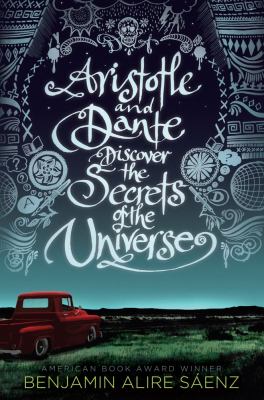
“Aristotle and Dante Discover the Secrets of the Universe”

aristotle   Aristotle and Dante Discover the Secrets of the Universe by Benjamin Alire Saenz

When they meet and Dante teaches Aristotle to swim, they laugh over their classical names—their pocho names, they think, because are real Mexicans named after philosophers and poets?

Ari Mendoza is dealing with some tough stuff. It’s 1987, and his dad is a Vietnam vet who never talks about what happened in the war but is still affected by his wartime experience. He has nightmares. Ari has nightmares as well. His siblings are much older than he is and his brother—eleven years his senior—is in jail. No one ever talks about him; there are no pictures of him in the house. It’s as if he never existed, but Ari doesn’t know why. And the silence of his family—the way they never really talk about anything important—is becoming more than he can take. He doesn’t make friends easily because he’s sullen and withdrawn. He’s a fighter, and he just wants to smack some creepy people around. As he says, “I want other people to tell me how they feel, but I’m not sure I want to return the favor.” In addition he thinks, “Being around guys made me feel stupid and inadequate. It was like they were all part of this club, and I wasn’t a member.”

Dante has a much easier relationship with his parents and with other people. His parents talk a lot, and Dante is their world.

To add to their worries about being pocho, neither Dante nor Ari watches TV. Dante reads poetry and the two of them, though they do like comics, love more difficult works of literature like Joseph Conrad’s Heart of Darkness. They appreciate the same music. In a few words, in spite of how different the boys are, they click. Stereotypes of Mexican American boys be damned.

But when Dante tells Ari that he ‘likes to kiss boys’ and that Ari is the boy he most wants to kiss, a tension colors their friendship. While Ari’s trying to work through it, he starts to question everything about his life and his family—his brother’s jail term (what did he do?), his father’s taciturn nature (what happened in Vietnam?). And he’s going to need some answers before things explode.

High school housekeeping: Aristotle and Dante Discover the Secrets of the Universe is a very good book. It’s well written and deals with several deep issues—what it means to be a Mexican American guy, what it means to be honest, both with others and with oneself. It is also a book that’s for readers. What I mean by that is that it evolves slowly in small increments, as does life. It’s a book I wish everyone would read. But I also like to be honest with you, and this book isn’t one that will appeal to the guy who hardly ever reads and has a reading assignment, or who is trying to become a more frequent reader. The long thoughts on dreams and nightmares, the viewing each event through a prism and the follow up discussion on its slants of light—you’ll have stopped before you get to the discovery of the universe. This novel will have wide appeal among both gay and straight youth who like a book to be like life—a book whose characters will take their time to arrive at self-knowledge. Who, finally, discover the universe within.

Posted in Family Problems, Fiction, Human Rights Issues, Romance, Young Adult Literature | Tagged , , , , , , , , , , | Leave a comment

Ontario Teen Book Fest–May 17, 2014

Posted in Fable/Fairy Tale/Fantasy, Family Problems, Fiction, Horror/Mystery/Suspense, Romance, Sci-Fi/Futuristic, Supernatural, Young Adult Literature | Tagged , , , , , , , | Leave a comment