
New Civil Rights Series–In Print and as eBooks

This slideshow requires JavaScript.

If you are doing an assignment on civil rights in the 20th or 21st centuries, come check out a great book. This series deals with South Africa and Apartheid laws; Iran and women’s rights; American Indians and Alcatraz Island; the Little Rock Nine and school integration; the International Ladies Garment Workers Strike of 1909; the Delano Grape Strike and Cesar Chavez; lunch counter sit-ins in the U.S. South in the 1960s; China and the Tiananmen Square Protest; gay pride and the Stonewall Riots of 1969; and Gandhi and the Salt March in India in 1930.

This series is both informative and colorful. We have a print copy of each title as well as an ebook copy that can be opened by multiple users at the same time and on any computer. So–you don’t have to wait to get the deeper information you need.

Posted in Historical Fiction/Historical Element, Human Rights Issues, Non-fiction | Tagged , , , , , , , , , , , , , , , , , , , , , , , , , , , , , , , , , , , , , , , , , | Leave a comment

More sequels are here!

This slideshow requires JavaScript.


We realized that some of our series are running very popular now and that we needed more copies of the sequels! Here are some that are just in–so you shouldn’t have to wait anymore. Come on over and check them out!

Posted in Fable/Fairy Tale/Fantasy, Family Problems, Fiction, Hi-Low/Quick Read, Horror/Mystery/Suspense, Over 375 pages, Romance, Sci-Fi/Futuristic, Supernatural, Young Adult Literature | Tagged , , , , , , , , , , , | Leave a comment

“My Side”

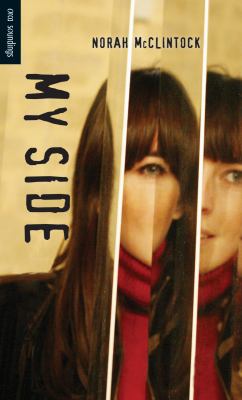
   my side       My Side by Norah McClintock

Addie is trying to pull her life back together after being lured into the woods and then having a sack thrown over her head by a knife-wielding, masked person. When she is locked in a basement in pitch darkness, she is sure she is going to die. She suddenly remembers girls at school talking about a strange man hanging out in the woods.

And then Addie is able to pull the sack over her head. When a flashlight clicks on, she sees the unbelievable. Her best friend, Neely, is helping with the torment.

High school housekeeping: My Side is one of the Orca Soundings series for teens who are working on improving their reading skills. The Lexile level is 660 (about grade 5). It’s a great, quick read about fear and cyberbullying. It’s also an interesting look at two sides of a story that—it would seem—should allow only one interpretation. Things are not what they seem to be in this little farm town. The author, Norah McClintock, does her usual good job of bringing a lot of story to a very short book. I highly recommend this one for struggling readers.

Posted in Family Problems, Fiction, Hi-Low/Quick Read, Horror/Mystery/Suspense, Read 180, Young Adult Literature | Tagged , , , , , , , , , , | Leave a comment

Throwback Thursday: “Blood and Chocolate”

Blood and Chocolate by Annette Curtis Klause blood and chocolate

Vivian Gandillon is a werewolf. That is, she’s a sixteen-year-old human girl. And she’s a wolf. And not just any wolf, but the daughter of the pack’s alpha pair. She, too, is destined to become a leader. Yet she is so tired of the fighting among the wolves—and it is pretty vicious stuff. She wonders if it would be better to explore her human nature with Aiden, a boy who is enchanted with the idea of wolves. With the reality, though?

While Vivian is deciding whether she should reveal her true nature to Aiden, a werewolf is killing locals. Vivian can’t remember doing the killing, but she keeps finding evidence that she is the culprit.

High school housekeeping: There are several reasons that Blood and Chocolate has held up as a good YA read. Throughout the novel, Vivian is unsure about her place in the wolf pack. But there are times when she must enter the extremes of her wolf nature to defend herself and her mother. The scenes, both among the wolves and between Aiden and Vivian were very edgy when the book was published—this is a sensuous book, the sort of thing we see more often now. But best of all is that the ending is a surprise. Not your usual ‘I’m in love with an alien species’ denouement. Try it.

Posted in Family Problems, Fiction, Horror/Mystery/Suspense, Supernatural, Young Adult Literature | Tagged , , , , , , , , , , | Leave a comment

“Please Ignore Vera Dietz”

Please Ignore Vera Dietz by A. S. King  please ignore
I’m sorry I ignored Vera Dietz for so long, but I finally had the chance to read her story. And loved it. Smart, witty, tragic, redeeming. By turns, of course.

Charlie Kahn had been Vera’s next-door neighbor and best friend for years. But they had a falling out, and now he is dead. And not just dead, but dead in mysterious circumstances.

Vera is having a hard time grieving. Because not long before he died, Charlie betrayed her with the psychopathic liar Jenny Flick. Now the rumors are flying and Vera could clear Charlie’s name, but why should she, after what he did to her?

So Please Ignore Vera Dietz takes us backwards through a suspenseful series of events leading to Charlie’s death. Through an explanation of just how bad his betrayal of Vera was. The Vera who was level-headed, hard-working and saving for college. The Vera who kept Charlie’s family secrets of spousal abuse. The Vera who just wanted to be left alone at school. The Vera who had always secretly loved Charlie as more than a friend.

High school housekeeping: Please Ignore Vera Dietz has general appeal as it is equally a love story, a reflection on friendship, a reflection on child-parent relationships, and a mystery. Both Vera and Charlie are smart, but Charlie has much going against him in his abusive father and rotten family life. He’s kind—until he’s not—but impulsive. After his death, he haunts Vera because she is the only one, besides the evil Jenny Flick, who can clear his name.

Even though Vera’s father is trying his best to raise her on his own after her mother left the family when she was twelve, he is faltering. He is a recovered alcoholic who spends his time on self-improvement with self-help books. Vera constantly points out how cheap he is and how some of his ideas for her are not that beneficial—like having a full-time job delivering pizzas in dangerous neighborhoods while she is still a senior in high school. But Ken means well—and periodically in the novel, he gets to tell his side of the story. As does Charlie, from beyond the grave. Even the pagoda, a local landmark, has the opportunity to set the reader straight once in a while. This makes for interesting point-of-view shifts and info drops.

Charlie’s life and death are at the crux of this story. Nevertheless, the relationship between Vera and her dad, as they finally try to come to terms with their absent wife/mother, is one of the things that sets this novel above many other teen reads.

A. S. King is also the author of Ask the Passengers, which I reviewed recently, and several other YA books. Lovely writing. I’m ready to read another.

Posted in Family Problems, Fiction, Horror/Mystery/Suspense | Tagged , , , , , , , , | Leave a comment

Truth, lies, and fiction: Mac Barnett in TED Talk

He’s right–fiction is the intersection between truth and lies. Readers, writers and artists have always known this, but Mac Barnett has a great way of making us fall in love with that knowledge. Enjoy!

Posted in Adventure Stories, Fable/Fairy Tale/Fantasy, Fiction, Graphic Novel | Tagged , , , , , , , , | Leave a comment

“More Than This”

More Than This by Patrick Ness  more than this

In a chilling prologue, a boy is drowning at sea. He tries over and over to save himself, but the water is too cold, the waves too rough, the craggy rocks too close. He is freezing—too cold to swim properly. And he is being smashed into the rocks by the waves.

As the novel proper opens, the boy has a name—Seth. And he has awakened into some weird world as the only person alive. It’s post-apocalyptic. He’s in a long-deserted English town, the boyhood home that he and his family had left after the terrible incident with his younger brother, Owen.

Is Seth in hell? Did he really die? Is the world he’s in now real? Was the life he remembers a dream? He certainly seems to be creating his universe. The things that he needs in order to survive appear as he desires them. A supermarket full of canned food and water. An outdoor supply store with sleeping bags, fuel and more. Uncanny escapes from danger.

And yet there are things in this world that are nothing Seth could have imagined on his own. The strange coffin-like pod in his attic, the presence of a creature intent on finding and killing him, and the unlikely sources of help that Seth finds.

How will Seth discover what is real and how will he stop the thing that is trying to kill him—if he’s actually alive?

High school housekeeping: As I’ve said before, I love Patrick Ness, and this is another great read. Like his other books, it’s longish (about 475 pages) and reading on grade level would be helpful. Nevertheless, Ness has the ability to end every single chapter on a cliffhanger—he does this better than any other YA author I’ve read. So if you are working on your reading skills, you just might find such a novel to be a great choice—you are pulled along rapidly, devouring the pages.

More Than This has the sci-fi feel of The Matrix, but it also ponders some serious questions about relationships, about the deep sorts of friendship in which one is willing to lay down his life for another. When others hurt us emotionally, how do we perceive their motivations versus the reality of what drives them to do what they do? What life events help us become the sorts of people we want to be?

There’s so much great adventure and action in More Than This—but if I discuss any of it, I think it will be a spoiler—because almost everything that happens is a big surprise, one unanticipated event after the next. So—just give Ness a try. I think you’ll be hooked.

Posted in Adventure Stories, Family Problems, Fiction, Horror/Mystery/Suspense, Over 375 pages, Romance, Sci-Fi/Futuristic, Young Adult Literature | Tagged , , , , , , , , , , , , , , | Leave a comment

“Yaqui Delgado Wants to Kick Your Ass”

yaqui delgado     Yaqui Delgado Wants to Kick Your Ass by Meg Medina

You’d think that this was just a titillating title for a silly girl-drama book.

But you’d be wrong.

Yaqui Delgado wants to Kick Your Ass is a really good book.

Piddy Sanchez is a Latina, but a fair-skinned girl of Cuban heritage. After her mother is hurt when the stairs give way, she and Piddy move away from their broken-down apartment building. They rent a house with a yard. Piddy’s mom sees this as a step upward for them. But Piddy has been launched into a hell that she couldn’t have previously imagined. Because at her new high school, where she is a sophomore, a girl named Yaqui Delgado has decided that Piddy is stuck up, that Piddy is shaking her ass–and particularly when Yaqui’s boyfriend is around.

Piddy is clueless. She never had an ass until recently, when her curves blossomed. How could she be shaking it? Worse, she doesn’t even know who Yaqui Delgado or her boyfriend, Alfredo, is.

Piddy decides to find out, but she’s in more trouble than she at first understands. And once she does get it—the fact that Yaqui really wants to hurt her—she finds herself changing in ways that affect her whole life. She had always been a good student, but she is so distracted that she isn’t turning in all of her assignments. Piddy tries to know Yaqui’s every move and worries every minute that she is in the hallways at school, lest she be jumped. Maybe she should just ditch school in order to stay safe? Her sleep suffers, her grades suffer, her friendships suffer, and her reputation suffers. Sadly, there are other students at school who know what is happening, but who don’t want to be involved. And Piddy is afraid to tell her mom because if word gets back to the school, Yaqui will really beat the crap out of her.

What’s going to happen to Piddy’s life now that this one person—out of nowhere and for no reason—has decided to ruin it?

High school housekeeping: The main plotline of this novel will keep you focused through to the conclusion, but there are also lots of minor plots that are interesting—who is Piddy’s dad and why doesn’t he ever contact her? Why is Piddy’s mom such a prude? What does Piddy’s old friend with the abusive, alcoholic dad know about life that can help Piddy? What is going to happen to those abandoned kittens?

I recommend this book to anyone who enjoys YA lit. Super students will relate to Piddy, but anyone who has ever been bullied will also connect to Piddy’s emotional world immediately. In fact, anyone who has been extremely anxious about a life circumstance that s/he thinks s/he can’t change will be riveted to Piddy’s dilemma. S/he’ll also understand that Piddy, although she is very smart and resourceful in many ways, isn’t equipped to take on a street fighter like Yaqui whose resentment fuels her anger, who has had lots of practice beating people, and who has no parents who care what she does or who have any will to get her under control. Another important—and very realistic—aspect of the novel is the fact that Piddy has to make some changes to escape Yaqui. It isn’t right and it isn’t fair, but it is worth it so that Piddy can realize her own goals. Finally, with the help of a real friend, she learns how to keep her eyes in the prize.
Posted in Family Problems, Fiction, Multicultural, Read 180, Romance, Young Adult Literature | Tagged , , , , , , , , , , , , , | 3 Comments

“Ask the Passengers”

Ask the Passengers by A. S. King  ask the passengers

Astrid Jones isn’t sure that her love is acceptable to anyone. She has a lot of it to give, but to whom? While she’s deciding—and deciding takes many months—she spends her odd free moments lying on a picnic table in the backyard, throwing her love up in the air, toward passengers on the airplanes that fly by.

These passengers appear to be able to feel Astrid’s love and respond to it—they all have problems with loving others and being loved. Just as Astrid does. Her mom is a stereotypical self-involved businesswoman who appears only to love Astrid’s sister. Her dad copes with his overbearing wife by staying stoned pretty much all the time. Her sister worries about being on the hockey team and the small town gossip about girl athletes being lesbians.

The small town narrow-mindedness of Unity Valley is getting to the whole family. You feel that in another environment they would be all right. But having to tough it out is worse for Astrid than the others. She thinks she may be gay. She feels that she’s in love with Dee, a girl who is out of the closet and very interested in Astrid. They both work for a caterer and sometimes find chances to kiss one another in the commercial refrigerator. But Astrid doesn’t want Dee to press her to do more. She doesn’t want to be forced to come out. She needs to work this out at her own pace.

Because life is so hard, Astrid finds comfort in her humanities class, where she learns about philosophers and their big questions. She images having several conversations with Socrates, studies paradoxes and looks forward to the day at school when the humanities students will dress in togas and pose paradoxes to the students at large. (This sounds like a great class for students who want to engage in life’s big questions. Oddly, the ‘paradoxes’ that Astrid and others come up with aren’t real paradoxes. This was a bit of a letdown for me, but in general, reviewers didn’t notice, so maybe it isn’t an issue for the reader. It may be enough that big questions are being asked.)

Astrid has friends who are also keeping secrets, also fearful of the small-town reputation-ruining machine. Ultimately, she learns to be brave, to accept herself, and even to accept others who are not as fearless as she becomes.

High school housekeeping: I know that you have seen every YA novel covered with exclamations on how it is the best book the reviewer has ever read. I think reading these blurbs is like seeing a product in the grocery store that screams “New formula!” Well, you’re going to see the ‘best book ever’ blurbs with Ask the Passengers, but don’t be too cynical. This really is a very good novel. It shows how coming into oneself can be a long, difficult process. While there are a few flaws—Astrid’s mom is one-dimensional, and believing that she would totally ignore one daughter while having ‘Mommy and Me’ dates with the other (including getting that daughter drunk each time) was something I couldn’t buy—there’s a great deal to like about this book. There’s value in working through Astrid’s process with her. Though not all teens are questioning their sexuality, Astrid’s way of dealing with big questions in order to find the courage to act on life issues can be a helpful model for the problems that all teens have to face.

Posted in Family Problems, Fiction, Romance, Young Adult Literature | Tagged , , , , , , , , , , , , , , | Leave a comment

Summer Classic Reread: “Walden”

Summer Classic Reread: Walden by Henry David Thoreau  walden

Why I wanted to reread it: Walden is one of the great American classics because it speaks about nature, individualism, and creating a life philosophy. I think a lot about nature (actually, I obsess over global climate change and my culpability in it), worry about whether I have given up my individualism, and have been reading some works of philosophy. So—Walden seemed perfect.

The basics: Henry David Thoreau, one of the Transcendentalists of the mid-1800s, decided that he would explore his inner life by exploring nature. On July 4, 1845 he set

out to live in very simple, stripped-down circumstances near Walden Pond. He stayed there for two years, two months, and two days. Walden is a record of that adventure. It consists largely of the details of Thoreau’s daily life at Walden and of the nature that he observes. He connects his observations to deeper thoughts and thus discusses philosophical questions—and even answers many of those questions.

Thoreau isn’t alone the entire time he lives near Walden Pond. Lots of visitors come by and chat with him, including farmers and hunters. He goes into town periodically and during one of those ventures, he is arrested for not paying his poll tax. (This not paying the tax was an act of civil disobedience—he objected to the Mexican War because of its connection to slavery in the United States. He discusses the issue in an essay entitled “Civil Disobedience.”) Still, Thoreau has plenty of time by himself and his observations of nature are keen and obsessively detailed.

High school housekeeping: While Walden is a very important work of American literature—it deals with so many American themes—the individual, time, technology, nature, conscience—I have to be honest and say that it isn’t for every high school student. In fact, I’m betting that reading it from cover to cover would drive lots of teens nuts—Thoreau describes all the materials he buys to build his cabin, exactly what he pays for each item, how he plants his beans and exactly what it costs him compared to what he sells them for, etc. (Honestly, I hate to say this because it seems sacrilegious, but if I’m not honest, I’m going to lose your trust in my recommendations.)

If you are a star student, you might enjoy reading Walden because there is so much to think about. If you just want to get the flavor of Thoreau’s adventure, you could read just a section of it. The best thing to do is to read about why Thoreau went to the woods and why he left the woods. Then pick out some events at the cabin. Lots of high school anthologies include “The Battle of the Ants”—the red versus the black ant armies that are gruesomely tearing each other apart. But there are other sections that have some beautiful descriptions of the nature around Thoreau—particularly the lakes—that you might like.

Posted in Environmental Issues, Non-fiction | Tagged , , , , , , | Leave a comment