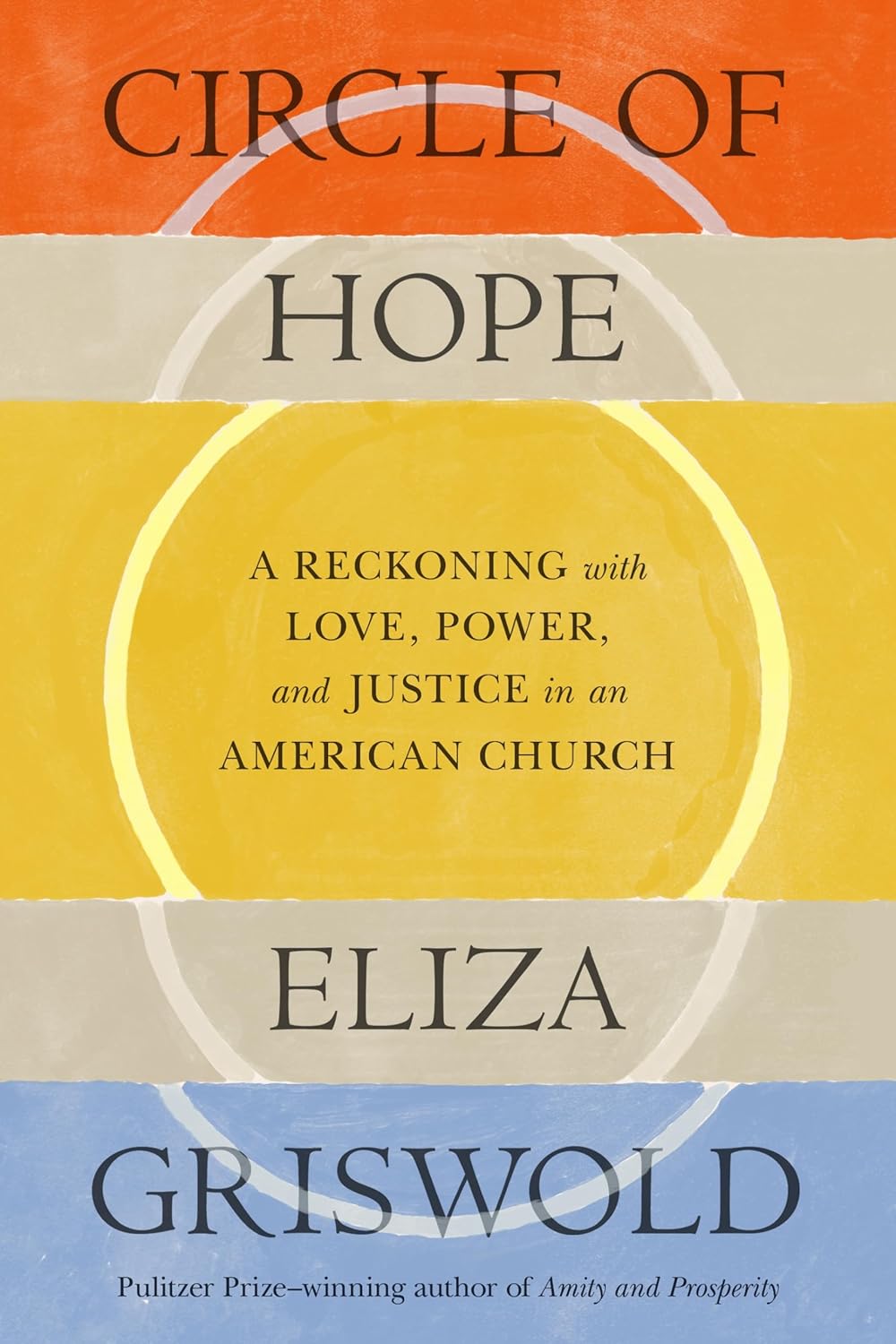
A church whose mission is to ‘love one another as Christ loves us’ is called to do the nearly impossible.
Circle of Hope
The Circle of Hope was just such a church in Philadelphia, a descendant of the Jesus movement of 1970s America. An older person might remember the words of Bernie Taupin/Elton John in the song Tiny Dancer: “Jesus freaks/Out in the street/Handing tickets out for God.” To see ‘Jesus Freaks’ was common, their ebullient conduct, on fire with the Spirit. The Circle of Hope is an updated version of this, with a desire and mission to bring the message of the Sermon on the Mount, the radical call of Christ’s love, to action. This meant caring for the neighborhoods where the circles met as well as for the peoples who resided in them.
Author and journalist Eliza Griswold embeds herself with the Circle’s four pastors: Ben White (a son of founders Gwen and Rod White), Julie Hoke, Jonny Rashid and Rachel Sensenig. The Circle leaders are a welcome reprieve from the megachurch/ mega millions pastors that feel more like con men than spiritual leaders. They live humble lives in service to the community. They start two thrift shops, profits from which enable them to help others. They plant community gardens and help undocumented people. To Circle leaders, ‘the least of these’ matters.
While Griswold maintains her narrative distance in this tale and gives each of the main players equal time and a narrative voice, I felt that the self-regard of one particular person made it impossible for the ministers to continue to hold the church together. Nevertheless, there is some element of blame—and of grace—in each of them.
Hope meets reality
What happens? During the pandemic, as meetings move online, the Circle leaders feel they must deal with the important issue of racism. What does it mean for a church to be anti-racist? Is it simply to follow the example of Christ as founder Rod White believed? Is it to explicitly work against racism by protesting police brutality (this is the period of George Floyd’s murder) and exploring the reasons behind the largely White makeup of the congregation?
By exploring who they are and what they are called to do, the leaders bring up other issues that are bothering them: the male pastors often dominate discussions and there is a sense of sexism. In the congregation at large, parishioners begin to feel they’ve failed LGBT+ community members even though the leadership professes (and desires) to be welcoming. As a part of the larger Anabaptist Church that does not approve of gay marriage, they try to stay silent on the subject. To endorse or preside over gay marriage would mean that they would be kicked out of the Anabaptist Church. And that larger church owned their buildings, so they would need to surrender their assets, have what they had worked to establish stripped away.
The circle is broken
Some well-intentioned efforts go awry (i.e., Church leaders move into the poor neighborhoods where they serve, but this drives up property costs). The more the leaders dig into the importance of social justice to the mission of the church, the more the center cannot hold. Ultimately, their differences about how to live out the message of Jesus pulls them apart. Attendance in the church is down. Circle of Hope finally decides to separate from the Anabaptists and perform gay marriage. This causes monetary contributions to plummet as members are unsure that their money won’t land in the greater Anabaptist Church while the separation is being worked out. In early 2024, the Circle disbands.
I was sorry to see this happen although the four pastors seem to move on to lives that serve in other ways. But it left me to worry about how we can live in service to one another when even these goodhearted people can’t agree. Everything they had hoped for and worked to do resonates with current social and justice issues. The end of the book leaves the reader with the larger questions: How do we move forward in radical acts of love? How do we care for one another? At the same time, it’s a comfort to see that people are trying, that the work moves into other forms. That the grace and hope of the Circle continues.
High school housekeeping
For those looking to add updated books on religion to their collection, this is a good choice. Eliza Griswold is a journalist (New Yorker) and originally intended to write a book about a church that practiced the opposite of Christian Nationalism. (She had written about that in the past.) This is a very even handed look at the Circle, without any proselytizing, so it works for public schools. For Christian religious/parochial schools it feels like a must purchase.
The four pastors each have strong narrative voices and there are also some church members who comment on the action. The narrative feels very close and personal, but the author stays above the fray, leaving the reader to evaluate the issues.
A primary reason this is a good choice for all high schools is that it confronts important social issues and issues of justice that are in the forefront of today’s world. It’s great food for thought.

 School Library Lady