
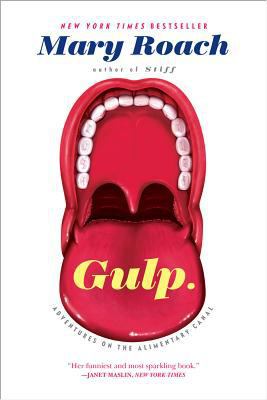
 Gulp by Mary Roach
Mary Roach has come up with another fun look at science, this time focusing on the anatomy and physiology of human digestion. Here she answers the questions you’ve always wanted to ask:
- Can snakes taste?
- Can your stomach digest itself (and why doesn’t it do that)?
- Why do humans (or at least Americans) throw away the most nutritious parts of the animal (brains, intestines, etc.)?
- Why are we so squeamish about what goes in our mouths?
- Why are we horrified by saliva once it’s out of the mouth? (For example, you wouldn’t spit in your soup and then eat it, but you will put the soup into your spitty mouth and swallow it.)
- Could Jonah really have survived in the belly of the whale?
- Can you eat so much that you blow up?
There are lots of fun facts about animals’ eating habits:
- At one time, cat food was evaluated by human tasters (this didn’t take off).
- Dry pet food came about because canned food was needed for war rations.
- Dogs like the smell of decomposing flesh if it isn’t too old.
- Cats and dogs really like just a few favors–we just think they like to eat like us, so pet food makers are trying to please us (vegetarian kibble for true carnivores is an example).
- Animals with no taste receptors, such as whales, swallow a lot of junk (cups, toothpaste tubes, etc.)
And fun facts about people:
- With soldiers consuming about a pound of meat a day during WW II, meat at home had to be rationed–so the government tried to get Americans to eat organs and reproductive parts (very nutritious).
- For the adults–you shouldn’t equate complexity with quality when you pick a beer. (A professional alcohol taster says that after hard work, the person who wants a refreshing beer should go for a Bud, not an IPA.)
- In microwavable food, the sauce makes the favor which disappears from the chicken
- You should eat slowly if you’re trying to lose weight–but not too slowly or you’ll be in big trouble.
- At one time, doctors used saliva for cures for syphilis and more. ( You can read about its effectiveness.)
On the opposite end of the alimentary canal, Roach can make even topics that disgust us pretty interesting. There’s a lot about poop here, and intriguing facts about the rectum.
- How do those prisoners manage to smuggle drugs and cellphones into lock-up without pooping them out? Inquiring minds want to know and Roach gives us the answers.
- Did you know that red meat will make your farts and poop stink more than other foods? (Unless those other foods are unrefrigerated and decomposing.)
- The future of fecal bacteria transplants–there may be a very cheap way to get rid of intestinal disorders.
- The terrible way Elvis Presley really died had more to do with constipation than a drug overdose.
More than junk food and not a load of crap, Gulp has the science and the history that will delight you beyond a mere gut reaction and keep you reading to the end.

 School Library Lady
Pingback: Absurd Science Questions and Answers: What If? | School Library Lady