
The Women by T. C. Boyle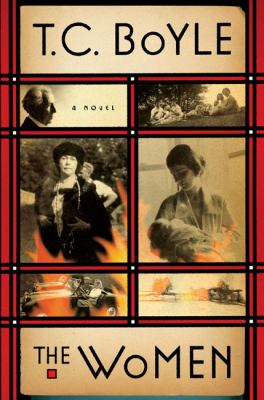
Yes, this is an odd book to include in a blog of book reviews for high school students. But when the CHS seniors were looking for works of (loosely historical) fiction to read before being required to develop a research question based on something in the novel, two students asked me if I had any suggestions for books about architects. And, unfortunately, I didn’t.
Considering that I could be asked this question again, I decided to read The Women by T. C. Boyle. The women of the title are the wives and mistresses of Frank Lloyd Wright, a genius who crafts plenty of drama as well as original designs. Boyle gives the reader an egomaniacal Wright, one whose vision was preeminent. He considered other people to exist in order to service it. Thus he secured loans that he had no intention of repaying. He rarely paid his staff’s salary, and yet he always had a cook and handymen about.
The story’s narrator, Sato, is a Japanese youth and one of Frank Lloyd Wright’s interns—budding young architects who paid Wright for the privilege of working for him, but who were required to do household jobs and run errands. Sato arrives at Taliesin (Wright’s home in Wisconsin) after Wright is married to his third wife. The narrative alternates between Sato’s own experience as an unpaid intern and his knowledge—and imaginings, as he couldn’t know what passed between characters years before he arrived on the scene—of Wright’s history with his wives and mistresses. The narrative moves backward in time from the third wife to the first. This is a great choice because it leaves for a climax the great tragedy of Wright’s life—the ax murder of his mistress, her children and four others, and the burning of Taliesin.
Wright designed Taliesin for Mamah Cheney. For her, he left his first wife, Kitty, and their six children. Mamah was the wife of a neighbor and an advocate of free love who also left her children to live with Wright. It is about her experience and tragedy that the final section of the novel revolves.
Starting at the end of the series of Wright women, the reader meets Olga, another Wright mistress who will later become his third wife. Her presence is the goad for Wright’s second wife, Miriam, to come to life. She is described in the publisher’s blurb as a passionate southern belle, but she is also portrayed as an opium-addicted mad woman with an ego to match Wright’s, bent on revenge against the new mistress. Her behavior is ironic (to say nothing of hypocritical) as before marrying Wright, Miriam had been his mistress while he was still married to Kitty. She will engages the newspapers in her fight to tell her side of the sordid story. And Wright was quite the celebrity, so the public gobbles up his personal drama in the same way it now seeks news about movie stars.
Though the true beauty of this novel is Boyle’s astonishing ability to create the intimate emotions and conversations of his characters with perfect-pitch dialogue and brilliant imagery, there is talk throughout of Wright’s architecture—his projects are named and his ‘natural style’ is discussed.
So, if you are looking for a novel with a discussion of architecture to start your senior project, you will be absolutely engrossed in the outrageous lives and terrible tragedies detailed in The Women. And even if there is never another student who asks me for a book about an architect, I’m so thankful that those two students did—because without their requests, I would never have picked up this wonderful novel.

 School Library Lady